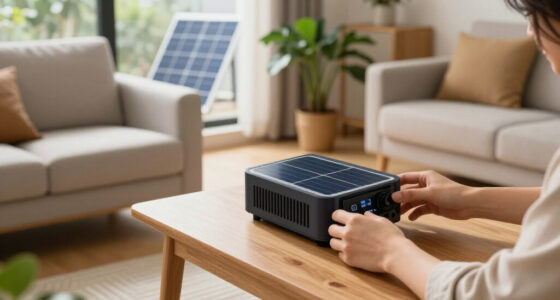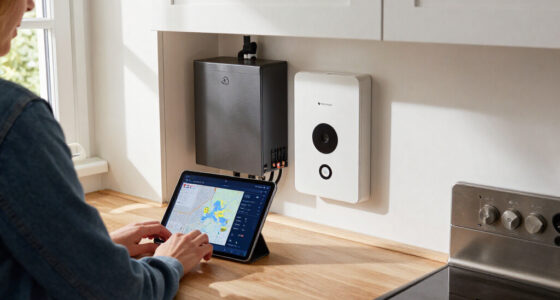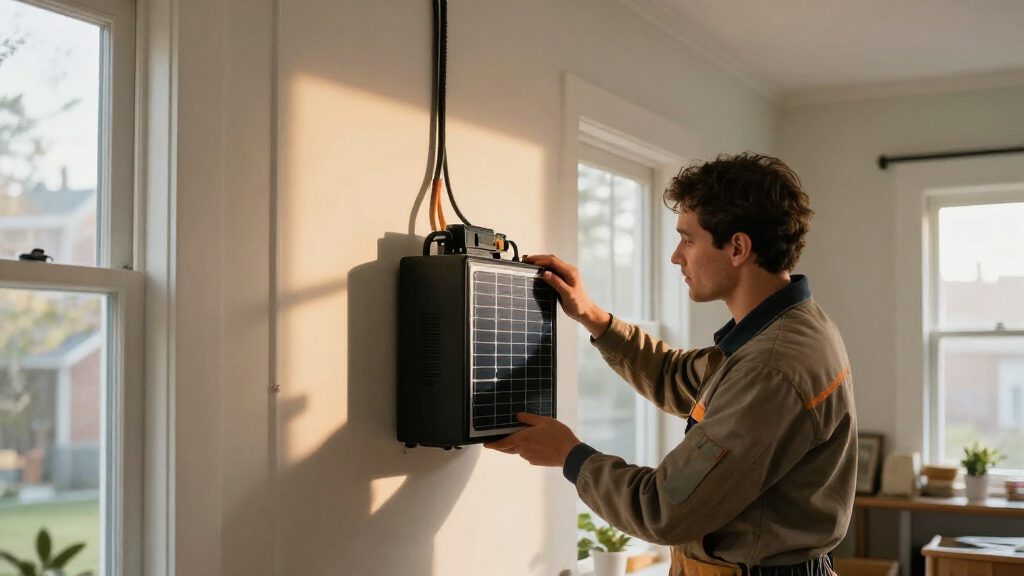

Choosing solar backup power means deciding how much of your home needs electricity during an outage and how much you want to spend to get it. Portable power stations can be paired with compatible solar panels and moved where needed; whole-home battery systems connect to home electrical equipment and can support selected circuits or, when sized for it, more of the house. The main tradeoff is flexibility and lower upfront cost versus capacity, integration, and convenience. Choose a portable station if your priority is keeping essential devices running on a limited budget. Consider a whole-home system if you want automatic, longer-duration backup for household circuits and can justify the installation cost.

Get backup power and energy gear delivered free with Prime
- Fast, free delivery on millions of items
- Prime Video, Amazon Music and more included
- Member-only deals all year

Jackery HomePower 3600 Plus Portable Power Station with Two 200W Solar Panels
- ✔ Battery capacity: 3,584Wh
- ✔ Battery type: LFP
- ✔ AC output: 3,600W

Jackery HomePower 3600 Plus Portable Power Station, 3584Wh, 3600W
- ✔ Battery capacity: 3,584Wh
- ✔ Battery type: LFP
- ✔ Output: 3,600W; 7,200W in parallel

Jackery Explorer 1000 v2 Portable Power Station with 200W Solar Panel, 1024Wh LiFePO4 Battery
- ✔ Battery capacity: 1,024Wh
- ✔ Battery chemistry: LiFePO4 (LFP)
- ✔ AC output: 1,500W; 3,000W surge peak
At a Glance
| Criteria | Portable power stations | Whole-home battery backup systems | Winner |
|---|---|---|---|
| Upfront cost and installation | Usually lower purchase cost; many units need no electrician, though home circuit integration may require additional equipment. | Higher total cost, typically including batteries, inverter and electrical work; quotes depend on system size and installation. | A |
| Backup coverage | Best for selected devices such as phones, lights, routers, and some appliances; powering household circuits takes compatible equipment and careful limits. | Can back selected circuits or a broader share of the home when correctly sized and configured. | B |
| Capacity and expansion | Capacity varies by model; some systems accept extra batteries, but expansion and output limits depend on the product. | Often designed around larger capacity and modular expansion, subject to system and installation limits. | B |
| Solar charging and integration | Can recharge from compatible portable panels; performance depends on panel size, sunlight, connection limits, and battery capacity. | Can integrate with rooftop solar and home energy equipment; charging and backup behavior depend on the configuration. | B |
| Portability and flexibility | Can move between rooms, take on trips, or use away from home. | Installed in a fixed location and tied to home electrical needs. | A |
| Outage convenience | Requires connecting devices or compatible transfer equipment and monitoring remaining charge. | Can switch to backup automatically when configured with compatible equipment; operation still depends on system design. | B |
| Long-term value | Strong value for modest, occasional backup needs; less compelling if frequent outages demand large capacity. | Higher value for frequent or extended outages, especially when the added capacity and integration are regularly useful. | Depends |
Jackery HomePower 3600 Plus Portable Power Station with Two 200W Solar Panels
For a buyer who wants meaningful outage capacity and a solar path in the same package, this HomePower configuration makes the strongest case. Its 3,584Wh LFP battery and 3,600W AC output give it a much larger reserve and load ceiling than the Explorer 1000 v2. Two 200W panels are listed with the system, so we can begin planning around solar charging without selecting panels separately. The product listing gives a four-hour solar recharge figure, though real charging depends on sunlight and conditions.It shares its core power station with the panel-free HomePower 3600 Plus: both can expand to 21kWh per unit, and parallel setups can provide 240V and up to 7,200W output. The difference is the included solar hardware and bundle convenience. That makes this version the most straightforward recommendation for a solar backup buyer, while the panel-free model may be more sensible if we already own compatible panels. Its 77.2-pound weight is the substantial compromise. Wheels and a telescopic handle help on flat surfaces, but they do not make it a light unit to lift into a vehicle or carry upstairs.The listing describes an LFP battery rated for 6,000 cycles, plus AC, solar, gas-generator, and hybrid charging. That flexibility can help when weather limits solar production. We should also plan for the possibility that the power station and panels arrive separately. Compared with the compact Explorer, this is a more capable home base, not a grab-and-go station.
Pros:
- 3,584Wh capacity and 3,600W output support larger backup needs than the Explorer 1000 v2.
- Two 200W solar panels are included in the listed bundle.
- Expandable capacity and parallel operation add a path to longer or higher-voltage backup.
- AC, solar, gas-generator, and hybrid charging offer multiple ways to replenish the battery.
Cons:
- At 77.2 pounds, it is difficult to lift despite its wheels and telescopic handle.
- The station and solar panels may ship in separate packages.
- Solar recharge performance depends on available sunlight and setup.
Best for: Households seeking a high-capacity backup system with solar panels included and room to expand.
Not ideal for: Buyers who need a lightweight station, or who want to choose panels separately and already have a solar setup.
Bottom line: We recommend this configuration for buyers who want the lineup’s strongest combination of large backup capacity and included solar panels.
“We recommend this configuration for buyers who want the lineup’s strongest combination of large backup capacity and included solar panels.”
Jackery HomePower 3600 Plus Portable Power Station, 3584Wh, 3600W
This panel-free HomePower is a strong choice when we want the same substantial storage and output as the solar bundle but prefer to source panels independently. The 3,584Wh battery and 3,600W output are identical to the first-ranked configuration, so it has the same basic potential for running larger loads and extending backup through added storage. It is also expandable and can reach 240V in parallel, which gives it a more adaptable role than the Explorer 1000 v2.The key distinction is what comes in the package: solar panels are optional. That can suit us if we already own compatible panels or need to design around a particular installation, but it means this listing is less immediately solar-ready than the bundle with two 200W panels. The listed charging options include AC, solar, gas generator, and hybrid AC+DC, with a two-hour hybrid recharge time. Multiple recharge routes are useful during prolonged outages, when sunlight may be inconsistent.Its wheeled, suitcase-style design makes relocation easier than carrying a unit of this size, but at 77.2 pounds we still need to account for lifting and storage. Compared with the panel-included HomePower, it asks us to make a separate solar decision. Compared with the Explorer, it brings over three times the battery capacity but sacrifices easy portability. The listed product information specifies two outlets, so we should check the outlet arrangement against our intended devices before choosing it.
Pros:
- 3,584Wh capacity and 3,600W output match the panel-included HomePower model.
- Expandable capacity and parallel 240V operation support a larger future setup.
- Four charging methods include solar and hybrid AC+DC.
- Wheels and telescopic handle help move the heavy unit across suitable surfaces.
Cons:
- Solar panels are optional and not included in the listed package.
- The 77.2-pound weight makes lifting and stair transport difficult.
- Listed specifications state two outlets, which may constrain simultaneous connections.
Best for: Buyers who want large expandable backup capacity and already have, or plan to select, compatible solar panels.
Not ideal for: People seeking an all-in-one solar package or a power station they can routinely carry by hand.
Bottom line: Choose this HomePower configuration when we want large expandable capacity and control over the solar panels we add.
“Choose this HomePower configuration when we want large expandable capacity and control over the solar panels we add.”
Jackery Explorer 1000 v2 Portable Power Station with 200W Solar Panel, 1024Wh LiFePO4 Battery
The Explorer 1000 v2 serves a different scale of backup. Its 1,024Wh LFP battery and 1,500W AC output are well below the HomePower systems, but that smaller footprint is the point: at about 23.3 pounds, it is much easier to move, store, or take along than either 77.2-pound HomePower. A 200W panel is included, giving this pick a clear advantage for buyers who want a compact station with solar charging in the package.For outages, the Explorer is better suited to selected essentials and shorter backup windows than to broad household coverage. The 10ms UPS switchover can help keep connected equipment running through a power interruption, while two pure sine wave AC ports and USB/DC connections cover a mix of devices. The HomePower models offer far more stored energy and output, plus expansion; we should choose the Explorer when portability and manageable scale matter more than extended runtime.Charging is another tradeoff to understand. The listing gives a 50-minute emergency charging mode that requires activation in the app, and its default full-charge time is described inconsistently as 1.25 hours. The battery is rated for over 4,000 cycles while retaining more than 70% capacity. The station and panel may ship separately. Compared with the panel-free HomePower, the Explorer is more immediately solar-equipped; compared with the two-panel bundle, it is easier to carry but offers far less capacity and only one included panel.
Pros:
- A 200W solar panel is included.
- At about 23.3 pounds, it is far easier to move than either HomePower configuration.
- The 10ms UPS switchover can support continuity for connected essential devices.
- Multiple AC, USB, and DC connections cover a range of small-device needs.
Cons:
- Its 1,024Wh capacity is substantially smaller than the HomePower systems.
- The 50-minute emergency charging mode requires app activation.
- Listed default full-charge timing varies, and the station and panel may ship separately.
Best for: People who need a portable solar station for selected essentials, smaller outages, or travel and outdoor use.
Not ideal for: Households aiming to power larger loads for extended outages or expand into a high-capacity backup system.
Bottom line: We would choose the Explorer 1000 v2 for portable, modest-scale solar backup, with the clear understanding that it cannot match HomePower runtime.
“We would choose the Explorer 1000 v2 for portable, modest-scale solar backup, with the clear understanding that it cannot match HomePower runtime.”
As an Amazon Associate we earn from qualifying purchases.
Key Differences
The most consequential difference is how much of daily home life each approach can support. A portable station is a compact reserve for chosen loads. It suits a plan built around essentials: communication, lighting, small electronics, and perhaps a particular appliance if its power demand fits the unit. A whole-home battery system can provide a more connected experience, but its actual coverage depends on battery capacity, inverter output, electrical configuration, and which circuits an installer includes. Neither label alone guarantees that heating, cooling, cooking, or every outlet will work during an outage.
Cost and effort follow that difference. Portable units usually avoid the expense of permanent electrical installation, making them easier to buy in stages or use for more than one purpose. Their limit is that users must manage what is connected and how long it runs. A fixed battery system costs more and requires a site-specific design, but can reduce manual steps and support more circuits. Paying that premium makes sense when outages are common, longer, or disruptive enough that capacity and automatic operation matter; for occasional short outages, a portable unit is often the better value.
Detailed Comparison
Upfront cost and installation (Portable power stations wins — major)
Portable power stations generally cost less to acquire and can be ready to use without permanent wiring. A whole-home system adds battery hardware, an inverter or compatible equipment, and professional electrical work. The difference is major for buyers with a limited budget. A portable unit wins on entry cost; home integration narrows its simplicity advantage if you need circuits powered directly.
Backup coverage (Whole-home battery backup systems wins — major)
A portable station is suited to a deliberately short list of devices, and its output must match their power needs. A home battery can serve selected household circuits or more of the home if capacity and installation support that load. The home system wins by a major margin for broader coverage, though the final result depends on what the system is designed to run.
Capacity and expansion (Whole-home battery backup systems wins — moderate)
Portable models range widely, and some accept add-on batteries, but expansion remains product-specific and may not increase every output limit. Home systems are commonly designed for larger storage and modular additions. This is a moderate to major advantage for the fixed system when outages last longer or loads are larger. Buyers should compare usable capacity and output ratings, not just battery size.
Solar charging and integration (Whole-home battery backup systems wins — moderate)
Both approaches can use solar, but portable stations typically connect to compatible panels and recharge as conditions allow. Whole-home systems may coordinate with rooftop solar and home energy equipment, subject to their configuration and operating behavior during grid outages. The home system has a moderate integration advantage; it does not mean solar panels will automatically power backup batteries during an outage without compatible equipment.
Portability and flexibility (Portable power stations wins — major)
A portable station can move between rooms, travel, or serve a different task when no outage is underway. A whole-home battery stays installed and serves the home electrical setup. The portable option wins clearly for mobility and multi-purpose use. Its flexibility comes with more hands-on decisions about placement, charging, and which devices receive power.
Outage convenience (Whole-home battery backup systems wins — moderate)
A portable station typically requires the user to connect devices or operate compatible transfer equipment and keep track of charge. A properly configured home system can switch to backup automatically and feed designated circuits. The home battery wins by a moderate to major margin for convenience, especially during overnight outages or when no one is home. Automatic operation depends on the system design.
Long-term value (major difference)
There is no universal winner. A portable station offers better value when backup is occasional and limited to essentials, particularly if it also serves travel or outdoor uses. A home system can justify its higher cost where outages are frequent or costly and broader, low-effort backup is worth paying for. This decision depends on outage pattern, system quote, and the loads you need to support.
Portable power stations: Pros and Cons
Pros:
- Lower upfront cost for basic backup
- Portable for use around the home or away
- Can pair with compatible solar panels
- Lets buyers start with a small system
Cons:
- Limited runtime and output compared with larger home systems
- Requires managing devices and charge during outages
- Home circuit integration may add equipment and expense
- Solar recharge depends on panel capacity and available sunlight
Whole-home battery backup systems: Pros and Cons
Pros:
- Can support selected household circuits or broader coverage when sized accordingly
- May switch to backup automatically with compatible installation
- Can integrate with rooftop solar and home energy equipment
- Expandable designs may add storage capacity
Cons:
- Higher purchase and installation cost
- Fixed location limits use outside the home
- Coverage depends on system design and selected circuits
- Solar operation during outages requires compatible equipment and configuration
Who Should Choose What
Choose Portable power stations if:
- You mainly need phones, lights, a router, and a small number of carefully selected devices.
- You want backup at a lower upfront cost and can manage charging and device connections yourself.
- You would also use the power station for travel, camping, or other off-grid tasks.
Choose Whole-home battery backup systems if:
- You want backup for household circuits with minimal manual setup.
- Your area has frequent or extended outages and the added capacity would materially improve daily comfort or safety.
- You already have, or plan to install, compatible rooftop solar and want an integrated home energy setup.
Skip both if: Neither is a fit if you need uninterrupted power for large loads but cannot fund a correctly sized system, or if your critical equipment requires a dedicated backup design beyond these general options.
Value for Money
Paying more for a whole-home battery is worthwhile when it buys meaningful coverage, longer runtime, or automatic operation that you will rely on through repeated outages. Ask installers to specify backed-up circuits, usable battery capacity, inverter output, expected runtime for your actual loads, and how solar behaves during a grid outage. Compare that installed quote with the portable setup needed to cover the same essentials. If your outages are rare and your needs are modest, the portable station is usually better value. If repeated outages make manual, limited backup a poor fit, the higher-priced home system can earn its premium.
Final Verdict
For most households seeking an affordable first step, choose a portable power station sized for the devices you truly need to run. It costs less, moves with you, and avoids committing to permanent installation. Choose a whole-home battery system when you need broader circuit coverage, more capacity, and hands-off operation often enough to justify the added installed cost. The deciding factor is not simply whether a system uses solar: it is how much power you need, for how long, and whether you are willing to manage it during an outage. Get a load-based design before assuming either option can run major appliances or an entire home.
Frequently Asked Questions
Can a portable power station run a house during an outage?
It can power connected devices and, with compatible transfer equipment, possibly selected circuits. Whether it can run a particular appliance or several loads at once depends on its output rating, battery capacity, and the equipment used to connect it. It should not be assumed to power an entire home.
Will rooftop solar keep working when the grid goes down?
Not necessarily. Many grid-tied solar systems shut down during an outage unless compatible backup equipment isolates the home from the grid and supports operation. Confirm the design with the installer or equipment documentation.
Which option lasts longer during an outage?
A larger home battery system can often store more energy, but runtime depends on the loads being used and the system’s usable capacity. A portable station may last a long time when powering only small devices. Compare expected runtime against your specific load list.
Is a whole-home battery worth the extra cost?
It can be, if outages are frequent or long and you value powering more circuits with less manual effort. For occasional outages and a few essential devices, the lower-cost portable option is usually the stronger value.