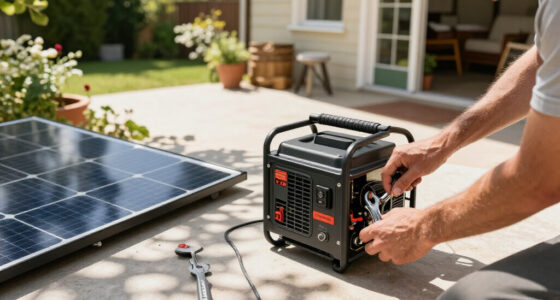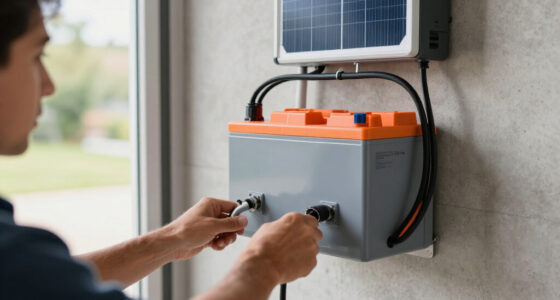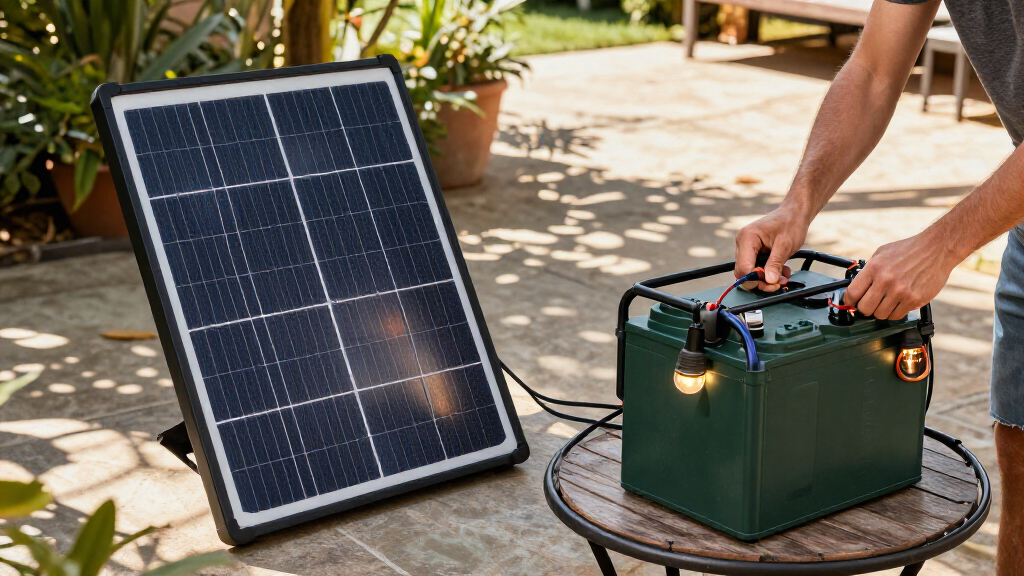
When selecting solar generators with battery storage, the primary challenge is balancing capacity against portability and cost. My analysis identifies the Jackery HomePower 3600 Plus as the best overall pick for whole-home backup due to its massive 3584Wh capacity and 3600W output, while the EF ECOFLOW DELTA 3 Classic stands out as the best mid-range option for its rapid charging speed and 1024Wh capacity. For those needing lightweight emergency power, the Jackery Explorer 300 offers an ideal compromise between weight and utility. Most buyers struggle with underestimating their power needs or overpaying for unnecessary capacity, so understanding your specific load requirements is key. Continue reading to see how these units compare in real-world scenarios and which one fits your lifestyle.

Get backup power and energy gear delivered free with Prime
- Fast, free delivery on millions of items
- Prime Video, Amazon Music and more included
- Member-only deals all year
Complete the kit


Key Takeaways
- Capacity thresholds are critical: units under 300Wh rarely power high-wattage appliances, making them suitable only for charging phones and small electronics.
- LiFePO4 battery chemistry, found in models like the Daran and Dyness, offers significantly longer lifespans (2000+ cycles) compared to traditional Li-ion, despite a higher upfront cost.
- The Jackery HomePower 3600 Plus represents a shift toward ‘home backup’ systems rather than just portable camping gear, bridging the gap between generators and grid storage.
- Charging speed varies drastically; the EF ECOFLOW DELTA 3 Classic recharges much faster than comparable Jackery models, a key factor for frequent off-grid use.
- Bundled solar panels in budget kits (like Takki or Apowking) are often undersized, meaning full recharge times can exceed 15 hours even in direct sunlight.
| Takki 250W Portable Power Station with 40W Solar Panel, 222Wh |  | Best Starter Kit for Small Loads | Battery capacity: 222Wh | Peak output: 450W | AC waveform: 110V pure sine wave | VIEW LATEST PRICE | See Our Full Breakdown |
| Jackery HomePower 3600 Plus & 2x200W Solar Panels, 3584Wh, 3600W AC Output |  | Best for Expandable Home Backup | Battery capacity: 3,584Wh | Expandable capacity: Up to 21kWh per unit; up to 43kWh with multiple units | AC output: 3,600W; up to 7,200W in parallel | VIEW LATEST PRICE | See Our Full Breakdown |
| Jackery Explorer 300 Portable Power Station with Carrying Bag, 292Wh |  | Best Compact Long-Life Battery | Battery capacity: 292Wh | Battery chemistry: LiFePO4 | Peak surge: 600W | VIEW LATEST PRICE | See Our Full Breakdown |
| Daran 89.6Wh Portable Power Station with LiFePO4 Battery |  | Best Ultralight Emergency Backup | Battery capacity: 89.6Wh | Battery chemistry: LiFePO4 | Maximum output: 100W | VIEW LATEST PRICE | See Our Full Breakdown |
| EF ECOFLOW DELTA 3 Classic Solar Generator with 220W Solar Panel, 1024Wh |  | Best Balanced Solar Backup Kit | Battery capacity: 1,024Wh | Battery chemistry: LiFePO4 | AC output: 1,800W | VIEW LATEST PRICE | See Our Full Breakdown |
| Jackery Explorer 1000 v2 Portable Power Station, 1070Wh, 1500W |  | Best for Long-Term Battery Durability | Battery capacity: 1,070Wh | Battery type: LFP (LiFePO4) | AC output: 1,500W; 3,000W surge peak | VIEW LATEST PRICE | See Our Full Breakdown |
| EnginStar 296Wh Portable Power Station with Pure Sine Wave AC Output |  | Best for Lightweight Multi-Output Backup | Battery capacity: 296Wh | Battery type: Lithium-ion | AC output: 300W | VIEW LATEST PRICE | See Our Full Breakdown |
| ENOFLO Portable Power Station, 97.68Wh |  | Best Compact Emergency Light and Charger | Battery capacity: 97.68Wh | Battery type: Lithium-ion | AC output: 110V, 120W peak | VIEW LATEST PRICE | See Our Full Breakdown |
| UDPOWER S1200 Portable Power Station with Two 120W Solar Panels |  | Best Solar-Ready Backup Bundle | Battery capacity: 1,191Wh | Battery type: LiFePO4 | Continuous AC output: 1,200W pure sine wave | VIEW LATEST PRICE | See Our Full Breakdown |
| Apowking 300W Portable Power Station with 40W Solar Panel |  | Best Compact Solar Bundle | Battery capacity: 220Wh | Peak output: 600W | AC outlets: 2 × 110V pure sine wave | VIEW LATEST PRICE | See Our Full Breakdown |
| Portable Solar Generator 300W Portable Power Station with 60W Solar Panel |  | Best Bundled Solar Starter | Battery capacity: 280Wh | Maximum AC output: 300W | AC voltage: 110V | VIEW LATEST PRICE | See Our Full Breakdown |
| Dyness 300W Portable Power Station, 256Wh LiFePO4 Battery |  | Best Compact LiFePO4 Option | Battery capacity: 256Wh | Battery chemistry: LiFePO4 | Continuous output: 300W | VIEW LATEST PRICE | See Our Full Breakdown |
| ZeroKor 300W Portable Power Station, 280Wh |  | Best for Flexible Recharging | Battery capacity: 280Wh | Maximum AC output: 300W | AC outlets: 2 × 110V | VIEW LATEST PRICE | See Our Full Breakdown |
| Jackery Solar Generator 300 and 40W Solar Panel, 292Wh, 300W AC |  | Best Lightweight Panel Bundle | Battery capacity: 292Wh | AC output: 300W rated; 600W peak surge | AC outlets: 2 | VIEW LATEST PRICE | See Our Full Breakdown |
| Jackery Solar Generator 1000 v2 and 200W Solar Panel, 1070Wh, 1500W AC |  | Best for Serious Backup Capacity | Battery capacity: 1,070Wh | Battery chemistry: LiFePO4 | AC output: 1,500W rated; 3,000W surge | VIEW LATEST PRICE | See Our Full Breakdown |
| solar generators with battery storage | Battery capacity | Weight | AC output |
|---|---|---|---|
| Takki 250W Portable Power Stat | 222Wh | Power station: 5.95 lb; panel: 1.87 lb | — |
| Jackery HomePower 3600 Plus & | 3,584Wh | 77.2 lb | 3,600W; up to 7,200W in parallel |
| Jackery Explorer 300 Portable | 292Wh | — | — |
| Daran 89.6Wh Portable Power St | 89.6Wh | — | — |
| EF ECOFLOW DELTA 3 Classic Sol | 1,024Wh | — | 1,800W |
| Jackery Explorer 1000 v2 Porta | 1,070Wh | 23.8 lbs | 1,500W; 3,000W surge peak |
| EnginStar 296Wh Portable Power | 296Wh | 6.5 lb | 300W |
| ENOFLO Portable Power Station | 97.68Wh | 2.2 lbs | 110V, 120W peak |
| UDPOWER S1200 Portable Power S | 1,191Wh | 25.8 lbs | — |
| Apowking 300W Portable Power S | 220Wh | 5 lbs | — |
| Portable Solar Generator 300W | 280Wh | 5.1 lb | — |
| Dyness 300W Portable Power Sta | 256Wh | — | 110V pure sine wave; 1 outlet |
| ZeroKor 300W Portable Power St | 280Wh | 5.1 lb | — |
| Jackery Solar Generator 300 an | 292Wh | 7.5 lb in description; 12.9 lb in listing data | 300W rated; 600W peak surge |
| Jackery Solar Generator 1000 v | 1,070Wh | 23.8 lb | 1,500W rated; 3,000W surge |
More Details on Our Top Picks
Takki 250W Portable Power Station with 40W Solar Panel, 222Wh
The Takki 250W earns this spot by including a foldable 40W solar panel, so a first-time buyer can try solar charging without sourcing a separate panel. Its 222Wh battery and 250W rated AC output suit phones, lights, and other modest loads, while eight ports give a small group room to charge several device types. Compared with the Jackery Explorer 300, it has less storage and output, but its panel is included; Jackery’s battery is LiFePO4, while Takki’s listed specs do not identify its chemistry. The tradeoff is limited appliance support: 250W rules out many high-draw devices, and the small panel needs favorable sunlight and several hours to replenish the battery. I’d choose it for basic, portable solar charging, not as a household backup unit.
Pros:- Includes a compact, foldable 40W solar panel.
- Eight output ports cover a mix of AC, USB, USB-C, and 12V DC devices.
- Can recharge from an AC outlet, solar panel, or 12V car charger.
- Built-in light has reading and SOS modes.
Cons:- 250W rated output limits use to small appliances and electronics.
- The 40W panel takes several hours to recharge the battery and depends on strong sunlight.
- Battery chemistry and cycle-life rating are not specified in the supplied data.
Best for: Campers and first-time solar-generator buyers who mainly need to charge phones, lights, and other small devices with an included panel.
Not ideal for: Buyers who want to run high-wattage appliances or recharge a 222Wh battery quickly from solar.
- Battery capacity:222Wh
- Peak output:450W
- AC waveform:110V pure sine wave
- Output ports:8
- Included solar panel:40W foldable; 23% conversion rate
- Charging methods:AC outlet, solar panel, 12V car charger
- Weight:Power station: 5.95 lb; panel: 1.87 lb
Our verdict“Choose the Takki if you want an entry-level, small-load power station with a solar panel included, and skip it if you need faster charging or appliance-level output.”
Jackery HomePower 3600 Plus & 2x200W Solar Panels, 3584Wh, 3600W AC Output
For buyers prioritizing stored energy and home-backup capacity, the Jackery HomePower 3600 Plus is in a different class from compact picks such as the Takki 250W. Its 3,584Wh battery and 3,600W output can support larger loads, and the system can expand to 21kWh per unit; parallel units can raise stated capacity further. The two included 200W panels provide a substantial solar input compared with the smaller bundled panels in this lineup, though the product details say the station and panels may arrive separately. Four charging methods and a rolling, telescoping-handle design help make a large battery easier to move and replenish. The tradeoff is bulk: at 77.2 pounds, this is not a grab-and-go camping unit. I’d favor it for outage planning, while buyers needing modest, easy-to-carry storage should look at the Explorer 300 instead.
Pros:- Large 3,584Wh battery with expansion capability up to 21kWh per unit.
- 3,600W AC output and stated 120V/240V capability in parallel support larger backup loads.
- Includes two 200W solar panels and supports AC, solar, hybrid AC-plus-DC, and gas-generator charging.
- Wheels and a telescoping handle make its 77.2-pound unit more manageable to roll.
Cons:- At 77.2 pounds, it is far less portable than the compact stations in this roundup.
- The power station and solar panels may ship in separate packages.
- The supplied details do not specify the solar panels’ combined recharge time or full output-port layout.
Best for: Households planning for extended outages who need high output, expandable battery storage, and a wheeled system for moving between rooms.
Not ideal for: Campers, apartment dwellers with little storage space, or anyone who needs a lightweight station for frequent carrying.
- Battery capacity:3,584Wh
- Expandable capacity:Up to 21kWh per unit; up to 43kWh with multiple units
- AC output:3,600W; up to 7,200W in parallel
- Voltage:120V; 120V and 240V in parallel
- Included solar panels:2 × 200W
- Charging time:AC: 2.5 hours; solar: 4 hours; hybrid AC+DC: 2 hours
- Weight:77.2 lb
- Dimensions:19.3 × 15.2 × 12.2 in
Our verdict“Pick the HomePower 3600 Plus for expandable, high-output home backup, but choose a smaller station if portability matters more than stored energy.”
Jackery Explorer 300 Portable Power Station with Carrying Bag, 292Wh
The Jackery Explorer 300 is the more considered compact choice for buyers who value battery longevity and a useful port mix over getting a panel in the box. Its LiFePO4 battery is rated for more than 4,000 cycles before reaching 70% capacity, and the 100W USB-C port can handle devices that need more than a basic USB connection. At 292Wh, it stores more energy than the Daran 89.6Wh, while remaining light enough to carry with its included bag. The key solar caveat is that compatible panels are sold separately; the Takki is a better ready-to-go option because it includes a 40W panel. Jackery’s 300W AC output also leaves out many kitchen or heating appliances. I’d choose this model for repeated trips and small electronics, not for a self-contained solar kit or heavy loads.
Pros:- LiFePO4 battery is rated for over 4,000 charge cycles before reaching 70% capacity.
- 100W USB-C PD, two USB-A ports, two AC outlets, and a 120W car port cover varied devices.
- Carrying bag and compact size support portable use.
- Supports solar charging, with stated charging times for 40W and 100W panels.
Cons:- Solar panel is not included, unlike the Takki 250W kit.
- 300W rated AC output excludes many high-draw appliances.
- Solar charging takes about 7.5 hours with a 40W panel.
Best for: Frequent campers and travelers who want a compact, cycle-rated LiFePO4 battery with strong USB-C charging and already own, or plan to buy, a compatible solar panel.
Not ideal for: Buyers who want a complete solar kit in one package or need enough AC output for high-wattage appliances.
- Battery capacity:292Wh
- Battery chemistry:LiFePO4
- Peak surge:600W
- USB-C output:100W PD
- Other ports:2 AC outlets, 2 USB-A ports, 120W car port
- Solar charging:80% in about 2.8 hours with 100W panel; about 7.5 hours with 40W panel
- Weight and dimensions:About 7.1–7.5 lb; 9.1 × 5.2 × 7.8 in
Our verdict“Choose the Explorer 300 for portable, long-cycle battery storage and versatile device charging if you are comfortable buying a solar panel separately.”
Daran 89.6Wh Portable Power Station with LiFePO4 Battery
At just 2.54 pounds, the Daran is the easiest station here to stash in a daypack or keep ready for small electronics. Its 89.6Wh LiFePO4 battery, seven ports, and quiet fanless design make it useful for phones, lights, and other low-wattage essentials; the digital display also gives a quick read on remaining charge. Compared with the Jackery Explorer 300, Daran is much lighter but holds less than a third of the energy and offers only 100W maximum output. Solar charging is supported, but the panel and cable are not included, so it is less of a complete solar setup than the Takki 250W. I’d treat it as a compact reserve for short trips or brief outages, not a general-purpose generator. Its low capacity and output put a firm ceiling on what it can power.
Pros:- Very light at 2.54 pounds and compact enough for a small emergency kit.
- LiFePO4 battery is rated for more than 3,500 cycles.
- Seven ports include two AC outlets, two USB-C ports, and two USB-A ports.
- Fanless operation, digital display, and four-level flashlight support quiet, practical use.
Cons:- 89.6Wh capacity offers much less stored energy than the Jackery Explorer 300 or Takki 250W.
- 100W maximum output rules out most appliances.
- Solar panel and cable are not included.
Best for: Hikers, solo travelers, and people assembling a lightweight emergency kit for phones, small USB devices, and low-power lighting.
Not ideal for: Buyers who need to run appliances, power several devices for long periods, or start solar charging without buying a separate panel and cable.
- Battery capacity:89.6Wh
- Battery chemistry:LiFePO4
- Maximum output:100W
- Peak output:200W
- Output ports:7
- Charging methods:AC, USB-C PD, car, optional solar
- Charging time:0–80% in 1.5 hours
- Weight and dimensions:2.54 lb; 6.5 × 3.3 × 4 in
Our verdict“Choose the Daran when low weight and small-device backup matter more than capacity, output, or an included solar panel.”
EF ECOFLOW DELTA 3 Classic Solar Generator with 220W Solar Panel, 1024Wh
The EcoFlow DELTA 3 Classic sits between the carryable small stations and the much larger Jackery HomePower 3600 Plus: its 1,024Wh battery and 1,800W AC output offer meaningful appliance support without committing to a 77-pound home-backup unit. The included 220W bifacial panel also makes this a more complete solar kit than the Jackery Explorer 300, whose compatible panel is optional. Fast AC charging can bring the battery to 80% in 45 minutes, while the stated solar recharge time is about 5.8 hours. For sensitive electronics, under-10ms UPS switching can help keep connected equipment running during an outage. The tradeoff is that solar replenishment still takes a substantial stretch of suitable conditions, and the generator and panel may arrive separately. I’d pick it for flexible home and outdoor backup, not for maximum expandable capacity.
Pros:- 1,024Wh battery and 1,800W AC output cover a broader range of loads than the compact stations.
- Includes a 220W bifacial solar panel with up to 25% stated conversion efficiency.
- AC charging reaches 80% in 45 minutes.
- Under-10ms UPS switching supports connected sensitive electronics during outages.
Cons:- Solar recharge takes about 5.8 hours under the stated conditions.
- The power station and solar panel may arrive separately.
- Its capacity is far below the expandable Jackery HomePower 3600 Plus.
Best for: Households and RV users who want a mid-capacity station with an included solar panel, useful AC output, and backup support for electronics.
Not ideal for: Buyers who need multi-day, expandable household storage or a very lightweight station for frequent carrying.
- Battery capacity:1,024Wh
- Battery chemistry:LiFePO4
- AC output:1,800W
- Surge output:3,600W
- USB-C output:100W
- Included solar panel:220W bifacial; up to 25% conversion efficiency
- Charging times:AC: 0–80% in 45 minutes; solar: about 5.8 hours
- UPS switching time:Under 10ms
Our verdict“Choose the DELTA 3 Classic for a balanced, panel-included solar backup kit with substantial AC output, but choose the HomePower 3600 Plus for much greater expandable storage.”
Jackery Explorer 1000 v2 Portable Power Station, 1070Wh, 1500W
I’d choose the Explorer 1000 v2 for buyers who want substantial stored power in a portable unit and expect to recharge it often. Its 1,070Wh LFP battery is rated for over 4,000 cycles while retaining over 70% capacity, a longer stated cycle life than the UDPOWER S1200’s 3,000-cycle rating. The Jackery also provides 1,500W AC output and a 3,000W surge peak, giving it more output headroom than the UDPOWER’s 1,200W continuous limit. App-controlled charging modes add useful control, including an emergency mode that can reach a full charge in one hour. The tradeoff for solar buyers is clear: panels are sold separately, and only Jackery panels are compatible. I’d skip it if you want a ready-to-use solar bundle or flexible panel choices.
Pros:- 1,070Wh LFP battery rated for over 4,000 cycles while retaining over 70% capacity
- 1,500W AC output with a 3,000W surge peak
- Three pure sine wave AC outlets plus USB-C, USB-A, and DC connections
- App-controlled charging modes, including quiet overnight and energy-efficiency options
Cons:- Solar panels are not included
- Solar charging is limited to compatible Jackery panels
- One-hour emergency charging must be enabled in the app; default charging time is 1.7 hours
Best for: Campers and backup-power buyers who want a roughly 1kWh LFP battery, frequent cycling, and enough AC output for compatible appliances.
Not ideal for: Buyers who want solar panels included or plan to use panels from another brand.
- Battery capacity:1,070Wh
- Battery type:LFP (LiFePO4)
- AC output:1,500W; 3,000W surge peak
- AC outlets:3 pure sine wave ports
- USB-C output:2 ports, up to 100W
- Weight:23.8 lbs
- Charge cycles:Over 4,000 cycles while retaining over 70% capacity
- Solar compatibility:Jackery solar panels only; panels sold separately
Our verdict“Choose the Explorer 1000 v2 if long cycle life and higher AC output matter more than getting solar panels in the box.”
EnginStar 296Wh Portable Power Station with Pure Sine Wave AC Output
The EnginStar 296Wh is a better fit for small electronics and light-duty camping than the larger Jackery Explorer 1000 v2: it weighs just 6.5 lb, but its 300W output rules out higher-draw appliances. Two pure sine wave AC outlets join USB, USB-C, DC, and a 12V car port, so I’d see it as a flexible way to keep several modest devices powered rather than as a household backup battery. Unlike the Apowking 300W, it does not include a solar panel, though it supports solar charging alongside wall and car charging. Its 296Wh lithium-ion battery and stated life of more than 1,000 cycles make it a simple, lighter choice, with periodic recharging needed during storage.
Pros:- Light 6.5 lb body with a compact footprint
- Two 110V pure sine wave AC outlets
- Multiple USB, USB-C, DC, and 12V car-port connections
- Can charge from wall power, a compatible solar panel, or a car charger
Cons:- 300W output excludes higher-draw appliances such as microwaves and heaters
- Solar panel is sold separately
- Battery needs periodic recharging during storage
Best for: Car campers and travelers who need to charge phones, lights, and other devices under 300W without carrying a larger power station.
Not ideal for: Buyers who need to run appliances over 300W, want a solar panel included, or need long-duration household backup.
- Battery capacity:296Wh
- Battery type:Lithium-ion
- AC output:300W
- AC outlets:2 × 110V pure sine wave
- USB-C output:18W
- Weight:6.5 lb
- Charge cycles:More than 1,000
- Charging methods:Wall charger, solar panel sold separately, or car charger
Our verdict“Pick the EnginStar for lightweight charging of modest devices, not for appliance-level backup or a solar kit ready out of the box.”
ENOFLO Portable Power Station, 97.68Wh
The ENOFLO 97.68Wh prioritizes easy carrying and emergency lighting over sustained power. At 2.2 lb, it is much easier to stash in a day bag than the 6.5 lb EnginStar, and its built-in flashlight with SOS mode and separate light panel give it a useful role during outages or overnight trips. The limit is its 120W peak AC output: I’d use it for small electronics, not appliances or demanding loads. It offers AC, solar, and USB-C recharging, but the solar panel is not included, so its solar-generator appeal depends on buying a compatible 13–25V panel separately. For buyers needing more stored energy and a higher device limit, the Apowking 220Wh is a more capable compact alternative, though it is heavier.
Pros:- Lightweight 2.2 lb design with a hidden handle
- Built-in three-level flashlight with SOS mode and a separate light panel
- Six output ports, including AC, USB-C, USB-A, and DC
- Supports AC, compatible solar, and USB-C car charging
Cons:- 120W peak AC output limits it to low-draw devices
- 97.68Wh capacity offers less stored energy than the EnginStar and Apowking
- Solar panel is not included
Best for: Day hikers, travelers, and emergency-kit builders who want a very small battery for phones, low-draw electronics, and built-in lighting.
Not ideal for: Campers seeking appliance power or longer runtimes, or buyers who want a solar panel bundled with the battery.
- Battery capacity:97.68Wh
- Battery type:Lithium-ion
- AC output:110V, 120W peak
- Output ports:6: 1 AC, 1 USB-C, 2 USB-A, and 2 DC
- Weight:2.2 lbs
- Dimensions:5.7 × 4.4 × 4.1 inches
- Cycle life:More than 1,000 cycles
- Solar input:13–25V; panel not included
Our verdict“Choose the ENOFLO when pocketable emergency lighting and small-device charging matter more than capacity or appliance support.”
UDPOWER S1200 Portable Power Station with Two 120W Solar Panels
The UDPOWER S1200 is the clearest choice here for buyers who want battery storage and panels together: its package includes two 120W solar panels, unlike the panel-free Jackery Explorer 1000 v2. The 1,191Wh LiFePO4 battery and 1,200W continuous pure sine wave output suit compatible small appliances and backup loads, while the 14 outputs make it practical for charging several devices at once. Its UPS switching within 10ms adds a backup role that the smaller ENOFLO does not target. The compromises are a lower continuous AC limit than the Jackery’s 1,500W and a stated battery rating of at least 80% capacity after 3,000 cycles. Solar harvest also varies with sunlight, panel angle, and shade, so the included panels do not guarantee a fixed recharge time.
Pros:- Includes two 120W solar panels for a 240W combined panel setup
- 1,191Wh LiFePO4 battery rated to retain at least 80% capacity after 3,000 cycles
- Five AC outlets and a broad mix of USB, DC, and car outputs
- UPS mode switches to battery power within 10ms
Cons:- Combined AC load must remain within the 1,200W continuous output limit
- Solar charging speed depends on sunlight, panel angle, and shading
- At 25.8 lb, it is heavier than the smaller portable options in this batch
Best for: Households and campers seeking a roughly 1.2kWh LiFePO4 station with solar panels included and fast UPS switching for compatible equipment.
Not ideal for: Buyers with loads above 1,200W or those prioritizing a higher AC output and longer stated cycle life over an included solar kit.
- Battery capacity:1,191Wh
- Battery type:LiFePO4
- Continuous AC output:1,200W pure sine wave
- Included solar panels:2 × 120W
- Maximum solar input:400W
- Outputs:5 AC, 4 USB-A, 2 USB-C, 2 DC, and 1 car outlet
- UPS switching time:Within 10ms
- Weight:25.8 lbs
Our verdict“Choose the UDPOWER if you want a substantial battery with panels included and can keep your AC load within 1,200W.”
Apowking 300W Portable Power Station with 40W Solar Panel
For a smaller solar setup that arrives with a panel, I’d put the Apowking 300W ahead of the EnginStar, which requires a separate solar-panel purchase. Its 220Wh battery and included 40W monocrystalline panel make it a convenient pairing for light camping and topping up small devices, while two pure sine wave AC outlets and USB-C PD ports expand charging options. At 5 lb, it is still easy to carry, but its 300W rated output is nowhere near the UDPOWER S1200’s appliance-oriented 1,200W. The solar panel is also modest, so buyers should expect a small-scale charging setup rather than rapid recovery of the battery. I’d choose it for portability and an included panel, not for powering high-draw equipment or extended backup.
Pros:- Includes a 40W monocrystalline solar panel
- Compact 5 lb design with AC, USB, USB-C, and DC outputs
- Two pure sine wave AC outlets and two USB-C PD ports
- Integrated LED floodlight and battery protection features
Cons:- 300W rated output limits the appliances it can support
- Included 40W panel provides modest solar input
- 220Wh capacity is far below the UDPOWER S1200 and Jackery Explorer 1000 v2
Best for: Weekend campers and travelers who want a light power station, an included panel, and enough output for small electronics and compatible low-draw devices.
Not ideal for: Buyers who need to run appliances above 300W, want faster solar input, or need the storage capacity of a 1kWh-class station.
- Battery capacity:220Wh
- Peak output:600W
- AC outlets:2 × 110V pure sine wave
- Included solar panel:40W monocrystalline, 24% efficiency
- USB ports:4 total, including 2 USB-C PD ports
- Weight:5 lbs
- Dimensions:8.5 × 6.7 × 4.1 inches
Our verdict“Choose the Apowking for a lightweight, panel-included setup for small loads, but step up to a larger unit for appliances or longer backup.”
Portable Solar Generator 300W Portable Power Station with 60W Solar Panel
I’d choose this ZeroKor bundle when having a panel in the box matters more than long-term battery life or appliance capacity. Its 280Wh battery and 300W AC limit suit phones, cameras, and a laptop, while the included 60W panel gives campers a direct way to recharge away from an outlet. That makes it a more ready-to-use solar kit than the ZeroKor 300W 280Wh model, which requires a separately purchased panel. The tradeoff is modest output: the product warns against loads above 300W, so heaters, coffee makers, and other high-draw appliances are out. I’d also treat the panel as a light-duty replenishment source, not a promise of fast recovery, and keep its non-waterproof junction box dry.
Pros:- Includes a 60W solar panel, unlike the panel-free ZeroKor 300W 280Wh model.
- 280Wh capacity and multiple USB, DC, and AC outputs cover common small-device charging.
- Built-in MPPT controller supports compatible solar charging.
- Flashlight includes reading and SOS modes for campsite use.
Cons:- 300W maximum AC output rules out many heat-producing and motor-driven appliances.
- The 60W panel is a modest charging source, so solar replenishment can take time.
- The panel junction box is not waterproof and needs protection from moisture.
Best for: Campers who want a compact power station and a compatible solar panel included for charging phones, cameras, and other small devices.
Not ideal for: Buyers planning to run appliances above 300W or seeking a substantial backup battery for extended outages.
- Battery capacity:280Wh
- Maximum AC output:300W
- AC voltage:110V
- Solar panel:60W included
- Solar charging input:Compatible 13–23V panel; built-in MPPT
- USB outputs:3 × 5V/3A USB ports; 1 QC USB port
- Weight:5.1 lb
- Protection:Short circuit, over-current, over-voltage, overload, and overheating protection
Our verdict“Choose this bundle for small-device camping power with a panel included, but skip it if you need to run high-wattage appliances.”
Dyness 300W Portable Power Station, 256Wh LiFePO4 Battery
The Dyness makes its case with LiFePO4 battery chemistry in a compact 256Wh station, rather than with a bundled panel or a high output ceiling. That chemistry is a useful distinction for buyers who expect to recharge and reuse their battery regularly. Its 300W continuous output and 600W starting wattage suit smaller electronics and selected low-power loads, while AC, USB, DC, and car outlets give it more charging routes than a basic USB-focused battery pack. Compared with the ZeroKor 300W bundle, the Dyness has the stated LiFePO4 chemistry but does not include a solar panel; solar charging requires a compatible panel bought separately. I’d skip it for appliance-heavy backup: 256Wh is limited storage, and the 300W continuous ceiling narrows what it can run.
Pros:- LiFePO4 battery chemistry is specified for a compact unit.
- Supports AC, solar, car, and dual-input recharging.
- AC, USB-C, USB-A, DC, and car outputs cover a range of small devices.
- Compact 9.3 × 5 × 6.8-inch form factor is suited to vehicle and camping kits.
Cons:- 256Wh capacity and 300W continuous output limit runtime and appliance choices.
- Solar panel is optional, adding a separate compatibility and purchasing decision.
- Only one AC outlet is provided.
Best for: Frequent campers and road-trippers who want a small LiFePO4 power station for electronics and are comfortable sourcing a compatible solar panel separately.
Not ideal for: Buyers who need an included solar panel, long runtimes, or enough output for high-wattage appliances.
- Battery capacity:256Wh
- Battery chemistry:LiFePO4
- Continuous output:300W
- Starting wattage:600W
- AC output:110V pure sine wave; 1 outlet
- Other ports:1 USB-C, 1 USB-A, 2 DC outputs, 1 car outlet
- Charging options:AC wall outlet, compatible solar panel, car charger, or dual input
- Dimensions:9.3 × 5 × 6.8 in
- Warranty:2 years
Our verdict“Pick the Dyness if a compact LiFePO4 battery matters more than a bundled panel or broad appliance support.”
ZeroKor 300W Portable Power Station, 280Wh
This ZeroKor is a better fit for buyers who already own a compatible solar panel or prefer to choose one separately. Its 280Wh capacity, two AC outlets, and collection of USB and DC ports support several small devices at once; the built-in MPPT controller also supports solar input from compatible 13–23V panels. Unlike the 60W-panel ZeroKor bundle, this version keeps the kit choice open but leaves solar hardware out of the box. That flexibility comes with an extra step before solar use. The 300W AC ceiling is another firm boundary: this is for electronics and small loads, not appliances such as a coffee maker or hair dryer. Its flashlight and protection features are handy, but the product calls for periodic recharging during storage, so it is a poor set-and-forget emergency battery.
Pros:- Two AC outlets plus USB and DC ports allow several small devices to connect.
- Built-in MPPT supports compatible solar charging.
- Can recharge from AC, a compatible solar panel, or a 12V car adapter.
- LED flashlight offers reading and SOS modes.
Cons:- Solar panel is sold separately.
- 300W AC output excludes many common high-draw appliances.
- Requires periodic charging during storage rather than being suited to neglected emergency storage.
Best for: Campers and van travelers who already own a compatible solar panel and need several outlets for low-power devices.
Not ideal for: Buyers seeking a complete solar kit, high-wattage appliance support, or a backup battery that can sit unused for long periods.
- Battery capacity:280Wh
- Maximum AC output:300W
- AC outlets:2 × 110V
- DC output:9–12.6V/10A maximum
- USB ports:3 × 5V/3A; 1 QC USB port
- Solar charging:Compatible 13–23V panel; panel not included
- Other charging:AC outlet or 12V car adapter
- Weight:5.1 lb
- Protection:Short circuit, over-current, over-voltage, and overload protection; built-in BMS
Our verdict“Choose this ZeroKor when you want multiple ports and already have a compatible panel, not when you need an all-in-one solar kit.”
Jackery Solar Generator 300 and 40W Solar Panel, 292Wh, 300W AC
For a small solar kit centered on portability, the Jackery 300 pairs a 292Wh battery with an included 40W panel and a 300W AC output. Its 100W USB-C PD port is useful for compatible laptops and other devices that benefit from faster USB-C charging. Compared with the ZeroKor 300W bundle, it offers a slightly larger stated capacity and a high-power USB-C port, but its included panel is rated lower at 40W rather than 60W. That makes it a less compelling choice if panel wattage is the priority. The product emphasizes a 7.5 lb weight, while listing data gives 12.9 lb, so buyers should verify the weight for the exact package. Either way, its 300W output and modest battery capacity keep it in the small-device category.
Pros:- 292Wh battery and 300W AC output suit small electronics and low-power loads.
- Includes a 40W solar panel for off-grid recharging.
- 100W USB-C PD port supports compatible higher-power USB-C devices.
- Two AC outlets and multiple USB and car outputs provide varied charging options.
Cons:- The included 40W panel has a lower stated rating than the 60W panel bundled with the ZeroKor option.
- 300W rated output limits use with high-wattage appliances.
- Product description and listing data give conflicting weights.
Best for: Campers who want a branded, compact solar bundle for phones, cameras, and USB-C devices, and do not need to power larger appliances.
Not ideal for: Buyers prioritizing a higher-wattage included panel, longer appliance runtimes, or a clearly verified package weight.
- Battery capacity:292Wh
- AC output:300W rated; 600W peak surge
- AC outlets:2
- USB-C:1 × 100W PD
- Other ports:2 USB-A ports and 1 car port
- Included solar panel:40W
- Solar charging time:About 7.5 hours to 80% with the included 40W panel, per product description
- Weight:7.5 lb in description; 12.9 lb in listing data
Our verdict“Choose this Jackery bundle for compact-device charging with a panel included, but look to a larger station for appliance backup.”
Jackery Solar Generator 1000 v2 and 200W Solar Panel, 1070Wh, 1500W AC
This is the clear step up for buyers whose needs exceed weekend electronics: its 1,070Wh battery and 1,500W AC output can support a broader set of household and camping appliances than any of the 300W stations here. The included 200W panel also gives the package a stronger solar input option than the small panels bundled with the compact models. Its LiFePO4 battery is rated for more than 4,000 cycles to 70% capacity, and the 23.8 lb weight keeps this capacity portable for car camping, though it is far less packable than the 5.1 lb ZeroKor units. Fast AC charging and app controls add flexibility, but the one-hour mode must be enabled in the app, and the 200W panel is specified to reach 80% in about six hours. It is not a substitute for a home-scale backup system.
Pros:- 1,070Wh capacity and 1,500W AC output support substantially more than the 300W compact stations.
- Includes a 200W solar panel for off-grid recharging.
- LiFePO4 battery is rated for over 4,000 cycles before reaching 70% capacity.
- Three AC outlets, two USB-C ports, USB-A, and a car port support several devices at once.
Cons:- At 23.8 lb, it is much heavier than the 5.1 lb ZeroKor compact stations.
- One-hour full charging requires enabling emergency charging in the app; the default mode takes about 1.7 hours.
- The included 200W panel is specified to reach 80% in about six hours, not to rapidly refill the battery.
Best for: Households, RV travelers, and car campers who need a portable battery with enough capacity and output for selected larger appliances and multiple devices.
Not ideal for: Hikers or minimalist campers prioritizing low carry weight, and buyers expecting whole-home backup or rapid solar charging from the included panel.
- Battery capacity:1,070Wh
- Battery chemistry:LiFePO4
- AC output:1,500W rated; 3,000W surge
- AC outlets:3 pure sine wave outlets
- Other ports:2 USB-C, 1 USB-A, and 1 DC car port
- Included solar panel:200W
- Solar charging:About 80% in 6 hours with a 200W panel
- Weight:23.8 lb
- AC charging time:About 1.7 hours by default; about 1 hour with app-enabled emergency charging
Our verdict“Pick the Jackery 1000 v2 when you need substantially more stored energy and AC output than a compact camping station can provide.”
How We Picked
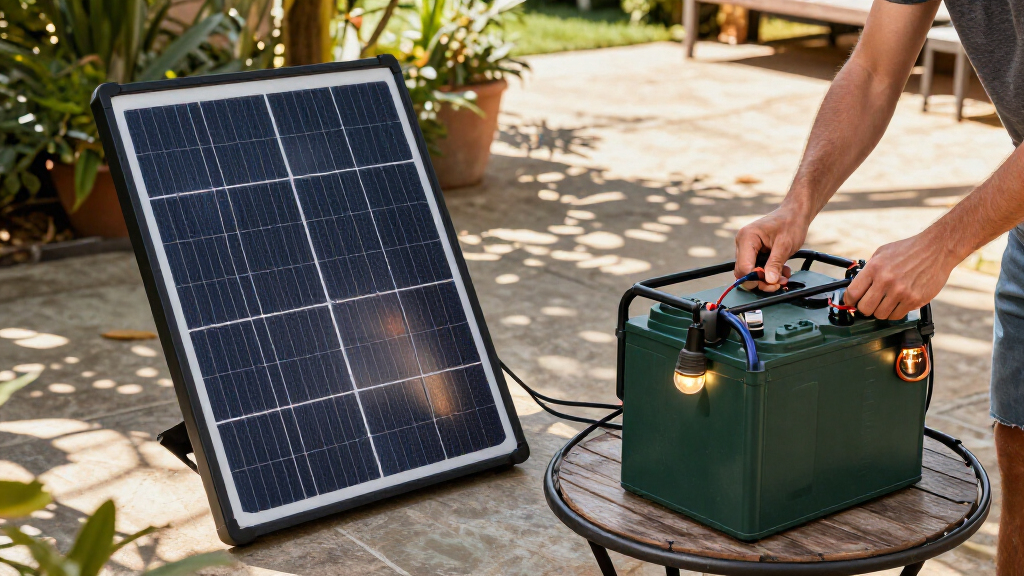
I evaluated these solar generators by prioritizing three core metrics: usable energy capacity, peak AC output, and battery chemistry longevity. I filtered out units with misleading marketing wattages, focusing instead on continuous output ratings that reliably support common appliances like coffee makers or mini-fridges. Units were ranked higher if they offered clear pathways for expansion or demonstrated robust build quality suitable for outdoor environments.
Additionally, I assessed the practicality of the included solar panels. Many budget kits include panels that are too small to charge the battery efficiently within a single day, a flaw I heavily penalized. The final ranking reflects a balance between value, performance consistency, and the specific use-case suitability of each model, ensuring recommendations align with actual buyer needs rather than just spec sheets.
Factors to Consider When Choosing Solar Generators With Battery Storage
Choosing the right solar generator involves more than just picking the highest number on the spec sheet. Here are the critical factors that influence performance and value.
Understanding Watt-Hours vs. Continuous Output
Many buyers confuse Watt-Hours (Wh) with Watts (W), leading to poor purchasing decisions. Watt-hours represent the total fuel in the tank, determining how long a device runs, while Watts represent the power available at any given moment. A unit with high Wh but low W cannot run a microwave or hair dryer, regardless of battery size. Always check the continuous output rating, not just the surge rating, to ensure your essential appliances will actually start. For general camping, 1500W continuous is a safe benchmark for most kitchen appliances, while 3000W+ is needed for heavy-duty tools or home backup.
Battery Chemistry: Li-ion vs. LiFePO4
The type of battery inside the generator dictates its lifespan and safety profile. Traditional Lithium-ion (NMC) batteries are lighter and often cheaper but typically degrade after 500-800 charge cycles. In contrast, Lithium Iron Phosphate (LiFePO4) batteries, seen in models like the Daran and Dyness, offer 2000-3000 cycles, lasting nearly four times longer. While LiFePO4 units are heavier and cost more upfront, they provide better long-term value for users who charge their generator frequently. If you only use the unit twice a year, Li-ion may suffice; for daily use, LiFePO4 is the superior choice.
The Reality of Solar Charging Speeds
Marketing materials often quote ‘fastest’ charge times under ideal laboratory conditions, which rarely reflect reality. A 100W solar panel in direct noon sun might deliver only 60-70W of actual power due to heat, angle, and atmospheric conditions. Undersized panels are a common trap in budget bundles; if the panel provides only 10-15% of the battery’s capacity per hour, a full charge could take over a day. Look for generators that support AC charging as a primary method, using solar only for top-ups or extended off-grid stays, unless you invest in larger, more expensive panel arrays.
Portability and Ergonomic Design
A powerful generator is useless if it is too heavy to move safely. Units under 1000Wh generally weigh between 20-25 lbs, making them manageable for car camping or tailgating. However, models like the Jackery HomePower 3600 Plus can weigh over 80 lbs, requiring two people or wheeled carts for relocation. Check for integrated handles, wheel kits, and stackable designs. If you plan to move the unit frequently, prioritize ergonomic features over marginal gains in capacity. For stationary home backup, weight matters less than footprint and noise levels.
Input/Output Versatility and Expansion
Consider how many devices you need to run simultaneously and what types of ports are available. A unit with only two AC outlets may force you to use power strips, which can be cumbersome and less safe. Look for generators with USB-C Power Delivery ports for fast laptop charging and multiple DC outputs for 12V accessories like coolers or lights. Some premium models offer expansion capabilities, allowing you to add extra battery modules to increase capacity later. This scalability protects your investment if your power needs grow over time.
Frequently Asked Questions
Can a solar generator run a refrigerator?
Yes, but you need sufficient capacity and the right output rating. A standard household refrigerator requires about 100-200W continuous but may surge to 1200W when the compressor starts. Therefore, you need a generator with at least 1500W continuous output and a capacity of 1000Wh or more to run it for 10-15 hours. Smaller units like the Jackery Explorer 300 will struggle with the startup surge and drain quickly. Always check the specific startup wattage of your appliance before purchasing.
How long do solar generator batteries last?
The lifespan depends heavily on the battery chemistry. Lithium-ion batteries typically last 500-800 full charge cycles before degrading to 80% capacity, which translates to roughly 2-3 years of weekly use. LiFePO4 batteries, found in models like the Daran 89.6Wh or Dyness 300W, can last 2000-3000 cycles, offering 5-10 years of regular use. Proper storage, avoiding extreme temperatures, and not leaving the battery fully depleted for long periods will further extend the life of any solar generator.
Is it worth buying a solar generator with a bundled panel?
Bundled panels are often convenient but may be undersized for the battery capacity. For example, pairing a 1000Wh generator with a 40W panel means a full charge could take over 25 hours of ideal sunlight. If you primarily use AC charging at home, the bundled panel is a nice bonus for emergencies. However, if you plan to rely on solar for daily recharging, it is often better to buy the generator separately and purchase a larger, more efficient solar panel kit that matches your charging speed needs.
Can I use a solar generator indoors?
Yes, solar generators are safe for indoor use because they produce no emissions, fumes, or carbon monoxide, unlike gas generators. They operate silently, making them ideal for apartment backup power or bedroom use during storms. However, ensure the unit has adequate ventilation to prevent overheating, especially when running high-wattage appliances. Always place the unit on a hard, flat surface away from flammable materials, and avoid using it in wet conditions unless it is explicitly rated for water resistance.
What is the difference between a portable power station and a solar generator?
A portable power station is the battery unit itself, which can be charged via AC wall outlets, car chargers, or solar panels. A solar generator is technically a bundle that includes both the portable power station and compatible solar panels. In practical terms, the terms are often used interchangeably. The key distinction for buyers is checking if the product includes panels. Some listings sell only the battery unit, requiring you to buy solar panels separately, which can lead to compatibility issues if not matched correctly.
Conclusion
Selecting the right solar generator depends entirely on your intended use case. For best overall home backup, the Jackery HomePower 3600 Plus provides the capacity and power needed for essential appliances, though it comes at a premium price and weight. If you seek the best value for camping, the EF ECOFLOW DELTA 3 Classic offers an excellent balance of 1024Wh capacity, fast charging, and versatile output, making it ideal for weekend trips and moderate backup needs. For beginners or light emergency use, the Jackery Explorer 300 is the most accessible entry point, offering reliable performance for charging devices without the bulk or cost of larger units. Those prioritizing long-term durability should look at LiFePO4 models like the Daran 89.6Wh or Dyness 300W, which offer superior cycle life for frequent users. Finally, for budget-conscious buyers, the Takki 250W serves as a basic emergency kit, provided you accept its limited capacity and slower solar charging speeds.