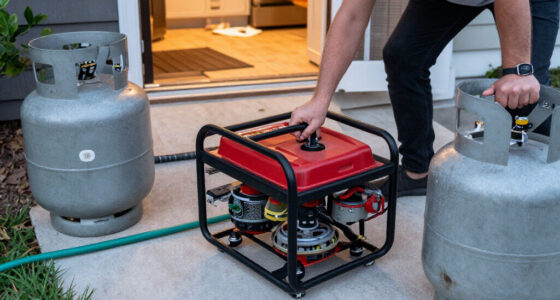
Choosing the right dual fuel portable generator means balancing raw power output against portability and noise levels. The DuroMax XP13000EH stands out as the best overall choice for those needing massive backup capacity, capable of running entire homes on either gasoline or propane. For campers and RV owners prioritizing quiet operation, the PowerSmart 3800-Watt Inverter offers clean power without the deafening roar of traditional open-frame units. Most buyers struggle with deciding between high-wattage open-frame models that require heavy lifting and lighter inverter models that may lack the surge capacity for heavy appliances. This guide breaks down the specific tradeoffs in fuel consumption, noise, and usability to help you match a generator to your actual load requirements.

Get backup power and energy gear delivered free with Prime
- Fast, free delivery on millions of items
- Prime Video, Amazon Music and more included
- Member-only deals all year
Complete the kit


Key Takeaways
- Inverter models like the WEN DF680iX offer cleaner power for sensitive electronics but often cost more per watt than open-frame units like the DuroMax XP5500HX.
- Propane efficiency drops noticeably in extreme cold, making gasoline a more reliable fuel source for winter storm preparedness in northern climates.
- Open-frame generators dominate the high-wattage segment (above 8,000 watts), while inverters generally cap out around 6,800 watts before becoming prohibitively heavy.
- Models with CO sensors, such as the Westinghouse WGen9500DFc, automatically shut off when carbon monoxide levels rise, adding a critical layer of home safety.
- Electric start reliability varies significantly by brand; Westinghouse and DuroMax models showed consistent starting performance compared to budget-focused alternatives.
| DuroMax XP13000EH 13,000-Watt Dual-Fuel Portable Generator |  | Best for High-Demand Backup | Fuel: Gasoline or propane | Running wattage: 10,500 watts | Starting wattage: 13,000 watts | VIEW LATEST PRICE | See Our Full Breakdown |
| PowerSmart 3800-Watt Dual-Fuel Inverter Generator |  | Best for Quiet, Lightweight Use | Fuel: Gasoline or propane | Running wattage: 3,300 watts on gasoline; 3,100 watts on propane | Starting wattage: 3,800 watts on gasoline; 3,500 watts on propane | VIEW LATEST PRICE | See Our Full Breakdown |
| Westinghouse WGen5300DFcv Dual-Fuel Portable Generator with CO Sensor |  | Best for Straightforward Home and RV Backup | Fuel: Gasoline or propane | Running wattage: 5,300 watts on gasoline; 4,800 watts on propane | Peak wattage: 6,500 watts on gasoline; 5,800 watts on propane | VIEW LATEST PRICE | See Our Full Breakdown |
| WEN DF680iX 6800-Watt Dual-Fuel Portable Inverter Generator |  | Best for Inverter Power with 240V Output | Fuel: Gasoline or propane | Engine: 224cc | Gasoline output: 5,100 rated watts; 6,800 surge watts | VIEW LATEST PRICE | See Our Full Breakdown |
| WEN DF360iX Dual-Fuel 3600-Watt Portable Inverter Generator |  | Best Compact Pick for RV Trips | Fuel: Gasoline or propane | Engine displacement: 149cc | Surge wattage: 3,600 watts on gasoline; 3,500 watts on propane | VIEW LATEST PRICE | See Our Full Breakdown |
| Westinghouse WGen9500DFc Dual-Fuel Portable Generator with Remote Start and CO Sensor |  | Best Overall for High-Output Backup | Fuel: Gasoline or propane | Running output: 9,500 watts gasoline; 8,500 watts propane | Peak output: 12,500 watts gasoline; 11,200 watts propane | VIEW LATEST PRICE | See Our Full Breakdown |
| WEN DF8000X 8000-Watt Dual-Fuel Portable Generator with Electric Start |  | Best Midrange Home-Backup Pick | Fuel: Gasoline and propane | Running output: 6,500 watts gasoline; 5,850 watts propane | Starting output: 8,000 watts gasoline; 7,200 watts propane | VIEW LATEST PRICE | See Our Full Breakdown |
| Westinghouse WGen9500DF Dual Fuel Portable Generator, 12,500-Watt Peak |  | Best High-Output Pick Without a Listed CO Sensor | Fuel: Gasoline or propane | Running output: 9,500 watts gasoline; 8,500 watts propane | Starting output: 12,500 watts gasoline; 11,200 watts propane | VIEW LATEST PRICE | See Our Full Breakdown |
| WEN DF480iX 4,800-Watt Dual-Fuel Portable Inverter Generator |  | Best for Sensitive Electronics and Quieter Use | Fuel: Gasoline or propane | Surge output: 4,800 watts gasoline; 4,320 watts propane | Engine: 224 cc, 4-stroke | VIEW LATEST PRICE | See Our Full Breakdown |
| DuroMax XP5500HX 5,500-Watt Dual-Fuel Portable Generator |  | Best for Basic Backup with a Longer Listed Warranty | Fuel: Gasoline or propane | Starting output: 5,500 watts | Running output: 4,500 watts | VIEW LATEST PRICE | See Our Full Breakdown |
| Westinghouse WGen3600DFcv Dual-Fuel Portable Generator |  | Best for Safety-Conscious RV Campers | Running Watts (Gas): 3,600 | Peak Watts (Gas): 4,650 | Fuel Tank: 4 gallons | VIEW LATEST PRICE | See Our Full Breakdown |
| Westinghouse WGen3600DFc Dual-Fuel Portable Generator |  | Best Convenience for Home Backup | Running Watts (Gas): 3,600 | Peak Watts (Gas): 4,650 | Fuel Tank: 4 gallons | VIEW LATEST PRICE | See Our Full Breakdown |
| Westinghouse WGen11500DFc Dual Fuel Portable Generator | 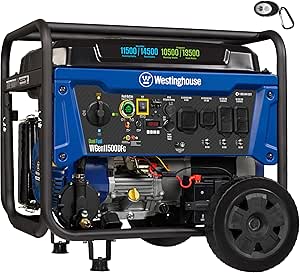 | Best High-Capacity Whole-Home Backup | Running Watts (Gas): 11,500 | Peak Watts (Gas): 14,500 | Fuel Tank: 9.5 gallons | VIEW LATEST PRICE | See Our Full Breakdown |
| dual fuel portable generator | Engine | Runtime | Fuel | Outlets |
|---|---|---|---|---|
| DuroMax XP13000EH 13,000-Watt | 500cc, 4-stroke OHV | 3 hours (listed) | Gasoline or propane | — |
| PowerSmart 3800-Watt Dual-Fuel | 149cc | Up to 8 hours at 25% load on gasoline; up to 24 hours on a 20-pound propane tank | Gasoline or propane | — |
| Westinghouse WGen5300DFcv Dual | 274cc, 4-stroke OHV | Up to 14.5 hours | Gasoline or propane | 120V duplex, TT-30R 30A, and L14-30R 30A |
| WEN DF680iX 6800-Watt Dual-Fue | 224cc | Up to 6.1 hours at half load on gasoline; up to 9 hours on a 20-pound LPG tank | Gasoline or propane | L14-30R, two 120V three-prong, TT-30R RV, 12V DC, and two USB |
| WEN DF360iX Dual-Fuel 3600-Wat | — | Up to 5 hours at half load on gasoline; up to 14 hours at half load on a 20-pound LPG tank | Gasoline or propane | Two 120V NEMA 5-20R, one TT-30R RV, one 12V DC, and two USB |
| Westinghouse WGen9500DFc Dual- | 457 cc, 4-stroke OHV | Up to 12 hours | Gasoline or propane | — |
| WEN DF8000X 8000-Watt Dual-Fue | 340 cc | Up to 10.5 hours at half load | Gasoline and propane | Four 120V 20A; one 120V 30A RV; one 120V/240V 30A transfer-switch-ready; one 12V DC |
| Westinghouse WGen9500DF Dual F | 457 cc, 4-stroke OHV | Up to 12 hours | Gasoline or propane | Two GFCI 120V 20A; one 120V 30A L14-30R; one 120/240V 50A 14-50R |
| WEN DF480iX 4,800-Watt Dual-Fu | 224 cc, 4-stroke | Up to 7 hours at half load on gasoline; up to 20 hours at half load on a 20-pound LPG tank | Gasoline or propane | Four 120V NEMA 5-20R; one 120V TT-30R RV; one 12V DC; two 5V USB |
| DuroMax XP5500HX 5,500-Watt Du | 210 cc OHV-V, 4-stroke | 15 hours; load condition not specified | Gasoline or propane | — |
| Westinghouse WGen3600DFcv Dual | 212cc OHV | — | — | 1x 5-20R, 1x TT-30R, 1x L5-30R |
| Westinghouse WGen3600DFc Dual- | 212cc OHV | — | — | 1x 5-20R, 1x TT-30R, 1x L5-30R |
| Westinghouse WGen11500DFc Dual | 550cc OHV | Up to 19 hours (25% load) | — | 1x L14-30R, 1x 14-50R |
More Details on Our Top Picks
DuroMax XP13000EH 13,000-Watt Dual-Fuel Portable Generator
When a dual-fuel generator needs to cover large backup loads, the DuroMax XP13000EH stands apart in this group: its 10,500 running watts on gasoline and 13,000 starting watts give it much more capacity than the Westinghouse WGen5300DFcv or the inverter models here. The 50-amp transfer-switch-ready outlet also suits a home setup better than the 30-amp connections on those smaller options. Its all-metal frame, copper windings, and no-flat tires point toward a rugged, moveable design, while electric start simplifies getting it running. The tradeoff is substantial: at 234 pounds, this is not a generator to lift into a vehicle alone. The listed three-hour runtime also makes fuel planning a concern, and the supplied tank-volume figure is unusually small, so buyers should verify the fuel-capacity details before relying on it for long outages.
Pros:- 10,500 running watts on gasoline for substantial backup loads
- Runs on gasoline or propane
- 50-amp transfer-switch-ready outlet supports home backup connections
- All-metal frame, copper windings, and no-flat tires emphasize durability and mobility
Cons:- 234-pound weight makes loading and repositioning difficult without assistance
- Listed runtime is only three hours, which may require frequent fuel stops
- The listed 0.5-gallon tank volume appears inconsistent with the output and runtime figures and merits verification
Best for: Homeowners who need high starting and running capacity for multiple backup loads and have a transfer-switch setup plus help moving a heavy generator.
Not ideal for: Campers, solo users, and buyers who need long stretches of operation without refueling; its 234-pound weight and listed three-hour runtime work against those needs.
- Fuel:Gasoline or propane
- Running wattage:10,500 watts
- Starting wattage:13,000 watts
- Engine:500cc, 4-stroke OHV
- Voltage:240 volts
- Runtime:3 hours (listed)
- Weight:234 pounds
- Starting system:Electric start
Our verdict“Choose the XP13000EH for high-demand home backup when output matters more than easy handling or long refueling intervals.”
PowerSmart 3800-Watt Dual-Fuel Inverter Generator
The PowerSmart 3800-Watt inverter is the lighter, quieter alternative to conventional open-frame choices such as the Westinghouse WGen5300DFcv. At 50.7 pounds and 59 dBA at 25% load in Eco Mode, it is easier to transport and less intrusive at a campsite, though its 3,300 gasoline running watts cannot match the Westinghouse’s 5,300. Its inverter format, parallel-ready design, and mix of AC, DC, and USB outlets fit recreational use and modest backup needs; a 30A twist-lock outlet adds flexibility beyond basic household plugs. The fuel figures also favor propane for extended light-load operation, with up to 24 hours on a 20-pound tank, while the 1.3-gallon gasoline tank limits gasoline runtime to up to eight hours at 25% load. Buyers needing 240-volt output or heavier home-backup capacity should choose a different model.
Pros:- 50.7-pound weight is easier to carry and stow than larger conventional generators
- 59 dBA at 25% load in Eco Mode supports quieter recreational use
- Runs on gasoline or propane, with up to 24 hours listed on a 20-pound propane tank
- Includes a 30A twist-lock outlet, household outlet, DC port, and USB ports
Cons:- 120V output does not suit equipment or setups requiring 240 volts
- 1.3-gallon gasoline tank limits runtime to up to eight hours at 25% load
- Running wattage is well below the Westinghouse WGen5300DFcv and other larger backup-oriented models
Best for: Campers and tailgaters who want a comparatively quiet, manageable dual-fuel inverter with USB charging and a 30A connection.
Not ideal for: Households needing 240-volt backup or enough output for larger loads; this model is 120V only and has less running capacity than the WGen5300DFcv.
- Fuel:Gasoline or propane
- Running wattage:3,300 watts on gasoline; 3,100 watts on propane
- Starting wattage:3,800 watts on gasoline; 3,500 watts on propane
- Noise level:59 dBA at 25% load in Eco Mode
- Engine:149cc
- Voltage:120 volts
- Weight:50.7 pounds
- Fuel tank capacity:1.3 gallons
- Runtime:Up to 8 hours at 25% load on gasoline; up to 24 hours on a 20-pound propane tank
Our verdict“Pick the PowerSmart for portable, quieter 120V power rather than whole-home loads or 240V equipment.”
Westinghouse WGen5300DFcv Dual-Fuel Portable Generator with CO Sensor
The Westinghouse WGen5300DFcv occupies a practical middle ground: it delivers more gasoline running power than the PowerSmart 3800-Watt inverter, while avoiding the DuroMax XP13000EH’s substantial weight and high output. Its 5,300 running watts, selectable 120/240V output, and 30A RV-ready and transfer-switch-ready connections suit an RV or a modest home backup setup. A 4.7-gallon tank supports up to 14.5 hours of operation, reducing—but not eliminating—refueling interruptions. CO shutdown and low-oil protection add useful safeguards, and the included wheel kit helps with movement after assembly. This is a conventional generator rather than a compact inverter, so it is less suited to buyers prioritizing low noise or easy transport. Its listed runtime is also finite, and larger homes with heavier simultaneous loads will be better matched to a higher-output model.
Pros:- 5,300 running watts on gasoline provide more capacity than the PowerSmart 3800-Watt inverter
- Selectable 120/240V output with RV-ready and transfer-switch-ready 30A outlets
- 4.7-gallon tank supports up to 14.5 hours of listed runtime
- CO shutdown and automatic low-oil shutdown add safety protections
Cons:- Requires minimal assembly before use
- Conventional generator design is less suitable for buyers prioritizing quiet inverter operation
- Up to 14.5 hours of runtime still means refueling during extended outages
Best for: RV owners and households seeking midrange dual-fuel capacity, 120/240V flexibility, and 30A connections for an RV or transfer switch.
Not ideal for: Buyers who need quiet inverter-style operation, a very light generator, or enough output for high-demand whole-home backup.
- Fuel:Gasoline or propane
- Running wattage:5,300 watts on gasoline; 4,800 watts on propane
- Peak wattage:6,500 watts on gasoline; 5,800 watts on propane
- Engine:274cc, 4-stroke OHV
- Voltage:120/240V selector
- Fuel tank capacity:4.7 gallons
- Runtime:Up to 14.5 hours
- Outlets:120V duplex, TT-30R 30A, and L14-30R 30A
Our verdict“Choose the WGen5300DFcv for midrange home or RV backup when 120/240V flexibility matters more than inverter quietness.”
WEN DF680iX 6800-Watt Dual-Fuel Portable Inverter Generator
The WEN DF680iX is the lineup’s more capable inverter choice for buyers who need both cleaner power and 120/240V output. It provides 5,100 rated watts on gasoline and includes an L14-30R outlet, making it a more flexible fit for some backup setups than the 120V-only PowerSmart 3800-Watt inverter. Its RV outlet, USB ports, electric start, and pure sine wave output also cover a range of recreational and electronics needs. Wheels and a telescoping handle help with movement, but this is still a sizable generator rather than a carry-to-the-campsite unit. At 64 decibels at quarter load, it is not as quiet as the PowerSmart’s 59 dBA figure. Gasoline runtime is up to 6.1 hours at half load, and buyers seeking 240V parallel operation must purchase a separate connection kit.
Pros:- Pure sine wave output is suited to sensitive electronics
- Rated output of 5,100 watts on gasoline with 120/240V capability
- Includes an RV outlet, standard outlets, USB, and 12V DC connections
- Wheels and telescoping handle make repositioning easier
Cons:- Gasoline runtime is up to 6.1 hours at half load
- At 64 decibels at quarter load, it is louder than the PowerSmart 3800-Watt inverter
- 240V parallel connection kit is sold separately
Best for: RV users and homeowners who want inverter-style power, 120/240V capability, and useful mobility aids in one dual-fuel generator.
Not ideal for: Buyers who want a lightweight, especially quiet camping generator or long gasoline runtime between refills.
- Fuel:Gasoline or propane
- Engine:224cc
- Gasoline output:5,100 rated watts; 6,800 surge watts
- Propane output:4,500 rated watts; 6,000 surge watts
- Voltage:120V/240V
- Noise level:64 decibels at quarter load
- Runtime:Up to 6.1 hours at half load on gasoline; up to 9 hours on a 20-pound LPG tank
- Outlets:L14-30R, two 120V three-prong, TT-30R RV, 12V DC, and two USB
- Warranty:Three years
Our verdict“Pick the DF680iX when you need inverter output and 120/240V flexibility, and can accept moderate runtime and noise.”
WEN DF360iX Dual-Fuel 3600-Watt Portable Inverter Generator
At 49 pounds, the WEN DF360iX is the easiest option here to handle as a compact inverter, and its TT-30R outlet makes it more RV-oriented than a generator with only household receptacles. It also supplies clean power for sensitive electronics and can run on gasoline or propane, giving travelers a choice between a small onboard tank and a 20-pound LPG cylinder. Compared with the PowerSmart 3800-Watt inverter, it is slightly lower in gasoline starting output and has a shorter listed gasoline runtime—up to five hours at half load. Its 65 dB noise figure is also higher than the PowerSmart’s 59 dBA at 25% load, though the different load ratings make direct comparison imperfect. This is a 120V unit, not a substitute for 240V home backup, and parallel operation requires a separate kit.
Pros:- 49-pound weight is the lightest in this five-product group
- Clean inverter power supports sensitive electronics
- TT-30R RV outlet sits alongside household, USB, and 12V DC outlets
- Runs on gasoline or propane and includes CO shutdown protection
Cons:- Gasoline runtime is up to five hours at half load
- 120V output does not support 240V appliances or connections
- Parallel connection kit is sold separately
Best for: RV travelers and campers who want a 49-pound dual-fuel inverter with a TT-30R outlet and clean power for electronics.
Not ideal for: Homeowners needing 240V output or extended gasoline operation, and buyers who prioritize the quieter 59 dBA rating of the PowerSmart inverter.
- Fuel:Gasoline or propane
- Engine displacement:149cc
- Surge wattage:3,600 watts on gasoline; 3,500 watts on propane
- Voltage:120V
- Fuel tank capacity:1.5 gallons
- Runtime:Up to 5 hours at half load on gasoline; up to 14 hours at half load on a 20-pound LPG tank
- Noise level:65 dB at quarter load
- Weight:49 pounds
- Outlets:Two 120V NEMA 5-20R, one TT-30R RV, one 12V DC, and two USB
Our verdict“Choose the DF360iX for portable RV and camping power when low weight and clean output outweigh longer gasoline runtime.”
Westinghouse WGen9500DFc Dual-Fuel Portable Generator with Remote Start and CO Sensor
I rank the WGen9500DFc first for buyers who want substantial home-backup capacity without giving up fuel choice. It supplies 9,500 running watts on gasoline and 8,500 on propane, with a 50A outlet for compatible transfer equipment and an RV-ready connection. Remote, electric, and recoil starting offer practical ways to get it running, while the CO sensor with automatic shutdown adds a layer of protection during operation. Compared with the WEN DF8000X, this Westinghouse provides more output and a larger 50A connection, but it is also far heavier at 212.1 pounds. Its 6.6-gallon tank runs for up to 12 hours, so extended outages still require refueling. I’d choose it for capacity and connection flexibility, not easy solo handling.
Pros:- High running output on both gasoline and propane
- Remote, electric, and recoil starting options
- 50A outlet supports compatible transfer-switch connections
- CO sensor, low-oil shutdown, and GFCI outlets
Cons:- Heavy at 212.1 pounds, despite its portable-generator designation
- Gasoline runtime is limited to up to 12 hours per tank
- Requires some assembly before use
Best for: Homeowners seeking high-output backup power with a 50A connection, multiple starting options, and gasoline-or-propane flexibility.
Not ideal for: Campers or buyers who need to move a generator alone; its 212.1-pound weight makes frequent relocation difficult.
- Fuel:Gasoline or propane
- Running output:9,500 watts gasoline; 8,500 watts propane
- Peak output:12,500 watts gasoline; 11,200 watts propane
- Engine:457 cc, 4-stroke OHV
- Fuel tank:6.6 gallons
- Runtime:Up to 12 hours
- Starting methods:Remote, electric, and recoil
- Weight:212.1 pounds
- Safety and display:CO sensor with automatic shutdown, low-oil shutdown, GFCI outlets; voltage, frequency, and lifetime-hours display
Our verdict“Choose the WGen9500DFc for high-output home backup and flexible connections if its weight is manageable for your setup.”
WEN DF8000X 8000-Watt Dual-Fuel Portable Generator with Electric Start
The WEN DF8000X makes sense for buyers who need a useful mix of household and RV connections but do not need the WGen9500DFc’s higher output. It delivers 6,500 running watts on gasoline or 5,850 on propane, and its 120V/240V transfer-switch-ready outlet supports compatible backup setups. Electric start keeps routine startup straightforward, with recoil backup if needed; the included wheel and handle kit helps when moving it around a driveway or garage. Compared with the Westinghouse WGen9500DFc, the WEN is a lower-output alternative, but its listed 212-pound weight is not provided here, so portability should not be assumed from the wheel kit alone. Runtime reaches 10.5 hours at half load on gasoline. Propane output is lower, and the 8,000-watt starting figure applies only to gasoline.
Pros:- Dual-fuel operation offers a choice of gasoline or propane
- Electric start with recoil backup
- 120V/240V transfer-switch-ready outlet and RV outlet
- Wheel and handle kit aids repositioning
Cons:- Running output falls to 5,850 watts on propane
- Up to 10.5 hours of runtime is specified at half load, not full load
- Less running capacity than the Westinghouse WGen9500DFc
Best for: Households that need midrange backup capacity, a transfer-switch-ready outlet, and wheels for occasional repositioning.
Not ideal for: Buyers planning to run heavier loads on propane or seeking the higher output and 50A outlet of the Westinghouse WGen9500DFc.
- Fuel:Gasoline and propane
- Running output:6,500 watts gasoline; 5,850 watts propane
- Starting output:8,000 watts gasoline; 7,200 watts propane
- Engine:340 cc
- Fuel tank:6.7 gallons
- Runtime:Up to 10.5 hours at half load
- Starting system:Electric start with recoil backup
- Outlets:Four 120V 20A; one 120V 30A RV; one 120V/240V 30A transfer-switch-ready; one 12V DC
- Safety:CO shutdown sensor
Our verdict“Pick the DF8000X for midrange backup needs and useful outlet variety, but look to the WGen9500DFc for more capacity.”
Westinghouse WGen9500DF Dual Fuel Portable Generator, 12,500-Watt Peak
The WGen9500DF is a strong fit for buyers prioritizing high output and connection options: it provides 9,500 running watts on gasoline, 8,500 on propane, and a 50A outlet alongside household and RV connections. Remote, electric, and recoil starting give it more startup flexibility than the electric-start-only DuroMax XP5500HX. Its 457cc engine and 6.6-gallon tank support up to 12 hours of runtime, though that figure does not remove the need to plan for refueling during a long outage. Unlike the closely related WGen9500DFc in this lineup, the supplied product data does not list a CO sensor, so buyers who want that specific automatic shutdown feature should favor the DFc. The included wheels, handle, oil, tools, and battery charger make setup more complete, but it remains a large, heavy machine.
Pros:- 9,500 running watts on gasoline and 8,500 on propane
- Remote, electric, and recoil starting
- 50A outlet plus household and RV connections
- Package includes wheels, handle, battery charger, oil, and tools
Cons:- CO sensor is not listed in the supplied product data, unlike the WGen9500DFc
- Up to 12 hours of runtime still means refueling during longer outages
- High-output format is less suited to frequent carrying or compact storage
Best for: Homeowners who need high dual-fuel output, a 50A connection, and a package that includes basic setup accessories.
Not ideal for: Buyers who require a listed CO sensor with automatic shutdown or need a generator that is easy to lift and store.
- Fuel:Gasoline or propane
- Running output:9,500 watts gasoline; 8,500 watts propane
- Starting output:12,500 watts gasoline; 11,200 watts propane
- Engine:457 cc, 4-stroke OHV
- Fuel tank:6.6 gallons
- Runtime:Up to 12 hours
- Starting methods:Remote, electric, and recoil
- Outlets:Two GFCI 120V 20A; one 120V 30A L14-30R; one 120/240V 50A 14-50R
- Warranty:3-year limited warranty
Our verdict“Choose the WGen9500DF for high output and included setup accessories, but choose the WGen9500DFc if a listed CO shutdown sensor is a priority.”
WEN DF480iX 4,800-Watt Dual-Fuel Portable Inverter Generator
The WEN DF480iX serves a different purpose from the large open-frame Westinghouse models: its inverter design provides clean power for sensitive electronics in a more compact, lower-output package. It offers up to 4,800 surge watts on gasoline and 4,320 on propane, with a 120V RV outlet, household outlets, DC, and USB connections. At a listed 62 dB at quarter load, it is a better match for campsites or quieter backup needs than the WGen9500DFc, though it cannot replace that model’s capacity for larger household loads. Electric start and recoil backup add flexibility, and the telescoping handle and wheels help with transport. The tradeoff is short gasoline runtime—up to seven hours at half load—and buyers who want parallel operation must purchase the connection kit separately.
Pros:- Inverter output is designed for sensitive electronics
- Gasoline and propane operation with different runtime options
- CO shutdown, low-oil and low-fuel shutdown, and overload protection
- Wheels and telescoping handle support transport
Cons:- Lower output than the WEN DF8000X and the large Westinghouse models
- Gasoline runtime is up to seven hours at half load
- Parallel connection kit is sold separately
Best for: RV owners and electronics users who want inverter power, a 120V RV outlet, and a portable dual-fuel option for moderate loads.
Not ideal for: Households seeking whole-home or high-wattage backup; its output is far below the WGen9500DFc, and parallel equipment costs extra.
- Fuel:Gasoline or propane
- Surge output:4,800 watts gasoline; 4,320 watts propane
- Engine:224 cc, 4-stroke
- Noise level:62 dB at quarter load
- Gasoline tank:1.9 gallons
- Runtime:Up to 7 hours at half load on gasoline; up to 20 hours at half load on a 20-pound LPG tank
- Starting system:Keyless electric start with recoil backup
- Outlets:Four 120V NEMA 5-20R; one 120V TT-30R RV; one 12V DC; two 5V USB
- Safety:CO shutdown sensor, low-oil and low-fuel shutdown, and overload protection
Our verdict“Choose the DF480iX for cleaner inverter power and RV-oriented portability, not for large home-backup loads.”
DuroMax XP5500HX 5,500-Watt Dual-Fuel Portable Generator
The DuroMax XP5500HX is a straightforward dual-fuel choice for buyers whose needs fall below the WEN DF8000X’s midrange capacity. Its 4,500 running watts suit a smaller set of backup loads, while the listed 5,500 starting watts give connected equipment some startup headroom. Electric start, CO Alert, GFCI household outlets, and a 120/240V twist-lock outlet cover useful basics; the MX2 switch adds outlet-use flexibility. At 131 pounds, it is lighter than the 212.1-pound WGen9500DFc, but still heavy enough that the foldable handle does not make it an easy carry. The listed 15-hour runtime is a plus, though the supplied data does not state the load for that figure. Buyers wanting more output should step up to the WEN DF8000X; those wanting cleaner inverter power should look at the WEN DF480iX.
Pros:- Runs on gasoline or propane
- Electric start and CO Alert
- 120/240V twist-lock outlet and GFCI household outlets
- Five-year warranty and foldable handle
Cons:- 4,500 running watts limits the number of larger loads it can support
- At 131 pounds, it remains difficult to carry despite the foldable handle
- The stated 15-hour runtime does not specify its load condition
Best for: Buyers needing moderate backup capacity, electric start, dual-fuel flexibility, and a listed five-year warranty.
Not ideal for: Households with larger simultaneous loads or users who need a lightweight generator for frequent carrying; it weighs 131 pounds and runs at 4,500 watts.
- Fuel:Gasoline or propane
- Starting output:5,500 watts
- Running output:4,500 watts
- Engine:210 cc OHV-V, 4-stroke
- Fuel tank:4 gallons
- Runtime:15 hours; load condition not specified
- Starting system:Electric start
- Weight:131 pounds
- Warranty:5 years
Our verdict“Choose the XP5500HX for moderate backup needs and its listed five-year warranty, but move up to the WEN DF8000X for more running capacity.”
Westinghouse WGen3600DFcv Dual-Fuel Portable Generator
This model stands out for its integrated carbon monoxide shutdown, a critical feature for anyone operating a generator near living spaces. While the Wen DF360iX offers a quieter, inverter-based alternative, this Westinghouse unit provides the raw durability and RV-ready TT-30R outlet that campers often need for high-draw appliances. The digital readout simplifies monitoring voltage and frequency, removing guesswork during operation. However, be aware that propane runtime drops compared to gasoline, and the unit requires some initial assembly. It is a robust middle-ground choice for those who prioritize safety features over the compact size of inverter models.
Pros:- Automatic CO and low-oil shutdown prevent dangerous operation
- TT-30R outlet allows direct connection to RV power cords
- Digital display provides real-time voltage and frequency data
Cons:- Requires manual assembly of wheels and handle
- Propane output is noticeably lower than gasoline output
- Open-frame design is louder than inverter competitors
Best for: RV owners and campers who need reliable power with built-in CO protection and direct plug-in compatibility for travel trailers.
Not ideal for: Users seeking a silent operation for tailgating or tight campsite settings, as this is an open-frame design rather than an inverter.
- Running Watts (Gas):3,600
- Peak Watts (Gas):4,650
- Fuel Tank:4 gallons
- Runtime (Gas):Up to 14 hours
- Engine:212cc OHV
- Outlets:1x 5-20R, 1x TT-30R, 1x L5-30R
- Safety Features:CO Shutdown, Low-Oil Shutdown
- Warranty:3-Year Limited
Our verdict“Choose this if you need a rugged, RV-compatible generator with essential safety shutoffs and don’t mind a bit of assembly.”
Westinghouse WGen3600DFc Dual-Fuel Portable Generator
The defining advantage of this unit over the WGen3600DFcv is the inclusion of electric and remote start. This eliminates the physical effort of pulling a recoil cord, which is particularly beneficial if you are storing the generator in a garage or basement during a storm. It shares the same 3,600 running watts and RV-ready outlets as its sibling, making it equally capable for camping. However, the remote start functionality adds complexity, requiring battery maintenance and occasional troubleshooting if the signal fails. For homeowners who value ease of access during emergency outages, this convenience outweighs the slight increase in mechanical complexity.
Pros:- Wireless remote and electric push-button start for easy ignition
- Dual-fuel capability allows switching between gas and propane on the fly
- Never-flat wheels and extendable handle improve portability
Cons:- Electric start system requires battery upkeep and is more complex than recoil
- Propane runtime specifications are less detailed than gasoline
- Assembly is required for wheels and handle setup
Best for: Homeowners using the generator for occasional backup power who want the ease of push-button or remote ignition without leaving shelter.
Not ideal for: Users who prefer minimal maintenance and simplicity, as the electric start system adds components that can fail or require battery replacement.
- Running Watts (Gas):3,600
- Peak Watts (Gas):4,650
- Fuel Tank:4 gallons
- Runtime (Gas):Up to 14 hours
- Engine:212cc OHV
- Outlets:1x 5-20R, 1x TT-30R, 1x L5-30R
- Starting System:Electric & Remote
- Warranty:3-Year Limited
Our verdict“This is the smarter buy for home backup scenarios where remote starting saves time and physical effort.”
Westinghouse WGen11500DFc Dual Fuel Portable Generator
This powerhouse delivers 11,500 running watts, dwarfing the capacity of the DuroMax XP5500HX or the smaller Westinghouse models. It is designed to run sensitive electronics thanks to its sub-5% total harmonic distortion, bridging the gap between rugged utility generators and clean power inverters. The 9.5-gallon tank supports up to 19 hours of runtime at partial load, making it suitable for extended outages. The tradeoff is significant bulk and weight; moving this unit requires the included lift bracket and sturdy wheels. It is not a portable option for light camping but a serious investment for whole-home transfer switch integration.
Pros:- Massive 11,500 running watts handles heavy loads and HVAC
- Low THD output protects sensitive computers and medical devices
- Extended 19-hour runtime on gasoline at 25% load
Cons:- Heavy and bulky, making it difficult to transport without assistance
- Transfer switch and installation kit are sold separately
- Lacks standard 120V duplex outlets for direct appliance plugging
Best for: Homeowners needing to power multiple large appliances, HVAC systems, and sensitive electronics during prolonged power outages.
Not ideal for: Campers or tailgaters, as the unit is too heavy and loud for typical recreational use, and lacks standard household 120V duplex outlets for direct plug-in.
- Running Watts (Gas):11,500
- Peak Watts (Gas):14,500
- Fuel Tank:9.5 gallons
- Runtime:Up to 19 hours (25% load)
- Engine:550cc OHV
- Outlets:1x L14-30R, 1x 14-50R
- THD:< 5%
- Starting System:Electric & Remote
- Warranty:3-Year Limited
Our verdict“Select this model if you are installing a permanent transfer switch and need clean, high-wattage power for your entire house.”
How We Picked
I evaluated these generators based on three core pillars: power delivery reliability, fuel versatility, and user-friendly design. Power output was assessed not just by peak watts, but by rated running watts, which is the realistic capacity for continuous operation. I prioritized models with robust transfer switch readiness and automatic low-oil shutoffs, as these features prevent engine damage during critical outages. Fuel efficiency was measured by estimated runtime at 50% load, a standard benchmark that reflects typical usage patterns better than full-throttle performance.
Portability and noise levels were also critical differentiators. Open-frame units were judged on wheel and handle ergonomics, while inverter models were scored on weight-to-power ratios. I excluded models lacking clear warranty support or those with inconsistent user feedback regarding fuel changeover mechanisms. The final ranking reflects a balance of raw capability and daily usability, ensuring that high-power options remain manageable for average homeowners.
| dual fuel portable generator | Fuel |
|---|---|
| DuroMax XP13000EH 13,000-Watt | Gasoline or propane |
| PowerSmart 3800-Watt Dual-Fuel | Gasoline or propane |
| Westinghouse WGen5300DFcv Dual | Gasoline or propane |
| WEN DF680iX 6800-Watt Dual-Fue | Gasoline or propane |
| WEN DF360iX Dual-Fuel 3600-Wat | Gasoline or propane |
| Westinghouse WGen9500DFc Dual- | Gasoline or propane |
| WEN DF8000X 8000-Watt Dual-Fue | Gasoline and propane |
| Westinghouse WGen9500DF Dual F | Gasoline or propane |
| WEN DF480iX 4,800-Watt Dual-Fu | Gasoline or propane |
| DuroMax XP5500HX 5,500-Watt Du | Gasoline or propane |
| Westinghouse WGen3600DFcv Dual | — |
| Westinghouse WGen3600DFc Dual- | — |
| Westinghouse WGen11500DFc Dual | — |
Factors to Consider When Choosing Dual Fuel Portable Generators
Selecting a dual fuel generator requires looking beyond the headline wattage number. These machines are complex systems where fuel choice, load type, and environmental conditions dictate performance. This guide addresses the specific decision points that separate a good purchase from a costly mistake.Open Frame vs. Inverter Technology
The fundamental choice in this category is between open-frame and inverter designs. Open-frame generators use a direct mechanical connection between the engine and alternator, resulting in higher power output and lower cost per watt. They are ideal for running heavy-duty appliances like well pumps, central AC units, and power tools. However, they produce more electrical noise (THD), which can harm sensitive electronics like laptops and modern medical devices. Inverter generators convert AC power to DC and back to clean AC, providing stable power suitable for sensitive gear. They are quieter and more fuel-efficient at low loads but cost significantly more and offer lower maximum wattage. Choose open-frame for raw utility and cost-efficiency; choose inverter for quiet operation and electronics safety.
Fuel Storage and Switching Practicality
Dual fuel capability is only useful if you can effectively manage two fuel sources. Propane storage is clean and stable indefinitely, making it excellent for long-term emergency prep, but it requires bulky tanks and can suffer from pressure drops in freezing temperatures. Gasoline is energy-dense and easy to refuel but degrades quickly, requiring stabilizers and regular rotation. The mechanism for switching fuels is a common pain point; some models require manual valve changes while the engine is off, while others offer seamless push-button switching. I recommend testing the switch mechanism before relying on it in an emergency. If you live in a region with frequent storms, gasoline offers easier refueling access, whereas propane is better for urban dwellers with limited storage space for flammable liquids.
Noise Levels and Decibel Ratings
Noise is not just a comfort issue; it can violate local ordinances or ruin a camping experience. Manufacturers often quote decibel levels at 25% load, which is misleadingly quiet. You must look for noise ratings at 50% or 75% load to get a realistic expectation. Inverter models typically hover around 50-60 dB, comparable to a normal conversation, allowing them to run at night without disturbing neighbors. Open-frame units often exceed 70-80 dB, sounding like a lawnmower. If you plan to use the generator near sleeping areas or in residential zones, prioritize inverter technology or invest in a sound-insulated enclosure. For rural properties or job sites, the extra noise of an open-frame unit is an acceptable tradeoff for the increased power output.
Portability and Ergonomic Design
Weight is a major limiting factor for many buyers. A 13,000-watt generator can weigh over 250 pounds, making it impossible to move alone. Portability features such as flat-free tires, telescoping handles, and wheel locks are not just conveniences; they are safety features that prevent back injuries. For higher-wattage models, ensure the wheel assembly is robust enough to handle uneven terrain. If you need to move the generator frequently between a garage and a driveway, look for models under 100 pounds or those with distinct ‘never-flat’ wheels that resist punctures. Budget models often cut costs on casters, leading to wobbly movement and potential tipping hazards when navigating curbs or gravel.
Safety Features and Carbon Monoxide Detection
Carbon monoxide (CO) poisoning is the leading cause of death associated with generator use. Modern regulations and safety standards have pushed manufacturers to integrate CO sensors that automatically shut down the engine when dangerous levels are detected near the unit. While no generator should ever be used indoors, these sensors provide a critical safety net against wind-blown exhaust entering windows or vents. Additionally, look for low-oil shutoffs and automatic voltage regulators (AVR). AVR protects your appliances from voltage spikes that can occur during load changes. Prioritize models with integrated safety tech, as retrofitting these features is often impossible or voids the warranty.
Frequently Asked Questions
Can I use a dual fuel generator indoors with the propane setting?
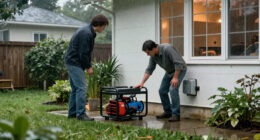
No, you must never use any generator indoors, including in garages, basements, or sheds, even when running on propane. While propane burns cleaner than gasoline and produces less carbon monoxide, it still generates significant amounts of this odorless, deadly gas. The risk of asphyxiation remains high in enclosed spaces due to oxygen depletion and CO accumulation. Always operate dual fuel generators outdoors in a well-ventilated area, at least 20 feet away from windows, doors, and vents. Installing a battery-operated CO alarm in your home is a necessary safety precaution, but it does not replace the requirement for outdoor operation.
How long does propane last compared to gasoline on the same generator?
Gasoline has a higher energy density than propane, meaning you will get more runtime per gallon of gasoline than per gallon-equivalent of propane. Generally, a generator will run about 20-30% longer on gasoline than on propane under the same load. However, propane tanks do not degrade like gasoline, which requires stabilizers and rotation every few months. For long-term emergency storage, propane is superior because it remains shelf-stable for years. For short-term outages where refueling is easy, gasoline provides better fuel economy and longer continuous runtimes between stops.
Do I need a transfer switch for my dual fuel generator?
While you can plug appliances directly into a generator, a transfer switch is highly recommended for whole-house or heavy-appliance backup. A manual transfer switch isolates your home from the utility grid, preventing backfeed that can electrocute utility workers and damage your generator. It allows you to wire specific circuits (like fridge, furnace, and lights) directly to the generator panel, avoiding the need to run extension cords through windows. Most dual fuel generators are transfer switch ready, but you should verify compatibility with your specific model and consult a licensed electrician for installation to meet local electrical codes.
Why does my generator lose power when I switch from gas to propane?
Power loss or stalling during fuel changeover is often caused by improper procedure or carburetor tuning issues. Dual fuel engines require specific carburetor settings for each fuel type because propane and gasoline have different air-to-fuel ratios. If the engine is not warmed up on one fuel before switching, or if the idle speed is not adjusted correctly for the second fuel, the engine will stall. Some newer models have automatic fuel switches that manage the transition electronically. If you are using a manual switch model, always let the engine run on the new fuel for a minute before applying load, and ensure the fuel valve is fully open to maintain pressure.
Is it worth paying extra for an inverter dual fuel generator?
You should pay extra for an inverter model if you need to power sensitive electronics, require quiet operation for camping or residential use, or need fuel efficiency at low loads. Inverters throttle down when demand is low, saving fuel and reducing wear. However, if your primary goal is to run heavy-duty tools, well pumps, or central air conditioning, an open-frame model offers better value per watt and higher surge capacity. The premium for inverter technology is significant, often doubling the price for similar wattage. Evaluate your load profile: if 80% of your devices are sensitive electronics, the inverter is worth the investment; if they are resistive or inductive motors, the open-frame is more practical.
Conclusion
Selecting the right dual fuel portable generator depends entirely on your specific power needs and lifestyle. For the homeowner seeking maximum backup capability for essential circuits and heavy appliances, the DuroMax XP13000EH is the best overall choice due to its massive output and robust build. If you are a camper or RVer who prioritizes silence and clean power for electronics, the PowerSmart 3800-Watt Inverter is the best value option, balancing portability with inverter technology. For those who need a middle-ground solution for home backup with modern safety features, the Westinghouse WGen9500DFc stands out as the best premium pick, offering remote start and CO sensing. Beginners looking for a simple, reliable entry into dual fuel power should consider the WEN DF360iX, which offers ease of use and sufficient power for light home backup without the complexity of larger units. Ultimately, match the fuel type and wattage to your most critical loads, and prioritize safety features like CO sensors to protect your household.