
TL;DR

Get backup power and energy gear delivered free with Prime
- Fast, free delivery on millions of items
- Prime Video, Amazon Music and more included
- Member-only deals all year
A guide published by Energy-Storage.News explains how battery energy storage systems (BESS) can help EV charging sites manage grid limits, peak demand and energy costs. The report says a well-sized system can reduce the grid capacity a site needs by 50–80% compared with a grid-only station, but actual results depend on site demand and system design.
Energy-Storage.News has published a guide to battery energy storage systems for electric-vehicle charging sites, explaining how they can buffer demand on constrained grid connections and which system designs operators can choose. The report says appropriately sized batteries can reduce required grid capacity by 50–80% compared with a grid-only station, while warning that poor sizing can undermine the expected benefits.
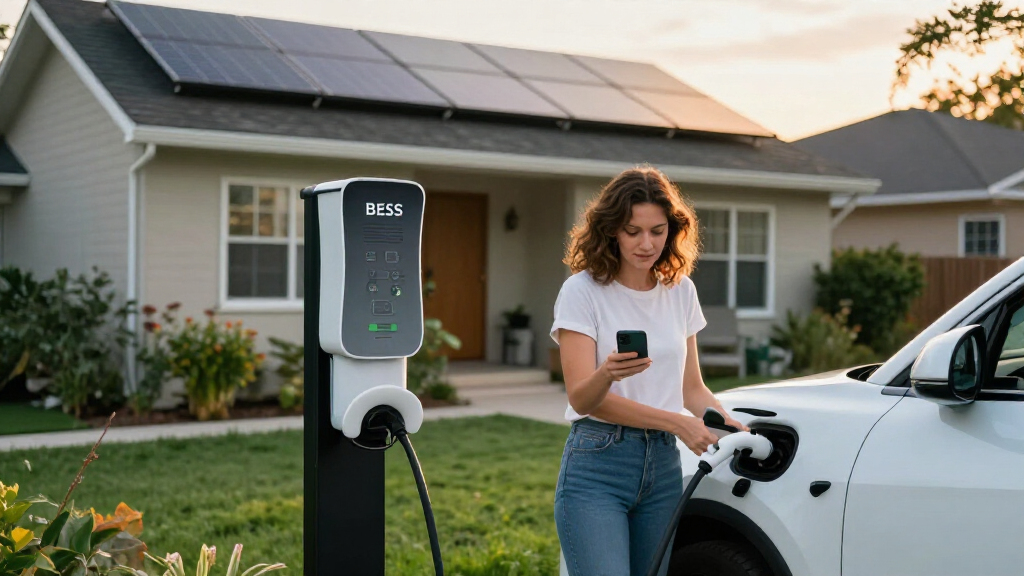
When several vehicles charge at once, a site can draw sharp peaks of power. A battery energy storage system (BESS) can charge when demand is lower and discharge to help supply chargers during busy periods. According to the guide, this can reduce the site’s reliance on a large grid connection, limit peak demand and help prevent grid-side throttling. It does not prevent throttling caused by a vehicle or charger, which the report identifies as a separate issue.
The guide describes two main configurations. Battery-buffered chargers contain storage within each charging unit and are generally quicker and less expensive to install, but each unit has a fixed capacity. A site-level BESS centralises storage and can be expanded as demand grows; it is more complex and costly, and can be integrated with on-site solar and other site assets.
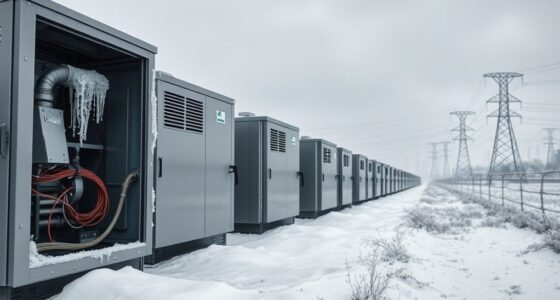
A site-level system typically includes battery modules, a power conversion system (PCS), a battery management system (BMS), an energy management system (EMS), thermal management, monitoring and safety equipment. The PCS moves energy between the battery, grid and chargers. The BMS monitors battery conditions, while the EMS manages charging and discharging in response to demand, tariffs and grid limits. Where solar is present, the EMS can direct generation to chargers or battery storage according to supply and demand.
Lowering Grid Demand at Charging Sites
Battery storage may let operators serve periods of high charging demand without requiring a grid connection sized for every charger running at full power simultaneously. The guide says that can reduce connection costs, which can rise sharply for higher-voltage connections, and help sites facing long waits for grid upgrades. It can also make demand less intermittent for the local grid.
For drivers, the intended benefit is a more reliable charging service during busy periods, although battery storage cannot guarantee uninterrupted charging or remove every source of power limitation. For operators, the financial case may include lower demand charges and better use of renewable electricity. These outcomes depend on local tariffs, grid conditions, charging patterns and system costs; the guide does not provide a universal savings figure.
Products Worth Considering

Bose SoundLink Plus Portable Bluetooth Speaker, Wireless Outdoor Speaker, Up to 20 Hours Battery Life, Waterproof and Dustproof, Black

Dyson V8 Cyclone Cordless Vacuum

Ring Alarm Pro 14-Piece Home Security Kit with Built-In eero Wi-Fi 6 Router
As an affiliate, we earn on qualifying purchases.
Choosing a System for Site Demand
The report frames storage as one response to the combination of growing EV charging demand and limits on available grid capacity. It says long grid-connection timelines affect many parts of the world, but does not identify specific regions, projects or a new policy or deployment announcement. The development is therefore a practical guide rather than a report of a particular installation.
Its central design point is to match battery power and energy capacity to the site. Power, measured in kilowatts (kW), describes how quickly the battery can supply electricity; energy, measured in kilowatt-hours (kWh), describes how much it can store. The guide gives a US rule of thumb of roughly 150 kWh of peak-hour charging per port, multiplied by the number of ports, less the energy available from the grid in one hour. It presents this as guidance, not a universal sizing standard.
Battery-buffered chargers may fit smaller sites or quick deployments. Centralised systems may suit large charging hubs, fleet depots or locations expected to expand. Some projects also use second-life EV batteries, and systems may be AC- or DC-coupled with chargers and renewable generation. The guide does not compare specific products or establish that one configuration is best for all sites.
““BESS makes the local grid a lot more stable if there are a lot of charging points.””
— Energy-Storage.News guide
Sizing and Savings Depend on Each Site
The guide’s 50–80% grid-capacity reduction is conditional on appropriate sizing and compares a storage-equipped site with a grid-only station. The supplied material does not specify the underlying projects, calculation method, cost assumptions or operating period, so the figure should not be treated as a guaranteed result for an individual site.
Actual performance and savings will depend on charger numbers and use, connection capacity, tariffs, battery power and energy ratings, and how often the system can recharge between demand peaks. The report also gives an example involving four 350 kW DC fast chargers on a 100 kW grid connection, but the supplied text ends before completing its calculation. No resulting battery size or performance outcome can be confirmed from that example.
Assessing Demand Before Installation
For operators considering storage, the guide points to a site-specific assessment before selecting equipment: establish charging demand and its peaks, determine the grid supply and connection constraints, and model the battery’s required power and stored energy. Operators also need to compare installation and operating costs with possible demand-charge reductions and the value of using on-site renewable power.
The supplied report does not announce a project, deadline or next policy milestone. The practical next step is for each site to validate its load and tariff assumptions and obtain a design suited to its expected demand; without that information, a system’s cost savings and ability to reduce grid capacity remain uncertain.
Key Questions
What does a BESS do at an EV charging site?
A battery energy storage system stores electricity and can discharge it to help supply chargers during periods of high demand. This may reduce peak power drawn from the grid, depending on the battery’s size and operating conditions.
What is the difference between battery-buffered chargers and a site-level BESS?
Battery-buffered chargers have storage built into each charger, usually with fixed capacity per unit. A site-level BESS is a central system that can offer more flexibility and expansion options, but generally involves a more complex and costly installation.
Will battery storage guarantee lower charging costs?
No. The guide identifies potential demand-charge savings, but actual results depend on local tariffs, charging patterns, grid limits and system sizing. The supplied report gives no universal savings amount.
How is battery storage sized for EV chargers?
Designers need to account for both the battery’s discharge power in kW and its stored energy in kWh. The guide offers a US rule of thumb based on peak-hour energy per port, less energy available from the grid, but says site-specific sizing is necessary.
Source: energy-storage.news