
When choosing between propane and natural gas storage, consider your location, energy needs, and budget. Natural gas is more efficient, cleaner, and often cheaper if you have pipeline access, but it requires an existing infrastructure. Propane offers flexibility with tank storage, ideal for rural areas without pipelines, though it can be more costly and needs regular safety checks. If you want a deeper understanding of these factors, you’ll find useful insights below.

Get backup power and energy gear delivered free with Prime
- Fast, free delivery on millions of items
- Prime Video, Amazon Music and more included
- Member-only deals all year
Key Takeaways
- Assess existing infrastructure: pipelines favor natural gas; tanks suit rural areas without pipeline access.
- Compare initial costs: natural gas may be cheaper if pipelines are available; propane offers flexibility without infrastructure.
- Consider long-term efficiency: natural gas provides higher efficiency and stable prices, especially with high usage.
- Evaluate safety and maintenance: natural gas involves fewer safety concerns; propane tanks require regular inspections.
- Factor in environmental impact: natural gas burns cleaner, aligning with eco-friendly goals and regulatory standards.
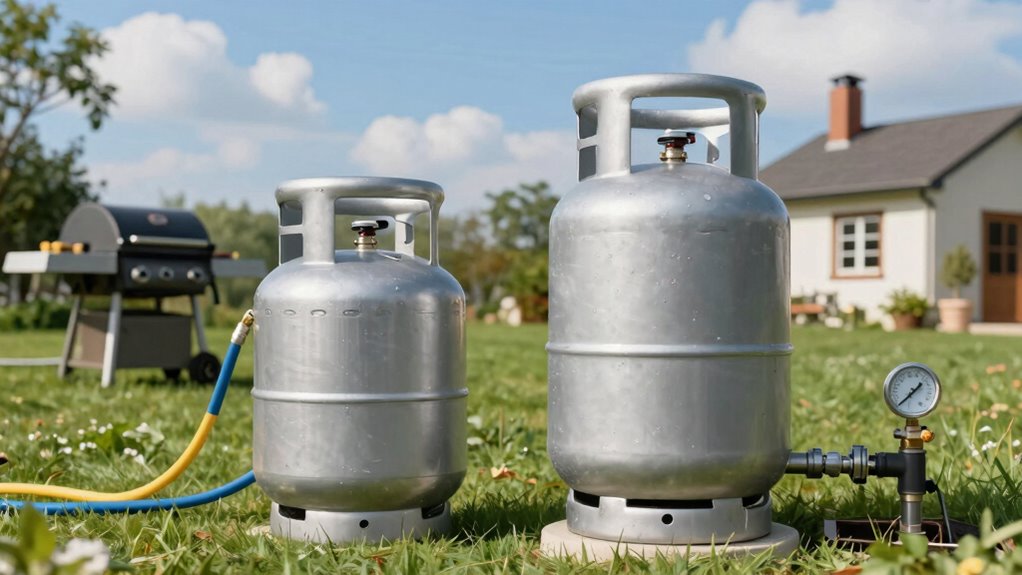
Choosing between propane and natural gas storage depends on your home’s needs, location, and available infrastructure. When you’re making this decision, it’s essential to contemplate how each fuel type impacts your home’s energy efficiency and what the cost comparison looks like over time. Energy efficiency plays a significant role because natural gas generally burns cleaner and more efficiently than propane, meaning you’ll often get more heat per unit of fuel. If reducing energy waste and lowering your utility bills are priorities, natural gas might be the better choice. It’s delivered through a pipeline directly to your home, which means fewer interruptions and less maintenance compared to propane tanks, which are usually stored on your property. This steady supply often translates into better energy efficiency over the long run, especially if your household uses a lot of heating or hot water. Additionally, pipeline infrastructure can influence the feasibility and costs associated with natural gas, making it an important factor in your decision.
However, the cost comparison isn’t always straightforward. While natural gas tends to be cheaper per unit of energy, the initial setup costs can vary depending on whether your home already has a pipeline connection. If your property isn’t connected to a natural gas line, installing one can be expensive, and this upfront investment might make propane more economically viable initially. Propane is stored in tanks on your property, which gives you the flexibility to have a reliable fuel source even in rural locations where natural gas infrastructure isn’t available. This might be especially appealing if you’re seeking energy independence or want to avoid potential service disruptions. Additionally, advancements in sound healing science suggest that incorporating certain frequencies can even positively influence your perception of energy efficiency and comfort in your home.
Furthermore, understanding regulatory and environmental considerations can help you make a more informed choice, especially in areas with strict emission standards or specific safety regulations. You should also weigh the ongoing costs associated with each fuel. Natural gas prices tend to be more stable and often lower than propane prices, but prices can fluctuate based on regional supply and demand. Propane prices tend to be higher per unit but can be more predictable, especially if you buy in bulk or have a fixed-price contract. Additionally, think about maintenance and safety. Propane tanks require regular inspections, and there’s always a small risk of leaks, so you’ll need to factor in safety measures and maintenance costs. Natural gas, being piped directly into your home, usually requires less maintenance and has fewer safety concerns, which can contribute to overall energy efficiency by reducing downtime and repair costs.
Frequently Asked Questions
What Are the Environmental Impacts of Propane Versus Natural Gas?
Propane generally produces higher environmental emissions than natural gas, releasing more carbon dioxide and pollutants when burned. Natural gas burns cleaner, resulting in fewer emissions and less air pollution. Regarding resource extraction, natural gas is obtained through fracking, which can harm water supplies and ecosystems, while propane is a byproduct of natural gas processing and oil refining. You should consider these impacts when choosing the fuel for your needs.
How Long Does Each Storage Tank Typically Last?
Propane tanks usually last about 20 years, while natural gas pipelines and storage tanks can last 30 to 50 years with proper maintenance. Your tank’s lifespan depends on factors like material, usage, and environmental conditions. For better storage durability, guarantee regular inspections and timely repairs. If you want long-term reliability, natural gas storage options tend to offer greater durability, but proper care extends the lifespan of either type of tank.
Are There Any Safety Risks Associated With Storage Options?
You might be surprised, but both propane and natural gas storage pose safety risks if not handled properly. Leak prevention is essential, as leaks can lead to fire hazards or explosions. Regular inspections and proper installation reduce these risks considerably. Always make certain tanks are in good condition, ventilated, and away from ignition sources. Staying vigilant and following safety guidelines helps protect your home and loved ones from potential dangers.
What Are the Maintenance Requirements for Each Storage Type?
You need to regularly inspect your tanks for corrosion, especially on metal surfaces, and make sure they’re protected from rust. For propane tanks, check for signs of tank corrosion and maintain proper ventilation to prevent gas buildup. Natural gas storage usually requires less maintenance, but you should still verify venting systems are clear and functioning. Proper upkeep ensures safety, prolongs tank life, and prevents leaks or other hazards.
How Do Local Regulations Affect Propane and Natural Gas Storage?
You must navigate local regulations closely, as they heavily influence your propane or natural gas storage options. Regulatory compliance is essential, and you’ll need to follow specific permitting procedures before installation. These rules can vary widely depending on your area, affecting tank placement, capacity limits, and safety standards. Ignoring local regulations risks penalties, so researching the requirements and securing necessary permits guarantees your storage setup remains legal and safe.
Conclusion
Choosing between propane and natural gas storage is like selecting the right tool for a job — it all depends on your specific needs and circumstances. Think about your home’s location, energy costs, and how you plan to use the fuel. By weighing these factors carefully, you’ll find the perfect fit, just as a painter picks the right brush for each stroke. With the right choice, you’ll enjoy reliable energy that powers your home smoothly and efficiently.
Fall Picks
fall essentials
As an affiliate, we earn on qualifying purchases.