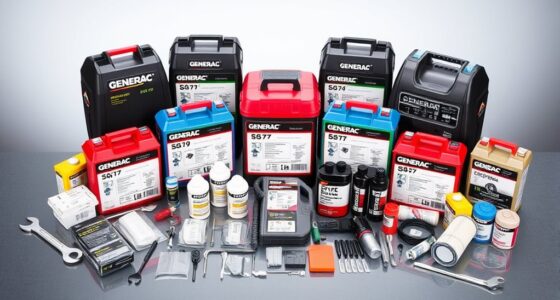
This checklist is for households preparing for a grid-down outage with a standby or portable generator, stored fuel, and backup power supplies. Use it to review the equipment that helps you connect, protect, and supplement your backup power setup.

Get backup power and energy gear delivered free with Prime
- Fast, free delivery on millions of items
- Prime Video, Amazon Music and more included
- Member-only deals all year
The sections follow the role each item plays: generator connection, outdoor placement, carbon monoxide awareness, fuel storage, portable power, and emergency lighting. Each product slot names the supplied pick; the enclosure section offers advice without a product recommendation.
Use the checklist to check compatibility first, then confirm the product’s specifications and instructions against your equipment and home. A listed item is a starting point for research, not a substitute for checking connectors, installation requirements, or safe operating guidance.
Generator Extension Cords
A generator extension cord is the link between compatible generator output and the equipment you intend to power. This slot’s pick is the Nilight 30 Amp 100FT Generator Extension Cord 10 Gauge Wire ETL Listed. Before choosing a cord, identify the generator’s outlet type and rating, then compare them with the cord’s connectors and stated capacity. A mismatch can keep equipment from connecting as intended.
A common buying mistake is treating length or a familiar plug shape as proof of compatibility. Confirm the full cord specification and the requirements of the connected equipment; do not assume the same cord suits every generator or load. Consider the route from generator to connection point, since a longer run may affect what is appropriate for your setup. Follow the generator and cord instructions for placement and use, and keep the connection arrangement consistent with the manufacturer guidance.
Check that the cord is intended for the conditions where it will be used and inspect it before outage season. Make sure the product details match the generator outlet, connected equipment, and planned run. If any rating or connector detail is unclear, verify it with the manufacturer before relying on the cord.
What to look for:
- Match connector ends to the generator outlet and intended equipment.
- Confirm the stated amperage and wire gauge suit the planned connection.
- Check the length against the route and equipment instructions.
- Review the listing and manufacturer guidance for intended use conditions.
Nilight 30 Amp 100FT Generator Extension Cord 10 Gauge Wire ETL Listed

This 100-foot, 30-amp generator extension cord is designed for emergency backup power, outdoor camping, and RV use. Made with high-quality, weather-resistant materials, it ensures safe and reliable power delivery in various outdoor conditions.
Pros:
- Heavy-duty, weather-resistant construction suitable for outdoor use
- High-quality pure copper wiring ensures minimal voltage drop
- Flexible and easy to coil despite its heavy-duty design
- UL and ETL certified for safety and reliability
Cons:
- Long length may be cumbersome to store and manage
- Heavy gauge wire can be stiff and less flexible in cold weather
Best for: Households whose generator outlet and equipment match the cord specifications
Not ideal for: Setups with different connector or rating requirements
Bottom line: Verify every connector and rating against your generator and equipment before adding this cord to your outage kit.
Outdoor Generator Enclosures
An outdoor generator enclosure is a planning consideration for anyone deciding where and how to keep a generator during an outage. This checklist provides advice only for this slot, with no product pick. The enclosure must be considered alongside the generator’s own instructions and placement requirements; a cover or housing should never lead you to disregard the manufacturer’s operating guidance.
A common mistake is choosing an enclosure based only on whether the generator fits inside it. Check the generator’s dimensions and the enclosure’s specified fit, access, and intended use. Review how the design handles ventilation and access around the unit, and confirm that its instructions are compatible with the generator’s operating requirements. Do not assume an enclosure makes an otherwise unsuitable location appropriate. Follow the generator manual for where it may operate and how it should be positioned.
Before selecting anything, identify the exact generator model and consult its documentation. Compare enclosure guidance with the generator’s requirements for operation, clearances, and access. If those instructions do not clearly support the proposed arrangement, contact the manufacturer for clarification. The useful checklist item here is compatibility with safe operating guidance, rather than a product name.
What to look for:
- Check the generator manual before choosing or using an enclosure.
- Match enclosure dimensions and fit to the specific generator model.
- Review ventilation and access guidance from both manufacturers.
- Confirm the enclosure’s stated use aligns with generator operating instructions.
- Do not rely on an enclosure to make an unsuitable operating location acceptable.
Carbon Monoxide Alarms
A carbon monoxide alarm belongs in an outage checklist because generator planning should include reviewing your home’s alarm setup and the alarm manufacturer’s instructions. The supplied pick is the First Alert Hardwired Combination Smoke & Carbon Monoxide Alarm with B. Its name identifies a hardwired combination smoke and carbon monoxide alarm; confirm the exact model and included features in the product listing before purchase.
A frequent mistake is assuming that a hardwired alarm will suit every home or replace existing alarms without additional work. Check the current alarm’s wiring, mounting arrangement, and any system requirements, then compare those details with the replacement’s documentation. Verify whether installation requires a compatible connection or professional help. Follow the alarm manufacturer’s placement and installation guidance, and consult applicable local requirements when planning changes. Do not infer compatibility from brand or product category alone.
Review the alarm’s instructions for setup, power, maintenance, and replacement, and make sure the household knows how to respond to an alert. Consider how a new unit will fit into the existing arrangement, especially if alarms are interconnected. Confirm the full model designation and the meaning of the trailing “with B” wording from the listing. Prioritize correct installation and clear alert readiness as part of outage preparation.
What to look for:
- Confirm the exact model and included features in the listing.
- Check hardwired connection and mounting compatibility with your home.
- Review installation requirements and whether qualified help is needed.
- Follow placement, maintenance, and replacement instructions.
- Understand the alarm’s alerts and household response guidance.
First Alert Hardwired Combination Smoke & Carbon Monoxide Alarm with Battery Bac

This combination smoke and carbon monoxide alarm features advanced sensing technology to reduce false alarms and provide early warning. It is hardwired with a 9V battery backup, interconnects with other alarms, and includes a secure mounting bracket for easy installation.
Pros:
- Reduces false alarms with advanced sensing technology
- Provides early warning for smoke and carbon monoxide
- Interconnects with multiple alarms for comprehensive safety
- Battery backup ensures protection during power outages
Cons:
- Installation may require electrical wiring knowledge
- Potential false alarms if not properly maintained
Best for: Households verifying a compatible hardwired alarm replacement
Not ideal for: Homes without a matching hardwired setup or installation plan
Bottom line: Confirm wiring, model details, and installation guidance before replacing an existing alarm.
Fuel Stabilizer
Fuel stabilizer is a storage-planning item for households that keep fuel as part of their generator preparation. The supplied pick is STA-BIL Storage Fuel Stabilizer, 1 Gallon. Before adding it to your checklist, confirm that the product’s label and instructions apply to the fuel type and storage approach you use. Do not assume one stabilizer is suitable for every fuel or generator setup.
A common mistake is focusing on the container size while overlooking the directions for use. Read the product label for application instructions, storage guidance, and any stated limitations, and compare those with the generator manual and fuel container guidance. Follow the stated mixing directions rather than estimating. Check the product information for how it should be stored and handled, and keep its instructions available with your outage supplies.
Plan fuel rotation and storage according to the generator and stabilizer manufacturers’ guidance. Make sure the quantity you keep is appropriate for your intended use by following the label, not by relying on a guessed dose. Confirm the full product name and package details before buying. The practical focus is matching the label to your fuel and using it exactly as instructed.
What to look for:
- Confirm the stabilizer is specified for your fuel type.
- Follow the product label’s application and mixing instructions.
- Check storage and handling guidance on the product label.
- Compare fuel storage guidance with the generator manual.
- Verify the package size and product details in the listing.
STA-BIL Storage Fuel Stabilizer, 1 Gallon

This fuel stabilizer preserves gasoline for up to 24 months, preventing corrosion and ensuring easy starts for stored vehicles, boats, and outdoor equipment. It maintains fuel system integrity and promotes optimal engine performance during periods of inactivity.
Pros:
- Preserves fuel for up to 24 months
- Prevents corrosion and engine issues
- Ensures easy starts after storage
- Suitable for various engines and equipment
Cons:
- Requires precise measurement for proper use
- Only effective if used within expiration period
Best for: Households storing fuel after confirming label compatibility
Not ideal for: Anyone unable to verify fuel type or follow the product directions
Bottom line: Use this stabilizer only as directed for a fuel type covered by its label.
Portable Power Stations
A portable power station can be a separate item to evaluate when planning for backup power. The supplied pick is the Jackery HomePower 3600 Plus Portable Power Station with 2x200W Solar P. Confirm the complete model name and included equipment in the listing, since the provided name ends mid-word. Then compare the station’s documented outputs and charging options with the devices you intend to use.
A common buying mistake is assuming a station will run an appliance because it has a large capacity figure or a familiar connector. Check the appliance’s power requirements alongside the station’s stated output limits, ports, and operating guidance. Consider which devices matter most during an outage and whether they need to run at the same time. If you plan to charge with solar panels, verify the supported panel connection and charging specifications; the “2x200W Solar P” wording alone does not establish what is included or compatible.
Review how the unit is charged, stored, and maintained, and make sure the household can find the relevant instructions during an outage. Check the full product listing for the exact model, configuration, and any included accessories. Build your plan around documented output and device needs, rather than assumptions based on the product name.
What to look for:
- Confirm the complete model name and included accessories.
- Match station output limits to each intended device.
- Check port types and simultaneous-use limits in the specifications.
- Verify solar panel compatibility and what the listing includes.
- Review charging, storage, and maintenance guidance.
Jackery HomePower 3600 Plus Portable Power Station with 2x200W Solar Panels

The Jackery HomePower 3600 Plus is a high-capacity portable power station featuring a 3584Wh LFP battery and 3600W AC output, expandable up to 21kWh. Designed for essential home backup, it supports dual voltage (120V/240V) and includes two 200W solar panels for versatile charging options.
Pros:
- High capacity and output suitable for running heavy appliances like pumps and heaters
- Fast charging capabilities, reaching full charge in as little as 2 hours
- Lightweight and portable design with wheels and telescopic handle
- Long lifespan with 6,000 charge cycles and 10-year durability
Cons:
- Heavy at 77.2 pounds, which may be difficult for some users to lift
- Power station and solar panels ship separately and may arrive in different packages
Best for: Households comparing documented outputs with planned device needs
Not ideal for: Buyers who have not checked appliance requirements or included accessories
Bottom line: Confirm the full model configuration and match its documented outputs to your outage priorities.
Rechargeable Emergency Lights
Emergency lighting helps households plan how they will see and move around during an outage. The supplied pick is named Rechargeable LED Light Therapy Face Mask with 7 Colors and Color-Run M, which reads like a face mask rather than an emergency light. The name alone does not establish that it is intended to illuminate a room or serve as outage lighting, so verify the complete listing before treating it as this checklist’s light source.
A common buying mistake is relying on the word “LED” or “rechargeable” without checking the product’s intended purpose. For an emergency light, look for explicit lighting use, controls and modes suited to the space, charging method, and manufacturer guidance for runtime and recharging. Confirm whether it provides useful illumination for the intended location; do not infer that from a therapy mask’s color description. Consider where it will be stored and how it will be charged before an outage.
Check the full name and listing details, especially the truncated “Color-Run M” ending, and verify that the item is actually a light suitable for emergency use. If the listing confirms it is a face mask, choose a separately identified emergency lighting product for this slot. Keep the plan grounded in intended use and clear specifications so the household is not left without practical lighting.
What to look for:
- Verify the product is intended to provide emergency illumination.
- Confirm the full model name and complete listing details.
- Check charging method and manufacturer guidance for runtime.
- Review controls and lighting modes for the intended space.
- Do not infer room-lighting capability from LED or color wording.
Rechargeable LED Light Therapy Face Mask with 7 Colors and Color-Run Mode

This portable LED face mask offers seven light colors and a color-run mode for at-home skincare. It has touch controls, a rechargeable battery, a lightweight design, and a 15-minute auto-off feature; the included USB cable, manual, and belt support use at home or while traveling.
Pros:
- Offers multiple light modes
- Rechargeable and portable without a power cable during use
- Automatically shuts off after 15 minutes
- Lightweight design
Cons:
- Does not operate while charging
- The included belt may feel too tight
- The description says results may take about three months
Best for: Shoppers checking whether the listing is actually an emergency light
Not ideal for: Anyone needing a confirmed room-lighting product immediately
Bottom line: The supplied name describes a face mask, so verify its intended use before counting it as emergency lighting.
Build the checklist in a needs-first order: confirm safe generator placement and alarm requirements, then verify the cord and fuel supplies against your specific equipment. Next compare portable power options with the devices you plan to run. Resolve the emergency-light listing mismatch before relying on that pick, and check every product’s complete specifications and instructions.
Outage preparation is easier when you review one connection and one use case at a time. Keep the manuals and product guidance with your supplies, and update the checklist when your equipment changes. With compatibility checked in advance, you can make a more confident plan for your household.