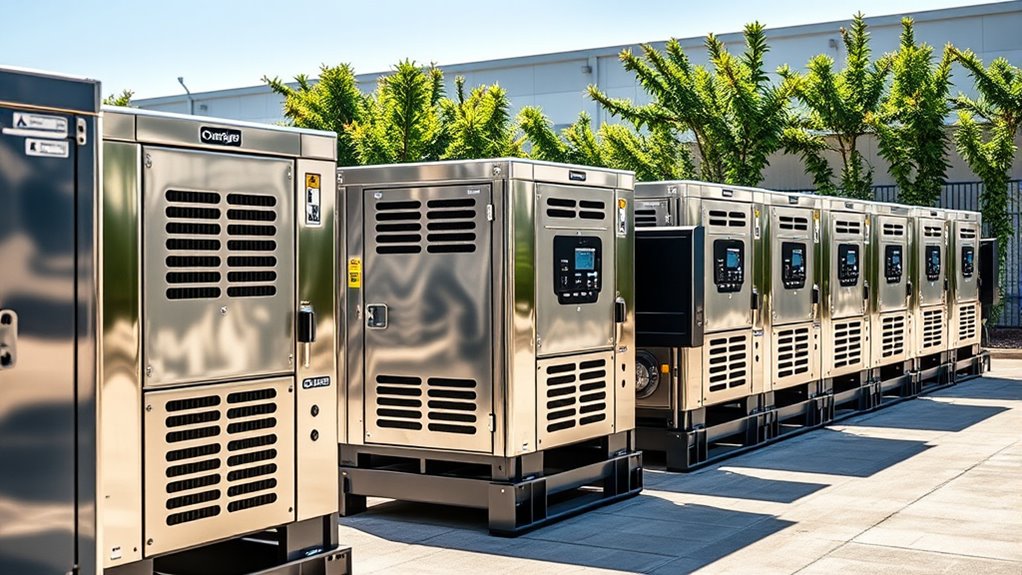

When choosing a Champion 20kW standby generator, your options range from compact models with advanced features to larger units designed for whole-home backup. The Honeywell 14kW Home Standby Generator offers reliable, clean power suitable for sensitive electronics with quiet operation, making it ideal for smaller homes or those prioritizing noise levels. On the other hand, the Honeywell 18kW Whole Home Standby Generator provides more robust backup power, dual fuel flexibility, and a durable build for larger households or homes with high energy demands. The main tradeoff is that the 14kW unit is less powerful and may not cover all appliances during an outage, while the 18kW model requires more space and professional installation. I’ll walk through what makes each stand out and help you decide which best fits your needs.

Get backup power and energy gear delivered free with Prime
- Fast, free delivery on millions of items
- Prime Video, Amazon Music and more included
- Member-only deals all year
Complete the kit


Key Takeaways
- The Honeywell 14kW generator excels in quiet operation and clean power, ideal for sensitive electronics or smaller homes.
- The Honeywell 18kW unit offers greater power capacity and dual fuel versatility, suitable for larger households with higher energy needs.
- Both models require professional installation, but the 18kW’s size and fuel setup make it more complex.
- Choosing between these depends on your home size, energy demands, and preference for fuel options.
- Price and installation costs are not included but will influence the overall value of each option.
| Honeywell 14kW Home Standby Generator |  | Best for Quiet, Sensitive Electronics | Power Output: 14kW | Engine: Generac G-Force Engine | Enclosure Material: All-Aluminum with RhinoCoat finish | VIEW ON AMAZON | See Our Full Breakdown |
| Honeywell 18kW Whole Home Standby Generator | | Best for Whole-Home Backup and Fuel Flexibility | Power Output: 18kW | Fuel Type: Natural gas or propane | Installation: Includes composite mounting pad | VIEW ON AMAZON | See Our Full Breakdown |
| champion 20kw standby generator | Power Output | Enclosure Material | Features | Engine |
|---|---|---|---|---|
| Honeywell 14kW Home Standby Ge | 14kW | All-Aluminum with RhinoCoat finish | PrecisionPower Technology, Quiet-Test Self-Test Mode, Multilingual LCD Display | Generac G-Force Engine |
| Honeywell 18kW Whole Home Stan | 18kW | All-weather aluminum | Dual fuel capability, LCD monitoring, durable construction | — |
More Details on Our Top Picks
Honeywell 14kW Home Standby Generator
The Honeywell 14kW Home Standby Generator stands out for its ability to deliver clean, stable power with minimal noise. Powered by a Generac G-Force engine, it’s engineered for durability and quiet operation, thanks to its Quiet-Test Self-Test Mode. Its all-aluminum enclosure with RhinoCoat finish offers excellent corrosion resistance, making it suitable for various climates. Compared with larger models, this generator is less powerful, so it’s better suited to smaller homes or those with fewer critical appliances. However, the absence of detailed pricing and the need for professional installation could be downsides for budget-conscious buyers. Overall, it provides a reliable, low-maintenance option for homeowners prioritizing quiet and clean power.
Pros:- Provides clean, stable power suitable for sensitive electronics
- Quiet operation with low fuel consumption during testing
- Durable corrosion-resistant aluminum enclosure
Cons:- No specific price information available
- Requires professional installation which can add to costs
Best for: Homeowners with smaller properties or sensitive electronics needing stable, quiet backup power.
Not ideal for: Large households or homes with high energy demands where 14kW may be insufficient during outages.
- Power Output:14kW
- Engine:Generac G-Force Engine
- Enclosure Material:All-Aluminum with RhinoCoat finish
- Features:PrecisionPower Technology, Quiet-Test Self-Test Mode, Multilingual LCD Display
Our verdict“A smart choice for those needing reliable, quiet power in smaller or electronics-sensitive homes.”
Honeywell 18kW Whole Home Standby Generator
The Honeywell 18kW Whole Home Standby Generator offers a significant step up in capacity, making it suitable for larger homes or those with many high-energy appliances. Its dual fuel capability, allowing use of natural gas or propane, adds to its versatility, especially in areas prone to fuel supply disruptions. The all-weather aluminum enclosure ensures durability against harsh conditions. Compared to the 14kW model, this generator can power more circuits and appliances, but it’s also bulkier and may require more complex professional installation. While installation costs and space requirements are considerations, this model’s reliability and flexibility make it a compelling choice for those needing comprehensive backup power.
Pros:- Reliable 18kW backup power for entire home
- Dual fuel flexibility for natural gas or propane
- Easy-to-use LCD control panel
- Durable all-weather aluminum enclosure
Cons:- Installation may require professionals, adding costs
- Bulkiness could limit placement options
Best for: Large households or homes with high energy demands seeking flexible, reliable whole-home backup.
Not ideal for: Homeowners with limited space or budget constraints, as this model requires considerable installation effort and space.
- Power Output:18kW
- Fuel Type:Natural gas or propane
- Installation:Includes composite mounting pad
- Enclosure Material:All-weather aluminum
- Features:Dual fuel capability, LCD monitoring, durable construction
Our verdict“An excellent option for larger homes needing flexible and robust backup power with dual fuel support.”

How We Picked
Our selection process focused on models that deliver reliable standby power at the 20kW range, emphasizing features like durability, ease of use, and suitability for different household sizes. We compared technical specs, user-reported reliability, and installation considerations. Our goal was to identify options that balance power, convenience, and longevity, helping homeowners find a generator that fits their specific backup needs. Cost was a secondary factor, as quality and performance took priority.
| champion 20kw standby generator | Enclosure Material | Features |
|---|---|---|
| Honeywell 14kW Home Standby Ge | All-Aluminum with RhinoCoat finish | PrecisionPower Technology, Quiet-Test Self-Test Mode, Multilingual LCD Display |
| Honeywell 18kW Whole Home Stan | All-weather aluminum | Dual fuel capability, LCD monitoring, durable construction |
Factors to Consider When Choosing Champion 20kw Standby Generator
Choosing the right standby generator involves balancing power needs, installation considerations, and long-term durability. For smaller homes or those prioritizing quiet operation, a lower-capacity, noise-reducing model like the 14kW is often ideal. Larger households or homes with high energy demands will benefit from the added capacity and fuel flexibility of the 18kW generator. Keep in mind that installation complexity and space limitations can influence your choice. Understanding these factors helps you select a generator that fits your home’s specific backup power requirements.Power Capacity and Home Size
Start by assessing your home’s total energy needs. A 14kW generator typically covers essential circuits and smaller homes, but if you have a larger property or many high-demand appliances, an 18kW unit offers more headroom. Choosing a generator that matches your load prevents overloads and ensures reliable power during outages.
Fuel Type and Flexibility
Dual fuel options, like natural gas and propane, provide flexibility, especially if one fuel source becomes scarce or expensive. The 18kW model’s dual fuel capability makes it more versatile for various fuel supply scenarios, which can be a major advantage in areas prone to disruptions.
Installation and Space
Both models require professional installation, but the 18kW’s larger size and additional fuel connections mean it demands more space and potentially higher setup costs. Make sure your property can accommodate the unit and that your installer is experienced with these setups.
Durability and Features
Look for features like corrosion-resistant enclosures and smart monitoring systems. Both models excel here, but the 18kW’s all-weather aluminum enclosure offers added resilience for harsh climates. Quiet operation is also worth considering if noise is a concern—this is where the 14kW’s self-test mode shines.
Frequently Asked Questions
How do I determine the right size generator for my home?
To find the ideal size, you should list all essential appliances and their power requirements, then add up their wattages. A generator that can handle this total load comfortably will keep your critical systems running without overload. For most smaller homes, 14kW might suffice, but larger homes often need 18kW or more for comprehensive backup.
Are dual fuel generators worth the extra cost?
Dual fuel generators provide increased flexibility because you can switch between natural gas and propane depending on availability and price. This can be especially valuable in areas where fuel supply is unreliable or during extended outages, making the extra investment worthwhile for many homeowners.
What maintenance does a standby generator require?
Regular maintenance includes checking oil levels, inspecting connections, and testing the system periodically. Many models feature automatic self-test modes that simplify maintenance routines. Professional inspections are recommended annually or after major outages to ensure reliable operation when needed most.
How long does a typical installation take?
The installation time varies based on the generator size and site conditions. The smaller 14kW models can often be installed within a day, whereas the 18kW units, with their additional connections and space needs, may take longer—sometimes up to two days. Consulting with a professional installer provides a clearer timeline tailored to your property.
What costs should I expect beyond the generator price?
Beyond the initial purchase, expect to budget for professional installation, permits, and possibly site preparation. Cost factors include the complexity of setup, the need for concrete pads or additional wiring, and potential fuel line modifications. These expenses can significantly add to the total investment, so obtaining detailed quotes upfront is advisable.
Conclusion
For homeowners prioritizing quiet operation and sensitive electronics, the Honeywell 14kW offers a reliable and low-noise backup solution. Those with larger homes or high energy loads should consider the Honeywell 18kW for its increased power and dual fuel flexibility. If space or installation complexity is a concern, the smaller model may be preferable, but for comprehensive, whole-home backup, the larger unit provides added peace of mind.
Halloween Picks
halloween
As an affiliate, we earn on qualifying purchases.