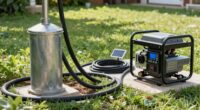
When power outages strike, having a reliable home backup generator can keep your essentials running smoothly. The best options range from permanent standby units to portable models suitable for emergencies or RV use. The top picks often balance power capacity, ease of use, and fuel flexibility, but tradeoffs include cost and installation complexity. For example, standby generators offer seamless automatic operation but come at a higher price and installation effort. Portable units are more affordable and flexible but require manual setup during outages. Continue reading for a detailed breakdown of the best home backup generators for 2026.
Key Takeaways
- Standby generators provide automatic, hands-free power restoration but tend to be more expensive and require professional installation.
- Dual-fuel and tri-fuel portable generators offer greater fuel flexibility, extending runtime during extended outages.
- Transfer switch compatibility is critical for safe, seamless operation of portable models with your home wiring.
- Power capacity varies significantly; choosing the right wattage depends on your household’s essential loads.
- Price and ease of use often trade off with features like WiFi monitoring, remote start, and advanced sensors.




More Details on Our Top Picks
Generac 12,500 Starting Watt Tri-Fuel Portable Generator with Electric Start and COsense Detection
This Generac model stands out for offering tri-fuel versatility, allowing users to switch between gasoline, propane, and natural gas—an advantage over the Westinghouse 12500 Watt Dual Fuel, which only supports gasoline and propane. Its electric start with a rechargeable battery simplifies operation, while COsense technology provides heightened safety by automatically shutting down if dangerous carbon monoxide levels are detected. Compared to the Westinghouse 12500 Watt, it delivers similar power but adds the convenience of multiple fuel sources and a rugged steel frame suitable for both home backup and job sites. The tradeoff is its heavier weight, which makes transport more challenging, and its higher price, reflecting premium features. Overall, this model makes the most sense for users needing maximum fuel flexibility and safety during prolonged outages or construction work.
Pros:- Tri-fuel flexibility maximizes power options
- Electric start with rechargeable battery for easy operation
- COsense safety system reduces poisoning risk
- Heavy-duty steel frame for durability
Cons:- Heavy weight may require assistance for transportation
- Limited fuel tank capacity on gasoline (7.5 gallons)
- Higher price point compared to basic models
Best for: Homeowners or contractors requiring reliable, multi-fuel portable power for extended use or job sites
Not ideal for: Small households or occasional users who prefer lightweight, budget-friendly units for infrequent outages
- Fuel Type:Tri-Fuel (Gasoline, Propane, Natural Gas)
- Starting Watts:12,500
- Running Watts:9,500
- Runtime on Gasoline:9.5 hours at 50% load
- Fuel Tank Capacity:7.5 gallons
- Engine Type:500cc OHV
Bottom line: This generator suits users who need versatile, safe, and durable portable power for frequent or demanding use.
Generac Guardian 10kW Home Standby Generator with 100 Amp Transfer Switch – Automatic Whole House Backup Power for Storms, Emergencies, and Outages, WiFi Enabled, Runs on Natural Gas or Liquid Propane
This model makes the list for automatic, whole-house backup power, ideal for homeowners who want seamless operation during outages. Its WiFi-enabled monitoring allows remote performance tracking, unlike the Westinghouse 14500 Watt Dual Fuel, which lacks smart features. The generator’s built-in transfer switch supports up to 16 circuits, making it suitable for comprehensive home coverage. Compared to the Westinghouse 14500 Watt, it operates on both natural gas and propane, providing more fuel flexibility, and is engineered and assembled in the USA for quality assurance. However, its installation requires a certified electrician, and its higher cost may deter budget-conscious buyers. This pick is perfect for those prioritizing reliability, automation, and remote oversight for home safety during outages.
Pros:- Automatic start and whole-house transfer switch
- WiFi connectivity for remote monitoring
- Durable aluminum enclosure for weather resistance
- Operates on natural gas or propane
Cons:- Requires professional installation
- Higher purchase and installation cost
- Less portable due to permanent setup
Best for: Homeowners seeking automatic, reliable, and remotely monitored backup power for full home coverage
Not ideal for: Renters or those looking for portable generators that can be easily moved or used on construction sites
- Power Output:10kW
- Fuel Type:Natural Gas or Propane
- Transfer Switch:100 Amp, 16-circuit
- Run Time:Variable, depends on fuel supply
- Enclosure Material:Aluminum
- Assembly:USA
Bottom line: This generator is best suited for homeowners wanting fully automatic, remotely monitored backup power for their entire house.
Westinghouse 12500 Watt Dual Fuel Home Backup Portable Generator, Remote Electric Start, Transfer Switch Ready, Gas and Propane Powered
This Westinghouse model is a solid choice for powering larger homes or multiple appliances with its 12,500 peak watts and 9,500 running watts. Its dual-fuel capability on gasoline and propane offers flexibility, but it does not support natural gas, unlike the Generac tri-fuel. The remote electric start and transfer switch readiness make it convenient for emergency use, though it is somewhat heavier and bulkier, which affects portability. Compared to the Generac tri-fuel, it offers less fuel versatility but still provides reliable power with a robust 457cc engine and long runtime of up to 12 hours on a 6.6-gallon tank. The tradeoff is its limited fuel options and slightly less advanced safety features. It’s ideal for users who need dependable backup but don’t require natural gas compatibility.
Pros:- High peak and running wattage for large appliances
- Remote electric start with key fob
- Transfer switch ready for easy connection
- Long runtime on 6.6-gallon tank
Cons:- Limited to gasoline and propane (no natural gas support)
- Heavier and less portable than smaller models
- No WiFi monitoring capabilities
Best for: Homeowners with larger homes needing reliable dual-fuel portable backup power
Not ideal for: Users looking for multi-fuel flexibility or lightweight portable units for frequent relocations
- Peak Wattage:12,500
- Running Wattage:9,500
- Fuel Type:Gasoline, Propane
- Tank Volume:6.6 gallons
- Runtime:Up to 12 hours
- Engine Displacement:457cc
Bottom line: This generator is best for larger homes needing dependable dual-fuel portable power without the need for advanced remote features.
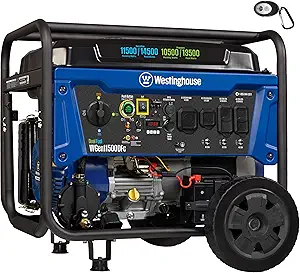
Westinghouse Outdoor Power Equipment 14500 Peak Watt Dual Fuel Home Backup Portable Generator, Remote Electric Start, Transfer Switch Ready, Gas and Propane Powered
This Westinghouse model shines for higher wattage capacity—14500 peak and 11500 running watts—making it suitable for larger households or demanding appliances. Its dual fuel support for gas and propane provides good flexibility, though it lacks natural gas compatibility, unlike the Generac 10kW model. The CO sensor enhances safety during operation, and the remote electric start adds convenience. It boasts a long runtime of up to 19 hours on a 9.5-gallon tank, which surpasses most competitors. However, its heavier weight (over 230 pounds) affects portability, and it is priced at a premium. Compared to the Generac 10kW, it offers more power but fewer fuel options, making it ideal for users who prioritize capacity and safety over portability.
Pros:- High peak and continuous wattage for large appliances
- Dual fuel (gas and propane) support
- CO sensor for added safety
- Extended runtime of up to 19 hours
Cons:- Heavy and less portable
- Higher price point
- Limited to gas and propane, no natural gas support
Best for: Larger households or small businesses needing high-capacity, dual-fuel portable backup power with safety features
Not ideal for: Users with limited storage space or needing lightweight, portable units for frequent movement
- Peak Wattage:14,500
- Running Wattage:11,500
- Fuel Type:Gasoline, Propane
- Tank Volume:9.5 gallons
- Runtime:Up to 19 hours
- Engine Displacement:550cc
Bottom line: This generator is best for those needing high wattage, safety features, and long runtime for larger homes or small business applications.
Westinghouse 6500 Watt Dual Fuel Home Backup Portable Generator, Transfer Switch Ready 30A Outlet, RV Ready 30A Outlet, CO Sensor
This model makes the list as an affordable, compact dual-fuel generator capable of powering essential appliances during outages. Its 6500 peak and 5300 running watts are sufficient for small to medium backup needs, and it supports both gasoline and propane, unlike the Generac 10kW. The CO sensor enhances safety, and its lightweight design at around 135 pounds improves portability over larger models like the Westinghouse 14500 Watt. Its 4.7-gallon tank offers up to 14 hours of runtime, suitable for short outages. However, it provides less power than larger models and lacks remote monitoring or automatic transfer switch capabilities. This makes it ideal for users needing a reliable, space-efficient backup option with safety features.
Pros:- Compact and lightweight for portability
- Dual fuel support for gasoline and propane
- CO sensor for safety
- Up to 14 hours runtime
Cons:- Less power output compared to larger models
- No remote monitoring
- Limited to essential appliances
Best for: Small households or RV owners seeking a portable, dual-fuel backup generator with safety sensors
Not ideal for: Larger homes or users needing high wattage and automatic features for long-term outages
- Peak Wattage:6,500
- Running Wattage:5,300
- Fuel Type:Gasoline, Propane
- Tank Volume:4.7 gallons
- Runtime:Up to 14 hours
- Engine Power:274cc
Bottom line: This generator suits users who need a space-saving, safe, and versatile backup for smaller homes or RV use.
Westinghouse 14500 Peak Watt Tri-Fuel Home Backup Portable Generator, Remote Electric Start, Transfer Switch Ready, Gas, Propane, and Natural Gas Powered
This Westinghouse 14500 Peak Watt Tri-Fuel Generator stands out for its impressive power output, making it ideal for larger homes or demanding job sites. Compared with the Westinghouse 12500 Watt Dual Fuel model, this unit offers higher peak wattage and longer runtime, which is essential for running multiple appliances simultaneously. Its tri-fuel capability provides flexibility, allowing you to switch between gasoline, propane, and natural gas based on availability and preference—an advantage over less versatile models. However, this extra capacity comes with increased size and weight, which may limit portability for some users. The robust 550cc engine and durable construction promise long-lasting performance, but the unit’s size may be a drawback for those looking for a more lightweight or compact backup option. It features a remote electric start, transfer switch readiness, and a fuel gauge, all of which enhance convenience during outages. The heavy-duty copper windings help ensure cleaner power, protecting sensitive electronics. This generator is better suited for homeowners who need reliable, high-capacity backup power and are willing to handle its bulk.
Pros:- High peak wattage of 14,500 watts supports large loads
- Tri-fuel capability offers maximum flexibility
- Long runtime of up to 19 hours on a full tank
Cons:- Heavy and bulky, making transport and storage challenging
- Higher price point compared to smaller or dual-fuel models
Best for: Large households or property owners needing significant power for multiple appliances and sensitive electronics during outages.
Not ideal for: Individuals with limited storage space or who prioritize portability over raw power, due to its substantial size and weight.
- Peak Wattage:14500 watts
- Running Wattage:11500 watts
- Fuel Types:Gasoline, Propane, Natural Gas
- Engine Displacement:550cc
- Run Time:Up to 19 hours
- Tank Volume:36 liters (9.5 gallons)
- Starting System:Remote Electric Start
- Transfer Switch Ready:Yes
- Weight:230 pounds
Bottom line: This generator makes the most sense for homeowners who need serious power and can accommodate its size and weight.
How We Picked
Our evaluation focused on key factors that matter most to homeowners seeking reliable backup power. We considered power output, fuel flexibility, ease of installation, and safety features like CO sensors. Portability versus permanence was also weighed, with standby units excelling in automatic operation and portable models offering flexibility. We prioritized products with proven durability, strong user reviews, and contemporary features like WiFi connectivity. The ranking reflects a balance of value, convenience, and performance, ensuring each pick serves a specific home backup need effectively.Factors to Consider When Choosing Home Backup Generators
Choosing the right home backup generator involves more than just comparing wattage. It’s important to consider how the generator will integrate with your home, your typical power needs, and your budget. Making the wrong choice can lead to undersized power, excessive costs, or complicated setup. Here are key factors to help you decide which generator fits your situation best.Power Capacity and Load Requirements
Assess your essential power needs carefully before making a purchase. Smaller portable generators might suffice for basic essentials like refrigerators and lights, but larger households or those wanting to power multiple appliances will need more wattage. Standby generators typically range from 8kW to 20kW, providing enough capacity for whole-house backup. Choosing a generator with insufficient power can leave you scrambling during outages, while overestimating can mean unnecessary expense and size. It’s wise to list your critical appliances and estimate their total wattage for a clearer picture.
Fuel Type and Runtime
Fuel flexibility can significantly extend your generator’s usability during prolonged outages. Dual-fuel and tri-fuel options allow switching between natural gas, propane, and gasoline, reducing the risk of running out of fuel. Standby units usually run on natural gas or propane, which are more convenient and cleaner than gasoline. Portable generators often rely on gasoline but with options for propane. Keep in mind that larger fuel tanks or dual-fuel capabilities typically mean higher initial costs but offer greater peace of mind during extended power outages.
Automatic vs. Manual Operation
Automatic standby generators connect to your home’s electrical system and start automatically when power is lost, offering convenience and peace of mind for frequent outages or severe weather. Manual portable units require you to be present to start them and connect them to your home, which can be a drawback during sudden outages but offers flexibility otherwise. Consider your typical outage frequency, your willingness to manage manual setup, and whether automatic operation justifies the higher cost and installation effort.
Installation and Maintenance
Standby generators require professional installation, which can add to the overall cost but ensures safe and code-compliant setup. Portable models are easier to move and set up but demand manual effort and proper transfer switch installation if you want seamless power transfer. Maintenance considerations include regular testing, oil changes, and fuel storage. Some models come with remote monitoring or automatic diagnostics, reducing the effort needed to keep the generator in top shape. Weigh these factors carefully based on your technical comfort level and budget.
Safety Features and Certifications
Safety should never be overlooked. Look for generators with built-in CO sensors, automatic shutoff, and safety certifications like UL listing. CO sensors are especially important for portable units operated indoors or in enclosed spaces. Transfer switches should be professionally installed to prevent backfeeding, which can be dangerous for utility workers. These features protect your household and utility workers, making safety features a key consideration in your selection process.
Frequently Asked Questions
Can I run my entire house on a portable generator?
Running an entire house on a portable generator is possible but depends on the generator’s wattage and your home’s load. Most portable units max out at around 15-20kW, which can power essential circuits but not the entire household. To do so safely, you’ll need a transfer switch and a generator sized appropriately for your essential loads. Keep in mind that running the whole house continuously may require extended fuel supplies and careful load management. For full-home backup, a standby generator is often a more reliable choice.
Is a standby generator worth the extra cost?
Standby generators are generally more expensive upfront but offer unmatched convenience with automatic start and seamless power transfer. They are especially valuable in areas prone to frequent outages or for homes with critical medical equipment or business operations. The cost savings over time include reduced manual effort and less risk of food spoilage or security issues during outages. If outages are rare, a portable generator might suffice, but for continuous reliability, a standby unit often proves worth the investment.
How much space do I need for a standby generator?
The space required varies depending on the model, typically ranging from about 4 to 12 feet in length and width, plus clearance for ventilation and maintenance access. Standby units should be installed outdoors in a well-ventilated area, away from windows and doors to prevent exhaust issues. Make sure to check local codes for setback requirements and ensure proper ventilation. Proper placement not only ensures safety but also maintains the generator’s efficiency and longevity.
Are dual-fuel generators more reliable than single-fuel models?
Dual-fuel generators tend to be more versatile since they can switch between fuels based on availability, which extends operational windows during outages. They often have larger fuel tanks or connections to different fuel sources, providing greater peace of mind. However, they are generally more complex and may have higher initial costs. Their reliability depends on proper maintenance and fuel supply, but overall, dual-fuel options offer a significant advantage in flexibility for backup power.
Do I need a professional to install a portable generator?
While portable generators are designed for easier setup, installing a transfer switch or connecting directly to your home’s electrical system should be performed by a licensed electrician. Proper installation ensures safety, compliance with local codes, and prevents backfeeding into the grid, which is dangerous for utility workers. For basic operation, you can set up and operate a portable generator yourself, but for permanent connection to your home, professional installation is highly recommended.
Conclusion
For homeowners seeking seamless, automatic backup power, the Generac Guardian 10kW Standby Generator stands out as the best overall choice. Budget-conscious buyers might prefer the Westinghouse 6500 Watt Dual Fuel Portable Generator for its affordability and flexibility. For those with larger homes or critical needs, investing in a premium standby model like the Generac 20kW offers peace of mind. Beginners or infrequent users may find portable units easier and more manageable, while households in storm-prone areas should prioritize automatic, whole-house solutions. Each buyer can find a suitable match based on their specific needs and budget.