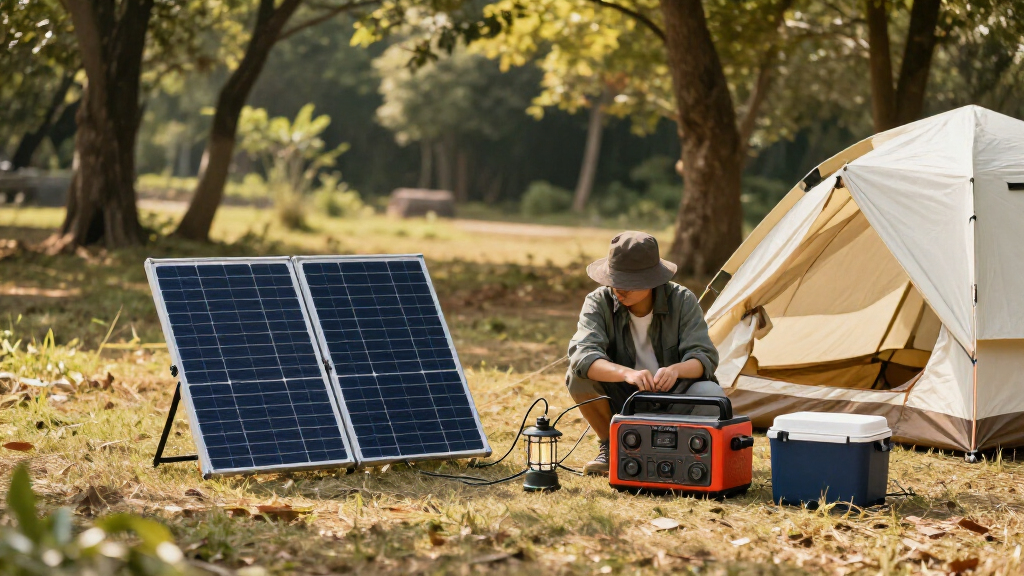
Choosing a portable solar panel for a power station is less about the biggest wattage printed on the panel and more about matching its output, connectors, and carry weight to your setup. I rank the CTOLITY 400W first for buyers who want the most stated output in this group, the Renogy 200W for a more balanced panel with direct USB charging, and the ZOUPW 100W for a compact, connector-rich option. The GRECELL 100W is the straightforward alternative for station owners who want adapters included and the option to pair panels.

Get backup power and energy gear delivered free with Prime
- Fast, free delivery on millions of items
- Prime Video, Amazon Music and more included
- Member-only deals all year
The tradeoff is clear: a higher-wattage panel can replenish a compatible station faster in favorable sunlight, but it may be harder to store and carry. Smaller 100W panels are easier to fit into a camping kit, though they provide less charging capacity per panel. I also weigh whether the listed connectors are clearly specified, because panel-to-station compatibility matters as much as rated power. My picks below are ranked for practical fit, not wattage alone.
Key Takeaways
- CTOLITY 400W has the highest stated output here, but its supplied connector details are less clear than the title’s broad compatibility claims.
- Renogy 200W balances station charging with USB-C PD 45W and dual USB-A ports, though its 4-in-1 adapter is sold separately.
- GRECELL 100W includes multiple adapters and supports series or parallel pairing, but its 10.3-pound weight is substantial for a 100W panel.
- ZOUPW 100W offers a five-connector cable and built-in USB ports in a 9.5-pound foldable format; its 12-month warranty is shorter than Renogy’s stated coverage.
- Before buying any of these panels, match its voltage, current, connector, and wiring arrangement to your power station’s solar input limits.
| CTOLITY 400W Foldable Portable Solar Panel for Power Stations |  | Best Overall for Buyers Prioritizing High Stated Output | Maximum power: 400 W | Output voltage: 40 V DC | Conversion efficiency: 23.4% stated | VIEW LATEST PRICE | See Our Full Breakdown |
| Renogy 200W Portable Solar Panel for Power Stations |  | Best Balanced Pick for Station and Device Charging | Maximum power: 200 W | Cell type: 16BB N-Type monocrystalline silicon | Efficiency: 25% stated | VIEW LATEST PRICE | See Our Full Breakdown |
| GRECELL 100W Foldable Portable Solar Panel |  | Best for Adapter Flexibility and Panel Pairing | Power: 100 W | Output voltage: 20 V DC | Maximum amperage: 5 A | VIEW LATEST PRICE | See Our Full Breakdown |
| ZOUPW 100W Portable Foldable Solar Panel |  | Best Compact 100W Option for Connector Variety | Maximum power: 100 W | Efficiency: 23.5% stated | Output voltage: 20.16 V | VIEW LATEST PRICE | See Our Full Breakdown |
| portable solar panels for power station | Maximum power | Output voltage | Weight | Cell type |
|---|---|---|---|---|
| CTOLITY 400W Foldable Portable | 400 W | 40 V DC | — | Monocrystalline |
| Renogy 200W Portable Solar Pan | 200 W | — | 13.9 lb | 16BB N-Type monocrystalline silicon |
| GRECELL 100W Foldable Portable | — | 20 V DC | 10.3 lb | — |
| ZOUPW 100W Portable Foldable S | 100 W | 20.16 V | 9.5 lb | — |
More Details on Our Top Picks
CTOLITY 400W Foldable Portable Solar Panel for Power Stations
The CTOLITY 400W is the highest-output panel in this group, making it the most compelling starting point for buyers whose compatible power station can accept a substantial solar input. Its foldable construction, adjustable kickstands, and MC4 connectors speak to an outdoor setup rather than a permanently installed array. The stated 23.4% cell efficiency and ETFE laminated surface add useful context, but they do not remove the need to check the station’s input limits and cable requirements before purchase.
Compared with the Renogy 200W, CTOLITY is built around higher rated panel output rather than a clearly documented balance of station charging and direct device charging. Renogy lists USB-C and USB-A ports, along with weight and folded dimensions; CTOLITY’s supplied specifications do not state its folded size or weight. That missing portability information matters because a 400W foldable panel can be a less convenient companion for a small car-camping kit than either 100W option.
The largest caveat is connector clarity. The product title mentions DC, XT60, Anderson, and USB outputs, but the included-component and connector information provided here specifies MC4. I would verify exactly what cables and outputs are included rather than assume every connection named in the title is supplied. Compared with the ZOUPW, whose five-connector cable is spelled out in its specifications, CTOLITY asks the buyer to resolve more compatibility questions. It makes the most sense when high stated output matters and the station accepts the panel’s actual output arrangement; buyers who need known carry dimensions or unambiguous included connectors should favor a more fully specified alternative.
Pros:- Highest stated output among these four panels at 400W.
- Foldable design with adjustable kickstands for outdoor positioning.
- MC4 connectors suit many power stations when their solar input requirements match.
- ETFE laminated surface and stated 23.4% conversion efficiency.
Cons:- The supplied connector details specify MC4, despite broader outputs named in the product title.
- Folded dimensions and panel weight are not provided in the supplied specifications.
- The 400W rating only helps when the connected station can accept the panel’s voltage and available current.
Best for: Power-station owners seeking the highest stated panel output in this group and who can confirm MC4 compatibility and input limits.
Not ideal for: Buyers who need published carry dimensions and weight, or who want the included connector package clearly itemized before ordering.
- Maximum power:400 W
- Output voltage:40 V DC
- Conversion efficiency:23.4% stated
- Connector information:MC4 specified in the supplied details
- Cell type:Monocrystalline
- Surface:ETFE laminated
- Positioning:Adjustable kickstands
- Water resistance:IP65 stated in title
Our verdict“I recommend CTOLITY to buyers who want the most stated solar capacity here and can confirm the actual connector package and station input compatibility.”
Renogy 200W Portable Solar Panel for Power Stations
The Renogy 200W earns its place near the top by combining useful panel capacity with unusually clear practical details. Its 16BB N-Type monocrystalline cells have a stated 25% efficiency, and four kickstands give more flexibility when angling the panel than a simpler two-support arrangement. At 13.9 pounds with folded dimensions of 23.72 by 22.99 by 1.97 inches, it is not featherweight, but buyers can judge its storage footprint before choosing it.
Its strongest point of difference from the CTOLITY 400W is not raw output. It is the built-in USB-C PD 45W and dual USB-A outputs, which let the panel charge compatible small devices directly while the MC4 connection serves a power station. That can be handy at a campsite when a phone or accessory needs power without routing every device through the station. Compared with the 100W GRECELL and ZOUPW panels, Renogy offers twice their stated panel output, but also weighs more and occupies a larger folded footprint.
There are two compatibility details I would check before choosing it. The 4-in-1 adapter is sold separately, and some power stations may need an adapter to use the MC4 output. The stated 200W rating also cannot override the input ceiling of the station; a station that accepts less solar power will limit the benefit of the larger panel. Its listed two-year material and workmanship warranty is a useful point of separation from the ZOUPW’s 12-month warranty, though neither warranty substitutes for checking the particular station connection. This is my best balanced recommendation for buyers who value specific portability information and direct device ports, not for those who want the lightest setup.
Pros:- 200W stated output with 16BB N-Type monocrystalline cells and 25% stated efficiency.
- USB-C PD 45W and dual USB-A ports can charge compatible devices directly.
- Four kickstands and a magnetic closure support positioning and folded storage.
- Weight, folded dimensions, and a two-year material and workmanship warranty are specified.
Cons:- The 4-in-1 adapter is sold separately.
- Some power stations may require an adapter for the MC4 output.
- At 13.9 pounds, it is heavier than both listed 100W alternatives.
Best for: Campers who want a mid-capacity panel with direct USB device charging, four positioning supports, and published folded dimensions.
Not ideal for: People seeking the lightest panel or a ready-to-connect adapter package for a power station that does not accept MC4.
- Maximum power:200 W
- Cell type:16BB N-Type monocrystalline silicon
- Efficiency:25% stated
- Maximum voltage:21.6 V
- Amperage capacity:11.3 A
- Connectors and ports:MC4, USB-C PD 45W, dual USB-A
- Weight:13.9 lb
- Folded dimensions:23.72 × 22.99 × 1.97 in
- Warranty:2-year material and workmanship
Our verdict“I would choose Renogy for a well-documented 200W setup that can serve a power station and USB devices, provided its adapter needs fit the station.”
GRECELL 100W Foldable Portable Solar Panel
The GRECELL 100W is the most useful pick for buyers whose main concern is getting a modest panel connected to a compatible power station without sourcing every adapter separately. It delivers a stated 100W at 20V, and the supplied description says multiple adapters are included. Its kickstands and mounting grommets make it adaptable to ground placement or other suitable mounting arrangements, while its foldable design keeps it in the same compact-capacity class as ZOUPW.
Compared with the ZOUPW 100W, GRECELL is distinguished by its included adapters and explicit support for connecting two panels in series or parallel. That gives it a clearer path for buyers who may expand a small solar setup later, subject to the power station’s voltage, current, and wiring limits. ZOUPW counters with a specified five-connector cable, built-in USB-C and USB-A ports, and a lower listed weight of 9.5 pounds. GRECELL’s listed weight is 10.3 pounds, so it is not the easier carry just because its panel output is 100W.
The stated cell efficiency reaches 23.5%, but actual collection depends on sunlight, panel angle, and the station’s input ceiling. Its dimensions are listed as 50.5 by 21.1 by 0.2 inches, with an approximate folded size of 25.25 by 10.55 by 3 inches; buyers should compare those figures with their storage space. Unlike Renogy, the supplied details do not list direct USB charging ports or warranty coverage. I would choose this panel for adapter flexibility and pairing potential, but skip it if minimizing carry weight or charging devices directly from the panel matters more than those connection options.
Pros:- Multiple adapters are included for compatibility with many portable power stations.
- Supports connecting two panels in series or parallel, subject to station limits.
- Foldable layout includes kickstands and mounting grommets.
- Stated output is 100W at 20V, with cell efficiency up to 23.5%.
Cons:- At 10.3 pounds, it weighs more than the ZOUPW 100W listed at 9.5 pounds.
- The supplied details do not list direct USB charging ports.
- Panel pairing still requires checking the power station’s permitted voltage and current.
Best for: Power-station owners who want included adapter options and may later connect a second compatible panel.
Not ideal for: Buyers who want the lightest 100W option, direct USB charging ports, or a clearly listed warranty.
- Power:100 W
- Output voltage:20 V DC
- Maximum amperage:5 A
- Cell efficiency:Up to 23.5%
- Connector type:MC4
- Weight:10.3 lb
- Folded size:Approximately 25.25 × 10.55 × 3 in
- Connection options:Multiple adapters; two-panel series or parallel connection supported
Our verdict“I recommend GRECELL to buyers who value included adapters and the option to pair panels more than the lightest carry or direct USB ports.”
ZOUPW 100W Portable Foldable Solar Panel
The ZOUPW 100W is a practical choice for buyers who want a smaller panel with a clearly stated assortment of station connectors and direct device-charging ports. Its five-connector cable lists DC8020, XT60, Anderson, DC7909/8 mm, and DC5521, helping buyers identify a possible route to their power station without guessing from a broad compatibility claim. The panel also has USB-C and two USB-A outputs, so compatible small electronics can draw power directly rather than taking up a station output.
Against the GRECELL 100W, ZOUPW is lighter on the supplied figures at 9.5 pounds versus 10.3 pounds, and its USB ports and connector cable are spelled out. GRECELL’s advantage is that multiple adapters are described as included and it supports a two-panel series or parallel setup. Against the Renogy 200W, ZOUPW is a smaller-capacity choice, but its five-connector cable is included in the listed details, while Renogy’s 4-in-1 adapter is sold separately. This distinction can matter more than nominal output when a station’s input port does not accept MC4 directly.
The panel’s 23.5% stated efficiency and ETFE coating, rated IP67 in the supplied description, suit outdoor use, and two adjustable kickstands help with positioning. Its folded size is 24.13 by 21.06 by 1.77 inches; unfolded, it measures 48.43 by 21.06 by 0.98 inches. The limitation is still its 100W maximum output, and charging speed depends on both sunlight and the station’s input limit. Compatibility is not guaranteed merely because a connector appears on the cable list: buyers must match the plug, voltage, current, and polarity requirements. I would choose ZOUPW for a connector-rich, compact setup, not for faster replenishment than a compatible 200W or 400W panel can provide.
Pros:- Five-connector cable lists several common power-station plug types.
- Built-in USB-C and dual USB-A ports support direct device charging.
- Listed weight is 9.5 pounds, lighter than the GRECELL 100W.
- ETFE coating, two adjustable kickstands, and IP67 water resistance are stated.
Cons:- The 100W rating provides less panel capacity than the Renogy and CTOLITY options.
- Connector fit and electrical limits still need to be checked against the station.
- The stated 12-month warranty is shorter than Renogy’s two-year coverage.
Best for: Campers who want a 100W panel with a specified multi-connector cable, direct USB charging, and a lighter listed weight than the GRECELL.
Not ideal for: Buyers seeking more than 100W of panel capacity, a longer stated warranty, or a no-check-needed connection to every power station.
- Maximum power:100 W
- Efficiency:23.5% stated
- Output voltage:20.16 V
- Maximum voltage:24.3 V
- Weight:9.5 lb
- Folded size:24.13 × 21.06 × 1.77 in
- Connector cable:DC8020, XT60, Anderson, DC7909/8 mm, DC5521
- USB outputs:USB-C PD 15 V / 3 A; two USB-A ports, including QC3.0
- Warranty:12 months
Our verdict“I would pick ZOUPW for a compact 100W setup when its connector variety and direct USB ports matter more than higher panel output.”
How We Picked
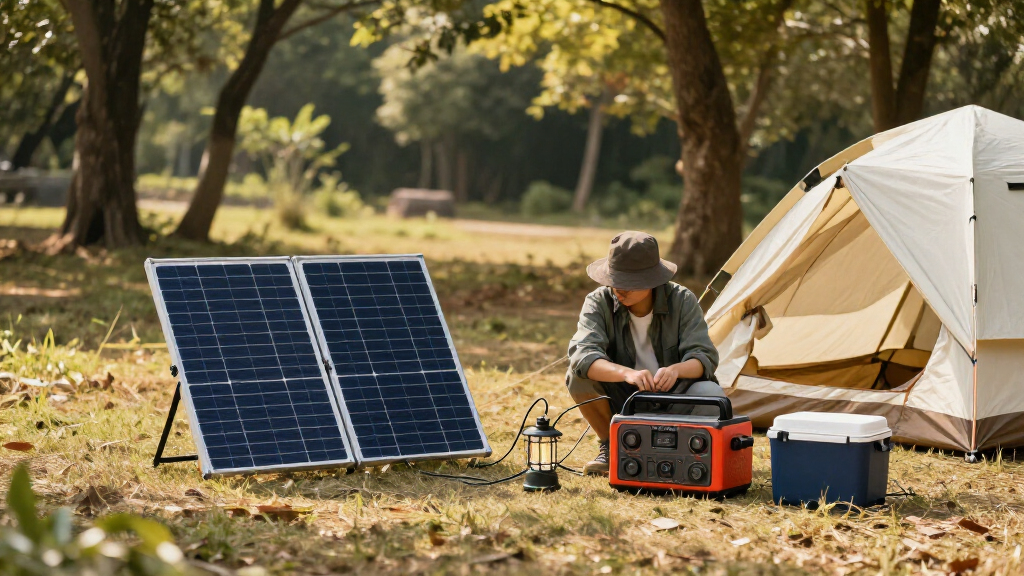
I ranked these panels for the job their title promises: portable solar charging for power stations. That means I looked beyond the maximum wattage and compared the details that shape day-to-day usefulness: the connection offered to the station, whether adapters are included, foldability and carrying information, positioning features, and extra device-charging ports. I also noted where the supplied product details leave a buyer with unanswered questions.
My ranking gives credit to meaningful power capacity, but only when the surrounding information makes the panel reasonably easy to match with a station. The CTOLITY 400W leads on stated output, yet its description specifies MC4 while the title lists additional outputs; that uncertainty keeps it from being an automatic choice for every station owner. The Renogy 200W ranks highly because its output, weight, folded dimensions, ports, and warranty are all stated, with the adapter caveat made clear.
Among the 100W options, I separate them by connection convenience and carry tradeoffs. ZOUPW supplies a five-connector cable and device-charging ports, while GRECELL lists multiple adapters and panel-pairing capability. Neither becomes the universal winner: the right pick depends on what your station accepts and whether you value connector variety, pairing flexibility, or lower listed weight. I have not treated rated output or efficiency as a guarantee of real-world charging speed; sunlight, panel orientation, temperature, cable setup, and the station’s input limit all affect actual results.
Factors to Consider When Choosing Portable Solar Panels For Power Stations
Before choosing among these four, I would start with the power station rather than the panel. A panel’s headline wattage has limited value if its voltage, connector, or wiring arrangement falls outside the station’s solar input specifications. Once that match is clear, compare output capacity with the amount you can comfortably carry and the way you expect to use the panel.
Match the panel to the station’s solar input
Check the station manual for its permitted solar input voltage range, maximum current, maximum wattage, and connector requirements. A panel can advertise 400W, 200W, or 100W while the station accepts less than that amount, or while the panel’s voltage falls outside the station’s accepted range. The station’s limit is what governs the usable connection; do not treat a higher panel rating as proof that the panel will charge every station.
Connector names are only part of the match. Confirm the exact plug, polarity, adapter arrangement, and whether the required cable is included. CTOLITY’s supplied details specify MC4 even though its title names additional outputs, while ZOUPW lists a five-connector cable and Renogy says its 4-in-1 adapter is sold separately. Those differences affect how ready a panel is for your particular station.
Choose output with realistic expectations
Higher rated output can make a bigger difference when a power station has a high enough solar input limit and the panel receives strong, well-positioned sunlight. That is why the CTOLITY 400W is the capacity-first pick and Renogy’s 200W model sits between it and the two 100W choices. These ratings are maximum stated values, not a promise of continuous output in changing outdoor conditions.
Cloud cover, shade, panel angle, temperature, and cable setup can all affect solar collection. A smaller panel may still be the more sensible choice if it fits your trip, storage space, and charging needs better. If you are considering two panels together, check whether your station allows the proposed series or parallel arrangement and whether the resulting voltage and current stay within its limits.
Balance panel capacity against carrying and storage
Foldable panels are easier to pack than rigid arrays, but “portable” does not mean weight-free. Renogy lists 13.9 pounds, GRECELL lists 10.3 pounds, and ZOUPW lists 9.5 pounds. CTOLITY does not provide a weight or folded dimensions in the supplied details, so its transport fit is harder to judge. If you move camp on foot or pack a small vehicle, published weight and folded size deserve as much attention as wattage.
Also distinguish the flat unfolded footprint from the packed footprint. A panel that spreads out to collect sun may need a clear spot at camp, then must fold down to a size that fits your vehicle or storage area. Renogy and both 100W panels provide folded dimensions; use those measurements to check your actual storage space rather than estimating from the panel’s power rating.
Treat efficiency and weather claims as supporting details
Stated cell efficiency can help compare how effectively a panel converts light under specified conditions, but a small difference in the listed percentage does not settle which panel will charge your station faster. Output wattage, available sunlight, placement, and the station’s input ceiling also shape results. The stated figures here range from 23.4% to 25%; use them as one comparison point, not a stand-in for real-world charging performance.
Likewise, coatings and water-resistance claims speak to outdoor design but do not mean every setup is safe in every condition. ZOUPW lists an IP67 rating, while CTOLITY’s title states IP65 and the descriptions mention ETFE surfaces on several models. Follow each product’s care instructions, protect connectors and power stations from exposure as directed, and avoid assuming that a weather-related rating covers every cable or connected device.
Decide whether direct USB ports or adapters matter more
Direct USB outputs can charge compatible phones and accessories without using the power station’s ports. Renogy lists USB-C PD 45W and dual USB-A; ZOUPW lists USB-C and two USB-A outputs. GRECELL’s supplied details emphasize station adapters and panel pairing instead, while CTOLITY’s listed connector information needs clarification before I would count on its additional ports.
Adapter convenience is a separate question from device charging. GRECELL says multiple adapters are included, ZOUPW specifies several connector types on its cable, and Renogy’s 4-in-1 adapter is sold separately. Before purchase, compare the actual station input with the panel’s supplied cables. If a necessary adapter is missing, include that extra part in your setup plan rather than assuming a connector will fit.
Compare warranty information and missing details
Warranty terms can help distinguish otherwise similar panels, but read the coverage and duration rather than treating a longer period as proof of better performance. Renogy lists a two-year material and workmanship warranty; ZOUPW lists 12 months. The supplied details for CTOLITY and GRECELL do not state warranty coverage, so check the current product documentation if that point affects your decision.
Missing specifications are themselves useful signals for a careful buyer. CTOLITY’s weight and folded size are absent from the supplied listing details, and its connector information conflicts with the broader connector references in its title. Resolve those gaps before choosing it for a tightly packed kit or a station that needs a specific cable. Clear fit matters more than a feature claim that cannot be confirmed for your setup.
Frequently Asked Questions
Which of these panels has the highest stated output?
The CTOLITY 400W has the highest stated maximum output, followed by the Renogy 200W and the two 100W models. That does not mean it will deliver 400W to every power station: the station must support the panel’s electrical input, and sunlight and panel positioning affect actual collection. I would check the station’s input ceiling before choosing a panel based on wattage alone.
How do I know whether a portable solar panel will work with my power station?
Compare the station’s solar input specifications with the panel’s voltage, current, connector, and cable arrangement. Check the exact plug and polarity, and confirm whether an adapter is included or sold separately. For example, Renogy lists an MC4 output and says its 4-in-1 adapter is sold separately, while ZOUPW names five connector types. A connector that fits physically still needs to match the station’s electrical limits.
Is a 200W panel always a better choice than a 100W panel?
No. A 200W panel such as Renogy’s can offer more stated capacity than the GRECELL or ZOUPW 100W panels, but it is also heavier than either listed 100W model and may exceed a station’s accepted solar input. A 100W panel can make more sense when storage space, carrying weight, or modest charging needs matter most. I would match capacity to the station and trip rather than select by wattage alone.
Can I connect two GRECELL panels to one power station?
GRECELL’s supplied details say that two panels can be connected in series or parallel, but that does not establish compatibility with every power station. Check the station manual for allowed wiring arrangements and maximum voltage and current, then confirm the cable setup. Series connections can raise voltage, while parallel connections can raise current, so stay within the station’s stated limits and use compatible components.
Can I charge a phone directly from these panels?
The Renogy and ZOUPW specifications list built-in USB outputs, so compatible devices may connect directly to those ports. The GRECELL details supplied here focus on MC4 and adapters for power stations and do not list USB ports. CTOLITY’s title mentions USB outputs, but its supplied connector details specify MC4, so I would verify exactly which outputs are included before relying on it for direct phone charging.
Conclusion
My recommendations depend on what you value most. Choose the CTOLITY 400W if your priority is the highest stated output in this group and you can confirm its actual cable package, weight, folded size, and station compatibility. Pick Renogy 200W for a more balanced setup with published carry dimensions, direct USB charging, and the longest stated warranty here, while accounting for its separately sold adapter and greater weight.
For a lighter-capacity camping setup, I would choose ZOUPW 100W when its specified connector cable and USB ports fit your needs. Choose GRECELL 100W instead if included adapters and the option to connect a second panel matter more than shaving weight or charging devices directly. Before ordering any of them, match the panel’s electrical output and connector setup to your power station; that check is what turns a promising panel into a useful part of your kit.
Fall Picks
fall essentials
As an affiliate, we earn on qualifying purchases.