
The best portable power station for home backup overall in this roundup is the EF EcoFlow DELTA 3 Max, whose 2,048Wh capacity gives it more reserve than the many 1,000Wh-class options here. For longer outages and heavier household loads, the Jackery HomePower 3600 Plus offers the largest listed capacity; for a compact setup, the Jackery Explorer 300 is easier to keep on hand but runs out of stored energy much sooner. The main tradeoff is between capacity for longer runtimes and a smaller, easier-to-move unit that can handle only a narrower set of essentials. Output, charging options, and the ability to connect to home circuits also affect what a station can actually support. Read on for the full breakdown and guidance on matching a station to the devices you need to keep running.

Get backup power and energy gear delivered free with Prime
- Fast, free delivery on millions of items
- Prime Video, Amazon Music and more included
- Member-only deals all year
Complete the kit


Key Takeaways
The 2,048Wh EF EcoFlow DELTA 3 Max stands apart from the cluster of roughly 1,000Wh units by offering more stored energy for backup without reaching the listed 3,584Wh capacity of the Jackery HomePower 3600 Plus.
The Jackery HomePower 3600 Plus has the highest stated capacity in this lineup, making it the strongest capacity-first candidate, though buyers should still check its output and circuit-connection details against their intended loads.
Several mid-size picks share a 1,024Wh capacity, but wattage and model features differ; capacity alone cannot tell you whether a station can start or run a particular appliance.
The 288–292Wh compact models are better framed as short-duration support for selected small devices than as a way to power multiple household appliances through a long outage.
The 2,010Wh Anker SOLIX S2000 lists a 1,500W output, while some smaller-capacity options list higher output figures; that contrast shows why buyers must compare both runtime capacity and appliance compatibility.
| EF EcoFlow DELTA 3 Max Portable Power Station, 2048Wh LiFePO4 Battery |  | Best Overall for Fast Home Backup | Battery capacity: 2,048Wh | Battery chemistry: LiFePO4 | X-Boost output: Up to 3,400W | VIEW LATEST PRICE | See Our Full Breakdown |
| Jackery HomePower 3600 Plus Portable Power Station, 3584Wh, 3600W |  | Best for Expandable Home Backup | Capacity: 3,584Wh | Output: 3,600W | Parallel output: 7,200W | VIEW LATEST PRICE | See Our Full Breakdown |
| BLUETTI Elite 100 Mini Portable Power Station, 1004.8Wh, 700W |  | Best Compact UPS-Style Backup | Battery capacity: 1,004.8Wh | Battery type: LiFePO4 | Running output: 700W | VIEW LATEST PRICE | See Our Full Breakdown |
| Anker SOLIX C1000 Gen 2 Portable Power Station |  | Best for High Output in a 1,024Wh Class | Battery capacity: 1,024Wh | Battery type: LiFePO4 | Running output: 2,000W | VIEW LATEST PRICE | See Our Full Breakdown |
| Jackery Explorer 1000 v2 Portable Power Station, 1024Wh LiFePO4 Battery |  | Best for Portable Essentials Backup | Battery capacity: 1,024Wh | Battery type: LiFePO4 | AC output: 1,500W | VIEW LATEST PRICE | See Our Full Breakdown |
| EF ECOFLOW DELTA 3 Classic Portable Power Station, 1024Wh, 1800W |  | Best for Fast, Compact Home Backup | Capacity: 1,024Wh | AC output: 1,800W | Surge output: 3,600W | VIEW LATEST PRICE | See Our Full Breakdown |
| Jackery Explorer 300 Portable Power Station, 292Wh |  | Best Lightweight Backup for Small Essentials | Capacity: 292Wh | Battery capacity: 20.4Ah | Peak surge: 600W | VIEW LATEST PRICE | See Our Full Breakdown |
| Anker SOLIX C300 Portable Power Station, 288Wh |  | Best for Charging Many Small Devices | Capacity: 288Wh | Running output: 300W | Surge output: 600W | VIEW LATEST PRICE | See Our Full Breakdown |
| EcoFlow DELTA 3 Portable Power Station, 1024Wh, 1800W |  | Best Expandable 1kWh Home Backup | Capacity: 1,024Wh | AC output: 1,800W | Surge output: 3,600W | VIEW LATEST PRICE | See Our Full Breakdown |
| BLUETTI Elite 30 V2 Portable Power Station 288Wh 600W LFP Solar Generator |  | Best Compact Station for Higher-Wattage Devices | Capacity: 288Wh | Continuous output: 600W | Power Lifting output: 1,500W | VIEW LATEST PRICE | See Our Full Breakdown |
| LIBRIDS C600 Portable Power Station, 640Wh, 600W |  | Best Compact Backup for Essentials | Battery capacity: 640Wh | Surge output: 1200W | Battery type: LiFePO4 | VIEW LATEST PRICE | See Our Full Breakdown |
| Anker SOLIX S2000 Portable Power Station, 2,010 Wh, 1,500 W |  | Best for Longer Essential-Load Backup | Battery capacity: 2,010Wh | Battery chemistry: LiFePO4 | Continuous and peak output: 1,500W continuous; 3,000W peak | VIEW LATEST PRICE | See Our Full Breakdown |
| portable power stations for home backup | Weight | Battery capacity | Battery chemistry | Capacity |
|---|---|---|---|---|
| EF EcoFlow DELTA 3 Max Portabl | — | 2,048Wh | LiFePO4 | — |
| Jackery HomePower 3600 Plus Po | 77.2 lbs | — | — | 3,584Wh |
| BLUETTI Elite 100 Mini Portabl | 23.5 lbs | 1,004.8Wh | — | — |
| Anker SOLIX C1000 Gen 2 Portab | 11.3kg | 1,024Wh | — | — |
| Jackery Explorer 1000 v2 Porta | 23.4 lbs | 1,024Wh | — | — |
| EF ECOFLOW DELTA 3 Classic Por | 26.7 pounds | — | LiFePO4 | 1,024Wh |
| Jackery Explorer 300 Portable | 7.5 pounds | 20.4Ah | LiFePO4 | 292Wh |
| Anker SOLIX C300 Portable Powe | 4.13kg | — | LiFePO4 | 288Wh |
| EcoFlow DELTA 3 Portable Power | — | — | LiFePO4 | 1,024Wh |
| BLUETTI Elite 30 V2 Portable P | About 9.5 pounds | — | LFP | 288Wh |
| LIBRIDS C600 Portable Power St | — | 640Wh | — | — |
| Anker SOLIX S2000 Portable Pow | — | 2,010Wh | LiFePO4 | — |
More Details on Our Top Picks
EF EcoFlow DELTA 3 Max Portable Power Station, 2048Wh LiFePO4 Battery
The EcoFlow DELTA 3 Max balances substantial capacity with a less-than-10ms transfer time, making it a strong fit for keeping selected home devices running when the grid drops. Its 2,400W output and X-Boost mode, rated up to 3,400W, give it more headroom for demanding appliances than the BLUETTI Elite 100 Mini, while its 2,048Wh battery offers twice that model’s stored energy. Reaching 80% charge in about 1.13 hours also helps when outages come in waves. The tradeoff is that it does not match the Jackery HomePower 3600 Plus for capacity or expansion, and its solar panel is sold separately. I’d choose it for a mix of fast recovery, meaningful backup capacity, and app controls, not for whole-home coverage without careful load planning.
Pros:- 2,048Wh capacity and 2,400W output suit a broader mix of home loads than compact 1,000Wh-class stations.
- Reaches 80% charge in about 1.13 hours for quicker recovery between outages.
- Less-than-10ms transfer time supports backup use for connected electronics.
- LiFePO4 battery, app controls, and a five-year warranty support long-term household use.
Cons:- The solar panel is optional, adding a separate purchase for solar recharging.
- Its listed runtime is 10 hours; actual operating time varies with connected loads.
- It has less capacity and expansion flexibility than the Jackery HomePower 3600 Plus.
Best for: Households that want fast-recharging backup for essential appliances and electronics, with app monitoring and enough capacity for more than a few small devices.
Not ideal for: Buyers seeking expandable, higher-capacity backup or a ready-to-use solar setup; the Jackery HomePower 3600 Plus offers greater capacity and expansion, while this unit needs a separate solar panel.
- Battery capacity:2,048Wh
- Battery chemistry:LiFePO4
- X-Boost output:Up to 3,400W
- Recharge time:0–80% in about 1.13 hours
- Transfer time:Less than 10ms
- Runtime:Listed as 10 hours
- Dimensions:9.4 × 12 × 19.44 in
- Warranty:5 years
Our verdict“Choose the DELTA 3 Max for fast-charging, mid-to-high-capacity backup for selected household loads, but look to the Jackery HomePower 3600 Plus if expansion is your priority.”
Jackery HomePower 3600 Plus Portable Power Station, 3584Wh, 3600W
For buyers who want a station that can grow beyond a single battery, the Jackery HomePower 3600 Plus makes the strongest case in this group. It starts with 3,584Wh and 3,600W output, then supports expansion up to 21kWh per unit or 43kWh with multiple units. Parallel operation can provide 240V, a capability the smaller EcoFlow DELTA 3 Max does not list, though it requires a second compatible unit. AC, solar, gas-generator, and hybrid charging give households more ways to replenish power during a prolonged outage. Wheels and a telescopic handle help with moving its 77.2-pound body, but they do not make it lightweight. With only two listed outlets, it may also call for careful use of connections. I’d pick it for capacity and expansion, not for portability or a simple grab-and-go setup.
Pros:- 3,584Wh capacity provides more stored energy than the other listed stations.
- Expandable to 21kWh per unit or 43kWh with multiple units.
- AC, solar, gas-generator, and hybrid charging offer varied ways to recharge during outages.
- Wheels and a telescopic handle make repositioning easier than carrying the 77.2-pound unit.
Cons:- At 77.2 pounds, it is cumbersome to lift or carry despite its wheels.
- 240V operation requires a parallel configuration rather than a single unit.
- Only two outlets are listed, which can limit direct connections for multiple devices.
Best for: Homeowners preparing for longer outages who want a high-capacity starting point, multiple charging methods, and a path to expanded storage or 240V operation.
Not ideal for: People who need a genuinely easy-to-carry station, or buyers who want 240V from a single unit; this model weighs 77.2 pounds and needs parallel configuration for 240V.
- Capacity:3,584Wh
- Output:3,600W
- Parallel output:7,200W
- Voltage:120V; 240V in parallel
- Expandable capacity:Up to 21kWh per unit or 43kWh with multiple units
- Charging options:Hybrid AC+DC, AC, solar, and gas generator
- Weight:77.2 lbs
- Battery cycle life:Designed for up to 6,000 cycles
- Warranty:5 years
Our verdict“Choose the HomePower 3600 Plus if capacity expansion and flexible recharging matter more than low weight or single-unit 240V operation.”
BLUETTI Elite 100 Mini Portable Power Station, 1004.8Wh, 700W
The BLUETTI Elite 100 Mini is best viewed as a compact backup for routers, laptops, lights, and other modest loads—not as a station for running high-draw appliances. Its 1,004.8Wh battery and 700W running output are much less capable than the Anker SOLIX C1000 Gen 2, which supplies 2,000W from a similar-sized battery. That lower output is the central compromise, but the Elite 100 Mini adds three AC outlets, 140W USB-C, app control, and a UPS switchover of 10ms or less. At 23.5 pounds, its compact shape saves space more readily than it saves lifting effort. I’d choose it for a small backup station that can sit near network or work equipment, while skipping it if household appliances are part of the plan.
Pros:- Compact footprint fits more easily beside a desk or home networking setup.
- 10ms-or-less UPS switchover supports backup for connected electronics.
- Three AC outlets and 140W USB-C offer useful connection options for small devices.
- LiFePO4 battery is rated for more than 6,000 cycles.
Cons:- 700W running output rules out many high-draw household appliances.
- Its 1,004.8Wh capacity provides much less stored energy than the Jackery HomePower 3600 Plus.
- At 23.5 pounds, it may still be awkward to carry frequently.
Best for: People in apartments or home offices who want a compact battery backup for networking gear, laptops, lighting, and other devices below its 700W running limit.
Not ideal for: Households expecting to run high-draw appliances or several demanding loads; the Anker SOLIX C1000 Gen 2 offers substantially higher output at similar battery capacity.
- Battery capacity:1,004.8Wh
- Battery type:LiFePO4
- Running output:700W
- Surge output:1,400W
- AC outlets:3
- USB-C output:140W
- UPS switchover:10ms or less
- Weight:23.5 lbs
- Charging time:1.5 hours to 80%
Our verdict“Pick the Elite 100 Mini for compact, low-load electronics backup, but choose a higher-output model such as the Anker SOLIX C1000 Gen 2 for appliances.”
Anker SOLIX C1000 Gen 2 Portable Power Station
The Anker SOLIX C1000 Gen 2 stands out when the load matters more than the size of the battery. Its 2,000W running output is higher than the Jackery Explorer 1000 v2’s 1,500W, so it can accommodate a wider range of appliances, while its 1,024Wh capacity remains in the same general class. That pairing makes it useful for short outages or brief appliance use, but it does not provide the longer reserve of the Jackery HomePower 3600 Plus. Charging is a major strength: AC input can bring it back in 49 minutes, and solar input supports up to 600W. Under-10ms UPS switching adds support for connected electronics. The tradeoffs are a 600W solar-input ceiling and a weight of 11.3kg. I’d favor it for a fast-recovery, high-output setup, not extended backup without a recharge source.
Pros:- 2,000W running output exceeds the Jackery Explorer 1000 v2’s 1,500W rating.
- AC recharge can take about 49 minutes at 1,600W input.
- Under-10ms UPS switchover supports connected equipment during a power interruption.
- Nine total power outlets provide more connection options than the Jackery HomePower 3600 Plus’s two listed outlets.
Cons:- 1,024Wh capacity is limited for prolonged outages or sustained appliance use.
- Solar input tops out at 600W, limiting maximum solar recharging power.
- At 11.3kg, it is not a lightweight carry for frequent movement.
Best for: Households that need a relatively compact station with enough output for more demanding appliances, and can recharge it between periods of use.
Not ideal for: Buyers preparing for long outages without access to charging, or those prioritizing high solar input; its 1,024Wh capacity and 600W solar limit are less suited to extended off-grid backup.
- Battery capacity:1,024Wh
- Battery type:LiFePO4
- Running output:2,000W
- Peak output:3,000W
- AC recharge time:49 minutes at 1,600W
- Maximum solar input:600W
- UPS switchover:Under 10ms
- Total power outlets:9
- Weight:11.3kg
Our verdict“Choose the C1000 Gen 2 when high output and quick AC recharge matter more than long-duration storage or a higher solar-input ceiling.”
Jackery Explorer 1000 v2 Portable Power Station, 1024Wh LiFePO4 Battery
The Jackery Explorer 1000 v2 suits buyers who want a 1,024Wh station that can move between home backup and outdoor use. Its 1,500W AC output and 3,000W surge rating cover a useful range of essential devices, though the Anker SOLIX C1000 Gen 2 offers a higher 2,000W running output and more listed outlets. The Jackery’s selling point is a combination of a foldable handle, 23.4-pound weight, app-controlled charging, and a 10ms UPS switchover. Standard full charging takes about 1.25 hours; the 50-minute option requires emergency charging to be enabled in the app. Solar power is not included and is limited to Jackery panels, which narrows your choices compared with the EcoFlow DELTA 3 Max. I’d pick it for portable essentials, not broad household coverage or brand-flexible solar charging.
Pros:- 1,024Wh capacity, 1,500W AC output, and 3,000W surge rating support a range of essential devices.
- 10ms UPS switchover helps keep connected equipment running through an interruption.
- Foldable handle and 23.4-pound weight aid movement between home and outdoor use.
- App-controlled charging offers a 50-minute emergency-charge mode.
Cons:- Solar panel is not included, and solar charging supports Jackery panels only.
- Its 1,500W output is lower than the Anker SOLIX C1000 Gen 2’s 2,000W rating.
- The 50-minute charge requires emergency mode; standard full charging takes about 1.25 hours.
Best for: Buyers who want one manageable station for essential home devices and occasional camping, with app controls and a 10ms UPS switchover.
Not ideal for: Households needing higher continuous output or flexible solar-panel compatibility; the Anker SOLIX C1000 Gen 2 has more running wattage, and this Jackery supports Jackery solar panels only.
- Battery capacity:1,024Wh
- Battery type:LiFePO4
- AC output:1,500W
- Surge peak:3,000W
- UPS switchover:10ms
- Standard charging time:About 1.25 hours for a full charge
- Emergency charging time:50 minutes for a full charge when enabled in the app
- Weight:23.4 lbs
- Solar compatibility:Jackery solar panels only; panel not included
Our verdict“Choose the Explorer 1000 v2 for portable essential-device backup and app-controlled charging, but favor the Anker C1000 Gen 2 if you need higher output.”
EF ECOFLOW DELTA 3 Classic Portable Power Station, 1024Wh, 1800W
The DELTA 3 Classic pairs a useful 1,024Wh capacity with 1,800W output, giving it more headroom for household essentials than the compact 288Wh models here. Its under-10ms UPS switching is a practical advantage for routers and other electronics that should stay on through a brief outage. AC charging can reach 80% in 45 minutes, while optional solar provides another way to replenish it. At 26.7 pounds, it is still manageable to move, though it weighs more than the Jackery Explorer 300 and Anker SOLIX C300. The main limitation is expansion: unlike the EcoFlow DELTA 3, the Classic does not work with DELTA 2 or DELTA 3 Series Smart Extra Batteries. I’d choose it for a portable, quick-recharging backup, not for building a larger expandable system.
Pros:- 1,024Wh capacity and 1,800W output suit a wider range of essentials than compact 288Wh stations.
- Under-10ms UPS switching helps keep connected electronics running through brief outages.
- AC charging reaches 80% in 45 minutes.
- LiFePO4 battery, app controls, and 100W USB-C output add useful daily flexibility.
Cons:- Not compatible with DELTA 2 or DELTA 3 Series Smart Extra Batteries.
- The 500W solar panel needed for the stated 2.5-hour solar charge is optional.
- At 26.7 pounds, it is less convenient to carry than the smaller Jackery Explorer 300 or Anker SOLIX C300.
Best for: Households seeking a portable 1kWh-class station for routers, lights, and other essentials, with fast AC recharging and UPS support.
Not ideal for: Buyers who want to expand capacity later with DELTA 2 or DELTA 3 Series Smart Extra Batteries, or need the longer runtimes of a larger home-backup unit.
- Capacity:1,024Wh
- AC output:1,800W
- Surge output:3,600W
- Battery chemistry:LiFePO4
- AC charging:0–80% in 45 minutes
- UPS switching:Under 10ms
- AC outlets:6
- USB-C output:100W
- Weight:26.7 pounds
Our verdict“Choose the DELTA 3 Classic for quick-recharging, UPS-capable backup in a portable 1kWh format, but skip it if battery expansion is part of your plan.”
Jackery Explorer 300 Portable Power Station, 292Wh
For a small outage kit that needs to move easily, the Jackery Explorer 300 is a simpler fit than the 1,024Wh EcoFlow DELTA 3 models. Its 7.5-pound weight and carry handle make it practical to move between a router, phone, and a few lights, while six ports cover common device types. The LiFePO4 battery is rated for over 4,000 cycles to 70% capacity, a useful durability detail for repeated use. The tradeoff is capacity and output: 292Wh and 300W are far below the larger stations, so this is not a solution for running high-wattage appliances or powering a household for long. Solar charging is supported, but the panel is separate. I’d treat it as a personal electronics backup, not a substitute for a larger home station.
Pros:- At 7.5 pounds, it is easy to carry and reposition during an outage.
- Six ports include AC outlets, USB-C PD, USB-A, and a car port.
- LiFePO4 battery is rated for over 4,000 cycles to 70% capacity.
- Supports solar charging with compatible Jackery panels.
Cons:- 292Wh capacity offers much shorter runtimes than the EcoFlow DELTA 3 or DELTA 3 Classic.
- 300W rated output limits the devices it can run.
- Solar panel is sold separately.
Best for: People who want a light, easy-to-store outage kit for phones, a router, small lights, and other low-power electronics.
Not ideal for: Households needing longer runtimes, high-wattage appliance support, or backup for several devices at once; its 292Wh capacity and 300W output are limited.
- Capacity:292Wh
- Battery capacity:20.4Ah
- Peak surge:600W
- Battery chemistry:LiFePO4
- Ports:6: 2 AC, 1 USB-C PD, 2 USB-A, 1 car port
- USB-C PD output:100W
- Weight:7.5 pounds
Our verdict“Pick the Explorer 300 for portable backup of small electronics, but choose a 1kWh-class station if you need meaningful household runtimes.”
Anker SOLIX C300 Portable Power Station, 288Wh
The Anker SOLIX C300 is a compact backup choice for households prioritizing ports over long runtimes. Its eight outputs, including three USB-C ports and three AC outlets, make it easier to keep several small devices connected than the Jackery Explorer 300, which has six ports. Two USB-C ports provide up to 140W each, useful for compatible laptops and fast-charging devices. At 288Wh and 300W, though, it remains a short-duration option; it cannot match the EcoFlow DELTA 3’s capacity for outage essentials over a longer stretch. Wall, solar, car, and USB-C charging provide flexibility, and the stated 25dB noise level is quiet. The solar panel and shoulder strap are separate, and solar compatibility has limitations, so I’d check the panel connection before planning solar as a backup source.
Pros:- Eight ports, including three AC outlets and three USB-C ports, support several devices at once.
- Two USB-C ports deliver up to 140W each for compatible devices.
- Can recharge from AC, solar, a car, or USB-C.
- Compact format and 25dB stated noise level suit indoor use.
Cons:- 288Wh capacity provides limited runtime compared with 1,024Wh stations.
- Shoulder strap and compatible solar panel are sold separately.
- Solar compatibility excludes several listed Anker panels and 5V/3A USB-C panels.
Best for: Remote workers and households who need to charge several phones, laptops, and small electronics during a brief outage.
Not ideal for: Buyers seeking extended home backup or appliance power; its 288Wh capacity and 300W output are much smaller than the EcoFlow DELTA 3’s.
- Capacity:288Wh
- Running output:300W
- Surge output:600W
- Battery chemistry:LiFePO4
- Charging ports:8
- USB-C output:Two 140W ports and one 15W port
- AC recharge:80% in 50 minutes
- Weight:4.13kg
- Noise level:25dB at 3.3 feet
Our verdict“Choose the C300 when multiple-device charging and compact size matter more than long backup runtime.”
EcoFlow DELTA 3 Portable Power Station, 1024Wh, 1800W
The EcoFlow DELTA 3 is the better fit than the DELTA 3 Classic for buyers who may need more capacity later: it can expand to up to 5kWh with compatible EcoFlow batteries. Its 1,024Wh battery and 1,800W AC output give it a stronger home-backup foundation than the Jackery Explorer 300 or Anker SOLIX C300, while 13 outlets allow more devices to connect at once. Fast charging is another advantage, with a stated 80% charge in 30 minutes and full charge in 56 minutes. The tradeoff is that expansion depends on separately acquired compatible batteries, and at 12.5kg it is less nimble than the compact stations. I’d rank it above the Classic for a growing backup setup, but not for buyers who only need a light, low-capacity device.
Pros:- Expandable capacity up to 5kWh with compatible EcoFlow batteries.
- 1,800W AC output and 1,024Wh capacity suit more home essentials than compact stations.
- Fast AC charging reaches 80% in 30 minutes, according to the supplied specifications.
- Thirteen power outlets support multiple connected devices.
Cons:- Expansion requires compatible EcoFlow battery packs.
- At 12.5kg, it is less portable than the Jackery Explorer 300 and Anker SOLIX C300.
- The listed IP65 protection applies to the battery pack, not the whole power station.
Best for: Households wanting a 1kWh starting point with a path to longer runtimes through compatible EcoFlow expansion batteries.
Not ideal for: Buyers who need the lightest station for occasional phone and laptop charging, or who do not want expansion to depend on compatible battery packs.
- Capacity:1,024Wh
- AC output:1,800W
- Surge output:3,600W
- X-Boost output:2,200W
- Battery chemistry:LiFePO4
- Expandable capacity:Up to 5kWh with compatible EcoFlow batteries
- Solar input:500W
- AC charging:80% in 30 minutes; full charge in 56 minutes
- Power outlets:13
Our verdict“Choose the DELTA 3 if you want substantial 1kWh-class backup now and a compatible expansion path for longer outages.”
BLUETTI Elite 30 V2 Portable Power Station 288Wh 600W LFP Solar Generator
Unlike the Jackery Explorer 300 and Anker SOLIX C300, the BLUETTI Elite 30 V2 offers 600W continuous output from a similarly small 288Wh battery. That extra output headroom can accommodate some higher-wattage devices, but it does not create longer runtimes: the capacity remains far below the 1,024Wh EcoFlow DELTA 3. BLUETTI also lists a 1,500W Power Lifting mode, 10ms UPS switching, and 0–80% AC charging in 45 minutes, making the unit a flexible short-duration option for electronics and selected emergency loads. At about 9.5 pounds, it is portable, though heavier than the Jackery Explorer 300. I’d consider it for compact backup where output capability matters more than stored energy, while checking device requirements carefully before relying on Power Lifting mode.
Pros:- 600W continuous output exceeds the 300W ratings of the Jackery Explorer 300 and Anker SOLIX C300.
- 10ms UPS switching supports connected electronics during a power interruption.
- AC charging reaches 80% in 45 minutes.
- Multiple charging modes include AC, solar, and car charging.
Cons:- 288Wh capacity limits how long it can run devices during an outage.
- Power Lifting mode is listed separately from the 600W continuous output, so device requirements need checking.
- At about 9.5 pounds, it weighs more than the Jackery Explorer 300.
Best for: People wanting a compact outage station for electronics and selected devices that need more than 300W, with UPS support for connected equipment.
Not ideal for: Households needing extended runtime or backup for multiple large appliances; 288Wh is a small energy reserve despite the higher output rating.
- Capacity:288Wh
- Continuous output:600W
- Power Lifting output:1,500W
- Battery chemistry:LFP
- UPS switching:10ms
- AC charging:0–80% in 45 minutes
- Outlets:9
- USB-C output:140W PD fast charging
- Weight:About 9.5 pounds
Our verdict“Pick the Elite 30 V2 for compact backup with higher output and UPS switching, but choose a 1kWh-class station for longer household coverage.”
LIBRIDS C600 Portable Power Station, 640Wh, 600W
The LIBRIDS C600 suits buyers who want a compact buffer for a router, lights, phones, or other modest loads rather than whole-room backup. Its 640Wh capacity, four AC outlets, and 10ms UPS switching offer practical support for sensitive electronics during an outage. Compared with the larger Anker SOLIX S2000, it is far easier to carry and store, but its 600W rated output and smaller battery limit the appliances and runtime it can support. The LiFePO4 battery is rated for more than 4,000 cycles while retaining over 80% capacity, and four charging methods add flexibility for replenishing it. The tradeoff is a firm power ceiling, and solar charging depends on a compatible XT60 connection.
Pros:- Compact 16.3-pound design is easier to store and move than the Anker SOLIX S2000.
- LiFePO4 battery rated for more than 4,000 cycles while retaining over 80% capacity.
- 10ms UPS switching and pure sine wave AC output suit sensitive electronics.
- AC, solar, car, and gas-generator charging offer several replenishment options.
Cons:- The 600W rated output rules out many high-draw household appliances.
- Its 640Wh capacity provides less outage runtime than larger options such as the Anker SOLIX S2000.
- Solar charging requires a compatible XT60 connection.
Best for: Apartment residents or remote workers who need portable backup for networking gear, phones, lighting, and other low-wattage essentials.
Not ideal for: Households seeking longer backup for refrigerators, high-wattage appliances, or several large loads; the 600W rated output and 640Wh capacity are limiting.
- Battery capacity:640Wh
- Surge output:1200W
- Battery type:LiFePO4
- Output ports:8 total, including 4 AC outlets
- UPS switching time:10ms
- Charging methods:AC wall outlet, solar panel via XT60, car charging port, or gas generator
- Weight and dimensions:16.3 lb; 8.1 × 7.1 × 8.3 in
Our verdict“Choose the LIBRIDS C600 for portable backup of low-wattage essentials, but pick a higher-capacity station for appliance use or longer outages.”
Anker SOLIX S2000 Portable Power Station, 2,010 Wh, 1,500 W
For buyers who want more outage headroom without stepping up to a much larger station, the Anker SOLIX S2000 offers a useful middle ground: 2,010Wh capacity, 1,500W continuous output, and a 3,000W peak. That combination can support more substantial loads and longer use than the LIBRIDS C600, though it weighs 35.7 pounds and is less convenient to move around. Its under-10ms UPS switchover can help keep connected electronics running through brief interruptions, while eight outlets and up to 400W of solar input suit a household backup setup. The stated runtime of up to 35 hours depends on the load and conditions, so it is not a promise for every appliance. One notable gap for backup planning: there is no 12V DC port.
Pros:- 2,010Wh capacity offers substantially more stored energy than the LIBRIDS C600.
- 1,500W continuous and 3,000W peak output support a broader range of loads than compact stations.
- Under-10ms UPS switchover and eight outlets suit a multi-device home backup setup.
- Supports up to 400W solar input and several recharge methods, including generator and alternator charging.
Cons:- At 35.7 pounds, it is less portable than the LIBRIDS C600.
- No 12V DC port limits direct connection to equipment that requires that output.
- Actual runtime varies with connected devices, usage, and ambient temperature.
Best for: Households that want a higher-capacity station for several essential devices and longer backup periods, with solar or generator recharging available.
Not ideal for: Buyers who need a lightweight grab-and-go unit or a 12V DC connection for compatible equipment.
- Battery capacity:2,010Wh
- Battery chemistry:LiFePO4
- Continuous and peak output:1,500W continuous; 3,000W peak
- Outlets:8
- Solar input:Up to 400W
- UPS switchover:Less than 10ms
- Recharge options:AC, solar, wall outlet, generator, solar panels, alternator charger, or car outlet
- Weight and dimensions:35.7 lb; 8.19 × 11.1 × 12.7 in
Our verdict“Choose the Anker SOLIX S2000 for more substantial, longer-lasting essential-load backup, provided its weight and lack of a 12V DC port fit your setup.”
How We Picked
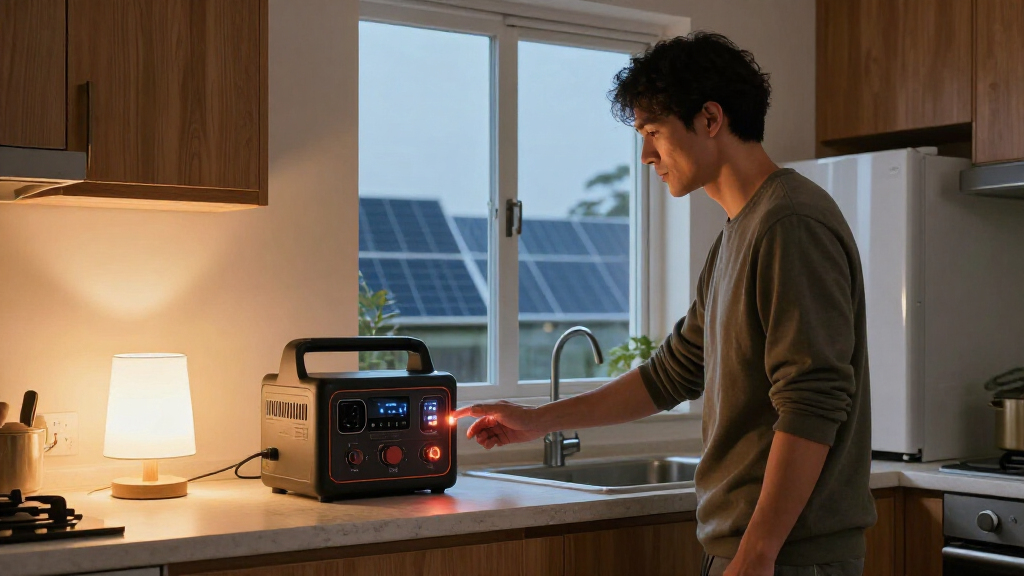
I ranked these stations for home-backup usefulness, not as general camping or travel gear. I weighed listed capacity for potential runtime, stated output for the kinds of loads a unit may support, and the practical difference between a compact station and a larger, heavier backup source. I also considered how clearly each model’s stated specifications let a buyer match it to essential devices; missing or limited specification details call for checking the manufacturer’s current documentation before purchase.
The order favors options that offer a persuasive balance of usable capacity and output for common outage priorities, then distinguishes high-capacity picks from compact units with narrower roles. A larger watt-hour figure does not automatically mean a station can run every appliance: output limits, surge demands, connection method, and recharge plans all matter. I assigned each product a distinct role so readers can see when a smaller or less powerful option is a better fit than a higher-ranked, larger station.
| portable power stations for home backup | Battery chemistry |
|---|---|
| EF EcoFlow DELTA 3 Max Portabl | LiFePO4 |
| Jackery HomePower 3600 Plus Po | — |
| BLUETTI Elite 100 Mini Portabl | — |
| Anker SOLIX C1000 Gen 2 Portab | — |
| Jackery Explorer 1000 v2 Porta | — |
| EF ECOFLOW DELTA 3 Classic Por | LiFePO4 |
| Jackery Explorer 300 Portable | LiFePO4 |
| Anker SOLIX C300 Portable Powe | LiFePO4 |
| EcoFlow DELTA 3 Portable Power | LiFePO4 |
| BLUETTI Elite 30 V2 Portable P | LFP |
| LIBRIDS C600 Portable Power St | — |
| Anker SOLIX S2000 Portable Pow | LiFePO4 |
Factors to Consider When Choosing Portable Power Stations For Home Backup
Choosing a backup station starts with the outage tasks you want to cover, not with the biggest number on a product page. I would make a short load plan first, then use it to compare capacity, output, charging, and home connection needs.
Start With Essential Loads, Not Whole-Home Expectations
Write down the devices you need during an outage, such as a router, phones, lights, medical equipment, or a refrigerator, and check their running and startup requirements. A portable station can be useful for selected circuits or plug-in devices, but it is not automatically a substitute for a home generator. Commonly, buyers count every appliance they might want and end up paying for capacity they rarely use, or they assume one station can support loads that exceed its output. Decide which devices can take turns and which must run continuously. That simple priority list often points to a smaller, more manageable setup than a vague goal of powering the whole house.
Treat Watt-Hours and Watts as Different Questions
Capacity, stated in watt-hours, gives a rough indication of how much energy is stored; output, stated in watts, limits how much power the station can supply at once. A high-capacity unit can still be unsuitable for an appliance whose demand exceeds its output, while a high-output unit may run out of energy quickly under a sustained load. Check both continuous output and any surge rating against appliance labels or manufacturer guidance. Add a margin for startup loads and conversion losses rather than assuming all labeled capacity reaches your devices. This distinction explains why comparing a 2,010Wh station with a 1,024Wh model on capacity alone can lead to the wrong choice.
Estimate Runtime With Realistic Usage
Use the device’s average draw and the station’s usable energy to estimate runtime, then treat that figure as a planning guide rather than a promise. Refrigerators cycle on and off, while a heater or kettle can consume energy rapidly whenever it runs. If several devices share the station, add their expected use across the same period instead of calculating each one in isolation. Leave room for battery conversion losses and changes in appliance demand. For a long outage, a modest daily energy budget paired with a recharge plan may be more useful than buying a larger station without considering how to refill it.
Plan How You Will Recharge During an Outage
A station’s value depends partly on whether you can recharge it when the grid is down. Check supported AC, vehicle, and solar charging methods, along with the input limits and recharge times listed by the maker. Solar can extend backup use, but panel output varies with weather, shade, season, and placement; do not plan around ideal sunlight every day. A vehicle can provide another route in some situations, though charging may take time and consume fuel. Before buying panels or cables, confirm that they are compatible with the station and that the full setup fits your available space.
Check Home Connection and Transfer Requirements
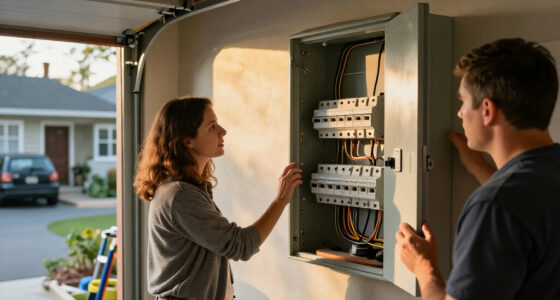
Plugging individual appliances into a station is different from feeding power to household wiring. If you want to support selected home circuits, check whether the model supports an approved transfer device or other manufacturer-authorized connection, and ask a qualified electrician about installation. Never connect a power station to a wall outlet as a way to energize home wiring; that can create dangerous backfeed. Confirm the equipment and installation requirements before choosing a model, since connection options can shape the entire backup plan. Buyers who only need to run a few plug-in devices may not need a home-circuit setup at all.
Balance Portability, Placement, and Battery Care
Large-capacity stations can reduce the need to ration power, but their size and weight may make them harder to move, store, or position near the devices they serve. Think through where the unit will sit during an outage, how it will be carried, and whether cords can reach safely without creating trip hazards. Follow the maker’s guidance for operating temperature, storage charge, periodic checks, and ventilation. Battery chemistry and cycle-life claims can inform long-term ownership, but they do not remove the need for proper care. A slightly smaller station that is accessible and maintained may be more useful than a larger one that is difficult to deploy.
Frequently Asked Questions
Which station in this roundup is most suitable for keeping a refrigerator running?
I would compare the refrigerator’s startup demand with the station’s output rating first, then estimate runtime from its average energy use. The Jackery HomePower 3600 Plus has the largest listed capacity here at 3,584Wh, while the EF EcoFlow DELTA 3 Max offers 2,048Wh, but capacity by itself does not confirm appliance compatibility. Check the refrigerator’s label or manual and compare both running and surge requirements with the station’s specifications. Also account for other devices sharing the unit, since they reduce the energy available to the fridge. If the refrigerator is a priority, verify the current model documentation before relying on any estimate.
Can a portable power station run my home’s furnace or central air conditioner?
Do not assume that a portable station can run either system. Furnaces and central air conditioners can have high startup demands, and their wiring and power requirements may not match a station’s outlets or output limits. Check the appliance specifications and the station’s continuous and surge ratings, then confirm any home-circuit connection with a qualified electrician. A station intended for plug-in essentials may be better suited to a router, lights, and selected small devices. For large fixed loads, compare purpose-built backup systems and installation requirements rather than relying on capacity alone.
Is a 1,000Wh station enough for an overnight outage?
It can be enough for a carefully selected set of low-draw essentials, but the answer depends on what runs and for how long. The lineup includes several models around 1,024Wh, yet a refrigerator, medical device, or multiple electronics can produce very different energy demands. List each device’s approximate wattage and operating hours, then allow for losses and unexpected use. If you need to run high-draw appliances or cover a longer outage, a higher-capacity option such as the 2,048Wh DELTA 3 Max may provide more room, though it still needs to meet each appliance’s output requirements. A recharge plan can matter as much as the initial capacity.
Should I choose a compact 288–292Wh station or a larger model for emergency backup?
A compact unit makes sense if your goal is limited support for phones, small electronics, or a few low-draw devices and you value easier storage and carrying. In this roundup, the Jackery Explorer 300, Anker SOLIX C300, and BLUETTI Elite 30 V2 sit in that compact capacity range, so they are not close substitutes for the 2,048Wh or 3,584Wh options when longer runtime is the priority. Estimate the energy your essential devices need over the outage period before choosing. If you need to support a refrigerator or several devices for many hours, a larger station is more likely to fit, subject to output compatibility. Some households may prefer a compact station as a secondary unit rather than their main backup.
What should I verify before connecting a power station to household wiring?
First confirm that the station supports a manufacturer-approved home connection method and that the required transfer equipment is compatible. Have a qualified electrician review the installation, circuit priorities, and local requirements before connecting anything to household wiring. Do not plug a station into a wall outlet to power the home, because that can send electricity back toward utility lines and create a serious hazard. Check whether the chosen circuits’ combined loads and startup demands fit the station’s output. If your plan only involves individual appliances plugged directly into the unit, a household wiring connection may not be necessary.
Conclusion
For most buyers seeking a balance of capacity and home-backup usefulness, I would start with the EF EcoFlow DELTA 3 Max as the best overall pick. The Jackery HomePower 3600 Plus is my capacity-first premium choice for buyers who need a larger stored-energy reserve and can confirm that its output and connection options match their loads. For a value-minded buyer, I would compare the 1,024Wh class—including the Jackery Explorer 1000 v2, EF ECOFLOW DELTA 3 Classic, EcoFlow DELTA 3, and Anker SOLIX C1000 Gen 2—against actual output, charging, and connection specifications rather than choosing by capacity alone. The Jackery Explorer 300 is the simplest fit for beginners who only need short-duration support for small devices, while the 288–292Wh models suit compact, limited-use backup. If you need more stored energy but have a specific output ceiling in mind, the Anker SOLIX S2000 deserves a closer spec check; match every candidate to your essential loads and outage plan before deciding.