
Solar powered backup generators offer a clean, quiet, and sustainable way to stay powered during outages or off-grid adventures. The best models balance capacity, portability, and affordability, but tradeoffs between size, price, and charging speed are common. The EF ECOFLOW DELTA 2 Max stands out for its large capacity and fast recharging, making it ideal for emergency use. The Jackery Explorer 300 offers a compact, budget-friendly option perfect for light power needs, while the OSCAL PowerMax 6000 provides high output for larger appliances. Continue reading for a detailed comparison to find the best fit for your needs.

Get backup power and energy gear delivered free with Prime
- Fast, free delivery on millions of items
- Prime Video, Amazon Music and more included
- Member-only deals all year
Complete the kit


Key Takeaways
- Top picks balance capacity, portability, and charging speed, with no one-size-fits-all solution.
- Large capacity models tend to be heavier and more expensive but are better for longer outages or bigger loads.
- Portable, lightweight options excel for camping or small emergency kits but have limited power output.
- Integrated solar panels simplify setup but may limit overall capacity and charging speed.
- Price varies widely; investing in a higher-capacity unit often provides better long-term value for emergency preparedness.
| ZeroKor 300W Portable Power Station with 60W Foldable Solar Panel | 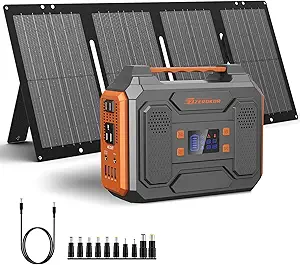 | Best for Emergency Features | Maximum output: 300W | AC outlets: 2 × 300W max | Solar panel: 60W monocrystalline; 20.5% conversion efficiency | VIEW LATEST PRICE | See Our Full Breakdown |
| Powkey 200W Portable Power Station with 40W Solar Panel |  | Best Lightweight Budget Pick | Battery capacity: 146Wh / 39,600mAh | Rated output: 200W | AC outlets: 2 × 110V pure sine wave | VIEW LATEST PRICE | See Our Full Breakdown |
| MARBERO 237Wh Portable Power Station with 60W Foldable Solar Panel |  | Best for Port Variety | Capacity: 237Wh / 64,000mAh | AC output: 2 × 300W rated, 375W peak, pure sine wave | USB-A: 2 × QC3.0 up to 18W; 2 × 5V/2.1A | VIEW LATEST PRICE | See Our Full Breakdown |
| OSCAL PowerMax 6000 Solar Generator with Three 400W Solar Panels |  | Best for Home Backup | Battery capacity: 3600Wh | Battery chemistry: LiFePO4 | AC output: 6000W | VIEW LATEST PRICE | See Our Full Breakdown |
| Jackery Explorer 300 Portable Power Station with 40W Solar Panel |  | Best for Long-Term Portable Use | Capacity: 292Wh | AC output: 300W rated, 600W peak surge | Weight: 7.5 lbs | VIEW LATEST PRICE | See Our Full Breakdown |
| BROWEY 1600W Portable Power Station with Built-In Solar Panel |  | Best for Long-Term Use | Battery capacity: 1,024Wh | Battery type: LiFePO4 | AC output: 1,600W (3,200W peak) | VIEW LATEST PRICE | See Our Full Breakdown |
| MARBERO 155Wh Portable Solar Generator with 30W Solar Panel |  | Best Compact Solar Kit | Battery capacity: 155Wh (42,000mAh) | Solar panel: 30W; 23% stated conversion efficiency | Solar charging time: 6–7 hours | VIEW LATEST PRICE | See Our Full Breakdown |
| Jackery HomePower 3600 Plus Portable Power Station with 2x200W Solar Panels |  | Best Premium Home Backup | Capacity: 3,584Wh; expandable to 21kWh per unit and 43kWh with multiple units | AC output: 3,600W; 7,200W in parallel | Voltage: 120V and 240V in parallel | VIEW LATEST PRICE | See Our Full Breakdown |
| Jackery Solar Generator 1000 v2 with 200W Solar Panel |  | Best Balanced Solar Bundle | Battery capacity: 1,070Wh | Battery type: LFP | AC output: 1,500W; 3,000W surge peak | VIEW LATEST PRICE | See Our Full Breakdown |
| BROWEY 1600W Portable Power Station with Built-In Solar Panel |  | Best for Multi-Device Charging | Capacity: 1,024Wh | Battery: LiFePO4 | Output: 1,600W pure sine wave; 3,200W peak | VIEW LATEST PRICE | See Our Full Breakdown |
| UDPOWER S1200 1190Wh Solar Generator Kit with 120W Solar Panel |  | Best Overall Solar-Powered Backup Generator | Battery capacity: 1190Wh | Battery chemistry: LiFePO4 | Battery cycle life: 4,000+ cycles | VIEW LATEST PRICE | See Our Full Breakdown |
| Apowking 300W Portable Power Station with 40W Solar Panel |  | Best for Portability and Camping Adventures | Battery capacity: 220Wh | Rated output: 300W | Peak output: 600W | VIEW LATEST PRICE | See Our Full Breakdown |
| Jackery Explorer 300 Portable Power Station, 292Wh |  | Best Compact Power Station for Short-Term Backup | Capacity: 292Wh | Rated output: 300W | Peak surge: 600W | VIEW LATEST PRICE | See Our Full Breakdown |
| EF ECOFLOW DELTA 2 Max Portable Power Station, 2048Wh LiFePO4 Battery |  | Best for High-Capacity, Expandable Backup Power | Battery capacity: 2048Wh | Battery chemistry: LiFePO4 | Charge time: 80% in 1.1 hours | VIEW LATEST PRICE | See Our Full Breakdown |
| solar powered backup generator | Battery capacity | Weight | AC output |
|---|---|---|---|
| ZeroKor 300W Portable Power St | — | — | — |
| Powkey 200W Portable Power Sta | 146Wh / 39,600mAh | 3.0 lbs | — |
| MARBERO 237Wh Portable Power S | — | — | 2 × 300W rated, 375W peak, pure sine wave |
| OSCAL PowerMax 6000 Solar Gene | 3600Wh | — | 6000W |
| Jackery Explorer 300 Portable | — | 7.5 lbs | 300W rated, 600W peak surge |
| BROWEY 1600W Portable Power St | 1,024Wh | 26.5 lb | 1,600W (3,200W peak) |
| MARBERO 155Wh Portable Solar G | 155Wh (42,000mAh) | 3.7 lb | — |
| Jackery HomePower 3600 Plus Po | — | — | 3,600W; 7,200W in parallel |
| Jackery Solar Generator 1000 v | 1,070Wh | 23.8 lb | 1,500W; 3,000W surge peak |
| BROWEY 1600W Portable Power St | — | — | — |
| UDPOWER S1200 1190Wh Solar Gen | 1190Wh | — | 1800W pure sine wave |
| Apowking 300W Portable Power S | 220Wh | 5 lbs | — |
| Jackery Explorer 300 Portable | — | 7.5 lbs | — |
| EF ECOFLOW DELTA 2 Max Portabl | 2048Wh | — | — |
More Details on Our Top Picks
ZeroKor 300W Portable Power Station with 60W Foldable Solar Panel
The ZeroKor 300W pairs a modest-capacity power station with a 60W solar panel, giving campers and emergency-kit owners a way to recharge away from an outlet. Its two AC outlets and mix of USB and DC ports suit phones, lights, and other small electronics, while the flashlight’s SOS mode adds a practical backup feature. Compared with the Powkey 200W, ZeroKor offers more rated AC output and a higher-wattage included panel; the MARBERO M823 is a stronger alternative for buyers who want stated pure sine wave AC and a USB-C PD port. The tradeoff is the 300W ceiling: high-draw appliances such as heaters and coffee makers are out, and the panel’s junction box is not waterproof. I’d choose it for small loads, not whole-home backup.
Pros:- Includes a 60W monocrystalline solar panel for off-grid recharging.
- Offers AC, DC, USB, and quick-charge outputs for mixed small-device loads.
- Can recharge from an AC outlet, solar panel, or 12V carport.
- Includes a flashlight with reading and SOS modes plus multiple BMS protections.
Cons:- 300W maximum output excludes high-draw appliances.
- Solar panel junction box is not waterproof.
- Product information says regular charge and discharge cycles may be needed to avoid a protection state.
Best for: Campers and emergency-kit owners who want a 60W solar panel, several device ports, and a built-in SOS light for small electronics.
Not ideal for: Households seeking to run heaters, coffee makers, water pumps, or other high-draw appliances, or buyers who need a waterproof solar-panel junction box.
- Maximum output:300W
- AC outlets:2 × 300W max
- Solar panel:60W monocrystalline; 20.5% conversion efficiency
- USB ports:3 × 5V/3A; 1 quick-charge port
- DC port:9V–12.6V/10A max
- Recharge methods:AC outlet, solar panel with built-in MPPT, 12V carport
- Safety:BMS protection and automatic cooling fan
Our verdict“Choose the ZeroKor for small emergency and camping loads when its included 60W panel and SOS light matter more than appliance-level output.”
Powkey 200W Portable Power Station with 40W Solar Panel
At 3 pounds and with a 40W panel in the kit, the Powkey is the easiest option here to carry for basic off-grid charging. Its 146Wh battery and 200W pure sine wave inverter fit phones, small electronics, and select low-power AC devices, while wall, car, and solar charging offer flexibility for short trips. Compared with the ZeroKor 300W, Powkey is lighter and smaller but gives up both rated output and solar-panel wattage. The Jackery Explorer 300 has more capacity and a 100W USB-C PD port, making it a better match for laptop-heavy outings, though the Powkey’s listed dimensions and 3-pound weight favor packability. Its limits are clear: the 200W ceiling rules out many appliances, and USB charging is limited to 5V/3.1A.
Pros:- Power station weighs 3.0 pounds.
- Includes a folding 40W solar panel.
- Supports wall, car, and solar recharging.
- Provides two pure sine wave AC outlets and built-in electrical protections.
Cons:- 146Wh capacity and 200W output limit runtime and appliance choices.
- Listed USB output is limited to 5V/3.1A, with no USB-C port specified.
- 12-month warranty is shorter than buyers may want for a backup unit.
Best for: Solo campers and day-trip users who prioritize a very light kit for phones, lights, and other small electronics.
Not ideal for: Laptop-heavy travelers or anyone wanting longer runtimes, faster USB-C charging, or enough output for high-power appliances.
- Battery capacity:146Wh / 39,600mAh
- Rated output:200W
- AC outlets:2 × 110V pure sine wave
- USB outputs:4, up to 5V/3.1A
- DC output:1, up to 12V/8A
- Included solar panel:40W folding panel
- Weight:3.0 lbs
- Wall charging time:5–6 hours
- Warranty:12 months
Our verdict“Pick the Powkey for the lightest, basic solar-charging kit here, provided your loads stay small and your runtime expectations are modest.”
MARBERO 237Wh Portable Power Station with 60W Foldable Solar Panel
The MARBERO M823 stands out for pairing a 60W panel with a useful spread of outputs: two pure sine wave AC outlets, USB-A, USB-C PD, and DC. That mix lets a small group charge different devices without relying on adapters, while the 237Wh capacity offers more stored energy than the Powkey 200W. Its 300W rated AC output still places it in the small-device category; the much larger OSCAL PowerMax 6000 is the relevant step up for appliance-level or home-backup loads, though it is a far less compact class of system. MARBERO’s tradeoff is that 237Wh won’t sustain extended outages, and solar charging depends on strong direct sun. I’d put it on a shortlist for camping and short-duration backup when port choice matters more than long runtime.
Pros:- Includes a 60W foldable solar panel.
- 237Wh capacity exceeds the Powkey’s 146Wh.
- Provides pure sine wave AC, USB-A, USB-C PD, and DC outputs.
- Built-in flashlight has flashlight, strobe, and SOS modes.
Cons:- 300W rated output is unsuitable for high-power appliances.
- 237Wh capacity is modest for extended outages.
- Solar charging speed depends on direct sunlight.
Best for: Campers and short-outage planners who need to charge USB-C devices, standard USB gear, and modest AC electronics from one compact station.
Not ideal for: People planning multi-day backup or hoping to run heaters and other high-wattage appliances.
- Capacity:237Wh / 64,000mAh
- AC output:2 × 300W rated, 375W peak, pure sine wave
- USB-A:2 × QC3.0 up to 18W; 2 × 5V/2.1A
- USB-C:1 × PD, up to 18W
- DC output:1 × 12–16.8V/10A, 14A max
- Solar panel:60W foldable; 21.5–23.5% conversion efficiency
- Battery type:Lithium-ion
- Flashlight:3 modes: flashlight, strobe, SOS
Our verdict“Choose the MARBERO M823 when a broad mix of ports and a 60W panel matter more than extended runtime or high appliance output.”
OSCAL PowerMax 6000 Solar Generator with Three 400W Solar Panels
The OSCAL PowerMax 6000 is the only pick in this group built around substantial backup loads: its 3600Wh LiFePO4 battery, 6000W AC output, and 120V/240V split-phase supply put it well beyond compact camping stations such as the Jackery Explorer 300. Three included 400W panels and up to 2400W solar input give it a credible path to replenishing a large battery when conditions cooperate. An EPS switchover rated at 5–8 ms and app control add convenience for home use. Those capabilities come with a major portability tradeoff; the supplied information gives no weight, but this is not in the same grab-and-go class as the 7.5-pound Jackery. Charging-time figures also differ in the product data, so I would confirm expected recharge performance before relying on it for a schedule-sensitive backup plan.
Pros:- 6000W AC output with 9000W surge capacity.
- 120V/240V split-phase output supports a broader range of backup loads.
- 3600Wh LiFePO4 battery is rated for up to 3500 cycles.
- Includes three 400W solar panels, app control, and 5–8 ms EPS switchover.
Cons:- Likely cumbersome to move; product information does not provide a weight.
- Published charging-time figures conflict, making recharge expectations unclear.
- Two-year warranty is specified, but the product data does not clarify service coverage details.
Best for: Homeowners who need high-output 120V/240V backup and have space to set up the station with its three solar panels.
Not ideal for: Campers, apartment dwellers, or buyers who need a lightweight unit that is easy to move and store.
- Battery capacity:3600Wh
- Battery chemistry:LiFePO4
- AC output:6000W
- Surge output:9000W
- Voltage:120V/240V split-phase
- Solar charging input:2400W
- Included solar panels:3 × 400W
- EPS switchover:5–8 ms
- Warranty:2 years
Our verdict“Choose the OSCAL for high-output home backup with solar input, if you can accommodate its large format and verify its real-world recharge expectations.”
Jackery Explorer 300 Portable Power Station with 40W Solar Panel
For repeat camping trips and portable backup, the Jackery Explorer 300 combines a 292Wh battery with a LiFePO4 chemistry rated for 4,000+ cycles to 70% capacity. At 7.5 pounds, it remains easy to carry, while its 100W USB-C PD port can serve compatible laptops more capably than the 18W USB-C port on the MARBERO M823. The included 40W panel is the main compromise: the stated recharge time to 80% is about 7.5 hours, so restoring the battery through solar takes patience. Its 300W rated output also keeps it focused on smaller loads, well below the OSCAL PowerMax 6000 for household appliances. I’d favor this Jackery when durability and USB-C charging matter more than rapid solar recovery or high output.
Pros:- LiFePO4 battery is rated for over 4,000 cycles to 70% capacity.
- 100W USB-C PD port suits compatible laptops and other higher-demand USB-C devices.
- 7.5-pound weight supports portable use.
- Includes a 40W panel and supports faster solar charging with a compatible 100W panel.
Cons:- Included 40W panel takes about 7.5 hours to recharge the unit to 80%, per product data.
- 300W rated output limits appliance options.
- 292Wh capacity is not intended for extended household backup.
Best for: Frequent campers and travelers who want a lightweight station with a long-cycle-life battery and strong USB-C charging for compatible devices.
Not ideal for: Buyers who need to run high-draw appliances, recharge quickly from the included panel, or power a household through an extended outage.
- Capacity:292Wh
- AC output:300W rated, 600W peak surge
- Weight:7.5 lbs
- Battery chemistry:LiFePO4
- Cycle rating:4,000+ cycles to 70% capacity
- Ports:2 AC, 1 USB-C PD (100W), 2 USB-A, 1 car port (120W)
- Included solar panel:40W
- Solar recharge time:About 7.5 hours to 80% with 40W panel
Our verdict“Pick the Jackery Explorer 300 for frequent portable use and long battery-cycle life, as long as slow recharging with the included panel fits your plans.”
BROWEY 1600W Portable Power Station with Built-In Solar Panel
The BROWEY pairs a 1,024Wh LiFePO4 battery with 1,600W of output, giving it more staying power for backup and camping than the MARBERO 155Wh. Its built-in 40W panel is convenient for topping up when the station is outside, but it is too small to quickly refill a battery this large; buyers planning regular solar recharging should check whether compatible external panels are an option. The battery’s stated 3,000+ cycles to 80% favors years of repeated use, while eight ports and 100W USB-C make it practical for powering several kinds of devices. At 26.5 pounds, it is portable for a 1kWh-class unit, though less suited to carrying far than MARBERO’s 3.7-pound kit. I’d choose it for durable capacity, not fast solar replenishment.
Pros:- 1,024Wh LiFePO4 battery rated for 3,000+ cycles to 80% capacity
- 1,600W pure sine wave output with 3,200W peak
- Eight ports include 100W USB-C PD
- Accepts AC, USB-C, car, and solar charging
Cons:- Built-in 40W panel is slow for replenishing a 1,024Wh battery
- At 26.5 pounds, it is heavier than compact options such as the MARBERO 155Wh
Best for: Campers and households wanting a durable, roughly 1kWh backup station for repeated use and occasional solar top-ups
Not ideal for: Buyers who need fast solar charging from the included panel or a very light station for frequent long-distance carrying
- Battery capacity:1,024Wh
- Battery type:LiFePO4
- AC output:1,600W (3,200W peak)
- Built-in solar panel:40W with MPPT controller
- USB-C output:100W PD
- Battery cycle life:3,000+ cycles to 80% capacity
- Weight:26.5 lb
- AC recharge:80% in 3 hours with AC adapter and 100W USB-C PD charging simultaneously
Our verdict“Choose this BROWEY for long-lived 1kWh capacity and varied charging options if you can accept slow charging from its built-in 40W panel.”
MARBERO 155Wh Portable Solar Generator with 30W Solar Panel
For short outings and small emergency loads, this 3.7-pound kit is far easier to carry than the 26.5-pound BROWEY 1600W. MARBERO supplies the station, a 30W panel, and a converter, so a buyer gets a compact solar setup without choosing components separately. The tradeoff is scale: its 155Wh battery and two 100W AC outlets suit modest devices, not sustained household backup or demanding appliances. The panel’s IP65 water resistance helps with outdoor use, and the built-in SOS and strobe flashlight add practical emergency utility. A stated 6–7-hour solar charge time means it will not quickly recover after heavy use, and the product data contains conflicting wattage figures. I’d treat it as a lightweight device-charging kit, not a smaller substitute for a high-capacity generator.
Pros:- Complete kit includes station, 30W panel, and power converter
- Light 3.7-pound station is easier to carry than the larger BROWEY units
- IP65-rated solar panel with a 6.5-foot cable
- Multiple USB, DC, and AC outputs plus SOS and strobe flashlight modes
Cons:- 155Wh capacity is limited for appliances or extended backup
- 30W panel is listed to take 6–7 hours to charge the station
- Product description gives conflicting wattage figures
Best for: Backpackers, campers, and car-kit owners who need a light station for phones, lights, and other modest loads
Not ideal for: Households seeking extended outage backup or buyers who need reliable solar replenishment on a short schedule
- Battery capacity:155Wh (42,000mAh)
- Solar panel:30W; 23% stated conversion efficiency
- Solar charging time:6–7 hours
- AC outlets:2 × 100W
- USB outputs:1 QC3.0 USB-A, 2 standard USB-A, and 1 station USB-C
- Solar panel water resistance:IP65
- Weight:3.7 lb
- AC voltage:110V
Our verdict“Pick the MARBERO for a compact, bundled solar kit for small devices, and skip it if you need meaningful home backup capacity.”
Jackery HomePower 3600 Plus Portable Power Station with 2x200W Solar Panels
With 3,584Wh of capacity and 3,600W AC output, the HomePower 3600 Plus is built for heavier and longer backup needs than the 1,070Wh Jackery Solar Generator 1000 v2. Its included pair of 200W panels gives it a stronger solar starting point than the smaller kits here, and the listed four-hour solar recharge is notably more useful for restoring a large reserve. The 6,000-cycle LFP rating and wheeled design suit buyers planning frequent use, though a station this large is still a substantial purchase and takes space. Some headline capabilities need careful reading: 240V and 7,200W output require parallel setup with additional units. I’d place it at the premium end for households that need high output and capacity, rather than occasional phone charging.
Pros:- 3,584Wh capacity and 3,600W AC output support larger loads than the Jackery 1000 v2
- Includes two 200W solar panels
- LFP battery rated for 6,000 cycles and a 10-year lifespan
- Wheeled luggage-style design helps move the large unit
Cons:- 240V and 7,200W parallel output require additional units and setup
- Large capacity and included panel bundle may be more than light-duty buyers need
- Station and panels may ship in separate packages
Best for: Homeowners who want several kilowatt-hours of portable outage reserve, high AC output, and a substantial included solar array
Not ideal for: Apartment dwellers and casual campers who prioritize low cost, small storage footprint, or easy lifting
- Capacity:3,584Wh; expandable to 21kWh per unit and 43kWh with multiple units
- AC output:3,600W; 7,200W in parallel
- Voltage:120V and 240V in parallel
- Battery type:LFP with high-temperature-resistant ceramic membrane cells
- Battery lifespan:6,000 cycles; stated 10-year lifespan
- Included solar panels:2 × 200W
- Recharge time:2 hours hybrid AC+DC; 2.5 hours AC; 4 hours solar
- Cell operating temperature:-4°F to 302°F (cell tested)
Our verdict“Choose the HomePower 3600 Plus if you need serious portable home backup and can accommodate its cost, size, and expansion requirements.”
Jackery Solar Generator 1000 v2 with 200W Solar Panel
The Solar Generator 1000 v2 strikes a practical middle ground: its 1,070Wh LFP battery and 1,500W output are a large step up from the MARBERO 155Wh, while its 23.8-pound listed weight is far below the HomePower 3600 Plus. The included 200W panel makes solar recharging more substantial than the built-in 40W panels on the BROWEY models, with 80% charge listed in six hours. Three AC outlets, two USB-C ports, and app charging modes make it a flexible choice for camping or smaller outage loads. The limits are its single-kilowatt-hour class capacity and a one-hour full-charge claim that depends on enabling emergency charging in the app. I’d pick it for balanced portability and solar input, not whole-home backup.
Pros:- 1,070Wh LFP battery with 1,500W AC output and 3,000W surge peak
- Included 200W panel supports more practical solar input than the BROWEY built-in 40W panels
- Three pure sine wave AC outlets plus USB-C and DC ports
- App includes emergency, quiet, and energy-efficiency charging modes
Cons:- Six hours is listed to reach 80% on the included 200W panel
- One-hour full AC charging requires emergency mode in the app
- Station and solar panel may ship separately
Best for: Campers and homeowners wanting a portable 1kWh-class station with a useful included panel for moderate backup loads
Not ideal for: Buyers needing multi-day household backup, high-output 240V power, or a station substantially lighter than 23.8 pounds
- Battery capacity:1,070Wh
- Battery type:LFP
- AC output:1,500W; 3,000W surge peak
- Solar panel:200W
- Solar charging:80% in 6 hours with a 200W panel
- Weight:23.8 lb
- Ports:3 pure sine wave AC, 2 USB-C, 1 USB-A, and 1 DC car port
- USB-C charging:PD 100W
Our verdict“Choose the Jackery 1000 v2 for a capable, portable solar bundle for moderate loads, but look to the HomePower 3600 Plus for longer or heavier home backup.”
BROWEY 1600W Portable Power Station with Built-In Solar Panel
This BROWEY shares the other 1600W BROWEY’s 1,024Wh LiFePO4 battery, 40W built-in panel, and 3,000+ cycle rating, so it offers much more output than the MARBERO 155Wh for campsite gear or short backup needs. The standout here is its eight-port setup and included accessory set, which can simplify charging a mix of devices and connecting DC equipment. But the built-in panel is best treated as a trickle top-up: compared with the Jackery 1000 v2’s included 200W panel, its 40W solar input is modest for a battery of this size. The listed three-hour recharge also requires AC and 100W USB-C charging together. I’d choose it when port variety and durable capacity matter more than rapid solar recovery.
Pros:- 1,024Wh LiFePO4 battery rated for 3,000+ cycles to 80% capacity
- 1,600W pure sine wave output with 3,200W peak
- Eight AC, DC, and USB-C ports with 100W USB-C PD
- Accessory bag and DC adapters support varied connection needs
Cons:- Built-in solar charging is limited to 40W, well below the Jackery 1000 v2’s 200W panel
- Three-hour recharge claim requires simultaneous AC and 100W USB-C charging
Best for: RV travelers and households charging a varied mix of AC, USB-C, and DC equipment from one durable station
Not ideal for: Solar-first buyers who want fast replenishment from the supplied panel or a simple recharge without simultaneous inputs
- Capacity:1,024Wh
- Battery:LiFePO4
- Output:1,600W pure sine wave; 3,200W peak
- Built-in solar charging:40W with MPPT controller
- Battery life:3,000+ cycles to 80% capacity
- Ports:8 AC, DC, and USB-C ports
- USB-C PD output:100W
- AC and USB-C recharge:Up to 80% in 3 hours with both inputs used simultaneously
Our verdict“Pick this BROWEY for durable capacity, multiple device connections, and useful accessories if slow built-in solar charging fits your routine.”
UDPOWER S1200 1190Wh Solar Generator Kit with 120W Solar Panel
This model stands out for its substantial 1190Wh LiFePO4 battery, which offers over 4,000 charge cycles, making it highly durable for long-term backup needs. Its 1800W pure sine wave output ensures safe operation for sensitive electronics, and the instant UPS switching under 0.01 seconds provides seamless power during outages—a key advantage over smaller models like the Jackery Explorer 300. The inclusion of a 120W foldable, IP65-rated solar panel adds versatility, though it ships separately, which could complicate setup. Compared with the EF ECOFLOW DELTA 2 Max, this unit is less expandable but more portable for everyday backup or outdoor use. The multiple ports support simultaneous device charging, and the smart energy management reduces standby power losses. Its main tradeoff is the need to purchase the solar panel separately, and the 120W panel might charge slowly in less sunny conditions.
Pros:- Large 1190Wh LiFePO4 battery rated for over 4,000 cycles
- Seamless UPS switching in less than 0.01 seconds
- Multiple ports support many devices simultaneously
- Includes a durable, foldable IP65-rated solar panel
Cons:- Power station and solar panel ship separately, adding setup steps
- 120W solar panel may recharge slowly in low sunlight
Best for: Homeowners seeking reliable, long-lasting backup power with fast device recovery during outages.
Not ideal for: Users needing ultra-fast recharging or high-capacity expansion, as the solar panel is rated at only 120W and ships separately.
- Battery capacity:1190Wh
- Battery chemistry:LiFePO4
- Battery cycle life:4,000+ cycles
- AC output:1800W pure sine wave
- Solar panel:120W, foldable, IP65-rated
- UPS switching time:Less than 0.01 seconds
- Ports:5 AC outlets, 2 USB-C, 4 USB-A, 1 car port, 2 DC5521
Our verdict“Ideal for those who want a dependable, durable backup with fast power switching and versatile ports, despite the need for separate solar panel purchase.”
Apowking 300W Portable Power Station with 40W Solar Panel
This compact unit makes a compelling case for portability, weighing just 5 pounds and measuring roughly the size of a small book. Its 220Wh lithium-ion battery supports basic devices and small appliances, but the 300W rated output limits it to lighter loads compared to larger models like the EF ECOFLOW DELTA 2 Max. The included 40W solar panel offers a quick start for solar recharging, especially with its 24% efficiency, suitable for camping or short-term backup rather than extended outages. The device’s multiple ports, including USB-C PD and a car port, support a variety of gadgets, while the built-in LED floodlight adds convenience outdoors. However, the limited power capacity and the lack of integrated solar charging time info mean it’s better suited for light, portable use. Its main tradeoff is that it can’t power high-wattage appliances or run for long periods without frequent recharging.
Pros:- Extremely portable at only 5 lbs
- Includes a 40W solar panel for quick, on-the-go charging
- Supports multiple device types with USB-C PD and car port
- Built-in LED floodlight for outdoor use
Cons:- Limited 220Wh capacity restricts usage duration
- Rated at 300W, unsuitable for high-wattage appliances
Best for: Campers or travelers needing lightweight, portable backup power for small devices and quick recharges.
Not ideal for: Households seeking substantial backup capacity or power heavy appliances, due to its 220Wh capacity and limited output.
- Battery capacity:220Wh
- Rated output:300W
- Peak output:600W
- Solar panel:40W, 24% efficient monocrystalline
- Weight:5 lbs
- Dimensions:8.5 × 6.7 × 4.1 in
Our verdict“Perfect for outdoor enthusiasts who need a lightweight, quick-charging backup for small devices and short trips, not for home backup or large appliances.”
Jackery Explorer 300 Portable Power Station, 292Wh
This model strikes a balance between portability and capacity, offering 292Wh in a lightweight 7.5-pound frame. It’s a solid choice for those who want to support multiple devices with its two AC outlets, USB-C PD, and USB-A ports. While it supports solar charging, the solar panel is sold separately, which might complicate planning for some users. Compared with the EF ECOFLOW DELTA 2 Max, the Jackery Explorer 300 is less powerful and less expandable but excels in simplicity and ease of use for quick emergency power or camping trips. Its lithium-ion chemistry has a shorter cycle life compared to LiFePO4 options but remains reliable for short-term use. Its main limitation is the absence of a built-in solar panel, a drawback if you want a fully integrated solar backup system.
Pros:- Lightweight and compact for its capacity
- Supports multiple device connections including USB-C PD
- Supports solar charging (panel sold separately)
- Over 4,000 charge cycles for reliability
Cons:- Solar panel sold separately adds extra cost
- Limited capacity for prolonged outages or high-wattage appliances
Best for: Individuals needing a portable, easy-to-use backup for short-term outages or outdoor trips with limited power needs.
Not ideal for: Users seeking long-term, high-capacity backup solutions or full solar integration, as the solar panel must be purchased separately.
- Capacity:292Wh
- Rated output:300W
- Peak surge:600W
- Ports:2 AC, 1 USB-C PD, 2 USB-A, 1 car port
- Weight:7.5 lbs
- Solar charging:Supported, panel sold separately
Our verdict“An excellent choice for portability and quick backup needs, but not suitable for large or long-term power requirements.”
EF ECOFLOW DELTA 2 Max Portable Power Station, 2048Wh LiFePO4 Battery
This powerhouse offers a massive 2048Wh LiFePO4 battery, making it suitable for extensive backup or off-grid living. Its up to 2400W continuous power and ability to expand to 6kWh with extra batteries surpass most competitors, including the Jackery Explorer 300 and UDPOWER S1200. The rapid charging capability—reaching 80% in just over an hour with dual AC and solar—delivers quick recovery times. The unit’s multiple outlets and app control enhance usability in complex setups. However, to maximize capacity, additional batteries are necessary, which increases cost and setup complexity. The 1000W maximum solar input supports efficient charging, though its size and weight make portability less practical for outdoor adventures. This pick is ideal for users prioritizing long-term, expandable backup solutions over portability.
Pros:- Very large 2048Wh capacity with expansion to 6kWh
- Fast charging—80% in 1.1 hours with AC and solar combined
- Supports up to 2400W continuous power and 15 outlets
- Expandable capacity and app control for smart management
Cons:- Additional batteries needed for full capacity increase
- Heavier and less portable for outdoor use
Best for: Homeowners or small businesses needing a high-capacity, expandable backup power system with fast recharge times.
Not ideal for: Individuals seeking ultra-portable solutions or simple, standalone backup units, as this model is large and more complex to set up.
- Battery capacity:2048Wh
- Battery chemistry:LiFePO4
- Charge time:80% in 1.1 hours
- Maximum solar input:1000W
- Output power:2400W
- Expandable capacity:Up to 6kWh
Our verdict“Best suited for those who need a high-capacity, long-term backup with rapid recharge and expandability, accepting less portability.”

How We Picked
I evaluated these solar powered backup generators based on several key factors: power capacity, portability, solar input versatility, build quality, and value for money. Models were ranked by their ability to reliably power essential devices during outages, ease of use, and how well they integrate with solar panels. Preference was given to units with balanced features, avoiding overly bulky options that sacrifice portability or underpowered units that can’t handle critical loads. The lineup aims to cover a range of needs—from compact emergency kits to high-capacity systems suitable for off-grid living—ensuring a variety of users can find a suitable option.Factors to Consider When Choosing Solar Powered Backup Generators
Choosing the right solar powered backup generator requires understanding how your power needs, portability preferences, and budget align. Considering these factors helps prevent common pitfalls like overpaying for unused capacity or ending up with a unit too small for your critical appliances. The following sections highlight the most important aspects to consider, helping you make an informed decision beyond just product specifications.Power Capacity and Output
Start by estimating the total wattage of the devices you want to run during an outage. Larger systems like the ECOFLOW DELTA 2 Max offer over 2000Wh of capacity, suitable for running refrigerators or multiple devices simultaneously. Smaller units, such as the Jackery Explorer 300, are limited to light electronics and essential chargers. Recognizing your actual power needs prevents buying a system that is either overkill or underpowered, which can lead to frustration or increased costs.
Portability and Size
If portability is essential, focus on lightweight, compact models with integrated handles or wheels. Larger capacity units tend to be bulkier and heavier, which might be impractical for frequent transport. Conversely, if the generator stays at home or in a designated emergency spot, size becomes less critical. The choice hinges on whether your priority is easy transport or maximum power capacity.
Solar Input and Recharging
Solar input specifications determine how quickly your generator recharges in sunlight. Units with higher wattage inputs, like the OSCAL PowerMax 6000, can replenish faster, minimizing downtime. Some models include integrated solar panels, simplifying setup but possibly limiting overall capacity. Be cautious of panels that are too small relative to your power needs, as slow recharging can render the backup less effective during prolonged outages.
Build Quality and Durability
Durability matters when using these generators outdoors or in harsh conditions. Look for sturdy casings, weather-resistant features, and reliable battery technology—such as LiFePO4 cells for longer lifespan. Cheaper, poorly built units may fail prematurely or suffer damage from frequent use. Investing in quality builds can save money and hassle over time, especially if you plan to rely on the generator regularly.
Budget and Long-term Value
Prices for solar backup generators vary widely, often reflecting capacity, features, and build quality. Higher upfront costs for premium units like the ECOFLOW DELTA 2 Max can deliver better longevity and faster recharging, which are valuable for critical use. Conversely, more affordable models work well for light, occasional needs. Balance your immediate budget with potential long-term savings and the importance of reliability during emergencies.
Frequently Asked Questions
How long can a solar powered backup generator run during an outage?
The runtime depends on the generator’s capacity and the power draw of connected devices. Larger capacity units like the ECOFLOW DELTA 2 Max can last for days if used conservatively, while smaller models like the Jackery Explorer 300 are better suited for short-term use. It’s important to match your expected usage with the generator’s watt-hour rating, ensuring it can sustain critical appliances until power is restored or recharged.
Can I run my entire home on a solar backup generator?
Running an entire home requires a high-capacity system, typically exceeding 2000Wh, with enough output to handle major appliances. Most portable solar generators are designed for essential devices and small electronics. For whole-home backup, you may need a specialized, grid-tied system with higher capacity and integration with your existing electrical system—something that standard portable units rarely provide.
How fast can I recharge a solar generator with panels?
The recharge speed depends on the solar input wattage and sunlight conditions. Models with higher solar input ratings, such as 200W or more, can replenish their batteries faster—sometimes within a few hours in optimal sunlight. However, actual recharging times vary based on weather, panel orientation, and shading. Having multiple panels or larger panels can significantly improve recharge times, especially important in prolonged outages.
Are portable solar generators suitable for outdoor camping?
Yes, many portable solar generators are designed with camping in mind, offering lightweight, compact designs, and easy setup. They typically provide enough power for lights, phones, small appliances, and even small refrigerators. However, their limited capacity means they won’t support large appliances or extended use without recharging. Always consider your specific power needs and whether the generator’s size and weight match your outdoor activity plans.
What should I consider when choosing a solar panel for my generator?
Look for panels with sufficient wattage to match your generator’s input specifications. Panels with higher wattage can recharge your unit faster, especially in direct sunlight. Durability and weather resistance are also key, as outdoor conditions can be harsh. Flexible panels offer portability but may be less efficient or durable than rigid ones. Compatibility with your generator’s input port and the ability to expand with additional panels can provide future flexibility as your power needs grow.
Conclusion
For most users seeking a reliable backup for home emergencies, the EF ECOFLOW DELTA 2 Max offers the best overall balance of capacity, speed, and portability. Those on a tighter budget or with minimal power needs will find the Jackery Explorer 300 a practical choice. If you prioritize ease of use and integrated solar, models like the BroWey 1600W with built-in panels are convenient, though they may lack capacity for larger loads. For anyone planning for frequent, extended outages or off-grid living, investing in a higher-capacity, premium unit like the EF ECOFLOW DELTA 2 Max or Jackery HomePower 3600 Plus makes the most sense. Tailor your choice based on your specific power needs, portability requirements, and budget to stay prepared in 2026.