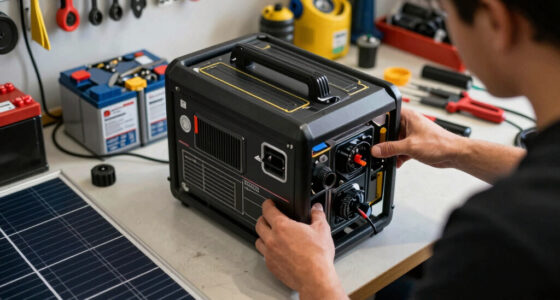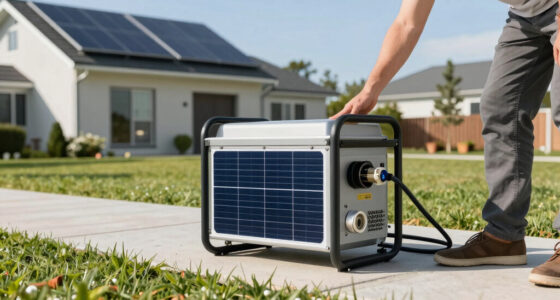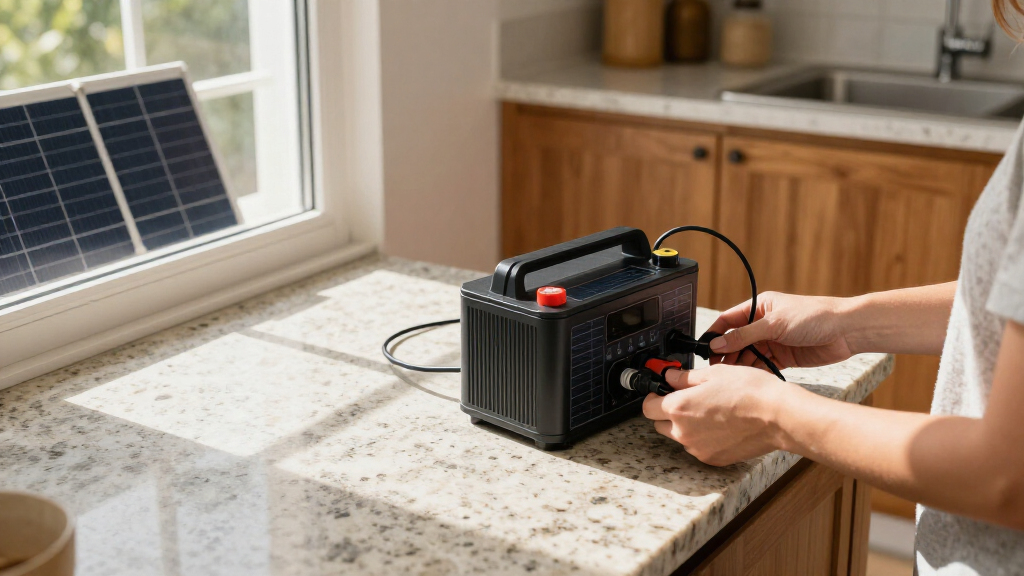
When choosing a solar backup power system, the main goal is reliable, clean energy that can power your essentials during outages or off-grid situations. The Jackery Solar Generator 1000 v2 stands out for its portability and ease of use, making it ideal for camping or emergency kits. Meanwhile, the ECO-WORTHY 48V Home Backup Power Station offers a high-capacity, home-focused solution for those seeking long-term resilience. The biggest tradeoffs involve balancing capacity, portability, and cost—larger systems often deliver more power but are less portable, while smaller units are easier to carry but may lack enough juice for critical needs. Keep reading for a detailed breakdown of these options to find the best fit for your backup power needs.
Complete the kit

Key Takeaways
- Higher capacity systems like ECO-WORTHY‘s Home Backup Station excel for long-term home backup but come with higher costs and installation complexity.
- Portable generators such as Jackery models prioritize mobility and user-friendliness, making them suitable for outdoor activities and emergencies.
- Some systems, like the ECO-WORTHY 10KW Off-Grid Kit, are designed for complete off-grid living but involve substantial investment and setup effort.
- Battery chemistry impacts durability and safety; LiFePO4 options generally last longer and are safer than traditional lithium-ion batteries.
- Price and expandability vary widely—higher-end models often support solar input expansion, giving more flexibility over time.


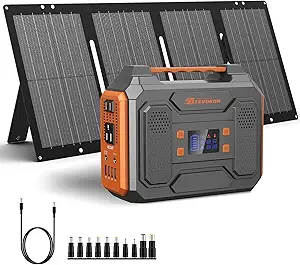


More Details on Our Top Picks
Jackery Solar Generator 1000 v2 with 200W Solar Panel
This model stands out for its impressive 1070Wh capacity, making it ideal for extended outdoor adventures or emergency scenarios where portability is key. Compared with larger, stationary systems like the ECO-WORTHY 48V Home Backup, it sacrifices some runtime but gains mobility, making setup simpler for on-the-go use. Its fast charging feature, capable of reaching 80% in just one hour, helps mitigate limited runtime—though it requires activating a special emergency mode, which adds a step. The separate solar panel means extra setup time, but it allows flexible placement for optimal sunlight. Despite its lightweight design, the runtime at full load is limited to around two hours, so it’s best suited for short-term power needs rather than continuous household backup. This is ideal for campers, RV travelers, or small-scale emergency kits.
Pros:- High capacity of 1070Wh supports multiple devices for hours
- Fast charging reduces downtime significantly
- Multiple ports including USB-C, USB-A, and AC outlets for versatile device compatibility
- Lightweight and portable for outdoor use
Cons:- Requires enabling emergency mode for fast charge, adding complexity
- Solar panel and generator are shipped separately, complicating initial setup
- Limited runtime of about 2 hours at full load
Best for: Outdoor enthusiasts and campers needing portable, reliable power with quick recharge features
Not ideal for: Homeowners requiring sustained multi-day backup, due to its limited runtime at high loads
- Wattage:1500 watts
- Capacity:1070Wh
- Output Wattage:1500W
- Power Source:Solar and Battery
- Charge Time:1 hour (fast charge)
- Ports:USB-C, USB-A, AC
Our verdict“This portable generator makes the most sense for outdoor users who need quick recharges and lightweight portability, not continuous household backup.”
ECO-WORTHY 48V Home Backup Power Station with 5120Wh LiFePO4 Battery and 5000W Inverter
Compared with portable options like the Jackery 1000 v2, this system is designed for long-term, reliable home backup, offering a massive 5120Wh capacity and a powerful 5000W inverter. It’s built to support essential household appliances during outages, with safety certifications and smart monitoring features that appeal to serious DIY homeowners. Its expandable design, supporting up to 30kW with additional batteries and inverters, makes it suitable for more comprehensive off-grid setups. However, its weight and size—requiring significant space—limit portability. Installation complexity may be daunting for those not familiar with electrical systems, and the initial cost is higher than portable units. Nonetheless, for those prioritizing sustained, high-capacity backup, this system provides unparalleled reliability. This makes the most sense for homeowners seeking a scalable, long-term backup solution.
Pros:- Massive 5120Wh capacity supports prolonged outages
- High 5000W inverter handles most household appliances
- Expandable system for future capacity increases
- Certified safe with Bluetooth and WiFi monitoring
Cons:- Heavy and requires dedicated space for installation
- Complex setup and expansion process
- Higher upfront investment
Best for: Homeowners wanting a scalable, reliable backup with room for future expansion
Not ideal for: Renters or small households needing portable, plug-and-play solutions
- Capacity:5120Wh
- Inverter Power:5000W
- Voltage:51.2V
- Battery Type:LiFePO4
- Runtime:2 hours
- Certifications:UL 1973, UL 9540A
Our verdict“This system suits homeowners committed to a long-term, expandable backup, accepting the complexity and cost involved.”
Jackery HomePower 3000 with 2x200W Solar Panels
This model offers a substantial 3072Wh capacity and a 3600W peak output, making it suitable for reliable home backup or off-grid applications. Its long-lasting LiFePO4 batteries, rated for 4,000 cycles, outperform many competitors like the ECOFLOW Delta 3 Classic, which has a smaller 1024Wh capacity. The fast recharging options—AC, DC, or solar—bring flexibility, but its weight nearly 60 pounds limits portability. The setup is more complex, especially with the included solar panels sold separately, which may deter less experienced users. Still, for those wanting a portable yet high-capacity system with durable batteries, this pick balances power and longevity effectively. This makes sense for homeowners seeking dependable, long-term backup and outdoor versatility.
Pros:- High capacity of 3072Wh supports extended outages
- Long battery life with 4,000 cycles
- Fast recharging via multiple methods
- Multiple ports for versatile device charging
Cons:- Heavy and less portable for frequent movement
- Solar panels sold separately, increasing initial cost
- Setup complexity for beginners
Best for: Homeowners or adventurers needing a durable, high-capacity backup with long cycle life
Not ideal for: Users seeking a lightweight, portable solution for occasional use or small emergencies
- Capacity:3072Wh
- Output Power:3600W
- Battery Cycles:4000
- Weight:59.5 pounds
- Charging Options:AC, DC, Solar
- Battery Type:LiFePO4
Our verdict“This system is ideal for those who prioritize long-term reliability over portability or initial simplicity.”
EF ECOFLOW Solar Generator Delta 3 Classic with 220W Solar Panel
Compared to the Jackery HomePower 3000, the EcoFlow Delta 3 Classic offers a smaller capacity of 1024Wh but excels in rapid recharging, taking just 45 minutes to reach 80%, which is a major plus for quick turnaround times. Its 1800W output with a surge capacity of 3600W suits a broad range of appliances and sensitive electronics, thanks to its UPS feature. The included 220W bifacial solar panel enhances efficiency for off-grid use. However, its lower capacity limits long-term backup capabilities, making it less suitable for extended outages. The need to purchase the generator and solar panel separately might add to initial setup costs. For users who need fast recharges and protection for sensitive electronics in a portable package, this model fits well. This is best for quick recharges and sensitive electronics rather than extended backup.
Pros:- Fast recharge time—45 minutes to 80%
- UPS protection for sensitive devices
- High surge capacity for demanding appliances
- Includes high-efficiency bifacial solar panel
Cons:- Lower capacity limits duration of backup
- Generator and solar panel sold separately
- Weight and size details are not specified
Best for: Campers or emergency users needing rapid recharge and electronics protection
Not ideal for: Households requiring long-term, high-capacity backup solutions
- Capacity:1024Wh
- Output Power:1800W
- Recharge Time (solar):5.8 hours
- Recharge Time (AC):45 minutes
- Battery Type:LiFePO4
- Surge Power:3600W
Our verdict“This generator is best suited for rapid recharging and electronics safety, not for sustained power needs over days.”
Portable Solar Generator 300W with 40W Solar Panel
This lightweight, highly portable unit packs a 220Wh battery and 300W continuous power, making it ideal for quick, short-term device charging during camping or brief outages. Its inclusion of a 40W solar panel offers renewable input, though its limited runtime—about 2 hours at full load—restricts its use to small devices or brief emergency power. Compared to larger systems like the Jackery HomePower 3000, it sacrifices capacity for portability, fitting into a backpack easily. The multiple ports—including USB-C, USB-A, and a carport—support versatile device charging. Its small size makes it perfect for hikers or emergency kits, but it’s not suitable for powering larger appliances or for extended outages. This is best for quick, mobile power needs in emergencies or outdoor activities.
Pros:- Ultra-lightweight and compact design
- Multiple ports for diverse device compatibility
- Includes solar panel for renewable input
- Built-in LED light for illumination
Cons:- Limited runtime of about 2 hours at full load
- Maximum continuous power of 300W may not support high-power devices
- Battery capacity may be insufficient for longer outages
Best for: Hikers, outdoor enthusiasts, or emergency kits requiring compact, lightweight power
Not ideal for: Homeowners needing sustained backup for multiple devices or appliances
- Wattage:300W
- Battery Capacity:220Wh
- Inclusion:40W solar panel
- Runtime:Up to 2 hours at 300W
- Weight:5 lbs
- Ports:2 AC, 3 USB-A, 2 USB-C, 1 DC
Our verdict“This small, portable generator is perfect for quick emergency power during outdoor activities, but not for long-term backup or high-power appliances.”
Growatt Helios 3600 Portable Power Station with 400W Solar Panel
The Growatt Helios 3600 stands out for its impressive 3600Wh capacity and expandable design, making it suitable for entire house backup and extended off-grid living. Its rapid 15ms power switching ensures continuous operation, which is a critical advantage over smaller or less responsive systems like the Portable Solar Generator 300W. The use of EV-grade LFP cells and a long 4000-cycle lifespan translate into reliability and cost-effectiveness over time. However, its weight and complexity make it less ideal for casual users or those needing portability. Compared to the Blavor Portable Power Station, this model offers much higher capacity but requires more technical setup and a higher budget. The cold-start technology broadens its usability in harsh climates. While it isn’t suited for lightweight camping, it excels as a dependable backup for homes or remote cabins.
Pros:- High capacity with expandable options for whole house backup
- Fast 15ms power switching for uninterrupted operation
- Reliable in extreme weather with cold start technology
- Long-lasting EV-grade LFP battery with 10-year lifespan
Cons:- Expensive compared to smaller portable units
- Heavy and bulky, requiring a dedicated setup space
Best for: Homeowners seeking a robust, expandable backup system with high capacity and fast switching, prepared for emergencies or off-grid use.
Not ideal for: Casual campers or users who prioritize portability and simplicity over large-scale backup capacity.
- Capacity:3600Wh
- Solar Panel Power:200W each (2 pieces)
- Expandable Capacity:Up to 36kWh
- Maximum Power Output:3600W continuous, 7200W in parallel
- Temperature Range:Works at as low as -22°F
- Cycle Life:4000 cycles retaining 80% capacity
Our verdict“This system is best for those needing serious, expandable backup power with minimal downtime, despite its higher cost and weight.”
Portable Solar Generator 300W Power Station with 60W Foldable Solar Panel
The Portable Solar Generator 300W with a 60W foldable solar panel is geared toward outdoor enthusiasts and emergency prepper who prioritize portability. Its 296Wh capacity comfortably charges smartphones, laptops, and small devices, making it a versatile companion for camping or short-term power needs. Compared with the larger Growatt Helios 3600, it sacrifices capacity for ease of transport and quick deployment. Its compact size and multiple charging ports make it straightforward to operate, but it can’t power high-wattage appliances or handle extended power outages effectively. The need for regular maintenance and full charging every few months can be a drawback for infrequent users. This model shines as a lightweight, reliable backup for small devices rather than a primary home system.
Pros:- Compact, lightweight design for portability
- Multiple charging options including solar, AC, and car
- Efficient solar panel with 23% conversion rate
- Reliable for small devices with overcharge protection
Cons:- Limited to 300W output, unsuitable for high-power appliances
- Solar panel not included in the package
- Requires regular maintenance and full charge to preserve battery health
Best for: Outdoor adventurers or emergency kit owners who need a portable, easy-to-use power source for small devices.
Not ideal for: Users requiring high power output or backup for large appliances—this unit cannot support heavy-duty devices.
- Battery Capacity:296Wh
- Power Output:300W
- Weight:6.5 pounds
- Dimensions:9 x 5.5 x 7.5 inches
- Solar Panel Power:60W
- Charging Time:3 hours via AC
Our verdict“Ideal for outdoor use or emergency small-device charging, but not for powering larger appliances or long-term backup.”
Portable Solar Generator 300W with 60W Solar Panel
Sharing a similar capacity with the previous model, the Portable Solar Generator 300W with 60W Solar Panel focuses on affordability and basic outdoor power needs. It supports multiple charging methods, including AC, solar, and car, but its 300W limit makes it unsuitable for higher wattage devices like refrigerators or power tools. Its built-in flashlight with SOS mode adds a practical touch for outdoor scenarios. Compared to the Blavor Portable Power Station, this unit offers a slightly more streamlined design but maintains similar limitations in power output. Its performance may decline if not regularly charged or if exposed to harsh conditions, so it’s best for short trips or backup use. It fills a niche for minimal, portable power without the frills.
Pros:- Affordable and lightweight for easy transport
- Multiple charging options including solar, AC, and car
- Built-in flashlight with SOS mode for outdoor emergencies
- Simple to operate with minimal setup
Cons:- Limited to 300W, cannot run high-power devices
- Junction box isn’t waterproof, limiting outdoor durability
- Performance relies on consistent maintenance and full charges
Best for: Budget-conscious campers or emergency preppers needing a simple, portable power source for small devices.
Not ideal for: Those seeking to power larger appliances or requiring frequent, high-capacity use—this model’s wattage limits restrict its utility.
- Wattage:300W
- Output Wattage:300W
- Solar Panel:60W foldable
- Additional Features:Overload/Short Circuit Protection, SOS flashlight
- Weight:6.5 pounds
- Dimensions:9 x 5.5 x 7.5 inches
Our verdict“A practical choice for short-term outdoor power with a focus on portability and affordability, but not suited for high-wattage appliances.”
Solar Complete 9.36KWH Off-Grid System: 12KW 120V/240V Split Phase Solar Inverter WiFi Monitoring, 2400W Solar Panels, 200A 51.2V Lithium Wall-Mounted & Vertical Battery, Combiner Box for Home Backup
The Solar Complete 9.36KWH Off-Grid System offers a comprehensive solution for energy independence with a 12KW inverter, 20 solar panels, and a 200Ah LiFePO4 battery. Its high inverter capacity and split-phase design support large household loads and simultaneous appliances, outperforming smaller systems like the Growatt Helios 3600 in scale and integration. The long lifespan of LiFePO4 batteries and WiFi monitoring enhance reliability and ease of management. However, the system’s complexity and upfront cost make it less suitable for casual users or those with limited technical experience. Installation may require professional help, and the initial investment could be prohibitive for some. This setup is ideal for those aiming for a dedicated, long-term off-grid or backup power solution for their entire home.
Pros:- Complete off-grid system with high capacity and efficiency
- Long-lasting LiFePO4 batteries with built-in BMS and LCD monitoring
- High inverter efficiency with MPPT charge controllers
- Includes all necessary hardware for installation
Cons:- Requires technical knowledge for setup and operation
- High initial cost and complex installation process
- Limited detailed guidance on installation in the product description
Best for: Homeowners seeking a full-scale, reliable off-grid power system capable of supporting all household needs.
Not ideal for: Individuals looking for portable or temporary backup solutions—this system is designed for permanent installation.
- Inverter Power:12KW
- Number of Solar Panels:20
- Panel Power:120W each
- Battery Voltage:51.2V
- Battery Capacity:200Ah
- Monitoring:WiFi, LCD display
Our verdict“Best suited for homeowners ready to invest in a permanent, high-capacity off-grid or backup system for total household coverage.”
Blavor Portable Power Station 1600W with Built-in Solar Panel and 1024Wh Battery
The Blavor Portable Power Station combines a substantial 1024Wh battery with a 1600W rated output, making it capable of running multiple small appliances or tools during camping trips, power outages, or emergency situations. Its integrated 40W solar panel facilitates renewable charging, providing a degree of independence from grid power. Compared to the Growatt Helios 3600, it offers less capacity but much more portability, at the cost of limiting high-power device operation. The inclusion of features like overload protection, a built-in flashlight, and a clear LCD display enhances outdoor usability. The weight of 26 pounds and limited solar input (40W) restrict its ease of carrying and charging speed, respectively. It suits users who prioritize large capacity and mobility over maximum solar input or extensive home backup capabilities.
Pros:- Large 1024Wh capacity with long lifespan
- Integrated 40W solar panel for renewable energy
- Supports multiple devices simultaneously
- Includes a practical LCD display and safety features
Cons:- Heavy for frequent portability at 26 pounds
- Limited solar input for faster recharging
- Higher price point due to capacity and features
Best for: Outdoor enthusiasts or emergency preppers needing a large-capacity, portable power source for multiple small devices.
Not ideal for: Users needing to power large appliances or expecting frequent, rapid solar recharging—its solar input is limited and capacity constrained.
- Wattage:1600W
- Surge Power:3200W
- Battery Capacity:1024Wh
- Battery Type:LiFePO4
- Solar Panel:40W built-in
- Weight:26 pounds
Our verdict“A solid portable power choice for outdoor and emergency use where high capacity and mobility are priorities, despite some recharging limitations.”
ECO-WORTHY 10KW Off Grid Solar System Kit with 12x 195W Solar Panels, 10KW Inverter, and Lithium Batteries
This comprehensive off-grid system stands out for its high energy output and suitability for homes, cabins, or farms that need reliable power. Compared to the Jackery HomePower 3600 Plus, it offers a much larger capacity and supports high-power appliances without sacrificing scalability, but it requires professional installation and space for its bulkier components. Its 12 bifacial panels and 10KW inverter deliver up to 9.36KWh of daily energy, ideal for demanding applications. The real-time WiFi and Bluetooth monitoring enhance management, though the system’s complexity can intimidate DIY users. It’s a strong choice for those who prioritize long-term, high-capacity off-grid power, willing to handle setup costs and technical maintenance.
Pros:- High energy output suitable for demanding appliances
- Durable, high-efficiency bifacial solar panels with 30-year lifespan
- Supports parallel inverter operation for increased capacity
- Real-time battery monitoring via WiFi and Bluetooth
Cons:- Professional installation recommended, increasing initial costs
- Heavy and large components require ample space and handling
- Complex setup may require technical expertise
Best for: Homeowners or farmers seeking a scalable, high-capacity off-grid energy solution with minimal daily limits.
Not ideal for: Casual users or those with limited technical skills, due to installation complexity and system size.
- Maximum Power:10,000W
- Number of Cells:2
- Output Voltage:120V / 240V AC
- Item Dimensions:58.86 x 26.18 x 1.18 inches
- Item Weight:21.9 pounds
- Battery Capacity:2 x 48V 100AH Lithium Batteries
Our verdict“This system is ideal for those needing a robust, scalable off-grid power setup who can manage its installation and maintenance demands.”
Jackery HomePower 3600 Plus Portable Power Station with Solar Panels
The Jackery HomePower 3600 Plus offers a compelling mix of portability and power, making it suitable for backup during outages or outdoor use. Its 3600W output and expandable capacity up to 21kWh provide enough energy for most household essentials, surpassing smaller units like the Anker SOLIX S2000. Its multiple charging options, including solar, AC, and a gas generator, make it versatile, but the unit’s 77.2-pound weight limits portability for some users. The solar panels are sold separately, which adds to the overall expense, and its size might be cumbersome for tight spaces. Still, it’s a dependable choice for those needing serious backup in a portable form.
Pros:- High power output suitable for household appliances
- Expandable capacity up to 21kWh for larger energy needs
- Multiple charging options including solar, AC, and gas generator
- Durable with a 10-year lifespan and resistant battery
Cons:- Heavy and bulky, limiting portability
- Solar panels sold separately, increasing total cost
- Higher price compared to smaller or less capable units
Best for: Homeowners needing a powerful, portable backup solution for outages, outdoor activities, or emergency preparedness.
Not ideal for: Users seeking a lightweight, highly compact system or those on a tight budget, due to its weight and additional costs for solar panels.
- Output Wattage:3600W
- Capacity:3584Wh
- Expandable Capacity:up to 21kWh
- Voltage:120V & 240V in parallel
- Charging Options:AC+DC, AC, Solar, Gas generator
- Weight:77.2 pounds
Our verdict“This portable power station makes the most sense for those who need substantial backup power with flexibility for outdoor and emergency use, despite its weight and cost.”
BROWEY 1600W Portable Power Station with 1024Wh LiFePO4 Battery and Built-in Solar Panel
The BROWEY 1600W portable station emphasizes ease of use and safety, making it ideal for camping, RV trips, or light home backup. Its 1024Wh LiFePO4 battery and 1600W continuous output provide reliable power for smaller appliances and devices. Compared with the Anker SOLIX S2000, it offers less capacity but excels in portability and integrated solar charging, thanks to its built-in solar panel with MPPT controller. Its 3-hour recharge to 80% is quick for its size, but the weight and limited power output restrict its use to essential devices. It’s a practical choice for users seeking a compact, safe backup option that can be recharged efficiently with solar.
Pros:- High capacity with long-lasting LiFePO4 battery
- Built-in solar panel with efficient MPPT charging
- Safe and reliable with advanced BMS protection
- Fast recharge to 80% in just 3 hours
Cons:- Relatively heavy and bulky for true portability
- Limited power output restricts use to essential devices
- Higher price point for a smaller capacity unit
Best for: Campers, RV owners, or emergency kits needing a portable, lightweight power source for essential devices.
Not ideal for: Those requiring high power output or extended backup time, due to its limited capacity and power.
- Capacity:1024Wh
- Power Output:1600W (3200W peak)
- Battery Type:LiFePO4
- Charging Time:3 hours to 80%
- Ports:8 (AC/DC/USB-C PD 100W)
- Built-in Solar Panel:Yes
Our verdict“Ideal for outdoor enthusiasts and light emergency backup, this station balances portability and safety with its integrated solar charging features.”
Anker SOLIX S2000 Portable Power Station, 2010Wh, 3000W Peak, Home Backup
The Anker SOLIX S2000 combines a substantial 2010Wh capacity with a lightweight, compact design, making it a practical choice for home backup, camping, or emergency use. Its 1500W continuous and 3000W peak output can handle essential appliances without overburdening transportability. Compared to the Jackery HomePower 3600 Plus, it offers slightly less capacity but is more portable and easier to carry. It supports solar charging, yet lacks a dedicated 12V DC port, limiting some device options. Its runtime is suitable for moderate use, but heavier appliances may quickly drain its capacity. It’s best suited for users who prioritize mobility and quick deployment over maximum capacity.
Pros:- High capacity suitable for essential devices
- Lightweight and compact for portability
- Supports multiple charging methods including solar
- Easy to handle and deploy
Cons:- No 12V DC port available
- Limited runtime for high-demand appliances
- Capacity slightly lower than larger units like Jackery 3000
Best for: Individuals needing a portable, lightweight backup for essential appliances during outages or outdoor trips.
Not ideal for: Users requiring prolonged power for large appliances or complex setups, due to its limited capacity and output.
- Wattage:2010Wh
- Peak Wattage:3000W
- Runtime:35 hours
- Item Dimensions:8.19″L x 11.1″W x 12.7″H
- Item Weight:35.7 pounds
- Recommended Uses:Camping, Emergencies, Home Backup
Our verdict“This power station is well-suited for users seeking a portable yet capable backup for essentials, with ease of transport as a priority.”
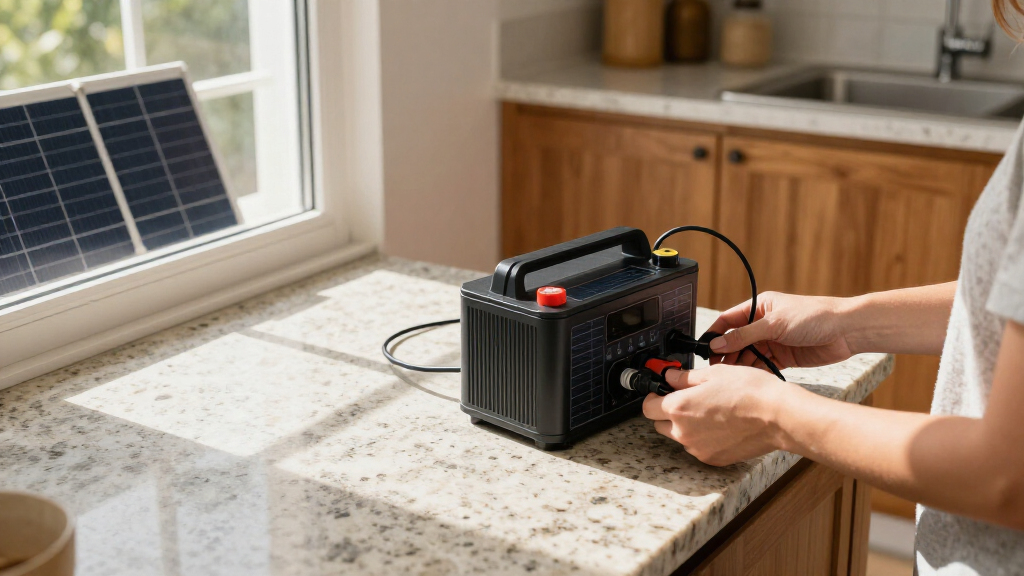
How We Picked
To evaluate these solar backup power systems, I focused on key factors that matter most to consumers: power capacity, portability, build quality, ease of use, and value for money. Systems were assessed on their maximum output, battery longevity, solar rechargeability, and user-friendly features like display interfaces and app control. I also considered real-world versatility—how well each product handles different scenarios, from emergency home backup to outdoor adventures. The ranking reflects a balance between performance, reliability, and price, aiming to highlight options suitable for various needs, from casual users to off-grid homesteaders.Factors to Consider When Choosing Solar Backup Power Systems
Choosing the right solar backup power system involves understanding several critical factors that influence your overall experience. Beyond just capacity, you should consider how portable the system is, how it interfaces with solar panels, and what kind of batteries it uses. These elements determine whether a unit will meet your daily needs or serve as a backup during extended outages. Considering your environment, usage frequency, and budget will help narrow down the best options. Here are the main factors to evaluate before making a purchase:Capacity and Power Output
Capacity, measured in watt-hours (Wh), indicates how much energy a system can store and deliver. If you need to power essential appliances for an extended period, look for models with higher capacity—around 2000Wh or more. Peak power output, rated in watts, determines what devices can run simultaneously; for example, a 1500W inverter can handle most small appliances, while higher wattage supports larger devices like refrigerators. Balancing capacity with your actual needs prevents overspending on unnecessary power or ending up with insufficient backup during outages.
Portability and Size
Portability is vital if you plan to use your backup system outdoors or in multiple locations. Smaller, lightweight units are easier to carry but often compromise on capacity. Conversely, larger systems designed for home backup can be heavy and require dedicated space. Consider how you intend to deploy the system—if mobility matters, prioritize compact, lightweight options with manageable weight. For stationary use, size and weight become less critical, allowing for larger, more powerful models.
Battery Chemistry and Longevity
The type of battery influences system durability and safety. LiFePO4 (lithium iron phosphate) batteries are increasingly popular due to their longer lifespan, better thermal stability, and safer chemistry compared to traditional lithium-ion batteries. These batteries can withstand more charge cycles—often over 2000—making them a smarter long-term investment. However, systems with advanced batteries typically come with higher upfront costs, but they tend to pay off through greater reliability and fewer replacements over time.
Ease of Solar Integration and Expandability
Most backup systems can be recharged via solar panels, but compatibility and expandability vary. Check whether the system supports additional panels to boost recharge speed or extend capacity. Some models include integrated solar inputs, simplifying setup, while others require compatible panels and connectors. Investing in a system with expandable solar capacity provides flexibility, especially if your energy needs grow or if you want to increase resilience during prolonged outages.
Cost and Overall Value
Price ranges widely in this category, from affordable portable units to high-end, full-home solutions. Cheaper models may lack capacity or durability, leading to higher long-term costs, while premium systems often include features like app control, larger batteries, and better solar compatibility. Focus on the total value—how well the system meets your needs relative to its cost—rather than just the initial price. Sometimes, paying more upfront yields a more reliable, longer-lasting system that reduces replacement and maintenance expenses later.
Frequently Asked Questions
How long can a solar backup system power my home during an outage?
The duration a backup system can support your home depends on its capacity and your power consumption. For example, a 2000Wh system might run essential appliances like a fridge or lights for several hours, but not days. Systems designed for whole-home backup, such as larger inverter setups, can sustain critical loads for extended periods, especially if combined with sufficient solar input or external batteries. Calculating your essential device wattages and daily usage helps estimate backup duration more accurately.
Can I expand my solar backup system later if my needs grow?
Many systems support expansion through additional batteries or solar panels, but compatibility varies. Some brands offer modular designs, allowing you to add more batteries or solar inputs over time, which is ideal for growing energy needs. Always check whether your chosen system supports external expansion and the types of panels or batteries compatible with it. Planning for future upgrades can prevent costly replacements and help ensure your system remains effective as your energy demands increase.
Are portable solar generators sufficient for long-term off-grid living?
Portable solar generators work well for short-term off-grid use or emergency backup but may fall short for continuous, long-term off-grid lifestyles. They typically have limited capacity and may require frequent recharging, which depends on available sunlight. Larger, dedicated off-grid systems with substantial batteries and solar array support are better suited for sustained off-grid living, providing more autonomy and fewer recharge interruptions. Match your system choice to your actual energy needs and lifestyle duration.
What safety features should I look for in a solar backup system?
Safety features such as overcurrent protection, thermal management, and battery management systems are essential to prevent overheating, overcharging, and short circuits. LiFePO4 batteries inherently offer safer chemistry, but additional protections like circuit breakers and surge protection add peace of mind. Some systems include app alerts for faults or low battery, helping you respond quickly to issues. Prioritizing safety features ensures reliable operation and reduces risks during use and charging.
Is it worth paying more for a system with higher wattage and capacity?
Investing in a higher wattage and capacity system makes sense if you plan to power multiple devices or need prolonged backup during outages. While the initial cost is higher, it can prevent the need for multiple smaller systems or frequent recharges. For homeowners or those with high energy demands, a more capable system provides peace of mind and greater resilience. However, if your needs are limited to small appliances or occasional use, a smaller, less expensive unit may suffice, saving money without sacrificing reliability.
Conclusion
For those seeking a reliable, all-around backup solution, the Jackery Solar Generator 1000 v2 offers excellent portability and ease of use for outdoor or emergency needs, making it ideal for casual users. Homeowners or those wanting long-term resilience should consider the ECO-WORTHY 48V Home Backup Power Station for its high capacity and expandability. If you’re ready to invest in a premium, full-scale off-grid setup, the ECO-WORTHY 10KW Off Grid Solar System Kit provides comprehensive power and flexibility. Beginners benefit from simple, portable models, while experienced users looking for maximum capacity should prioritize systems with advanced batteries and solar expandability. Ultimately, your choice depends on your specific energy needs, budget, and future plans.