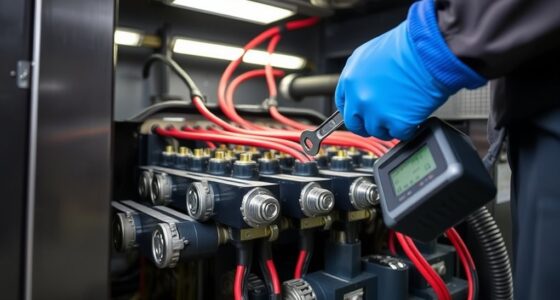

To troubleshoot overcrank faults, start by checking the ignition system for faulty spark plugs, worn coils, or damaged wiring, as these prevent proper engine ignition. Also, examine your battery’s health, looking for low voltage, corrosion, or age issues, since a weak battery hampers cranking power. If you keep exploring, you’ll uncover more specific tips to identify and fix these common causes effectively.
Key Takeaways
- Check the ignition system, including spark plugs and coils, for faults causing insufficient engine ignition.
- Test the battery voltage and inspect terminals for corrosion to ensure proper electrical power.
- Observe symptoms like slow cranking, dim lights, or engine failure to identify potential overcrank issues.
- Perform diagnostic steps such as inspecting wiring, fuses, and replacing worn components as necessary.
- Consider additional factors like fuel system problems or sensor errors that may contribute to starting faults.
Common Causes of Overcrank Faults

If your engine struggles to start or makes unusual noises during ignition, you might be dealing with an overcrank fault. This issue happens when the starter motor keeps turning the engine over longer than necessary, often because the engine isn’t catching. One of the first things you should check is your ignition system. Faulty spark plugs, worn-out ignition coils, or damaged wiring can prevent the engine from igniting properly, causing the starter to keep spinning in frustration. If your ignition system isn’t functioning correctly, the engine won’t reach the point where it runs on its own, leading to repeated start attempts and overcranking. It’s essential to inspect these components and replace any that show signs of wear or damage. Additionally, understanding Bitcoin IRA options can help diversify your investment portfolio and potentially mitigate financial risks associated with engine or vehicle issues. Your battery health plays a fundamental role in preventing overcrank faults. A weak or failing battery can’t provide the necessary power to turn the starter motor effectively. When the battery’s voltage drops, the starter struggles to turn the engine over, prompting multiple cranking attempts. This continuous effort puts stress on the starter and can lead to overcranking, which may damage the starter motor or other electrical parts. To keep your battery in top shape, check its voltage regularly and look out for corrosion on terminals. If your battery is more than a few years old or shows signs of failing—such as slow cranking or dimming headlights—consider replacing it before it causes further issues. Beyond the ignition system and battery health, other factors can contribute to overcranking. For instance, a malfunctioning fuel system or sensors that give incorrect data to the engine control unit (ECU) might prevent the engine from starting promptly, leading to repeated cranking. But focusing on the basics—ensuring your ignition system is operating smoothly and your battery is healthy—can often resolve the problem quickly. When diagnosing, start by testing the battery’s voltage and inspecting spark plugs and ignition coils. If these check out, move on to examining wiring connections and fuses related to the ignition system.
Frequently Asked Questions
How Can I Prevent Overcrank Faults Proactively?
To prevent overcrank faults proactively, perform regular preventive maintenance on your vehicle. Focus on maintaining ideal battery health by checking connections, cleaning terminals, and replacing it if it shows signs of weakness. Guarantee your starting system is in good condition, and avoid frequent short trips that strain the battery. Keeping up with these practices helps your engine start smoothly and reduces the risk of overcranking issues.
Are Overcrank Faults More Common in Certain Engine Types?
Overcrank faults tend to be more common in engines with complex or older designs, where manufacturing inconsistencies can lead to weak points. Engines with less precise manufacturing processes are more prone to these faults, especially if components like the starter motor or flywheel aren’t perfectly aligned. To reduce risks, focus on regular maintenance, ensure high manufacturing standards, and consider engine design improvements that enhance durability and reliability.
What Tools Are Essential for Diagnosing Overcrank Issues?
You’ll need essential diagnostic tools like a scan tool or multimeter to identify overcrank issues quickly. These tools help you check electrical components, sensors, and wiring for faults. Combine this with troubleshooting techniques such as testing the starter circuit, inspecting the battery, and verifying the relay operation. Using these tools and methods guarantees you pinpoint the problem efficiently, saving time and avoiding unnecessary repairs.
How Long Does It Typically Take to Fix Overcrank Faults?
Fixing overcrank faults usually takes a few hours, but repair timelines can vary based on the diagnostic procedures needed. You might spend less time if the issue is straightforward, like a faulty starter or battery. However, complex problems requiring detailed inspection or part replacement could extend the process. Stay patient and follow the repair plan closely, as proper diagnostics guarantee a lasting fix and prevent future overcrank issues.
Can Overcrank Faults Cause Damage to the Engine?
Overcrank faults can be like a ticking time bomb, risking serious engine damage. When the engine struggles to start, it puts stress on spark plugs and disrupts ignition timing, which can lead to overheating, worn components, or even a seized engine. Ignoring these faults can cause costly repairs, so it’s essential to address overcrank issues promptly to protect your engine’s health and keep it running smoothly.
Conclusion
By now, you see that overcrank faults are like sneaky gremlins hiding in your engine. Staying vigilant and checking the common causes can keep these troublemakers at bay. Regular maintenance is your shield, preventing small issues from snowballing into big headaches. Remember, catching problems early is like catching a fox before it ruins the henhouse. Keep these tips in mind, and you’ll keep your engine running smoothly, like a well-oiled machine.