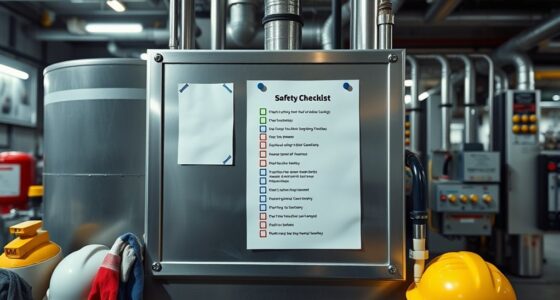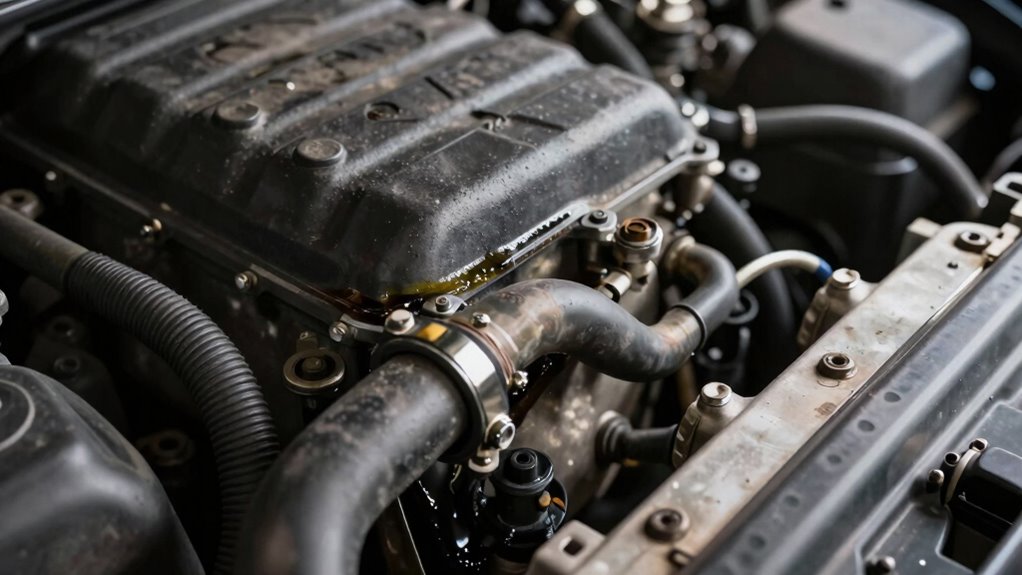

To troubleshoot coolant loss without visible leaks, start with a pressure test on your cooling system to spot hidden leaks or cracks. Check for bubbles or drops in the radiator and reservoir during testing. Also, inspect internal components like the head gasket and radiator for internal damage or corrosion that isn’t visible externally. Keep an eye on coolant levels over time to detect slow leaks. If you want to learn more about uncovering these hidden issues, continue exploring proven diagnostic methods.
Key Takeaways
- Perform a pressure test on the cooling system to identify hidden leaks or pressure drops.
- Check for bubbles in the radiator or coolant reservoir during pressure testing, indicating internal leaks.
- Inspect the radiator and hoses carefully for signs of internal corrosion or cracks not visible externally.
- Examine the oil and combustion gases for contamination that may suggest a head gasket failure.
- Use professional diagnostic tools to detect internal damage or leaks that are not visible through visual inspection.
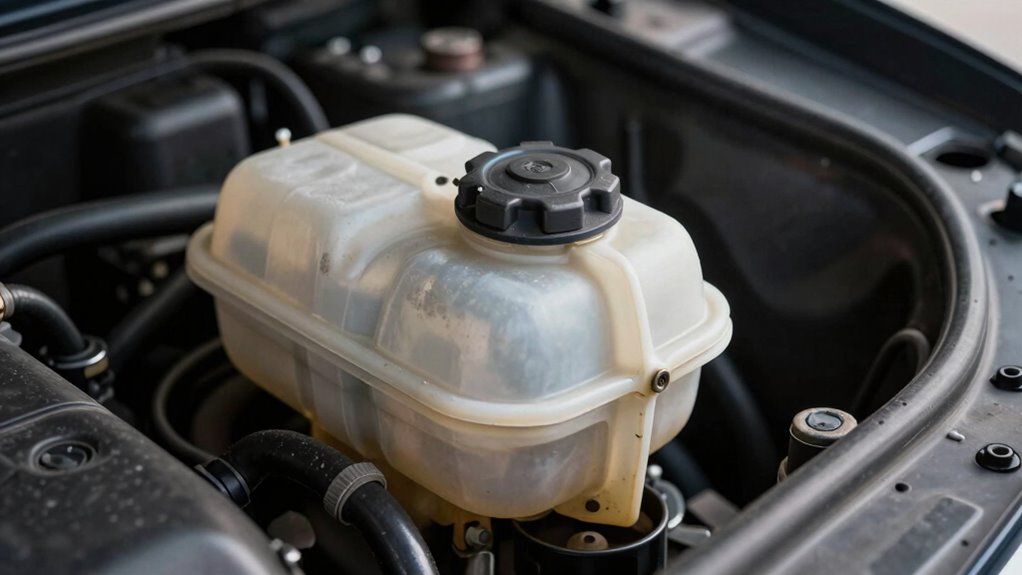
Experiencing coolant loss can be frustrating and potentially damaging to your vehicle if not addressed promptly. Even if you don’t see any visible leaks under your car, the coolant level keeps dropping, indicating there’s an underlying issue. The first step is to understand that coolant can escape in ways that aren’t immediately obvious, such as through small cracks or internal leaks. To troubleshoot effectively, you need to narrow down where the loss is happening and whether it’s caused by a leak or another problem.
Coolant loss without visible leaks may indicate internal issues or small cracks needing diagnosis.
Start by checking the coolant reservoir and radiator cap for any signs of contamination or damage. Sometimes, the cap might not seal properly, causing coolant to evaporate or escape under pressure. If the cap looks worn or damaged, replacing it might resolve the issue. Next, examine the radiator and hoses for any signs of swelling, discoloration, or minor cracks—these can be early indicators of internal damage that aren’t visible as leaks on the ground. If you suspect a leak but see nothing on the surface, consider performing a pressure testing on your cooling system. This involves pressurizing the system to see if it holds pressure, which can reveal leaks that are otherwise hidden. During pressure testing, listen carefully for hissing sounds or look for small bubbles in the radiator or coolant reservoir, which are signs of escaping air or coolant.
If the pressure test indicates a leak or loss of pressure, you’ll need to inspect further. Radiator repair might become necessary if cracks or corrosion are found in the radiator itself. Modern radiators can sometimes be patched or welded, but often replacement is the best solution for long-term reliability. It’s also essential to check the radiator’s internal passages; sometimes, blockages or build-up can cause overheating and coolant loss without visible external leaks. Additionally, understanding the coolant system and how internal components interact can help in diagnosing less obvious issues. To further complicate matters, internal leaks may be caused by faulty head gaskets, which can allow coolant to seep into the engine cylinders or mix with engine oil, making diagnosis more challenging. Regular maintenance and system inspections are crucial to prevent such hidden issues from developing unnoticed. Furthermore, internal corrosion can weaken internal components, leading to undetectable leaks over time. It’s important to recognize that internal damage might not always be visible or straightforward to diagnose, requiring more in-depth investigation. Addressing coolant loss early prevents severe engine damage, and performing a thorough diagnosis—using pressure testing, visual inspections, and possibly professional radiator repair—is your best approach to find the root cause and get your cooling system back in shape.

Portable Solar Generator 300W Portable Power Station with 60W Solar Panel
- Portable Generator with 60W Solar Panel Included: with a big battery pack,...
- Multiple Charging outlets for camping gear with SOS Flashlight: with 2* 300W Max AC...
- Multiple Charging Optional, Solar Panel Charger 60W Included: ZeroKor portable power bank generator...
As an affiliate, we earn on qualifying purchases.
Frequently Asked Questions
Can a Blown Head Gasket Cause Coolant Loss Without Leaks?
Yes, a blown head gasket can cause coolant loss without visible leaks. Head gasket failure often leads to internal corrosion, allowing coolant to seep into the engine cylinders or oil passages instead of leaking externally. This internal damage can reduce coolant levels without showing visible signs of a leak. If you notice overheating or milky oil, it’s likely a head gasket problem causing the coolant loss silently inside your engine.
How Does a Failing Radiator Cap Affect Coolant Levels?
Think of your radiator cap as the gatekeeper of radiator pressure; when it fails, coolant escapes silently like a whisper in the wind. A failing radiator cap can’t maintain proper pressure, causing coolant levels to drop. You should replace the cap promptly, ensuring it seals tightly and maintains the correct pressure. This simple fix can prevent overheating and keep your cooling system functioning smoothly, like a well-tuned orchestra.
Can Internal Engine Issues Lead to Coolant Loss?
Yes, internal engine issues can lead to coolant loss. Engine overheating caused by problems like a failing head gasket or cracked engine block can cause coolant to escape internally, often leading to coolant contamination. This contamination can reduce coolant effectiveness and cause further overheating. You might not see leaks, but internal damage can still drain your coolant system, so pay attention to signs like rising engine temperature and milky oil.
Is It Normal for Coolant to Evaporate Over Time?
Coolant evaporation over time isn’t normal, but it can happen, especially if your engine overheats or there’s a small leak you haven’t noticed. As coolant evaporates, your engine might run hotter than usual, risking overheating. Keep an eye on your coolant levels and look for signs like a sweet smell or steam. Regular checks help prevent engine overheating caused by coolant loss, ensuring your vehicle runs smoothly.
How Can I Detect a Coolant Leak Inside the Engine?
You can detect an internal coolant leak by using coolant dye and pressure testing. Add a fluorescent dye to your coolant, then run the engine and inspect with a UV light for glowing traces indicating leaks. Complement this with a pressure test—pressurize the cooling system and watch for drops in pressure, which signal leaks. These techniques help you pinpoint internal leaks quickly, saving you time and preventing engine damage.
SOARAISE Solar Power Bank 48000mAh Wireless Battery Pack with 4 Cables
- Upgraded High-Efficiency 4 Solar Panels: Equipped with 4 premium solar...
- Massive 48000mAh Solar Power Bank: Featuring a high-capacity 48000mAh lithium-polymer...
- Built-in 4 Cable for Multi-Device Compatibility: Designed for multi-device charging, this...
As an affiliate, we earn on qualifying purchases.
Conclusion
Think of your cooling system as a carefully guarded treasure chest. When coolant mysteriously disappears, it’s like a sneaky thief slipping inside unnoticed. By carefully inspecting every nook and cranny, you become the vigilant guardian, uncovering hidden leaks or internal issues. With patience and a keen eye, you’ll uncover the culprit and restore your engine’s harmony. Remember, in this quest, persistence is your trusty compass guiding you to the treasure of a well-cooled engine.

Luvknit Portable Charger 20000mAh, Fast Charging USB-C Power Bank with Dual Outputs & Emergency Solar Backup – Ideal for Camping, Travel, and Power Outages
- ☀️ 𝐒𝐨𝐥𝐚𝐫 𝐏𝐚𝐧𝐞𝐥 𝐟𝐨𝐫 𝐄𝐦𝐞𝐫𝐠𝐞𝐧𝐜𝐲 𝐏𝐨𝐰𝐞𝐫 – The...
- 🔋 𝐋𝐚𝐫𝐠𝐞 𝐂𝐚𝐩𝐚𝐜𝐢𝐭𝐲 𝐟𝐨𝐫 𝐌𝐮𝐥𝐭𝐢𝐩𝐥𝐞 𝐂𝐡𝐚𝐫𝐠𝐞𝐬 – The...
- ⚡ 𝟏𝟓𝐖 𝐅𝐚𝐬𝐭 𝐂𝐡𝐚𝐫𝐠𝐢𝐧𝐠 𝐔𝐒𝐁-𝐂 – When plugged...
As an affiliate, we earn on qualifying purchases.
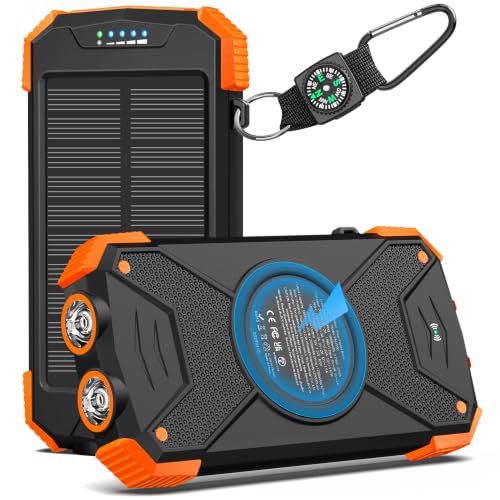
BLAVOR Solar Power Bank 10,000mAh, Portable Wireless Charger, 20W Fast Charging External Battery Pack with USB C for Cell Phones, Solar Panel Charging with Dual Flashlight for Camping
- Brand-Oriented and Outdoor Charger Pro: With over 10 years of...
- Leading USB C Input Output Tech and Wireless: The latest upgrade includes a...
- Premium Battery and Smallest Solar Charger: BLAVOR uses the safer Lithium-cobalt...
As an affiliate, we earn on qualifying purchases.