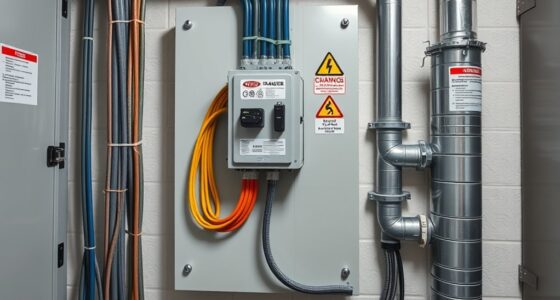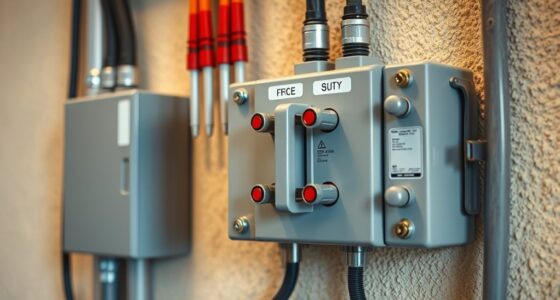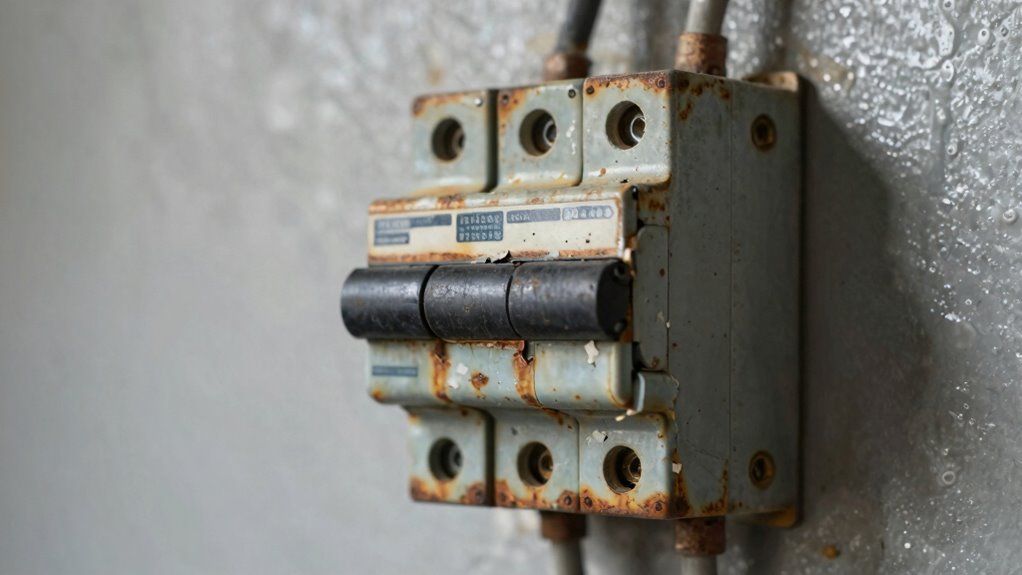

You should upgrade your older transfer switch if it shows signs of wear, such as corrosion, burns, or loose connections. If it needs frequent repairs or doesn’t support modern appliances and safety standards, it’s time for an upgrade. Outdated switches can fail during power outages, risking safety and system reliability. Professional evaluation can help determine if an upgrade is needed. Keep going to find out how to identify the right moment to replace your switch.
Key Takeaways
- Signs of wear, corrosion, or burning smells indicate it’s time to replace the switch.
- Outdated switches may lack compatibility with modern appliances or system upgrades.
- Frequent repairs or servicing suggest the switch is nearing the end of its lifespan.
- Older transfer switches may not meet current safety standards and could pose risks.
- Upgrading ensures improved safety, reliability, and compatibility with modern electrical systems.
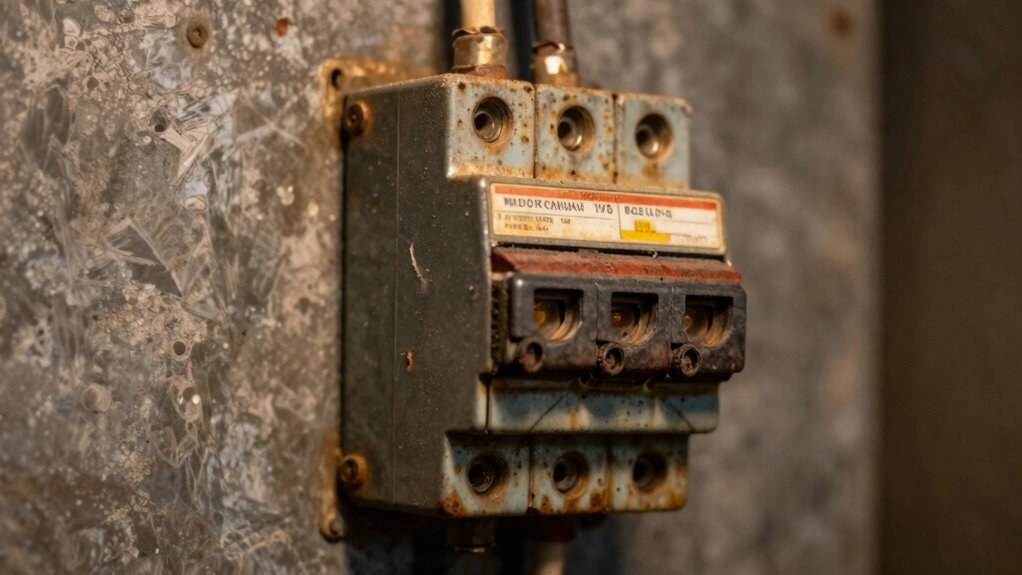
If your transfer switch is several decades old or showing signs of wear, it may be time to contemplate an upgrade. Transfer switches are essential for safely switching your power source during outages, but over time, their components can degrade. Recognizing when to upgrade hinges on understanding maintenance frequency and compatibility concerns. While regular maintenance can extend the lifespan of your switch, neglecting it or ignoring signs of deterioration may lead to dangerous malfunctions. If you find yourself needing to service it more often or notice frequent faults, it’s a clear indicator that replacement is necessary.
Older transfer switches often lack the advanced features and safety standards of modern models. Compatibility concerns are common with outdated switches, especially if your electrical system has been upgraded or expanded. Newer appliances or backup generators may not work smoothly with an old switch, which can cause operational issues or even damage to your equipment. If you’re unsure whether your current transfer switch can handle your current setup, it’s wise to consult a professional. They can evaluate whether your existing switch still meets your needs or if an upgrade would provide better safety, reliability, and efficiency.
Outdated transfer switches may cause operational issues or damage; consult a professional to ensure safety and compatibility.
Maintenance frequency is a good indicator of your switch’s condition. If you’re performing inspections or repairs more often than recommended—typically every few years—it could mean the switch is nearing the end of its life. Signs like corrosion, burning smell, or loose connections should never be ignored, as they can compromise your entire backup power system. An aging transfer switch may also fail during critical moments, such as a power outage, leaving you unprotected when you need it most. Upgrading to a newer model not only ensures reliability but also reduces the likelihood of sudden failure.
Furthermore, technological advances have produced transfer switches with features that improve safety, ease of use, and integration with modern systems. If your current switch doesn’t support these enhancements, you might be missing out on valuable improvements. Upgrading can also help you comply with current electrical codes and safety standards, which are constantly evolving. In addition, component degradation is a common issue with older switches, further emphasizing the need for replacement. Staying informed about electrical standards can help you make better decisions regarding your system’s safety and compliance. In the end, if your transfer switch is old, unreliable, or incompatible with your current setup, it’s a smart move to replace it. Doing so safeguards your home, ensures continuous power during outages, and provides peace of mind knowing your system is up-to-date and functioning properly.
Top picks for "upgrade older transfer"
Open Amazon search results for this keyword.
As an affiliate, we earn on qualifying purchases.
Frequently Asked Questions
How Long Does a Transfer Switch Typically Last?
A transfer switch typically lasts about 10 to 15 years, depending on usage and maintenance. Over time, its lifespan diminishes due to wear and tear. You should consider upgrading if you notice frequent malfunctions or if the switch becomes unreliable. Replacement costs can vary, but investing in a new transfer switch guarantees safety and efficiency. Regular inspections help extend its lifespan, saving you money and preventing unexpected outages.
Can I Upgrade My Transfer Switch Myself?
You can upgrade your transfer switch yourself, but it’s no small feat—think of it as wrestling a wild beast! Before diving in, check compatibility considerations to guarantee the new switch matches your system. Follow proper upgrading procedures carefully: turn off power, disconnect the old switch, and install the new one per manufacturer instructions. If you’re not confident, hiring a professional is the safest route to avoid dangerous mistakes.
Are There Specific Signs Indicating Imminent Transfer Switch Failure?
You’ll notice signs of failure in your transfer switch well before it fully breaks down. Common indicators include frequent tripping, unusual noises, or difficulty switching power sources. The transfer switch lifespan varies, but if you see these signs, it’s a clear signal that your switch may be nearing the end of its service life. Addressing these issues early can prevent power interruptions and guarantee safety.
What Safety Precautions Are Needed When Upgrading a Transfer Switch?
Prioritize electrical safety and gather the right tool requirements before upgrading your transfer switch. Turn off your main power, wear insulated gloves and safety glasses, and guarantee proper grounding to prevent shocks. Use insulated tools, avoid working in wet conditions, and double-check connections. By following these precautions, you protect yourself, your home, and your equipment, making the upgrade safer, smoother, and more reliable.
How Does a Transfer Switch Upgrade Affect My Home’s Warranty?
Upgrading your transfer switch can impact your home’s warranty, so check with your manufacturer first. Generally, a well-executed upgrade offers benefits like improved safety, reliability, and compatibility with newer systems. However, improper installation might void parts of your warranty. To protect your warranty, guarantee the upgrade is performed by a licensed professional and keep documentation. This way, you enjoy the upgrade benefits without risking warranty implications.
Conclusion
Upgrading your older transfer switch guarantees your home stays protected during outages. If it’s over 10-15 years old, shows signs of wear, or doesn’t meet current safety standards, it’s time to replace it. Did you know that outdated transfer switches can increase the risk of electrical failures by up to 30%? Staying proactive keeps your system reliable and safe, giving you peace of mind when you need backup power most. Don’t wait—upgrade before it’s too late.