
To keep your transfer switch reliable, regularly test it every few months by simulating a power outage and observing for smooth, prompt transfers without unusual sounds or delays. Schedule inspections to spot early signs of wear or damage, and follow your manufacturer’s guidelines for proper testing procedures and component replacements. Using genuine parts and promptly addressing issues helps prevent failures during outages. Maintaining a proactive approach guarantees safety and longevity—keep going to discover more helpful maintenance tips.
Key Takeaways
- Conduct regular testing every few months to verify smooth and reliable transfer operation during power outages.
- Follow manufacturer guidelines for specific testing procedures and indicators to ensure proper switch performance.
- Inspect and listen for unusual noises, delays, or signs of wear during tests to identify potential issues early.
- Replace worn or damaged components promptly using genuine parts to maintain switch reliability and safety.
- Maintain detailed records of testing and inspections to monitor system health and schedule proactive maintenance.

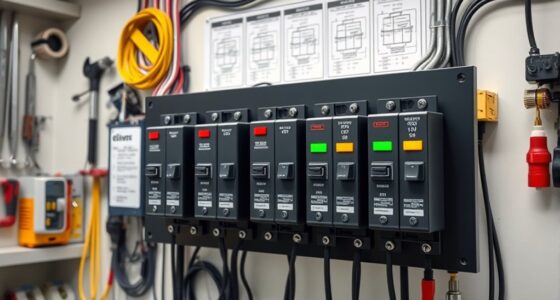
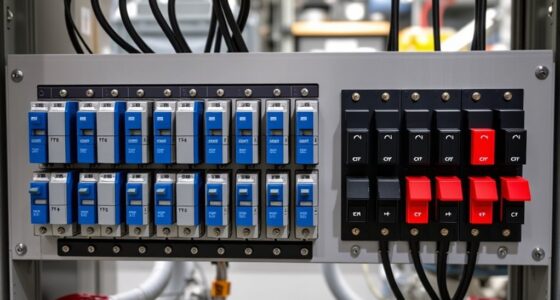
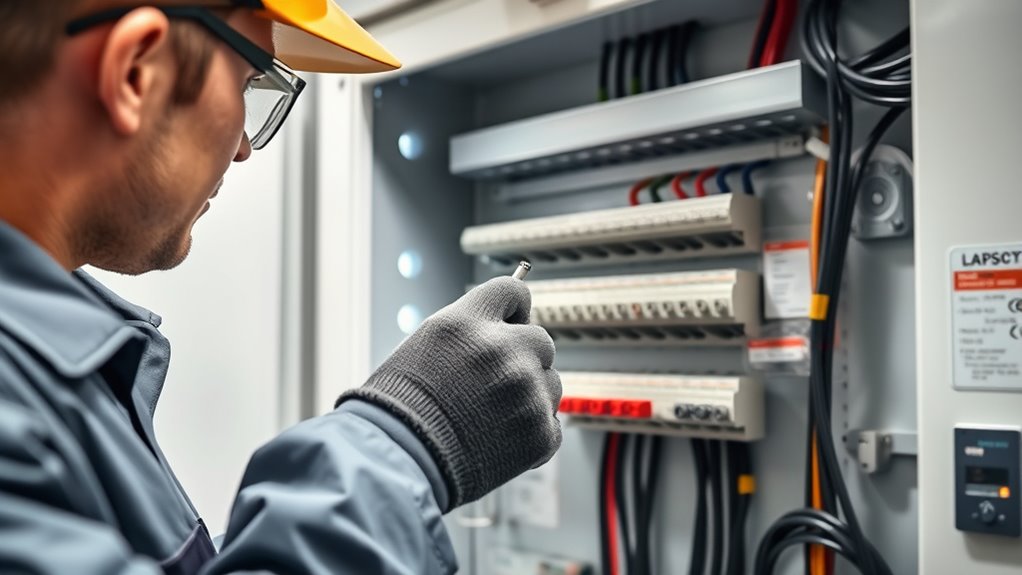
Regular maintenance of your transfer switch is essential to guarantee it operates reliably during power outages. One of the key aspects of this maintenance is performing thorough testing procedures. You should regularly test your transfer switch to confirm it functions correctly when needed. This involves simulating a power outage by switching from the utility power to the backup source, then verifying that the transfer switch engages promptly and accurately. During these tests, listen for any unusual noises or delays that could indicate a problem. It’s also important to observe whether the switch completes its transfer smoothly without any hesitation or failure. Document your testing results, noting any irregularities, so you can address them promptly. Performing these tests periodically—at least once every few months—helps you spot potential issues before they turn into major failures during an actual outage. It’s equally important to follow the manufacturer’s recommended testing procedures, as different models may have specific steps or indicators you need to monitor. This way, you confirm that your testing is thorough and aligned with the switch’s design. Incorporating regular inspections can further enhance the reliability of your transfer switch and prevent unexpected breakdowns.
Alongside testing, understanding replacement guidelines is critical for maintaining your transfer switch’s reliability. Over time, components can wear out or become damaged, especially if your switch has been through multiple power cycles or adverse conditions. Knowing when and how to replace parts is essential. Usually, the manufacturer provides guidelines that detail the lifespan of critical components like contacts, relays, or circuit boards. If you notice signs of wear—such as corrosion, pitting, or sluggish operation—it’s time to consider replacing those parts, even if they haven’t failed yet. In some cases, the entire switch may need replacement if it’s outdated or no longer meets safety standards. Always follow the replacement guidelines closely to avoid unnecessary repairs or premature failures. Using genuine replacement parts ensures compatibility and safety, prolonging the switch’s lifespan. If you’re unsure about the process, consult the manufacturer’s instructions or seek professional assistance.
Combining regular testing procedures with a solid understanding of replacement guidelines guarantees your transfer switch remains dependable. This proactive approach minimizes the risk of unexpected failures and guarantees your backup power system kicks in seamlessly when you need it most. Remember, maintenance isn’t a one-time task; it’s an ongoing process that preserves your system’s integrity and safety. By staying vigilant and following recommended procedures, you’ll keep your transfer switch in top condition, providing peace of mind during outages and safeguarding your property effectively.
Frequently Asked Questions
How Often Should Transfer Switches Be Inspected by Professionals?
You should schedule a professional assessment of your transfer switches at least once a year. An inspection schedule helps guarantee they function properly and catch potential issues early. Regular inspections by qualified technicians verify all connections, test operational readiness, and address wear and tear. If your environment is harsh or usage is frequent, consider more frequent assessments. Staying proactive with these inspections keeps your transfer switch reliable during power outages.
What Are the Signs of a Failing Transfer Switch?
A stitch in time saves nine, so watch for signs of a failing transfer switch. You might notice frequent switching issues, unusual noises, or delayed power transfer during outages. Transfer switch diagnostics can reveal problems like electrical contact wear or corrosion. If your system shows these signs, it’s time to have a professional inspect and repair it, ensuring your backup power remains reliable when you need it most.
Can Transfer Switches Be Tested Without Power Interruption?
Yes, you can test transfer switches without power interruption through remote testing and automatic diagnostics. These features allow you to verify the switch’s functionality safely and efficiently, without shutting down your power system. Remote testing enables you to perform checks from a distance, while automatic diagnostics continuously monitor system health. Always guarantee your transfer switch supports these options and follow manufacturer guidelines for safe, reliable testing.
Are There Specific Maintenance Precautions for Outdoor Transfer Switches?
Sure, outdoor transfer switches demand superhero-level weatherproofing and corrosion prevention. You better shield them from rain, snow, and dirt, or risk a meltdown—literally. Use high-quality enclosures, seal all openings, and apply corrosion-resistant coatings. Don’t forget to inspect regularly; neglecting these precautions turns your switch into a rusty relic, risking failure when you need it most. Stay vigilant, or prepare for a power outage disaster!
How Long Do Transfer Switches Typically Last With Proper Care?
With proper care, your transfer switch typically lasts 10 to 15 years. Regular maintenance, such as inspecting and cleaning contacts and testing functionality, can extend its lifespan. You should perform maintenance every 6 to 12 months to guarantee ideal performance. By staying consistent with maintenance frequency and addressing issues early, you help maximize your transfer switch’s durability and reliability, preventing unexpected failures and ensuring continuous power during outages.
Conclusion
By following these maintenance tips, you’ll keep your transfer switch running smoother than a racing car on a track. Neglect it, and you risk it failing during a blackout—leaving you powerless when you need it most. Imagine being stranded in the dark while your backup system refuses to activate. Don’t let that happen! Stay vigilant, perform regular checks, and you’ll guarantee your transfer switch is always ready to jump into action faster than lightning strikes.