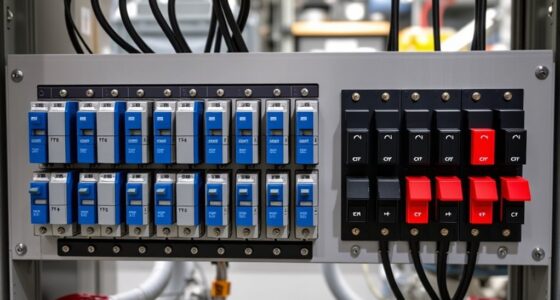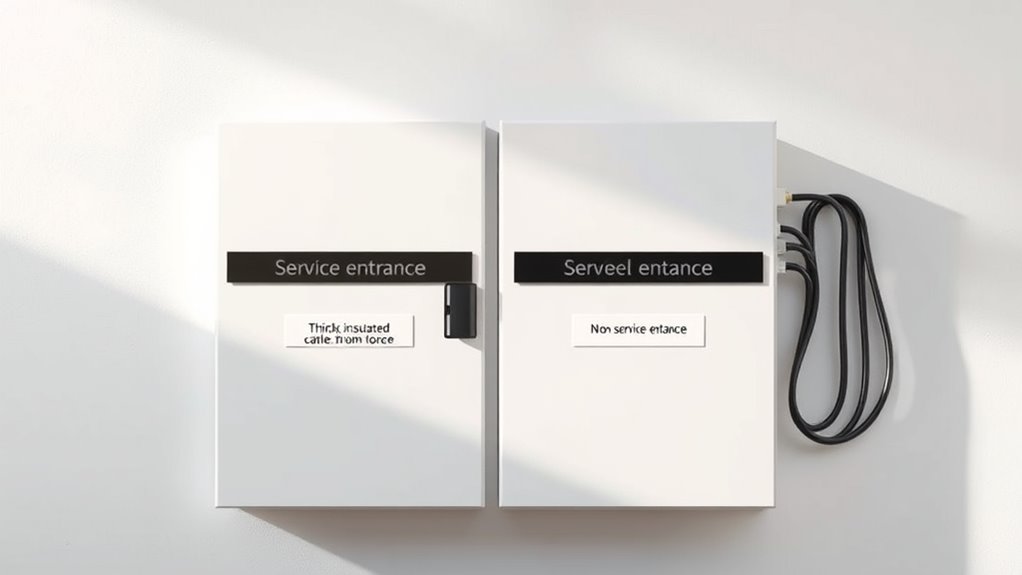

If you’re choosing between a service entrance and a non-service entrance ATS, consider your facility’s power demands and system setup. A service entrance ATS connects directly at the main utility feed for whole-building management, offering seamless control. A non-service entrance ATS, however, isolates specific circuits or loads, ideal for targeted backup. Your choice depends on whether you need extensive or selective power management—continue to learn about how each option fits your needs.
Key Takeaways
- Use a service entrance ATS for whole-building power management directly from the utility line.
- Choose a non-service entrance ATS to isolate or backup specific circuits or critical loads.
- Consider system complexity and integration needs—service entrance units support more advanced configurations.
- Install non-service entrance switches downstream from the main panel, suitable for retrofit or targeted backup.
- Ensure compliance with industry standards to guarantee safety and proper system operation.
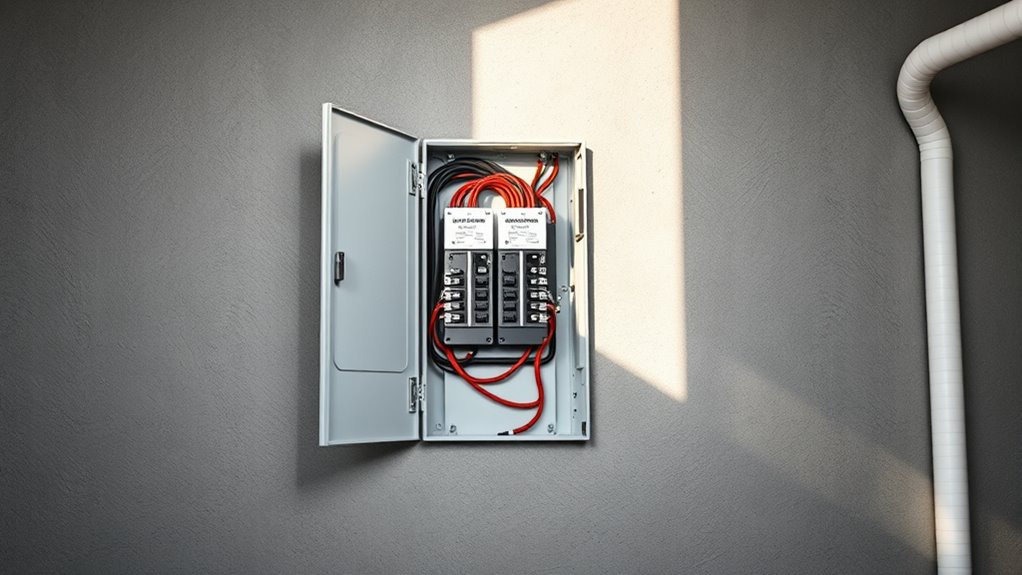
When selecting an automatic transfer switch (ATS) for your electrical system, understanding the differences between service entrance and non-service entrance options is essential. Your choice directly impacts how your system manages power source compatibility and the installation process. Service entrance ATSs are designed to connect directly to the main utility line, providing seamless integration at the point where power enters your building. This setup is ideal if you want an integrated system that manages both utility power and backup sources, such as generators, through a single point of control. Because of this, they often support more complex configurations and are suited for facilities where maintaining uninterrupted power is critical.
On the other hand, non-service entrance ATSs are typically installed downstream from the main service panel, often between the utility meter and your load center. This configuration makes them suitable for applications where you want to isolate a particular circuit or branch of your electrical system from the main feed. When considering non-service entrance options, you should evaluate the power source compatibility carefully. These switches are often used for backup systems that serve specific loads, like a backup generator for a critical circuit, rather than the entire building. This targeted approach can sometimes simplify installation considerations, especially in retrofit scenarios or when upgrading existing systems. Additionally, understanding the industry standards for installation can help ensure compliance and safety.
Frequently Asked Questions
What Are the Main Cost Differences Between Service Entrance and Non‑Service Entrance ATS?
You’ll find that service entrance ATS units generally cost more upfront due to higher installation costs, as they require direct connection to utility service and more complex wiring. However, they offer better scalability options for future load increases. Non‑service entrance ATS units are usually cheaper initially and simpler to install, but they might limit your ability to expand easily later, potentially leading to higher costs down the line.
How Do Maintenance Requirements Differ Between the Two ATS Types?
Ironically, maintenance routines are often easier with non-service entrance ATS, since they typically require less frequent inspection and simpler upkeep. You’ll find inspection frequency lower, reducing your overall maintenance effort. Service entrance ATS demands more regular checks and complex routines due to their integration with the main service, making maintenance seem like a never-ending chore. So, if you prefer less hassle, non-service entrance options might just be the way to go.
Can Existing Electrical Systems Be Adapted for Either ATS Option?
Yes, you can adapt existing electrical systems for either ATS option, but you need to take into account electrical system upgrades and compatibility considerations first. Upgrading your wiring, panels, or grounding might be necessary to guarantee the system supports the new ATS. It’s crucial to evaluate your current setup and consult a professional to confirm compatibility, making certain a safe and efficient shift without risking system performance or safety.
How Does Each ATS Type Impact Overall Electrical System Reliability?
Think of each ATS type as a guardian of your electrical fortress. A service entrance ATS enhances system redundancy, ensuring continuous power even during faults, while non-service entrance ATS focuses on fault isolation, preventing issues from spreading. Both improve reliability, but the service entrance version offers a broader shield, reducing downtime. Your choice influences how resilient your system remains under stress, directly impacting overall electrical system dependability.
Are There Specific Code or Permit Considerations for Each ATS Type?
You need to guarantee code compliance and obtain the necessary permits for each ATS type. Service entrance ATSs often require specific permits due to their direct connection to the utility, while non-service entrance units may have less stringent requirements. Always check local electrical codes and permit regulations to avoid violations, and consult with an electrician or authority having jurisdiction to verify you’re meeting all specific code and permit considerations for your installation.
Conclusion
Think of your ATS options as gateways to your home’s safety. Choosing between a service entrance and non-service entrance system is like selecting the right door for your needs—each has its own path and protection level. Consider your power setup and future plans, then open the door to the best choice. With the right decision, you’ll create a secure, reliable bridge that keeps your home energized and safe, no matter what storm comes your way.