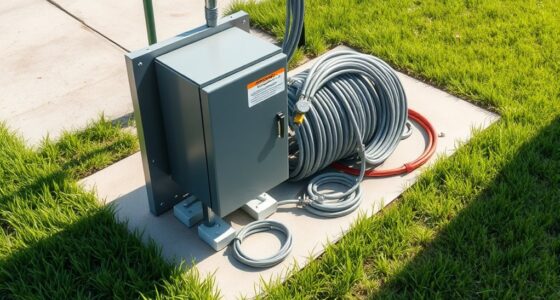
Open changeover transfer switches disconnect the utility power before connecting the generator, causing a brief power interruption, which might affect sensitive equipment. In contrast, closed transition switches connect both sources simultaneously, allowing seamless power transfer with minimal or no downtime, but they require precise synchronization to prevent faults. Your choice depends on whether you prioritize system reliability and continuous power or can tolerate short outages. Exploring these options further helps you select the right switch for your needs.
Key Takeaways
- Open transition switches disconnect utility power before connecting the generator, causing a brief power outage during transfer.
- Closed transition switches connect both power sources simultaneously, enabling seamless, uninterrupted power transfer.
- Open switches are simpler and suitable where brief outages are acceptable; closed switches require precise synchronization for continuous power.
- Closed switches prevent power interruption but demand complex control systems to ensure safe, synchronized transfer.
- Proper switch selection depends on system reliability needs, with open switches favoring simplicity and closed switches prioritizing continuous power.
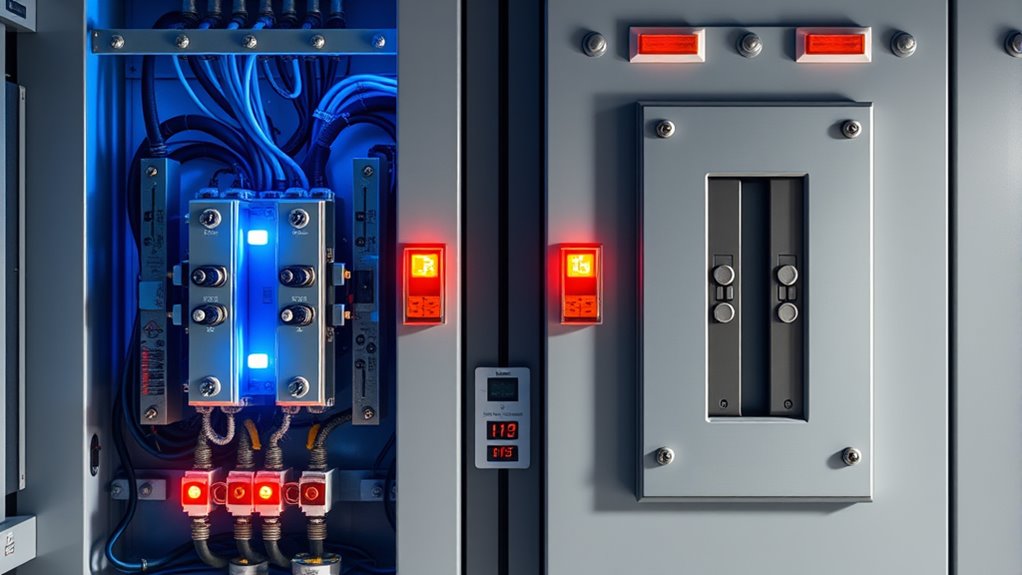
When choosing a transfer switch for your backup power system, understanding the differences between open changeover and closed changeover switches is essential. These switches are critical components that manage load transfer from utility power to your generator, and their design impacts both safety and system reliability. Open transition switches, also known as break-before-make switches, disconnect the utility power before connecting the generator. This process ensures that there’s no direct connection between the two power sources at any time, reducing the risk of backfeeding and electrical faults. However, during the switch-over, there’s a brief period when the load is momentarily without power, which may be noticeable depending on your setup. This interruption can be problematic for sensitive equipment or critical systems that require continuous power. Proper switch selection is essential to match your system’s needs and ensure safe, reliable operation.
Closed transition switches, on the other hand, are designed to transfer loads seamlessly by connecting both power sources simultaneously during the switch-over. This process, called make-before-break, minimizes or eliminates power interruption, providing a smoother transition. Because both sources are momentarily connected, load transfer occurs without any noticeable downtime, making closed transition switches ideal for environments where continuous power is crucial. However, this method demands more precise control and synchronization between the utility and generator sources to prevent electrical faults, which can impact switch reliability if not properly maintained. Proper synchronization ensures that the voltage, frequency, and phase of both sources are aligned, preventing potential damage and ensuring reliable operation.
Frequently Asked Questions
How Do Open and Closed Transition Switches Impact Power Quality?
Open changeover transfer switches can cause brief power interruptions, impacting power stability and risking equipment protection. Closed changeover switches smoothly switch power sources without interruption, maintaining consistent power quality. When choosing between them, consider your need for seamless transfer to guarantee your equipment stays protected and power remains stable. Properly managing switch type helps prevent surges or outages that could damage sensitive devices or disrupt operations.
What Are the Typical Installation Costs for Each Switch Type?
Think of installing transfer switches like upgrading your home’s electrical system—you want reliability without breaking the bank. Open changeover switches generally cost less, with lower installation expenses, often around a few hundred dollars. Closed transition switches tend to be pricier, sometimes reaching over a thousand dollars due to their complex setup. Your choice depends on your budget and the level of seamless power transfer you need, balancing cost comparison with performance.
Can Open and Closed Transition Switches Be Used Interchangeably?
You can’t use open and closed transition switches interchangeably because their switch compatibility and shift reliability differ. Open transition switches disconnect from one power source before connecting to the other, which can cause brief outages. Closed transition switches, on the other hand, allow seamless transfer, maintaining continuous power. Choosing the right switch depends on your need for transition reliability and whether you prioritize minimal downtime or cost savings.
What Maintenance Is Required for Open Versus Closed Transition Switches?
You should regularly inspect your open and closed changeover switches to guarantee maximum switch lifespan. For open changeover switches, lubrication is typically needed to prevent wear and corrosion, especially on moving parts. Closed changeover switches generally require less lubrication, but you should still check for any signs of damage or dirt buildup. Routine maintenance, including cleaning and testing, helps extend the lifespan and guarantees reliable operation of both switch types.
How Do Transition Types Affect System Reliability During Power Outages?
Think of your system like a tightrope walker—smoothness keeps it steady. Closed transition switches provide seamless power transfer, maintaining system reliability during outages with minimal disruption, thanks to automatic control. Open transitions, however, can cause brief power interruptions, risking system stability. By choosing the right transition type, you make certain your backup generator kicks in reliably, keeping your operations safe and steady even when grid power fails.
Conclusion
Choosing between open and closed changeover transfer switches depends on your backup power needs. Open transitions switch sources abruptly, creating a brief outage, like flipping a light switch. Closed transitions, however, switch seamlessly without interruption, much like flipping a dimmer switch. If you prefer continuous power with no flicker, closed transition is your best bet. Think of it as upgrading from a standard light switch to a smooth, silent dimmer—ensuring your power remains steady and reliable.