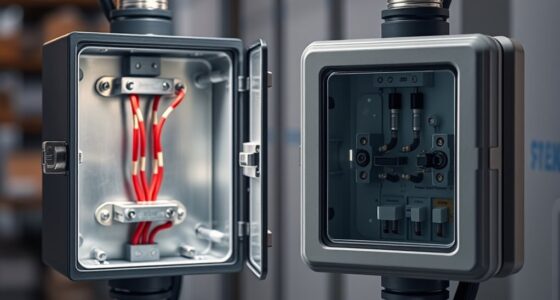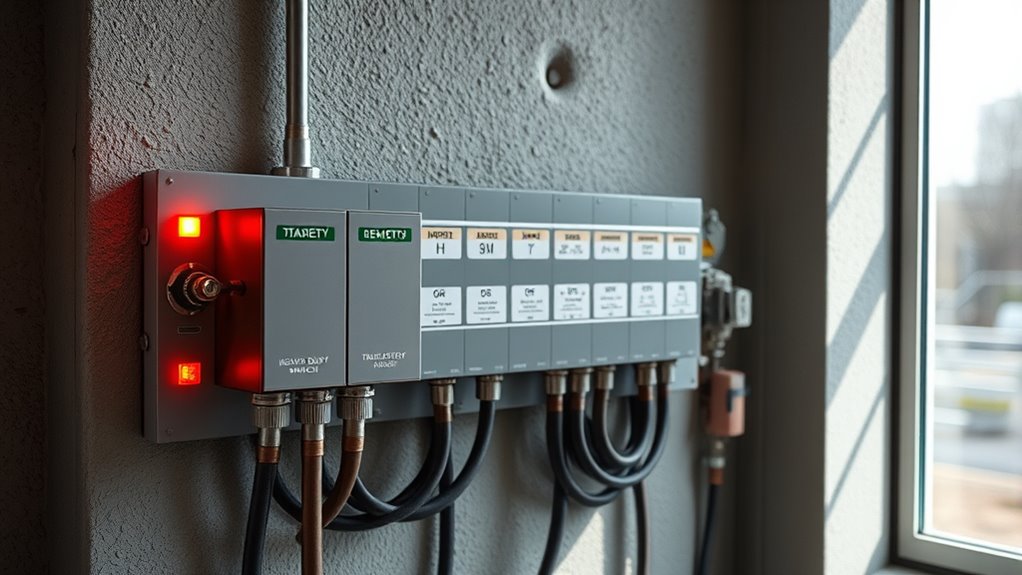

To prevent backfeed with transfer switches, you need to ensure the switch isolates your home’s electrical system from the utility grid when your generator is running. Proper installation is vital, so follow safety guidelines or hire a licensed electrician. The transfer switch will disconnect power sources, stopping generator energy from flowing back into utility lines and protecting utility workers and your system. Keep exploring to learn more about how these switches keep your home safe during outages.
Key Takeaways
- Transfer switches isolate the generator from utility lines, preventing backfeed into the grid.
- Proper installation ensures the switch automatically disconnects utility power when the generator is active.
- Using a compatible, professionally installed transfer switch reduces the risk of backfeed during outages.
- Regular maintenance verifies the switch’s proper functioning, preventing accidental backfeed.
- Adhering to safety guidelines and electrical codes guarantees the transfer switch effectively prevents backfeed.
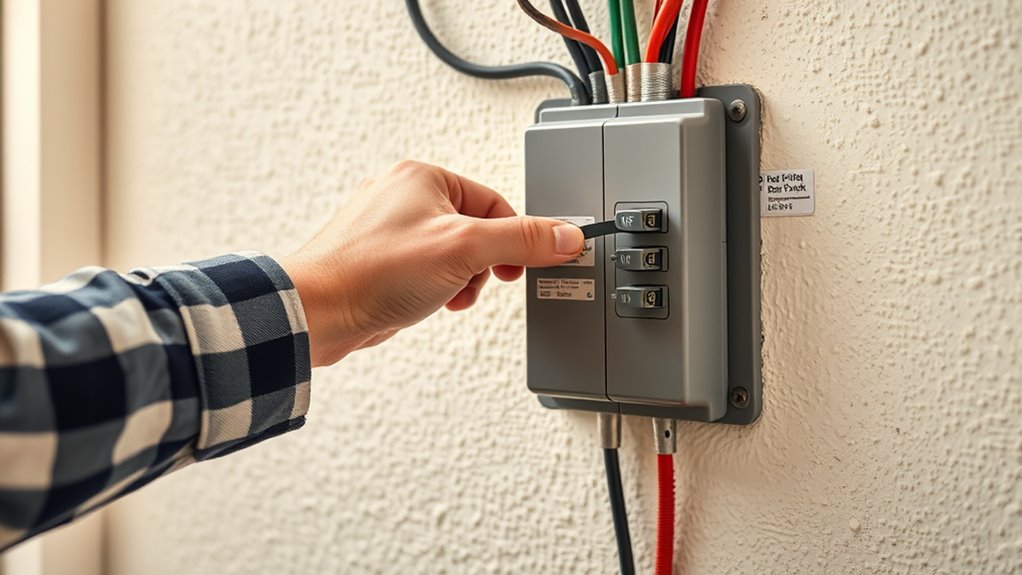
When switching your power source during an outage, preventing backfeed is essential to guarantee safety and system integrity. Backfeed occurs when electricity flows from your generator back into the utility lines, posing serious risks to utility workers and damaging your equipment. To avoid this danger, proper switch installation is fundamental. A transfer switch acts as a safeguard, ensuring that your generator’s power doesn’t feed into the grid when it’s not supposed to. Installing a transfer switch is a straightforward way to maintain generator safety and prevent accidental backfeed, but it must be done correctly by following manufacturer instructions and local codes.
Proper transfer switch installation prevents backfeed, ensuring safety and system integrity during power outages.
A transfer switch essentially isolates your home’s electrical system from the utility grid when the generator is in use. When you experience a power outage, you turn on the generator, and the switch allows you to select whether power flows from the utility or the generator. This prevents the two sources from connecting directly, which could be catastrophic. Without a proper switch installation, there’s a risk that your generator could energize utility lines, creating a dangerous situation for repair crews and neighbors. That’s why choosing the right transfer switch for your setup and having it professionally installed is fundamental for your generator safety.
The process of switch installation involves connecting the transfer switch to your circuit breaker panel and ensuring it is compatible with your generator’s power output. It’s essential to follow all safety guidelines during installation, including shutting off power and verifying wiring connections. A poorly installed switch can lead to hazards, such as electrical shock or fire, or it might fail to prevent backfeed altogether. If you’re not confident in your electrical skills, it’s best to hire a licensed electrician. They know how to properly install the switch, ensuring compliance with electrical codes and guaranteeing your system’s safety. Additionally, understanding the importance of proper installation methods helps prevent potential hazards associated with incorrect wiring or setup.
Once installed correctly, your transfer switch provides a reliable method to switch between utility and generator power safely. It also simplifies the process during an outage, allowing you to operate your generator without risking backfeed or endangering repair personnel. Regular maintenance and inspections of the switch are recommended to guarantee it functions properly when needed. Remember, generator safety isn’t just about having a generator; it’s about making sure it operates safely within your electrical system, and a correctly installed transfer switch is key to that safety. Avoid shortcuts or DIY fixes that might compromise your system’s integrity—invest in professional switch installation to protect yourself, your home, and those working to restore power.
Frequently Asked Questions
What Are the Signs of Backfeed Issues During Power Outages?
You might notice strange generator noise or sudden circuit breaker trips during a power outage, which can indicate backfeed issues. These signs mean electricity is flowing where it shouldn’t, risking damage or safety hazards. If you experience these symptoms, immediately turn off your generator and consult an electrician. Regularly inspecting your transfer switch and ensuring proper setup helps prevent backfeed problems and keeps your system safe.
Can Backfeed Damage My Home’s Electrical System?
Backfeed can definitely damage your home’s electrical system if you don’t follow generator safety and circuit protection measures. When backfeeding occurs, it can send power back through your wires, potentially damaging appliances and risking electrical fires. Using a transfer switch properly ensures safe operation by preventing backfeed, so always ensure your setup includes appropriate circuit protection devices and that you adhere to safety guidelines to protect your home and avoid costly repairs.
Are There Specific Transfer Switch Models Better at Preventing Backfeed?
Yes, some transfer switch models are better at preventing backfeed thanks to specific features like automatic transfer capabilities and built-in protection circuits. You should look for models with reliable transfer switch features designed to automatically disconnect from the utility grid during generator operation. These models tend to offer greater safety and durability, ensuring they prevent backfeed effectively. When choosing a transfer switch, prioritize model reliability and features that enhance backfeed prevention.
How Often Should I Inspect My Transfer Switch for Backfeed Risks?
Think of your transfer switch as a vigilant guardian watching over your home’s safety. You should follow a regular maintenance schedule, inspecting it at least once a year, to catch any backfeed risks early. During each inspection, look for signs of wear or damage, ensuring it functions perfectly when needed. Consistent inspection frequency keeps your system reliable, preventing backfeed and safeguarding your power supply.
Is Professional Installation Necessary to Prevent Backfeed Effectively?
Yes, professional installation is necessary to guarantee installation safety and meet electrician requirements. An experienced electrician knows how to correctly install your transfer switch to prevent backfeed, avoiding electrical hazards and damage. They follow proper procedures, use the right equipment, and ensure code compliance. Skipping professional help risks unsafe setup, which can lead to backfeed issues and potential safety hazards, so always rely on a licensed electrician for installation.
Conclusion
To keep your home safe, using a transfer switch is essential to prevent backfeed. Did you know that improper backfeed can cause electrical fires or harm utility workers? By installing a transfer switch properly, you reduce these risks considerably. Remember, over 80% of electrical accidents during outages happen because of backfeed issues. So, take the right steps now—your safety and the safety of those around you depend on it.