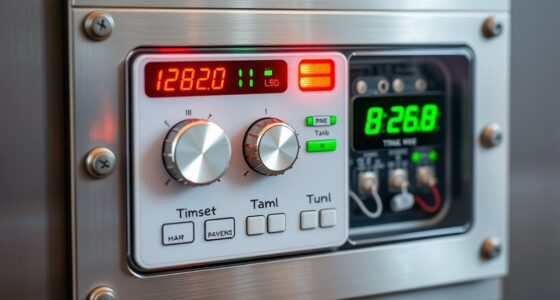
An automatic transfer switch detects when your main power fails and instantly switches your load to a backup generator, ensuring you stay powered without manual effort. It constantly monitors utility power, and as soon as it senses a blackout, it disconnects your home from the grid and signals the generator to start. Once utility power is restored, it switches back seamlessly. If you want to understand how this process works in detail, there’s more to discover.
Key Takeaways
- Continuously monitors utility power and detects outages instantly.
- Disconnects loads from the utility during a power failure.
- Signals the generator to start and transfers the load to backup power.
- Once utility power is restored, switches back to grid and shuts down the generator.
- Incorporates safety features to prevent back-feeding and ensure safe operation.
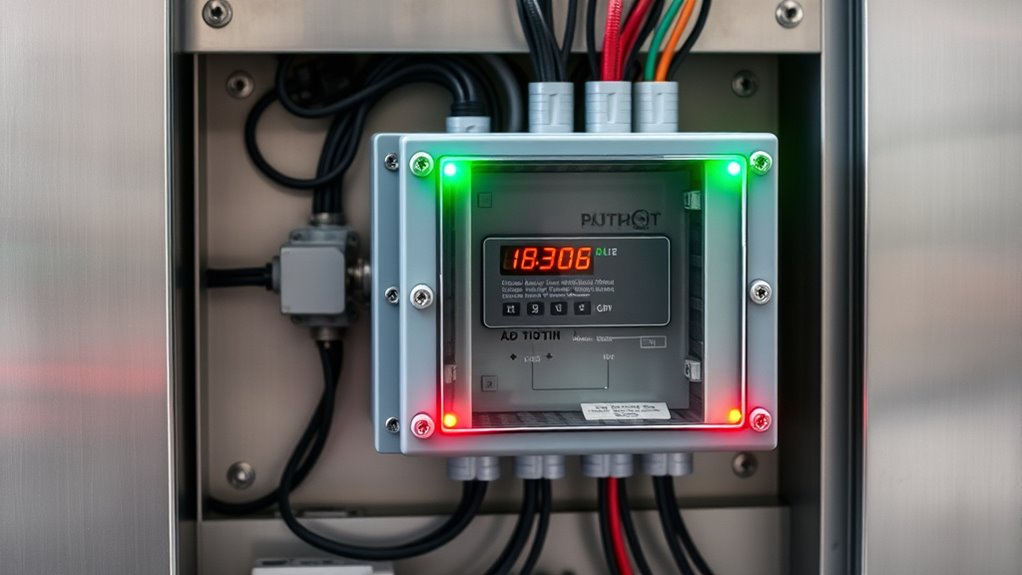
Ever wonder how your backup power system switches seamlessly during an outage? It’s thanks to the automatic transfer switch, a critical component that guarantees your generator kicks in without any manual intervention. When the main power grid fails, the switch detects the outage almost instantly and begins the process of transferring your power source. This device is designed with safety and reliability in mind, making it essential to understand how it operates and how to maintain it properly. Proper switch installation is crucial; if not done correctly, it can compromise generator safety and increase the risk of faults or damage. When installing an automatic transfer switch, you need to follow manufacturer instructions carefully and guarantee it’s integrated correctly with your generator and electrical system. This guarantees the switch functions smoothly, preventing potential power surges or interruptions.
Once installed, the switch constantly monitors the incoming utility power. When it detects a power failure, it rapidly disconnects your loads from the compromised grid and signals your generator to start. This transition happens within seconds, so your appliances and essential systems keep running without interruption. The switch then connects your load to the generator, which begins supplying backup power. When the utility power returns and stabilizes, the switch automatically transfers back, shutting down the generator and reconnecting your main power source. This seamless transfer process is essential for maintaining continuous power and avoiding damage to sensitive equipment. Incorporating top safety features**** further ensures the system operates securely and effectively.
Generator safety is a top priority during this process. Automatic transfer switches are equipped with safety features that prevent back-feeding and electrical faults that could endanger you or utility workers. They also ensure the generator operates within safe parameters and that the transfer occurs only when conditions are ideal. Proper switch installation is vital here—if the switch isn’t correctly wired, it could fail to operate or cause dangerous situations, such as unintentional power flow back into the grid. Regular maintenance and inspections are recommended to keep everything functioning correctly. Checking for loose connections, corrosion, or worn parts helps prevent failures at critical moments.
Frequently Asked Questions
Can an ATS Handle Multiple Power Sources Simultaneously?
An ATS typically can’t handle multiple power sources simultaneously; it’s designed to switch between sources based on load prioritization. When a power source fails, the ATS quickly transfers the load to the backup, minimizing transfer time. While some advanced systems may support multiple sources, standard ATS units focus on a primary and secondary source, ensuring smooth shifts and reliable power without overloading or delays.
How Long Does It Take for an ATS to Switch Sources?
Timing is everything, like a well-orchestrated symphony. An ATS typically switches power sources within 2-4 seconds, ensuring minimal disruption. When the main power source fails or drops below a set threshold, the switch activates swiftly to connect your load to the backup source. This rapid switching time keeps your systems running smoothly, preventing downtime and protecting your equipment from power fluctuations.
Is Maintenance Required for Automatic Transfer Switches?
Yes, maintenance is essential for your automatic transfer switch to guarantee backup power reliability. Regular inspections and testing help identify wear or potential issues, maintaining switch reliability during power outages. You should check connections, clean contacts, and verify proper operation periodically. Proper maintenance minimizes downtime, ensures smooth transfer between sources, and keeps your backup power system ready when needed, giving you peace of mind during emergencies.
What Are Common Signs of ATS Failure?
You’ll notice signs of ATS failure when your power supply becomes unreliable or the switch mechanism malfunctions. Common indicators include frequent switching between power sources, failure to transfer loads during outages, or unexpected trips. If your automatic transfer switch isn’t responding correctly or you hear unusual noises, it’s time to examine it. Prompt maintenance or repair guarantees your system stays operational and protects your equipment from power disruptions.
Are ATS Systems Compatible With All Generator Types?
Think of your ATS as a universal adapter, compatible with many generator types, but not all. It’s essential to check generator compatibility before installation, as some models may require specific switch speeds or settings. I once helped a facility that thought their ATS would work with their vintage generator, only to find it needed a custom setup. Always verify switch speed and compatibility to guarantee seamless power transfer and avoid surprises.
Conclusion
Think of an automatic transfer switch like a vigilant guard dog, always watching over your power source. When the main power fails, it swiftly switches to the backup, ensuring your home stays lit. I once saw a family’s generator kick in instantly during a blackout, like an emergency responder arriving just in time. That seamless switch keeps your life running smoothly, proving that a reliable transfer switch is the silent hero behind your uninterrupted power.