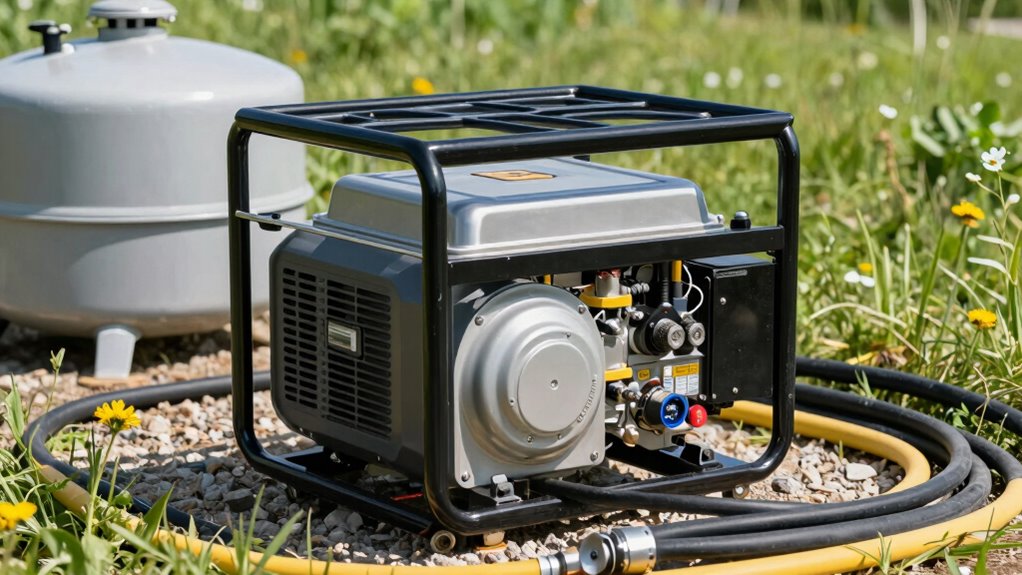

Before powering your septic system with a generator, make sure it’s properly sized to handle essential components like pumps and aerators. Regular maintenance and safety checks, including proper grounding and ventilation, are crucial for safe operation. Opt for renewable energy options like solar or wind if possible, and keep spare parts ready for emergencies. Staying aware of system components and safety procedures helps prevent costly failures. If you keep exploring, you’ll discover key tips to keep your system running smoothly.

Get backup power and energy gear delivered free with Prime
- Fast, free delivery on millions of items
- Prime Video, Amazon Music and more included
- Member-only deals all year
Key Takeaways
- Ensure the generator is properly sized to meet the septic system’s power requirements without overload.
- Regularly maintain and test the generator to ensure reliable operation during outages.
- Install the generator according to local codes, with proper grounding and ventilation for safety.
- Keep spare parts and fuel accessible for emergency repairs and continuous operation.
- Consider renewable energy options like solar or wind to reduce environmental impact and long-term costs.
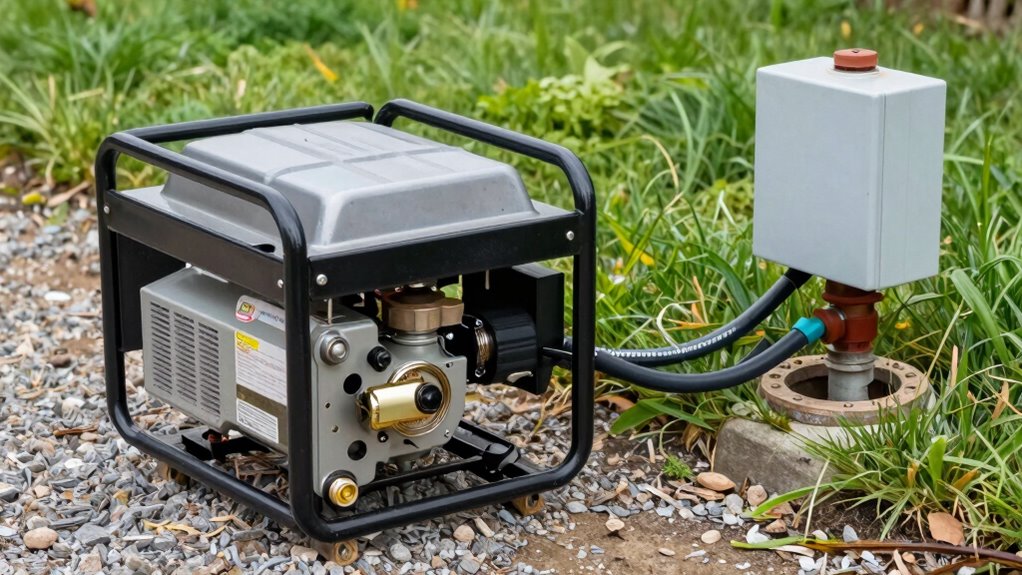
Maintaining a septic system can seem intimidating, but with the right tips, you can guarantee it runs smoothly and efficiently. When considering powering your septic system with a generator, it’s essential to understand the key factors involved. First, you should evaluate your alternative energy options. Although a generator is a reliable backup, exploring other sustainable energy sources like solar panels or wind turbines can reduce reliance on fuel and lower long-term costs. These alternatives often require a more extensive initial setup, but they’re cleaner and more environmentally friendly, making them worth considering if you want a greener solution.
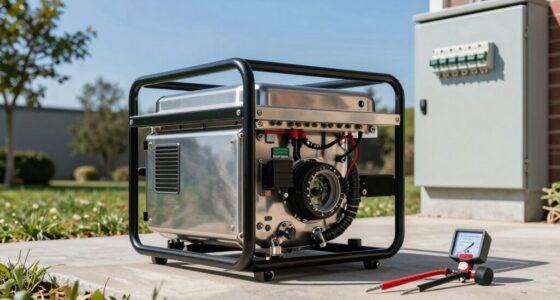
Before you connect a generator to your septic system, you need a thorough maintenance checklist. This checklist should include regular inspections of the generator’s condition, ensuring it has enough fuel, and testing it periodically to verify it operates correctly. You’ll want to check the transfer switch and wiring, making sure everything is secure and functioning properly. It’s also wise to keep spare parts and fuel on hand in case of emergencies, so you’re prepared for any unexpected outages. Additionally, understanding the auditory processing involved in system alerts can help you better recognize when maintenance or troubleshooting is needed. Staying informed about the septic system components** that require regular attention can help prevent costly repairs and extend the lifespan of your system. Regularly reviewing the system maintenance schedule ensures that all critical tasks are completed on time, further reducing the risk of malfunctions. Incorporating preventative maintenance into your routine can significantly enhance the reliability of your backup power system. Additionally, having knowledge of system diagnostics** can assist in quicker troubleshooting and minimizing downtime during outages.
Powering a septic system with a generator also involves understanding the energy requirements of your system. Septic systems typically don’t demand a lot of electricity, but certain components like pumps and aerators do. You should calculate the total wattage needed to run these devices safely, avoiding overloads that could damage your generator or septic components. Investing in a slightly larger generator than your minimum requirement provides a safety margin, ensuring you can handle peak loads without risking system failure.
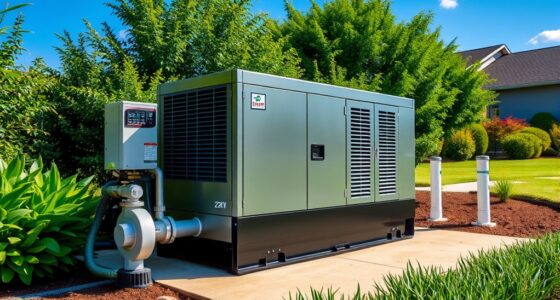
Another vital aspect is making sure that your generator’s installation complies with local codes and regulations. Proper grounding and ventilation are essential for safety, and you should hire a professional if you’re unsure about the setup. Proper installation minimizes risks such as carbon monoxide leaks or electrical faults, which could pose serious hazards. Regular testing and maintenance are equally important to keep your backup power system operational when needed.
Finally, it’s wise to inform everyone in your household or property about the generator’s operation and safety precautions. Clear understanding helps prevent accidents and ensures that everyone knows how to turn it on and off correctly. Having a detailed plan and routine maintenance schedule guarantees your septic system will stay functional during power outages, giving you peace of mind. By combining a solid maintenance checklist with exploring alternative energy options, you’ll keep your septic system running smoothly and efficiently regardless of electrical disruptions.
Frequently Asked Questions
Can I Run My Septic System Continuously During a Power Outage?
You can run your septic system continuously during a power outage if you prioritize generator safety and proper septic system maintenance. Make certain your generator is correctly sized and always operate it outdoors to prevent carbon monoxide buildup. Regularly check your septic system to avoid backups or damage. Keep the generator running only as long as necessary, and follow safety guidelines to prevent risks, guaranteeing your system functions smoothly until power is restored.
How Long Can a Septic System Operate Solely on Generator Power?
You can run your septic system on generator power for a few days, but it’s essential to take into account septic maintenance and generator compatibility. Studies show that prolonged operation can lead to system stress, risking backups or damage. To avoid issues, monitor your generator closely, verify it’s compatible with your septic setup, and limit continuous use. Regular maintenance and timely inspections help keep your system functioning smoothly during outages.
Will Using a Generator Affect My Septic System’s Lifespan?
Using a generator won’t directly harm your septic system if you maintain it properly. Regular septic tank maintenance and effluent flow management are key to prolonging its lifespan. Make certain your generator supplies stable power, avoid overloading, and monitor for any signs of system stress. Proper upkeep prevents backups or damage, helping your septic system operate efficiently even during power outages, ultimately extending its longevity and reliability.
Are There Specific Generator Types Better Suited for Septic System Support?
Think of your generator as the steady heartbeat of your home, and choosing the right type is vital. Gas-powered generators are generally better suited for septic system support due to their consistent power output. Look for models with good generator maintenance features and guarantee septic system compatibility. Inverter generators are often a smart choice because they provide cleaner power, reducing the risk of damage to sensitive septic components.
How Do I Prevent Generator Overload When Powering My Septic System?
To prevent generator overload when powering your septic system, you should regularly perform generator maintenance, ensuring it’s in top shape. Always follow safety precautions, like avoiding overloading the generator beyond its capacity, and use a transfer switch for safe connection. Monitor the system during operation, and don’t forget to check the wattage requirements of your septic system components to prevent overloads and keep everything running smoothly and safely.
Conclusion
Powering your septic system with a generator is like keeping a steady heartbeat for your home’s hidden world below the surface. When you guarantee your system has reliable power, you’re safeguarding your property from potential backups and damage. Imagine a peaceful night, knowing your septic is quietly working, even during a storm. With proper preparation, you’ll keep your home’s foundation strong, the water flowing smoothly, and peace of mind washing over you like a gentle tide.
Evergreen bestsellers Picks
bestsellers
As an affiliate, we earn on qualifying purchases.