The most important rule for using an inverter generator with sensitive electronics is to guarantee it produces high-quality, clean power that closely resembles household electricity. Look for models that specify “true sine wave” or “clean power,” as this indicates stable and smooth output. This prevents voltage fluctuations and electrical noise that can damage delicate devices. If you want to know how to easily identify these features and make the best choice, there’s more to discover below.
Key Takeaways
- Ensure the generator produces a true sine wave for stable, clean power suitable for sensitive electronics.
- Verify it explicitly states “clean power” or “true sine wave” output.
- Check the waveform quality to prevent data loss and hardware damage.
- Confirm proper filtering to minimize electrical noise and fluctuations.
- Prioritize inverter technology that inherently provides consistent, high-quality power.
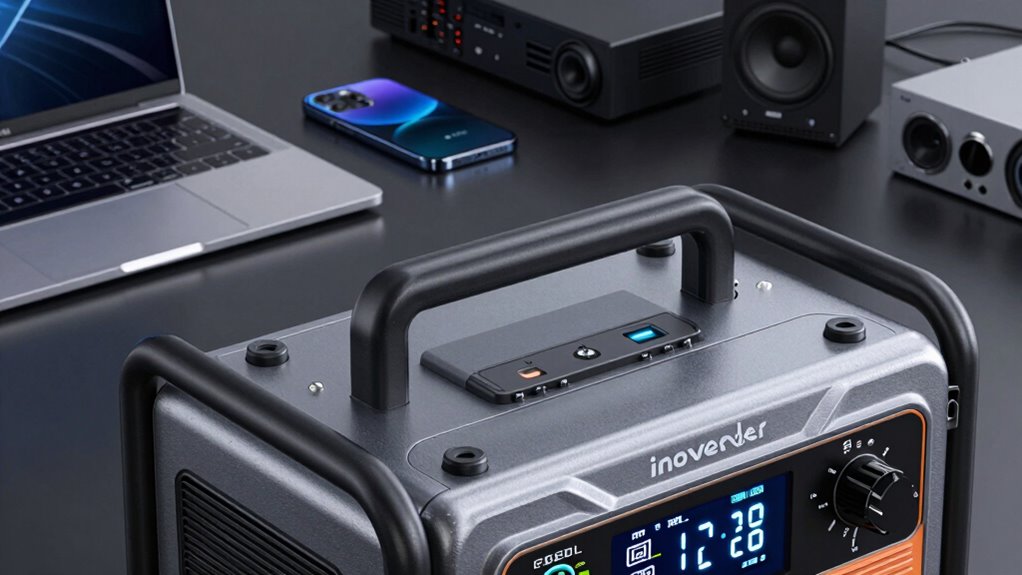
If you rely on sensitive electronics like laptops, smartphones, or medical devices, choosing the right power source is critical. Not all generators are created equal, especially when it comes to protecting your valuable equipment. The inverter generator rule that matters most for sensitive electronics centers around the quality of power it produces, particularly the power output and noise levels. Unlike conventional generators, inverter models are designed to supply cleaner, more stable electricity, which is essential for delicate devices. You want a generator that offers consistent power output, free from voltage fluctuations that can cause damage or malfunction. Fluctuations in power can harm sensitive electronics, leading to data loss, hardware failure, or degraded performance over time. An inverter generator with a steady power output ensures your devices receive a stable current, preventing unexpected shutdowns or damage. Inverter technology inherently provides power that’s smoother and more consistent. This smooth power, often described as “clean,” is essential for sensitive electronics that rely on precise voltage and frequency. When shopping for a generator, look for one that explicitly states it supplies “clean power” or “true sine wave” output. These terms indicate that the generator produces a waveform similar to that of your home’s electrical system, which is critical for preventing issues with sensitive equipment. Additionally, paying attention to power quality specifications can help ensure your devices are protected from potential electrical disturbances. Ensuring the generator has proper filtering can further enhance the safety of your sensitive electronics, reducing the risk of damage from electrical noise or fluctuations. Recognizing the importance of waveform quality can make a significant difference in safeguarding your electronic devices.
Top picks for "inverter generator rule"
Open Amazon search results for this keyword.
As an affiliate, we earn on qualifying purchases.
Frequently Asked Questions
Can Inverter Generators Be Used for Medical Equipment?
Yes, you can use inverter generators for medical equipment because they provide the necessary medical safety and power stability. Their clean, stable power prevents fluctuations that could harm sensitive devices like CPAP machines or portable ventilators. By choosing an inverter generator, you guarantee your medical equipment operates reliably during power outages or outdoor activities, giving you peace of mind knowing your devices are protected and functioning safely at all times.
Do All Inverter Generators Automatically Meet the Sensitive Electronics Rule?
Not all inverter generators automatically meet the sensitive electronics rule. You need to check their specifications carefully. Power stability is essential for protecting sensitive devices, and some models excel with cleaner, more stable power. Noise levels also matter—quieter generators reduce interference and disturbance. Before trusting an inverter generator, verify if it guarantees consistent power quality and low noise, ensuring your electronics stay safe and perform at their best.
How Often Should I Test My Inverter Generator’s Clean Power Output?
You should test your inverter generator’s clean power output at least once every few months. Regular testing helps you catch power fluctuations early, guaranteeing your sensitive electronics stay protected. During testing, monitor for any irregularities in the power supply and verify that the generator maintains a stable, consistent output. This practice keeps your equipment safe and ensures your inverter generator continues to deliver reliable, high-quality power.
Are There Specific Brands Known for Better Inverter Generator Power Quality?
You might think all inverter generators are the same, but some brands truly stand out for power stability. Brands like Honda and Yamaha have built solid reputations for consistent, clean power, making them ideal for sensitive electronics. Ironically, while they cost more, their reliability often saves you from headaches and equipment damage. So, if power quality matters, investing in a reputable brand guarantees your devices get the stable, clean power they deserve.
What Maintenance Ensures Consistent Clean Power From My Inverter Generator?
To guarantee your inverter generator provides consistent, clean power, focus on quality fuel and effective load management. Use fresh, clean fuel to prevent engine issues that can cause power fluctuations. Avoid overloading the generator by matching your load to its capacity, which helps maintain stable output. Regularly inspect and clean air filters and spark plugs. Proper maintenance keeps the generator running smoothly, delivering reliable, high-quality power for your sensitive electronics.
Conclusion
In the quiet hum of your inverter generator, you find a gentle reassurance, a subtle promise that your sensitive electronics are cradled in a tender embrace of stability. By choosing the right model, you’re not just powering devices—you’re nurturing peace of mind amid life’s unpredictable currents. Embrace this mindful choice, and let your electronics bask in the soft glow of dependable, whisper-quiet energy, ensuring they thrive peacefully, no matter where your adventures take you.