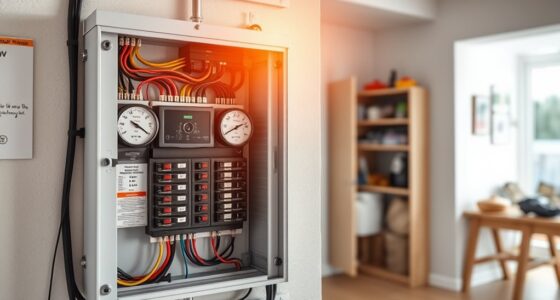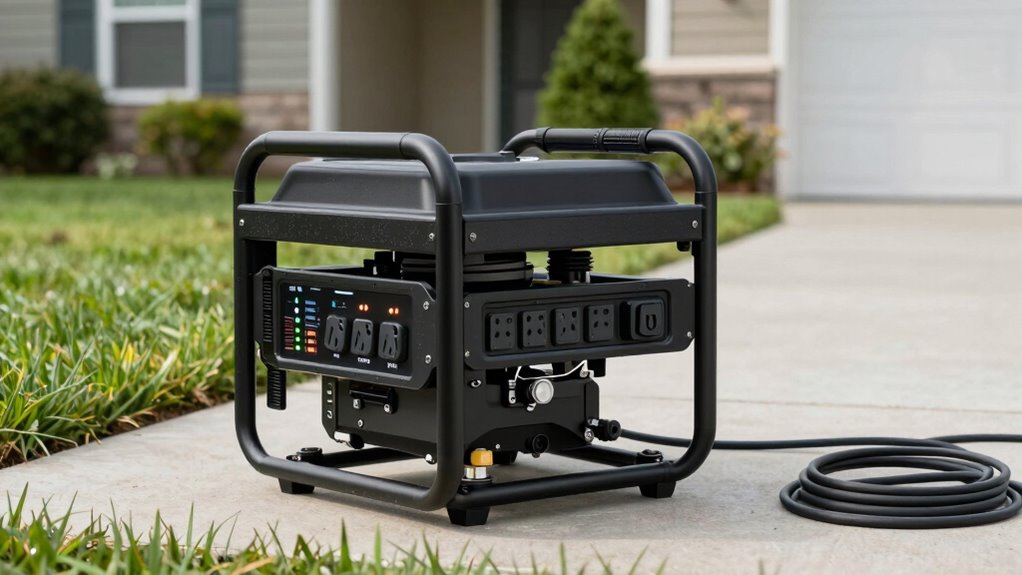
To choose a home backup portable generator that fits your loads, start by listing your essential appliances and their wattages. Confirm the generator’s capacity can handle this total without overloading. Balance your needs with fuel efficiency to avoid unnecessary costs. Check the specifications for power output and fuel consumption to match your requirements. If you keep these tips in mind, you’ll select a generator that’s reliable and cost-effective—more helpful details lie ahead.
Key Takeaways
- Calculate total wattage of essential appliances to determine the generator’s required capacity.
- Match the generator’s power output with your peak load to prevent overloads.
- Consider fuel efficiency and long-term operating costs when selecting a generator.
- Review detailed specifications to ensure compatibility with your specific backup needs.
- Balance capacity and cost to choose a model that provides reliable power without unnecessary expenses.
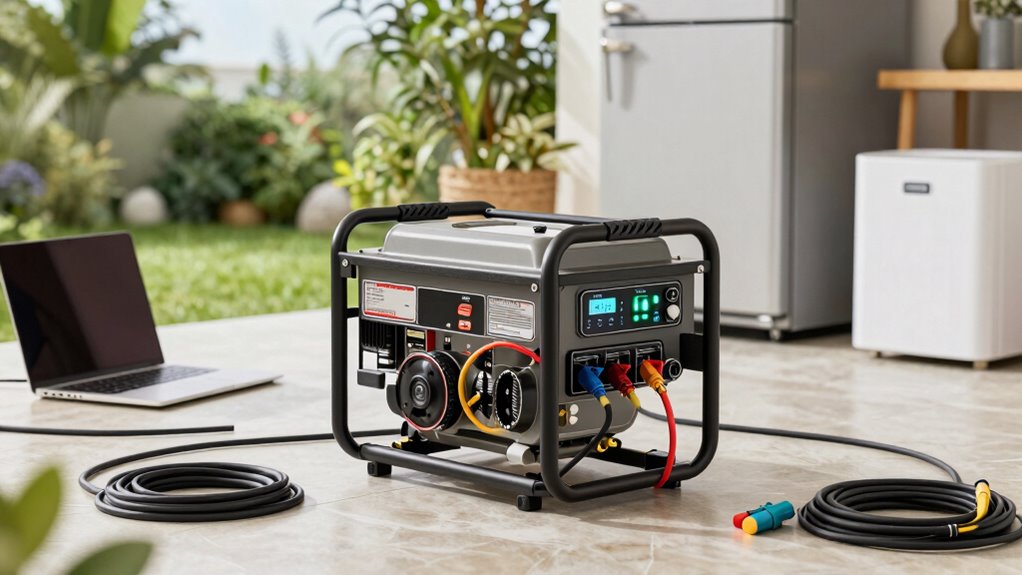
When a power outage strikes, having a reliable portable generator can keep your essential appliances running and provide peace of mind. To choose the right one, you need to consider how much power you’ll require and how efficiently the generator uses fuel. Think about the appliances you want to power—your refrigerator, lights, medical devices, or perhaps a few power tools—and determine their combined wattage. This total helps you identify the generator’s capacity, ensuring you don’t buy more than necessary or end up with insufficient power. It’s tempting to go for the most powerful model, but that might mean higher costs and unnecessary fuel consumption. Conversely, choosing one that’s too small will leave you short during outages. Be precise about your needs to find a balance. Additionally, understanding the power capacity of a generator is crucial to ensure it can handle your load without overloading or causing damage. Knowing the generator’s efficiency can further help you select a model that offers optimal performance while minimizing fuel use. Considering the long-term fuel costs can also make a significant difference in your overall investment. Moreover, evaluating the fuel consumption rate of different models can help you make a more informed decision based on your expected usage patterns. A thorough understanding of generator specifications will help you align your choice with your specific backup needs.
Top picks for "choose home backup"
Open Amazon search results for this keyword.
As an affiliate, we earn on qualifying purchases.
Frequently Asked Questions
Can I Use a Portable Generator Indoors Safely?
You shouldn’t use a portable generator indoors because it’s unsafe. Portable generators produce carbon monoxide, which can quickly build up in enclosed spaces, risking poisoning. Always guarantee proper indoor ventilation if you must run it nearby, and never operate it inside your home, garage, or basement. For safety, use outdoor, properly ventilated areas and install carbon monoxide detectors inside your home to protect yourself and your loved ones.
How Loud Are Portable Generators During Operation?
You’ll notice the noise levels of portable generators vary widely—some are surprisingly loud, reaching 70 decibels, akin to a vacuum cleaner. Others operate more quietly, around 50 decibels, similar to a normal conversation. Sound insulation can help, but if peace and quiet matter, choose a model with lower decibel ratings. Imagine your evenings undisturbed, the hum of your generator blending into the background rather than dominating it.
Do Portable Generators Require Regular Maintenance?
Yes, portable generators do require regular maintenance to stay reliable and guarantee fuel efficiency. You should follow a maintenance schedule that includes oil changes, air filter replacements, and spark plug checks. Regular upkeep helps prevent breakdowns, keeps the generator running smoothly, and maximizes fuel efficiency during operation. By sticking to a consistent maintenance routine, you’ll extend your generator’s lifespan and ensure it’s ready when you need backup power.
Can I Connect Multiple Generators for More Power?
Imagine plugging in multiple generators, like stacking blocks of power, to create a robust energy source. Yes, you can connect multiple generators through a parallel connection for power scaling, but only if they’re compatible and designed for it. This setup boosts your capacity, but always follow manufacturer instructions and make certain proper synchronization to prevent damage. Properly managed, this method provides a reliable, scalable power solution during outages or heavy loads.
What Safety Precautions Should I Follow When Using a Generator?
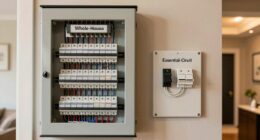
When using a generator, always follow safety precautions like ensuring proper ventilation to prevent carbon monoxide buildup. Use the correct generator fuel and store it safely away from your home. Before power transfer, turn off the generator and use a transfer switch to avoid back-feeding into the grid, which can be dangerous. Never overload your generator, and keep a fire extinguisher nearby for emergencies.
Conclusion
Choosing the right portable generator is like finding a reliable partner—you want one that matches your needs without overpowering or underperforming. By understanding your power demands and considering essential features, you’ll guarantee your home stays powered during outages. Think of it as fitting the key to the lock—you need the perfect size to open the door smoothly. With a little research, you’ll find a generator that keeps your home running smoothly, no matter what comes your way.