To guarantee outage preparedness in your data center or server room, invest in reliable backup power solutions like UPS units and generators. Develop a thorough disaster recovery plan with clear procedures and regular testing to spot weaknesses before a real outage occurs. Protect your infrastructure with physical and cybersecurity measures, and keep maintenance routines up to date. Staying proactive with these strategies will help you minimize downtime and safeguard critical operations—exploring further reveals even more ways to strengthen your resilience.

Get backup power and energy gear delivered free with Prime
- Fast, free delivery on millions of items
- Prime Video, Amazon Music and more included
- Member-only deals all year
Key Takeaways
- Implement reliable backup power systems like UPS and generators, regularly maintained and tested for readiness.
- Develop comprehensive disaster recovery plans with clear procedures, responsibilities, and resource allocation.
- Protect backup infrastructure from environmental and cyber threats through physical security measures and cybersecurity protocols.
- Conduct routine testing and maintenance of backup systems to ensure reliability during outages.
- Train staff and conduct drills to ensure preparedness, swift response, and minimal disruption during power failures.
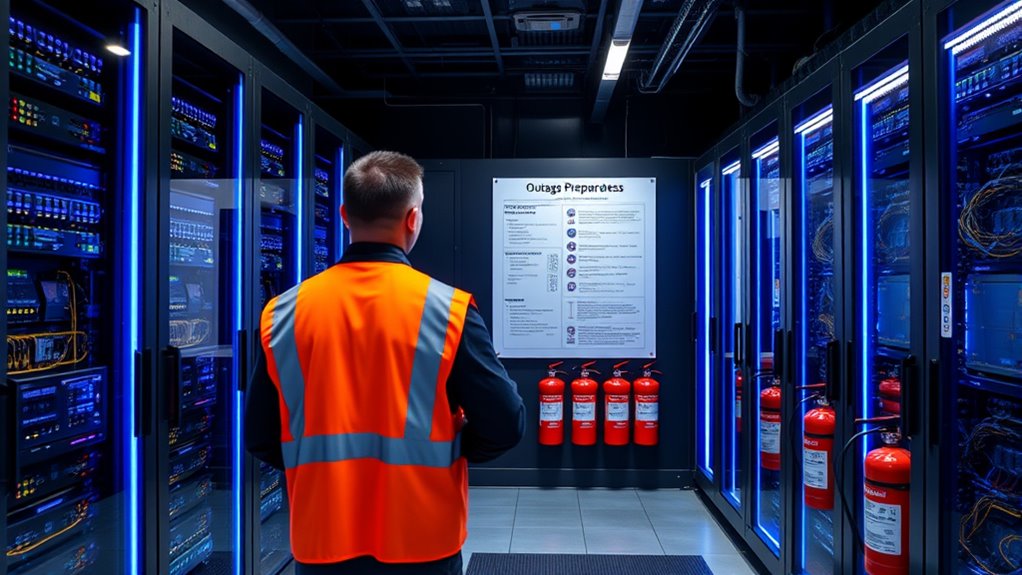
Outages can strike unexpectedly, disrupting essential operations and causing costly downtime for data centers and server rooms. When the power goes out, your first priority should be to guarantee that your systems stay operational. That’s where backup power solutions come into play. Uninterruptible Power Supplies (UPS) and backup generators are indispensable components of an effective outage preparedness plan. These systems are designed to provide immediate power when the main supply fails, giving you the critical time needed to switch to backup systems or initiate disaster recovery protocols. Without reliable backup power, your data center could experience data loss, hardware damage, or prolonged downtime, all of which can be devastating for your business.
Having a solid backup power strategy isn’t enough on its own; you also need an extensive disaster recovery plan. Disaster recovery involves more than just restoring power—it’s about ensuring your entire infrastructure can recover quickly and efficiently after an outage. You should regularly test your recovery procedures, including data backups, system redundancies, and failover processes. By doing so, you’ll identify potential weaknesses before an actual outage occurs, reducing the risk of extended downtime. Your disaster recovery plan should clearly outline step-by-step actions, designate responsible personnel, and specify the resources required to get operations back online swiftly. This proactive approach minimizes data loss and helps maintain customer trust, even when unforeseen disruptions happen.
Regularly test your disaster recovery plan to identify weaknesses and ensure quick, efficient recovery after outages.
It’s essential to consider the physical and cybersecurity aspects of outage preparedness as well. Power interruptions can sometimes coincide with or lead to security breaches, so ensuring your backup power systems are protected against environmental hazards and cyberattacks is fundamental. Regular maintenance and testing of backup generators and UPS units ensure they operate reliably when needed most. Additionally, keep your disaster recovery documentation up to date and accessible, so your team can act quickly without confusion. Training staff on emergency procedures and conducting regular drills will reinforce readiness and help prevent panic during actual outages. Incorporating power system maintenance into your planning can significantly improve the reliability of your backup solutions.
Ultimately, your goal is to create a resilient infrastructure that can withstand power failures and other disruptions. With robust backup power systems and a well-practiced disaster recovery plan, you’ll be better positioned to minimize downtime, protect key data, and ensure continuous service for your users. Outages may be unpredictable, but your preparedness doesn’t have to be. By implementing these strategies, you’re safeguarding your data center’s future and maintaining operational stability, no matter what unforeseen event comes your way.
Frequently Asked Questions
How Often Should Outage Drills Be Conducted?
You should conduct outage drills at least twice a year to guarantee your redundancy planning and emergency communication protocols are effective. Regular testing helps identify vulnerabilities and keeps your team prepared for real emergencies. By practicing often, you can improve response times, update your procedures when needed, and ensure everyone knows their roles. Consistent drills build confidence and resilience, minimizing downtime and data loss during actual outages.
What Is the Cost of Implementing Backup Power Solutions?
The cost of implementing backup power solutions is like planting a seed that grows into a sturdy tree—initial investments vary widely, typically ranging from thousands to hundreds of thousands of dollars. You’ll need emergency equipment and power redundancy systems, including generators and uninterruptible power supplies, to make certain of continuous operation. Although costly upfront, these solutions protect your data integrity and uptime, preventing costly outages and downtime that can cripple your business.
How to Prioritize Critical Systems During an Outage?
You should prioritize critical systems during an outage by first identifying essential functions through redundancy planning. Confirm backup power and data routes are in place. Maintain clear emergency communication channels to coordinate response efforts swiftly. Act quickly to stabilize vital systems, minimizing downtime. Regularly review your plan to adapt to new threats. This proactive approach keeps your critical systems operational and reduces potential damage during outages.
What Are the Best Tools for Outage Monitoring?
You should use cloud-based monitoring tools like Datadog, Nagios, or SolarWinds to effectively track your systems. These tools provide real-time alerts, so you get immediate notifications of issues. They enable you to quickly identify outages, analyze root causes, and respond proactively. By leveraging these solutions, you enhance your outage detection capabilities, minimize downtime, and make certain your critical systems stay operational even during unexpected disruptions.
How to Train Staff for Outage Response?
Think of training your staff like tuning a musical ensemble—you want everyone to play in harmony during an outage. You should conduct regular drills focused on emergency protocols, ensuring staff communicate clearly and efficiently. Use simulations to practice real scenarios, emphasize roles and responsibilities, and review procedures frequently. This way, your team will respond swiftly, confidently, and cohesively, minimizing downtime and preventing chaos when an outage occurs.
Conclusion
By staying proactive and having a well-thought-out plan, you create a safety net that keeps your data center or server room running smoothly, even when unexpected moments arise. Think of it as a gentle safety blanket, offering peace of mind amid the hustle. With diligent preparation, you can turn potential disruptions into minor ripples, ensuring your operations stay resilient. Remember, a little foresight today keeps the downtime away tomorrow.
Halloween Picks
halloween
As an affiliate, we earn on qualifying purchases.