
To prepare your home for winter, inspect and seal gaps around windows and doors, clear gutters, and repair any roof damage. Add insulation to attic and basement, and cover windows with storm film for extra warmth. Schedule furnace tune-ups, replace filters, and guarantee chimneys are clean. Clear snow and ice from pathways, and insulate pipes to prevent freezing. Keep your home safe and cozy—you’ll find more tips to make winter even easier to handle.
Key Takeaways
- Inspect and seal gaps around windows and doors to prevent cold air infiltration.
- Clear gutters and repair roof shingles to avoid leaks and ice dams.
- Add insulation to attic and basement for better energy efficiency.
- Schedule professional maintenance for heating systems and clean vents.
- Cover exposed pipes and ensure safe snow and ice removal for home safety.
Are you prepared to keep your home in top shape year-round? As winter approaches, it’s essential to focus on winter proofing your house. This process not only protects your property from harsh weather but also enhances energy efficiency, helping you save money on heating bills. Start by inspecting your home’s exterior for gaps or cracks around windows and doors. Sealing these openings with weatherstripping or caulk prevents cold air from sneaking inside, making your home more comfortable and reducing energy loss. Consider adding insulation to your attic and basement; well-insulated spaces act as a barrier against the cold, keeping heat inside and preventing drafts. Proper insulation is a key step in winter proofing because it directly impacts your home’s energy efficiency, ensuring you get the most warmth with less energy consumption.
Winter proof your home with sealing, insulation, and maintenance for energy efficiency and comfort.
Next, check your heating system to ensure it’s operating efficiently. Schedule a professional tune-up if needed, replacing filters and inspecting vents for blockages. An efficient heating system not only keeps your home warm but also reduces energy waste, lowering your utility bills. Don’t forget to inspect your chimney and fireplace if you have one, making sure they’re clean and functioning correctly. This prevents dangerous creosote buildup and ensures safe, efficient operation during winter months.
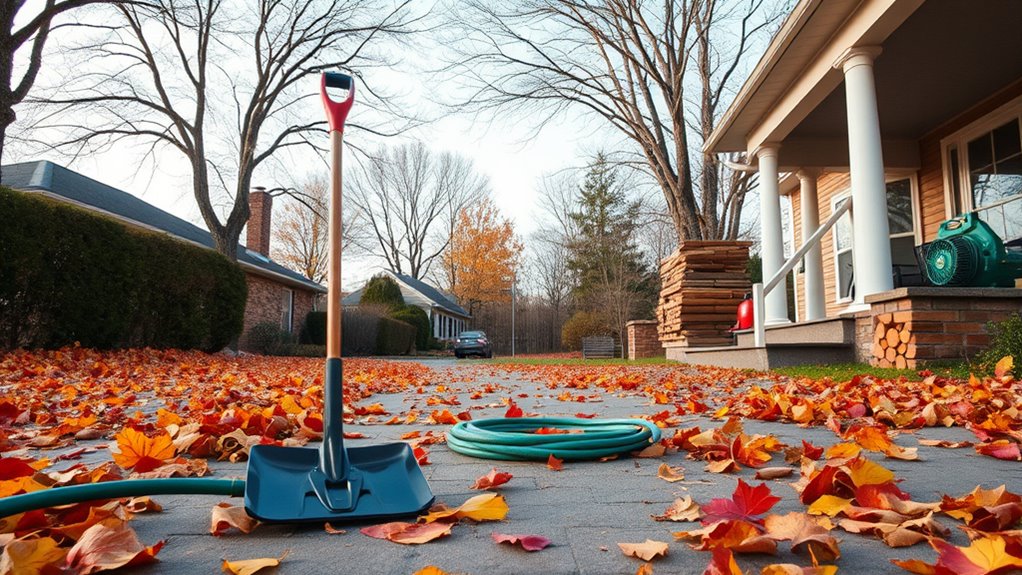
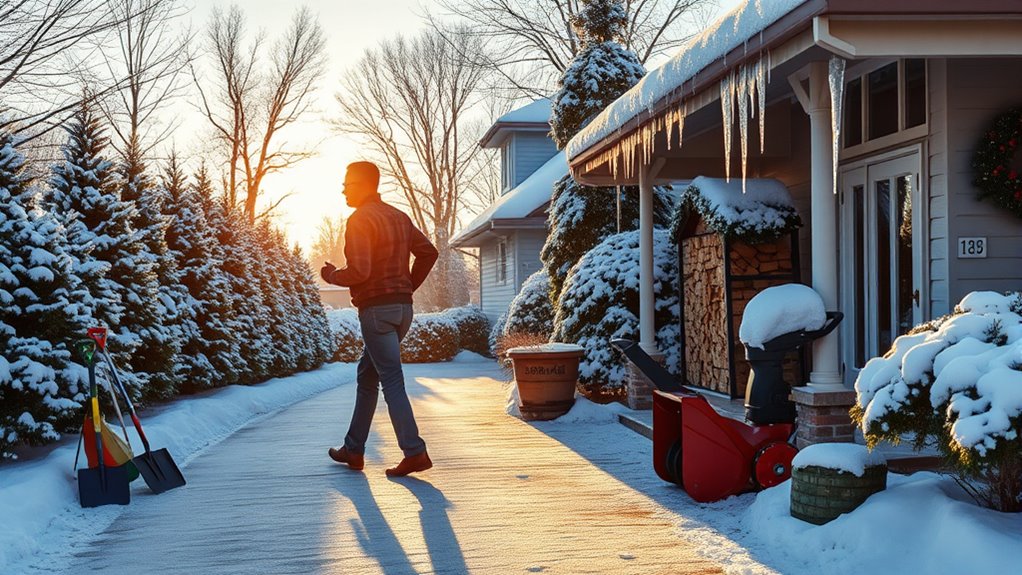
Outside, take time to prepare your gutters and downspouts. Remove leaves and debris to prevent ice dams, which can cause water to back up and damage your roof and walls. Ensure your roof is in good condition, with no loose or missing shingles that could allow water infiltration. If you notice any damage, get it repaired before winter hits in full force. Clearing pathways and driveways of snow and ice also reduces slip hazards and makes it easier for you to access your home safely.
Finally, consider adding some winter-specific features that improve energy efficiency. Installing storm windows or covering existing windows with plastic film can provide extra insulation. Covering exposed pipes with foam or heat tape prevents freezing and bursting, saving you from costly repairs. Additionally, using sound design techniques such as ambient sounds or audio cues in home automation systems can create a more comfortable environment during the colder months. By taking these steps, you’re not just winter proofing your home—you’re making it more energy-efficient, more comfortable, and better prepared to handle the cold months ahead. With a little effort now, you’ll enjoy a warmer, safer house all winter long, while also keeping your energy costs in check.
Frequently Asked Questions
When Should I Start Winterizing My Home?
You should start winterizing your home in early fall, ideally by late September or early October. Begin with insulation upgrades to keep warmth in and cold out. Make sure to clean your gutters to prevent ice dams and water damage. Check seals around windows and doors, and schedule gutter cleaning to ensure proper drainage. Taking these steps now helps protect your home from winter’s harsh weather and keeps it energy-efficient.
How Often Should I Check My Heating System?
You should check your heating system at least once a month during the winter season. Regular inspections help extend its lifespan and guarantee it runs efficiently. Follow a maintenance checklist that includes changing filters, inspecting vents, and testing thermostats. If you notice unusual noises or reduced performance, schedule a professional tune-up promptly. Staying proactive keeps your heating system in good shape and prevents costly repairs during the cold months.
What Are Signs My Roof Needs Repairs Before Winter?
Can you imagine waking up to a soggy ceiling? You should check for roof leaks and shingle damage before winter hits. Look for water stains, curled or missing shingles, and granule loss in gutters. These signs indicate your roof needs repairs. Addressing issues now prevents leaks during heavy snow or rain, saving you from costly damage and ensuring your home stays warm and dry all winter long.
Are There Eco-Friendly Winter Maintenance Options?
Yes, you can choose eco-friendly winter maintenance options like solar heating to reduce energy consumption and carbon footprint. Additionally, eco-friendly insulation made from sustainable materials helps keep your home warm efficiently, lowering heating needs. Regularly sealing drafts and using environmentally friendly heating systems also contribute to a greener winter home. These options are effective, sustainable, and help you stay warm while protecting the environment.
How Can I Prevent Frozen Pipes During Cold Weather?
To prevent frozen pipes, you should insulate exposed pipes with pipe insulation, especially those in unheated areas. Don’t forget to install outdoor faucet covers to protect outdoor spigots. Keep your home’s thermostat set to at least 55°F, even when you’re away. Letting faucets drip slightly during very cold nights can also prevent freezing. These steps help guarantee your pipes stay safe and functional during winter’s chill.
Conclusion
As you finish your winter prep, it’s funny how the small tasks—like sealing drafts or checking your heater—can unexpectedly save you from chilly nights. Just yesterday, I found a loose hose that would’ve caused trouble, and I realized how these quick checks make all the difference. So, as the seasons change, stay proactive. Sometimes, a little preparation now means cozy, worry-free winter nights—proof that good habits truly pay off when you least expect it.