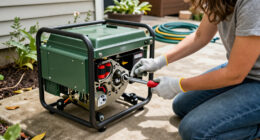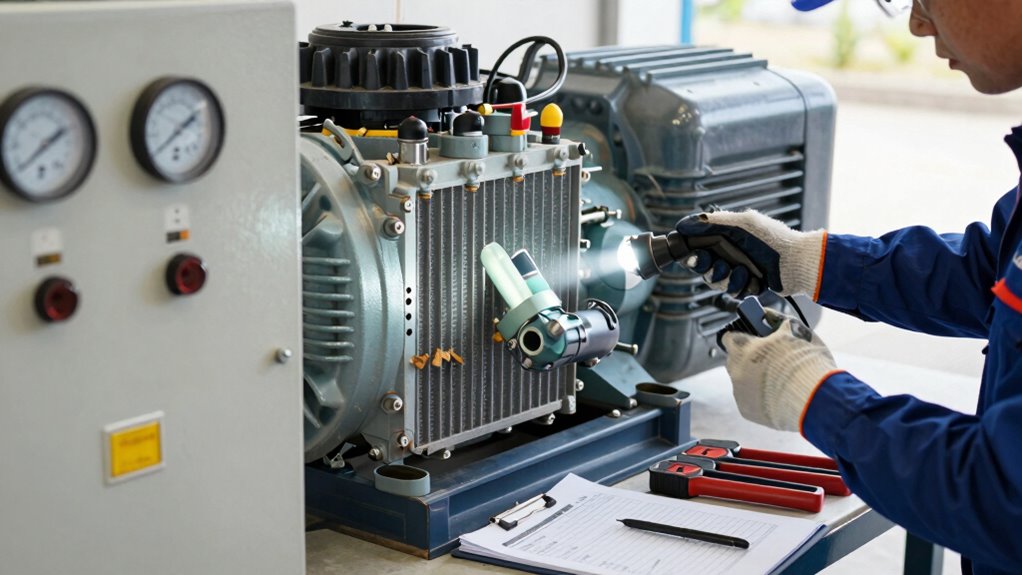

During a preventive generator walkaround, you should inspect the fuel system for leaks, corrosion, and debris to guarantee efficient operation. Check noise levels and listen for unusual sounds indicating worn components or loose parts. Examine the air filter and cooling system, replacing filters and inspecting hoses for leaks. Look over the exterior for corrosion or damage, and review the control panel for warning lights. Consistent checks like these help keep your generator reliable—continue further to learn all essential steps.

Get backup power and energy gear delivered free with Prime
- Fast, free delivery on millions of items
- Prime Video, Amazon Music and more included
- Member-only deals all year
Key Takeaways
- Inspect fuel lines and connections for leaks, corrosion, or blockages.
- Evaluate noise levels and check for loose components or abnormal sounds.
- Examine air filters and cooling system for dirt, clogs, leaks, or damage.
- Inspect exterior surfaces and control panel for corrosion, dirt, or warning indicators.
- Monitor overall system performance, including fuel levels and operational efficiency.
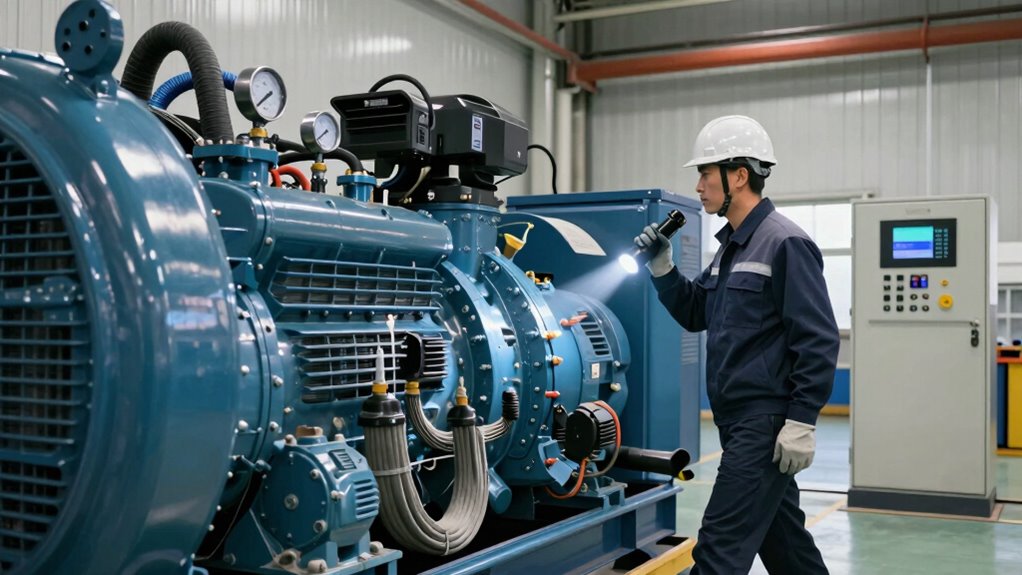
Have you ever wondered why regular inspections are essential for your generator’s reliability? Performing routine checks isn’t just about catching problems early; it’s about guaranteeing the unit runs smoothly when you need it most. During a preventive generator walkaround, you focus on key aspects that directly impact its performance, including fuel efficiency and noise levels. These factors are vital because they influence operational costs and indicate the overall health of your generator.
Regular generator inspections ensure reliable performance, efficiency, and early detection of issues to keep your unit running smoothly when it matters most.
Start by inspecting the fuel system. Check for leaks, corrosion, or any signs of wear on fuel lines and connections. A well-maintained fuel system helps maximize fuel efficiency, meaning your generator consumes less fuel for the same output, saving you money in the long run. If you notice any leaks or blockages, address them immediately. Also, verify the fuel level and ensure the tank isn’t contaminated with debris or water, which can impair performance and increase emissions. Proper fuel management is crucial for generator reliability, ensuring consistent operation during critical times.
Next, evaluate the generator’s noise levels. Excessive noise often signals underlying issues like loose components, worn-out bearings, or misaligned parts. During your walkaround, listen carefully to the generator’s operation and note any unusual sounds. Reducing noise levels isn’t just about comfort; it’s also a sign your equipment is running efficiently and isn’t under undue stress. Tighten loose bolts and inspect mufflers or exhaust systems for cracks or blockages, as these can escalate noise and reduce overall efficiency.
Beyond fuel and noise, examine the air filters. Dirty or clogged filters restrict airflow, decreasing fuel efficiency and causing the engine to work harder, which increases wear and tear. Clean or replace filters as needed to maintain ideal airflow. Check the coolant levels and inspect hoses for leaks or cracks, since proper cooling ensures your generator operates within safe temperature ranges, further supporting fuel efficiency and preventing overheating. Regularly monitoring regional flavors and chicory/coffee insights can also help in understanding how environmental factors influence cooling and performance.
Finally, review the overall condition of the generator’s exterior. Look for signs of corrosion, dirt buildup, or damaged parts. Keeping the exterior clean helps prevent corrosion and makes it easier to spot potential problems early. Also, check the control panel for warning lights or irregular readings, which can indicate developing issues. By systematically inspecting these elements, you’re taking proactive steps to extend your generator’s lifespan and guarantee it performs reliably when required. Regular walkarounds aren’t just maintenance tasks—they’re essential checks that keep your generator running efficiently, quietly, and ready to serve whenever needed.
Frequently Asked Questions
How Often Should a Generator Walkaround Be Performed?
You should perform a generator walkaround weekly to guarantee peak performance. During this check, you inspect fuel levels, making sure they’re adequate for upcoming needs, and assess the battery condition, looking for corrosion or loose connections. Regular inspections help catch issues early, preventing unexpected failures. By staying consistent with your walkarounds, you maintain the generator’s reliability and extend its lifespan, keeping your power supply secure.
What Safety Precautions Are Necessary During a Walkaround?
During a walkaround, you should wear proper safety gear like gloves, safety glasses, and steel-toed boots to protect yourself. Stay alert and be aware of hazards such as hot surfaces, moving parts, or fuel leaks. Always turn off the generator before inspecting, and follow lockout/tagout procedures. Keep a safe distance from exhaust and electrical components. These precautions help prevent accidents and guarantee a safe, effective inspection.
Can a Walkaround Detect All Generator Issues?
A walkaround can’t detect all generator issues because some problems are internal or develop over time. However, it’s vital for equipment inspection and issue identification of visible signs like leaks, corrosion, or loose connections. By thoroughly inspecting the generator’s exterior and accessible parts, you catch many potential problems early, reducing downtime. Still, routine extensive maintenance and testing remain essential for uncovering hidden or developing issues.
What Tools Are Needed for a Thorough Walkaround?
Think of your toolkit as your Bat-Signal for a thorough walkaround. You need a flashlight, gloves, and a multimeter to check electrical components. Make certain your tools are calibrated for accurate readings. Use an inspection checklist to systematically assess parts like fuel, oil levels, and belts. These tools help you catch issues early, keeping your generator running smoothly and preventing costly breakdowns from going unnoticed.
Who Should Conduct the Preventive Generator Walkaround?
You should conduct the preventive generator walkaround yourself or assign a trained technician skilled in generator maintenance. Make sure they follow a thorough safety checklist to identify potential issues early. Regularly performing these walkarounds helps prevent failures, maintains peak performance, and guarantees safety. By actively inspecting components and adhering to safety protocols, you’ll keep the generator reliable and extend its lifespan, reducing unexpected downtime and maintenance costs.
Conclusion
By conducting a thorough preventive generator walkaround regularly, you can catch potential issues early and guarantee reliable power when needed. Remember, studies show that 60% of generator failures could be prevented with proper maintenance checks. So, take the time to inspect fluid levels, belts, and connections—your preparedness can save you from costly outages. Stay proactive, stay powered, and keep your equipment in top shape to avoid unexpected surprises.
Halloween Picks
halloween
As an affiliate, we earn on qualifying purchases.