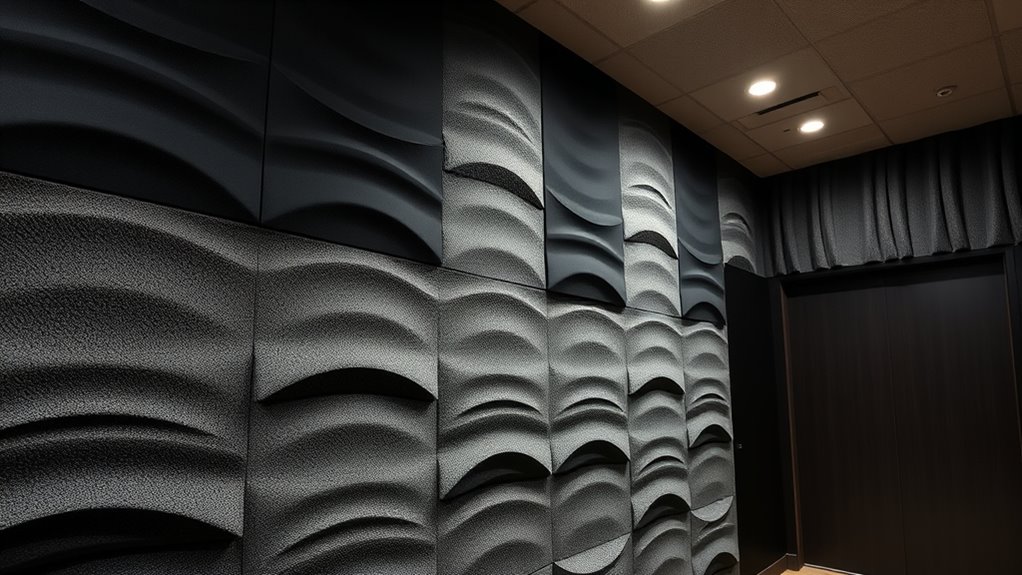

To effectively reduce noise, you should use soundproof materials like mass-loaded vinyl and acoustic panels that block or absorb sound waves. Applying strategic design principles, such as controlling reflections and reverberations with diffusers and bass traps, also helps. Proper installation is key—seal gaps with acoustic caulk and position materials carefully. By combining these techniques, you can create a quieter environment that’s both functional and comfortable. Keep exploring to discover more ways to enhance your space’s acoustics.
Key Takeaways
- Utilize soundproof materials like mass-loaded vinyl, acoustic panels, and fiberglass insulation to block or absorb noise effectively.
- Design spaces with strategic placement of sound-absorbing panels, diffusers, and bass traps to control reflections and reverberations.
- Ensure proper sealing of gaps and cracks with weatherstripping and acoustic caulk to prevent sound leaks.
- Combine material selection with acoustic design principles tailored to specific environments for optimal noise reduction.
- Focus on quality materials and installation details to maximize attenuation and create quieter, more balanced spaces.

Sound attenuation and noise reduction techniques are vital for creating quieter, more comfortable environments in both industrial and residential settings. When you want to reduce unwanted noise, understanding how soundproof materials and acoustic design work together can make a significant difference. Soundproof materials are specifically engineered to block or absorb sound waves, preventing them from passing through walls, floors, or ceilings. These materials include mass-loaded vinyl, acoustic panels, fiberglass insulation, and specialized drywall, all of which help create barriers that keep noise out or contain it within a space. By strategically incorporating these soundproof materials, you can markedly decrease sound transmission, making rooms more peaceful and less disruptive.
Effective soundproofing reduces noise with specialized materials like vinyl, insulation, and drywall to create peaceful, quiet spaces.
Acoustic design plays a vital role in optimizing sound environments. It involves planning the layout and selecting appropriate materials to control sound reflections, echoes, and reverberations. When designing a space, you need to take into account factors like room shape, size, and surface materials. For example, placing acoustic panels on walls and ceilings helps absorb sound waves, reducing echo and improving clarity. Diffusers and bass traps can also be integrated into the design to manage specific frequencies, ensuring that sound behaves as intended within the space. The goal is to strike a balance between sound absorption and reflection, creating an environment that feels comfortable and minimizes noise disturbance.
You can further enhance noise reduction by paying attention to the details of installation. Proper sealing of gaps and cracks around doors, windows, and structural joints prevents sound leaks that can undermine your efforts. Using weatherstripping and acoustic caulk can make a noticeable difference in soundproofing effectiveness. Additionally, choosing the right placement for soundproof materials is key; for instance, installing mass-loaded vinyl behind drywall or around noisy machinery can block sound paths more efficiently. Combining these techniques with acoustic design principles allows you to create spaces that are not only quieter but also more acoustically balanced. Understanding sound behavior is essential for effective noise control.
Implementing soundproofing and acoustic design isn’t just about adding materials — it’s about understanding how sound behaves and using that knowledge to craft environments tailored to your needs. Whether you’re working to minimize noise in a home office, a recording studio, or an industrial plant, focusing on quality soundproof materials and thoughtful acoustic design ensures your space remains peaceful and functional. When you make these choices wisely, you’ll notice a marked improvement in sound quality and noise control, making your environment more comfortable and productive.
Frequently Asked Questions
How Effective Are Passive Versus Active Noise Reduction Methods?
Passive noise reduction methods, like passive design, are quite effective for reducing consistent, low-frequency sounds and require no power. Active control, on the other hand, actively cancels out noise using electronic systems, making it better for dynamic, unpredictable sounds. You’ll find passive methods work well in quiet environments, but combining them with active control provides a more all-encompassing noise reduction solution for varying noise levels.
What Materials Are Best for Sound Absorption in Industrial Settings?
You might think all materials are equal, but in industrial settings, soundproof curtains and acoustic panels top the list. They absorb noise effectively, reducing echo and vibration. Acoustic panels, especially those with foam or mineral wool, are fantastic for targeting specific noise frequencies. Meanwhile, soundproof curtains offer a quick, flexible solution for large, open spaces. So, your best bet? Combine these materials for a quieter, safer work environment.
How Does Room Geometry Influence Sound Attenuation?
You should consider how room shape and wall angles impact sound attenuation. Irregular room shapes and angled walls help scatter sound waves, reducing echoes and reverberation. Conversely, rectangular rooms with parallel walls can trap sound, increasing noise levels. By designing with non-parallel walls and varied geometries, you optimize sound diffusion and absorption, creating a quieter environment. These factors are vital for effective noise control in industrial spaces.
Can Noise Reduction Techniques Improve Speech Intelligibility?
Yes, noise reduction techniques can markedly improve speech intelligibility, especially in noisy environments. Research shows that reducing background noise by just 10 decibels can make speech 50% clearer. By implementing effective noise control, you enhance speech clarity and provide better hearing protection. This not only helps you understand conversations more easily but also reduces listening fatigue, making communication more comfortable and effective in loud settings.
What Are the Latest Innovations in Soundproofing Technology?
You’ll find that the latest innovations in soundproofing include smart soundproofing systems and innovative materials. These materials, like acoustic metasurfaces and phase-changing gels, adapt to sound frequencies for better attenuation. Smart soundproofing integrates sensors and automated controls, allowing you to optimize noise reduction in real-time. These advancements make it easier for you to create quiet, comfortable spaces, whether for work, rest, or privacy.
Conclusion
By now, you see that mastering sound attenuation and noise reduction isn’t just about technology—it’s about reclaiming peace in your space. Think of these techniques as your secret shields against chaos, turning noisy environments into havens of calm. With the right strategies, you’re not just reducing noise; you’re creating a sanctuary where tranquility reigns. So, take control and make noise reduction your superpower—because silence truly is golden.