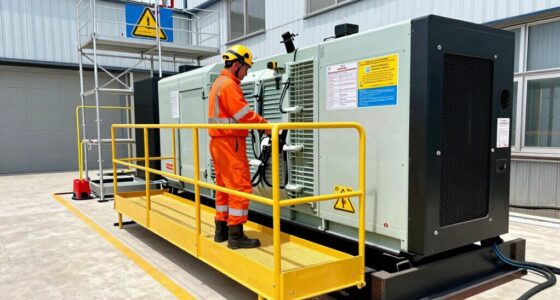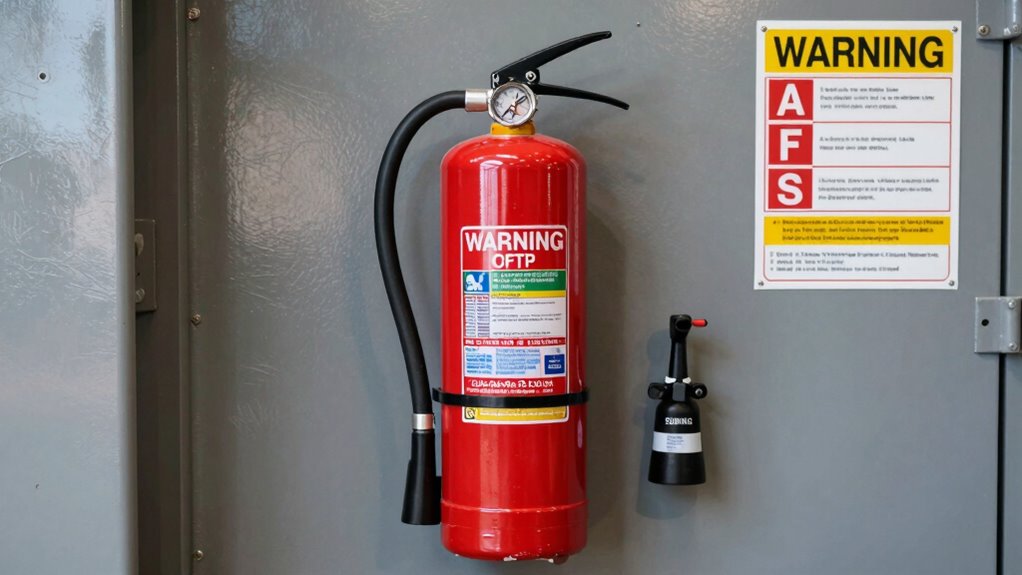
Choosing the right fire extinguisher for generator areas requires balancing electrical safety with fuel combustion risks. My top overall pick is the First Alert HOME2PRO Rechargeable Fire Extinguisher, which offers superior 2-A:10-B:C ratings for high-risk zones. For budget-conscious buyers covering multiple units, the 6-Pack ABC Dry Chemical Fire Extinguishers provide essential coverage without breaking the bank. The main tradeoff in this category is between clean discharge options that protect sensitive electronics and dry chemical powders that offer stronger knockdown power for fuel fires. Continue reading to see which model fits your specific generator setup and safety requirements.

Get backup power and energy gear delivered free with Prime
- Fast, free delivery on millions of items
- Prime Video, Amazon Music and more included
- Member-only deals all year
Complete the kit


Key Takeaways
- Dry chemical ABC extinguishers dominate this category because they address both electrical (Class C) and fuel (Class B) risks common in generator setups.
- Mounting hardware is often sold separately or omitted in multi-packs, adding hidden costs for users needing wall or vehicle brackets.
- Smaller 2.5 lb units are easier to deploy quickly but may lack the discharge duration needed for large fuel tank fires.
- Rechargeable models like the First Alert HOME2PRO offer better long-term value than disposable units for permanent installations.
- Spray canisters provide convenience for small engine fires but lack the reach and capacity required for full-scale generator enclosures.
| 6-Pack ABC Dry Chemical Fire Extinguishers with Mounts, 2.5 lb |  | Best for Covering Multiple Generator Locations | Pack quantity: 6 | Extinguisher weight: 2.5 lb each | Fire classes: A, B, C | VIEW ON AMAZON | See Our Full Breakdown |
| Kidde FA110G Basic Home Fire Extinguisher, 1-A:10-B:C, 1 Pack | 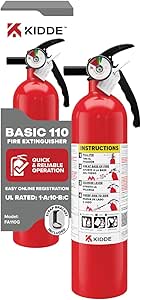 | Best Lightweight Residential Pick | Brand and model: Kidde FA110G | Extinguishing agent: 2.5 lb of monoammonium phosphate | Cylinder material: Aluminum | VIEW ON AMAZON | See Our Full Breakdown |
| First Alert HOME2PRO Rechargeable Fire Extinguisher, 2-A:10-B:C, Red | 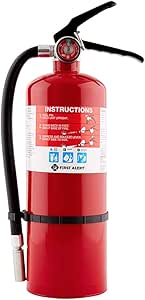 | Best Rechargeable Option | Brand and model: First Alert 1039897 | Extinguishing agent: Monoammonium phosphate | Rechargeable: Yes, by certified professionals after use | VIEW ON AMAZON | See Our Full Breakdown |
| Ougist ABC Dry Chemical Fire Extinguisher, 2.5 lb, Model FF1KG |  | Best for Quick Access | Manufacturer and model: Ougist FF1KG | Extinguisher contents: 2.5 lb ABC dry chemical | Fire classes: A, B, C | VIEW ON AMAZON | See Our Full Breakdown |
| Ougist ABC Dry Chemical Fire Extinguisher, 5 lb, 2-Pack |  | Best Two-Station Capacity | Brand and model: Ougist FF2KG | Package size: 2 extinguishers | Agent weight: 5 lb each | VIEW ON AMAZON | See Our Full Breakdown |
| Ougist Portable Dry Chemical Fire Extinguishing Spray, 6-Pack |  | Best for Distributed Backup Coverage | Manufacturer: Ougist | Model: FF600 | Quantity: 6 | VIEW ON AMAZON | See Our Full Breakdown |
| 5 lb ABC Dry Chemical Fire Extinguisher with Wall Mount, 2A:10B:C Rated |  | Best for Primary Generator-Area Coverage | Agent: ABC dry chemical | Capacity: 5 lb | Item weight: 9.5 lb | VIEW ON AMAZON | See Our Full Breakdown |
| Kidde Home Fire Extinguisher, 2-A:10-B:C, 4 lb |  | Best for Familiar Home-Use Format | Model: KD143-210ABC | Agent weight: 4 lb | Dimensions: 4.5 x 4.5 x 14.3 inches | VIEW ON AMAZON | See Our Full Breakdown |
| Ougist ABC Dry Chemical Fire Extinguisher with Wall Mount, 2.5 lb |  | Best for Clearly Marked, Compact Wall Storage | Manufacturer: OUGIST | Model: FF1KG | Agent weight: 2.5 lb | VIEW ON AMAZON | See Our Full Breakdown |
| 2.5 lb ABC Dry Chemical Fire Extinguisher, 1-Pack |  | Best for Routine Inspection Readiness | Model: FE25 | Extinguishing agent: ABC dry chemical | Extinguisher weight: 2.5 lb | VIEW ON AMAZON | See Our Full Breakdown |
| fire extinguishers for generator area | Included components | Material | Dimensions | Warranty |
|---|---|---|---|---|
| 6-Pack ABC Dry Chemical Fire E | Fire extinguisher with mount | All-metal cylinder | 3.5 x 3.5 x 14.5 in | — |
| Kidde FA110G Basic Home Fire E | Fire extinguisher and mounting bracket | — | — | 6-year limited manufacturer’s warranty |
| First Alert HOME2PRO Rechargea | — | — | 5.75 x 6 x 17 in | 12-year limited |
| Ougist ABC Dry Chemical Fire E | Extinguisher, monthly inspection record card, owner’s manual, location arrow sign, wall-mount hook | Carbon steel | 5.71 x 3.74 x 14.17 in | — |
| Ougist ABC Dry Chemical Fire E | 2 extinguishers, 2 brackets, 2 operating guides, 2 signs | Carbon steel | — | Six-year quality program |
| Ougist Portable Dry Chemical F | — | Aluminum | — | — |
| 5 lb ABC Dry Chemical Fire Ext | — | — | 4.4 x 4.4 x 16.8 inches | — |
| Kidde Home Fire Extinguisher | Fire extinguisher and wall hanger | — | 4.5 x 4.5 x 14.3 inches | 6-year limited warranty |
| Ougist ABC Dry Chemical Fire E | Fire extinguisher, wall mount bracket, and identification sign | Carbon steel | — | 6 years |
| 2.5 lb ABC Dry Chemical Fire E | Extinguisher, wall-mount hook, location arrow sticker, and monthly inspection record card | — | — | — |
More Details on Our Top Picks
6-Pack ABC Dry Chemical Fire Extinguishers with Mounts, 2.5 lb
For buyers who need an extinguisher at several generator points, this six-pack makes coverage its main advantage. Each compact unit is rated for Class A, B, and C fires, covering ordinary combustibles, flammable liquids, and energized electrical equipment—hazards that may be present around generators. Compared with the single Ougist FF1KG 2.5 lb extinguisher, this bundle can outfit more than one location without sourcing units separately. The all-metal valve and trigger and stated operating range of -22°F to 140°F also suit varied placement conditions. The tradeoff is capacity: at 2.5 lb each, these are portable units rather than a substitute for choosing an extinguisher sized to the specific hazard. Dry chemical residue also means cleanup, and the listed total item weight is 31 lb.
Pros:- Six units support coverage across multiple generator locations
- ABC rating includes electrical and flammable-liquid fire classes
- All-metal valve and trigger
- Mounts are included and the stated operating range is broad
Cons:- Each extinguisher contains only 2.5 lb of agent
- Dry chemical discharge can leave residue on equipment and nearby surfaces
- Listed package weight of 31 lb may make handling and storage less convenient
Best for: Owners with several generators, outbuildings, or vehicle-based generator setups who want a mounted extinguisher at each location.
Not ideal for: Buyers seeking one higher-capacity extinguisher for a single generator area, or anyone who wants to avoid dry chemical cleanup.
- Pack quantity:6
- Extinguisher weight:2.5 lb each
- Fire classes:A, B, C
- Operating temperature:-22°F to 140°F (-30°C to 60°C)
- Shelf life:6 years
- Material:All-metal cylinder
- Dimensions:3.5 x 3.5 x 14.5 in
- Included components:Fire extinguisher with mount
Our verdict“Choose this bundle when the priority is placing a compact ABC extinguisher at several generator locations rather than maximizing capacity at one spot.”
Kidde FA110G Basic Home Fire Extinguisher, 1-A:10-B:C, 1 Pack
The Kidde FA110G is the light-handling choice here for a homeowner who wants a familiar, straightforward unit near a residential generator. Its aluminum cylinder keeps the extinguisher lightweight, while the pressure indicator and included bracket make it easier to check and keep in a known place. It covers Class A, B, and C household fire types, but its 1-A:10-B:C rating is more limited on the Class A side than the First Alert HOME2PRO’s 2-A:10-B:C rating. That distinction matters if the area has nearby wood, paper, or other ordinary combustibles. The Kidde is also intended for single use and is not recommended for computers or similar equipment, so it is less appealing for a generator setup with sensitive electronics or a preference for professional recharging.
Pros:- Lightweight aluminum cylinder is easier to handle than heavier all-metal alternatives
- Pressure indicator supports quick visual charge checks
- Covers common Class A, B, and C household fire types
- Mounting bracket is included
Cons:- Single-use design means replacement after discharge
- Not recommended for computers or similar equipment
- Its 1-A Class A rating is lower than the First Alert HOME2PRO’s 2-A rating
Best for: Homeowners who want a lightweight, bracket-mounted extinguisher for a residential generator area and value a clear charge indicator.
Not ideal for: Generator owners who need an extinguisher suitable for computers or want a rechargeable unit with a stronger stated Class A rating.
- Brand and model:Kidde FA110G
- Extinguishing agent:2.5 lb of monoammonium phosphate
- Cylinder material:Aluminum
- Use:Residential, single-use
- Service life:12 years
- Warranty:6-year limited manufacturer’s warranty
- Included components:Fire extinguisher and mounting bracket
Our verdict“Pick the Kidde for a lightweight residential setup where easy handling matters more than recharging or suitability around sensitive electronics.”
First Alert HOME2PRO Rechargeable Fire Extinguisher, 2-A:10-B:C, Red
The HOME2PRO stands apart for buyers who want a rechargeable extinguisher rather than replacing the unit after discharge. Its 2-A:10-B:C rating covers common combustibles, flammable liquids, and electrical equipment, while the all-metal valve and trigger and included mounting hardware suit a fixed workshop or generator-area location. Compared with the Kidde FA110G, it has a higher stated Class A rating and can be recharged by certified professionals; the Kidde is lighter and simpler for a homeowner who prefers a single-use unit. The HOME2PRO’s tradeoffs are its 9.6 lb weight and need for professional servicing after use. Dry chemical agent can also leave residue, so it may not suit buyers concerned about cleanup around nearby equipment.
Pros:- Rechargeable by certified professionals after use
- 2-A:10-B:C rating covers common combustibles, liquids, and electrical equipment
- All-metal valve and trigger construction
- Mounting bracket and wall hook are included
Cons:- At 9.6 lb, it is heavier than the Kidde FA110G
- Recharging after discharge requires a certified professional
- Monoammonium phosphate discharge can leave residue around generator equipment
Best for: Generator owners with a fixed workshop or utility-area installation who prefer a sturdier, rechargeable extinguisher and can arrange professional servicing.
Not ideal for: Buyers who prioritize the lightest unit, want to handle post-discharge replacement themselves, or need to minimize powder residue near equipment.
- Brand and model:First Alert 1039897
- Extinguishing agent:Monoammonium phosphate
- Rechargeable:Yes, by certified professionals after use
- Construction:All-metal valve and trigger
- Weight:9.6 lb
- Dimensions:5.75 x 6 x 17 in
- Warranty:12-year limited
Our verdict“Choose the HOME2PRO for a fixed generator-area station when rechargeability and a higher Class A rating matter more than low weight or simple replacement.”
Ougist ABC Dry Chemical Fire Extinguisher, 2.5 lb, Model FF1KG
The FF1KG’s distinctive feature is its quick-release handle, designed to operate without removing a safety pin. For a generator area where an extinguisher needs to be clearly mounted and quickly reached, that mechanism may appeal to buyers who want fewer steps during access. It has an ABC dry chemical charge, a carbon-steel body, and comes with a wall hook, inspection card, manual, and location arrow sign. Compared with the six-pack of 2.5 lb ABC extinguishers, this is a single-unit purchase with more installation and inspection materials bundled for one station. Its limitations are the modest 2.5 lb agent capacity and 4.4 lb total item weight. The quick-release design may not suit buyers who prefer a conventional pin-and-handle setup.
Pros:- Quick-release handle is designed to work without removing a safety pin
- ABC dry chemical agent covers Class A, B, and C fires
- Carbon-steel construction
- Includes wall hook, inspection card, manual, and location arrow sign
Cons:- 2.5 lb agent capacity may not suit buyers seeking a larger extinguisher
- Total item weight is 4.4 lb, above the stated agent weight
- Quick-release operation may be less familiar than a standard pin-operated design
Best for: Owners setting up one clearly marked generator station who value a quick-release handle and supplied inspection and location materials.
Not ideal for: Buyers outfitting several generator points, seeking a larger agent capacity, or preferring a conventional safety-pin mechanism.
- Manufacturer and model:Ougist FF1KG
- Extinguisher contents:2.5 lb ABC dry chemical
- Fire classes:A, B, C
- Item weight:4.4 lb
- Material:Carbon steel
- Dimensions:5.71 x 3.74 x 14.17 in
- Temperature range:-22°F to 140°F
- Included components:Extinguisher, monthly inspection record card, owner’s manual, location arrow sign, wall-mount hook
Our verdict“Choose the FF1KG for a single, marked generator station where its quick-release handle and included mounting and inspection materials are useful.”
Ougist ABC Dry Chemical Fire Extinguisher, 5 lb, 2-Pack
For a buyer who wants more agent per unit than the 2.5 lb options, this 5 lb two-pack offers a practical middle ground: one extinguisher can be mounted at the generator and another at a nearby access point or second unit. Both are rated for Class A, B, and C fires, and the package includes brackets, operating guides, and safety signs. Compared with Ougist’s single FF1KG, each extinguisher carries twice the stated agent weight, but the quick-release handle is shared and dry chemical cleanup remains part of the tradeoff. The package weighs 18.28 lb, so it is less convenient to move or store than a compact single extinguisher. Buyers should also check that the larger units fit their mounting locations and match the hazard and installation requirements for their generator area.
Pros:- Two 5 lb units provide more agent per extinguisher than the 2.5 lb Ougist FF1KG
- ABC dry chemical rating covers Class A, B, and C fire types
- Quick-release, easy-grip handles
- Package includes two brackets, operating guides, and signs
Cons:- The 18.28 lb package is less convenient to carry and store than a single compact unit
- Dry chemical discharge may leave residue around generator equipment
- Two units require suitable mounting space at the intended locations
Best for: Owners with two generator locations or a generator and nearby access point who want 5 lb ABC units with mounting and identification materials included.
Not ideal for: Buyers needing a lightweight single extinguisher or a residue-free option for equipment-sensitive surroundings.
- Brand and model:Ougist FF2KG
- Package size:2 extinguishers
- Agent weight:5 lb each
- Fire classes:A, B, and C
- Material:Carbon steel
- Package item weight:18.28 lb
- Included components:2 extinguishers, 2 brackets, 2 operating guides, 2 signs
- Warranty:Six-year quality program
Our verdict“Choose this two-pack when you need two mounted ABC extinguishers with 5 lb of agent each and have room for their installation.”
Ougist Portable Dry Chemical Fire Extinguishing Spray, 6-Pack
For a generator area with several access points, this six-pack makes it possible to place a compact unit near the generator, fuel storage, and nearby work areas rather than relying on one extinguisher. Each spray weighs 1.32 lb and has a stated range of up to 13 feet, which may help a user keep some distance while responding to a small fire. Its dry chemical agent is described as non-conductive, and the listed fire types include electrical and flammable-gas fires. Compared with the 5 lb ABC Dry Chemical Fire Extinguisher with Wall Mount, these units are easier to distribute but contain much less agent apiece. That limited capacity is the main tradeoff: they are best treated as accessible backup for incipient fires, not a substitute for a full-size extinguisher. The six-unit pack also weighs 10.8 lb altogether, so storage needs planning.
Pros:- Six compact units allow placement at multiple nearby access points
- Each unit weighs 1.32 lb and is easy to carry
- Dry chemical agent is described as non-conductive
- Stated range is up to 13 feet
Cons:- Each unit has limited agent capacity compared with a 5 lb extinguisher
- The six-pack weighs 10.8 lb in total and requires storage space
- The product data does not state a formal fire-class rating
Best for: Generator-area owners who want several lightweight backup units placed at separate access points around a home, garage, or vehicle storage area.
Not ideal for: Anyone seeking one primary, higher-capacity extinguisher for a generator enclosure or a location where a fire could grow quickly.
- Manufacturer:Ougist
- Model:FF600
- Quantity:6
- Weight per unit:1.32 lb
- Total item weight:10.8 lb
- Range:Up to 13 feet
- Material:Aluminum
- Listed fire types:Electrical, grease, vehicle, garage, and flammable gas
- Guarantee:6 years
Our verdict“Choose this pack for distributed, lightweight backup around a generator setup, not as the sole extinguisher for a higher-risk area.”
5 lb ABC Dry Chemical Fire Extinguisher with Wall Mount, 2A:10B:C Rated
This is the strongest fit in this batch for buyers who want one wall-mounted extinguisher to serve as the main response option near a generator. Its 5 lb ABC charge covers ordinary combustibles, flammable liquids, and energized electrical equipment, while the stated 15-foot discharge range can help keep the operator farther from the fire. The quick-release bracket and one-hand squeeze control make access more direct than with the loose, compact sprays in the Ougist six-pack. Its wide operating range, from -40°F to 140°F, also suits many unheated or warm storage locations. The compromise is bulk: the unit weighs 9.5 lb and stands 16.8 inches tall, so it needs a secure mounting spot and may be harder for some users to handle. The listed six-year service life depends on proper storage.
Pros:- 5 lb ABC agent covers Class A, B, and C fire types
- Quick-release wall bracket supports accessible storage
- 15-foot stated discharge range
- Operating range spans -40°F to 140°F
Cons:- At 9.5 lb, it may be difficult for some users to lift and operate
- Its 16.8-inch height requires more mounting space than compact options
- Six-year service life is stated under proper storage conditions
Best for: Generator owners who need a wall-mounted, multipurpose ABC extinguisher in a garage, shed, or other accessible area with room for a larger unit.
Not ideal for: Buyers who need a lightweight extinguisher to carry between locations or cannot provide a secure, accessible wall mount.
- Agent:ABC dry chemical
- Capacity:5 lb
- Item weight:9.5 lb
- Discharge range:Up to 15 feet
- Operating temperature:-40°F to 140°F
- Dimensions:4.4 x 4.4 x 16.8 inches
- Mount:Quick-release wall bracket included
- Service life:6 years under proper storage conditions
Our verdict“Pick this as a primary generator-area extinguisher when you can mount and manage a heavier 5 lb ABC unit.”
Kidde Home Fire Extinguisher, 2-A:10-B:C, 4 lb
For a generator kept near a home or attached garage, this Kidde offers a straightforward 4 lb ABC-rated format with a wall hanger, metal valve and handle, and a stated 12–18-foot range. Its household-fire rating includes ordinary combustibles, flammable liquids and gases, and electrical equipment, matching the broad hazards a generator area can present. Compared with the 5 lb wall-mount extinguisher in this group, it is smaller and lighter, though its stated discharge time of 13–15 seconds still calls for quick, deliberate action. The tradeoff is that it is single-use: after discharge, it must be replaced rather than put back into service. Dry chemical agent may also irritate skin. Its residential positioning and included hanger make it a practical accessible option, but it is not the pick for buyers prioritizing rechargeability.
Pros:- UL-listed 2-A:10-B:C rating for common household fire types
- Wall hanger supports accessible storage
- Metal valve and handle with an aluminum cylinder
- Stated discharge range is 12–18 feet
Cons:- Single-use design requires replacement after discharge
- Dry chemical agent may irritate skin
- Product data does not provide an operating temperature range
Best for: Homeowners who want a familiar, wall-hung ABC extinguisher near a residential generator and are prepared to replace it after use.
Not ideal for: Buyers who want a rechargeable unit, or who need a stated wide-temperature operating range for an exposed or unheated generator location.
- Model:KD143-210ABC
- Agent weight:4 lb
- Dimensions:4.5 x 4.5 x 14.3 inches
- Discharge time:13–15 seconds
- Discharge range:12–18 feet
- Operating pressure:100 PSI
- Included components:Fire extinguisher and wall hanger
- Warranty:6-year limited warranty
Our verdict“Choose this for a residential generator area when you value an accessible, household-oriented ABC unit over rechargeability.”
Ougist ABC Dry Chemical Fire Extinguisher with Wall Mount, 2.5 lb
This Ougist pairs a 2.5 lb ABC charge with a wall bracket and identification sign, making it a tidy choice when a generator-area extinguisher needs a designated, visible place. The sign can help household members or other users locate it quickly; the quick-release mount keeps removal simple. It is lighter than the 5 lb wall-mount model, though that smaller agent load also means less extinguishing capacity. Its stated operating range of -40°F to 120°F gives it flexibility for many garages and sheds, but the product must be protected from rain, snow, and direct outdoor exposure. That restriction matters around generators often stored outside: this unit needs a sheltered mounting location, not an exposed post or open-sided area. I would treat it as a convenient nearby response tool for small fires, rather than relying on its compact size to cover a larger incident.
Pros:- ABC dry chemical agent covers Class A, B, and C fires
- Wall bracket and identification sign are included
- Quick-release design supports fast access
- Rated operating range is -40°F to 120°F
Cons:- Must be kept away from rain, snow, and direct outdoor exposure
- 2.5 lb agent capacity is lower than the 5 lb option in this batch
- Product data does not state a discharge range or discharge time
Best for: Owners who want a clearly identified, quick-release extinguisher mounted inside a sheltered garage, shed, or generator room.
Not ideal for: Buyers who need an extinguisher mounted outdoors in direct weather or want more agent capacity than a 2.5 lb unit provides.
- Manufacturer:OUGIST
- Model:FF1KG
- Agent weight:2.5 lb
- Item weight:5.72 lb
- Fire classes:A, B, and C
- Material:Carbon steel
- Temperature range:-40°F to 120°F
- Included components:Fire extinguisher, wall mount bracket, and identification sign
- Warranty:6 years
Our verdict“Choose this compact Ougist when a sheltered generator-area wall mount and visible identification matter more than higher agent capacity.”
2.5 lb ABC Dry Chemical Fire Extinguisher, 1-Pack
The useful distinction here is not extra capacity but the included inspection aids: a pressure gauge, printed PASS instructions, monthly inspection record card, and location arrow sticker. Those details support a repeatable check-and-find routine for a generator area where an extinguisher should stay visible and ready. Its 2.5 lb ABC agent is rated for small, incipient-stage Class A, B, and C fires, with a 10–12-second discharge. Compared with the similarly sized Ougist 2.5 lb wall-mount model, this one supplies more explicit inspection accessories, while Ougist includes a bracket and identification sign. The short discharge window and small capacity are meaningful limits: this is for an early, manageable fire, not a growing blaze. The product data lists a wall-mount hook rather than a full bracket, so buyers should check that the mounting arrangement fits their location.
Pros:- 1-A:10-B:C rating covers Class A, B, and C fire types
- Pressure gauge and printed PASS instructions support routine checks
- Monthly inspection card and location arrow sticker are included
- Lightweight 2.5 lb agent capacity for carrying and mounting
Cons:- Intended only for small, incipient-stage fires
- 10–12-second discharge time leaves a short operating window
- Package lists a wall-mount hook rather than a full bracket
Best for: Generator owners who want a small ABC extinguisher with built-in prompts and records for regular visual inspection.
Not ideal for: Anyone seeking longer discharge time, greater agent capacity, or a full wall bracket included in the package.
- Model:FE25
- Extinguishing agent:ABC dry chemical
- Extinguisher weight:2.5 lb
- Gross weight:4.5 lb
- Operating pressure:195 PSI
- Operating temperature:-40°F to 120°F
- Discharge time:10–12 seconds
- Included components:Extinguisher, wall-mount hook, location arrow sticker, and monthly inspection record card
Our verdict“Choose this for a small, accessible generator-area unit when inspection prompts matter more than extra capacity or a full mounting bracket.”

How We Picked
I evaluated these products based on their UL rating classifications, specifically prioritizing models with strong Class B and Class C ratings. Generators present unique hazards involving flammable fuels and live electrical components, so extinguishers must handle both. I also assessed ease of deployment, considering weight, nozzle design, and whether mounting brackets were included or available.
Value was determined by looking at cost-per-ounce of extinguishing agent and the availability of replacement parts. I excluded products with poor corrosion resistance or ambiguous rating labels, as generator areas often face harsh weather and dust. The ranking reflects a balance between raw fire-fighting power and practical usability in a utility setting.
| fire extinguishers for generator area | Material |
|---|---|
| 6-Pack ABC Dry Chemical Fire E | All-metal cylinder |
| Kidde FA110G Basic Home Fire E | — |
| First Alert HOME2PRO Rechargea | — |
| Ougist ABC Dry Chemical Fire E | Carbon steel |
| Ougist ABC Dry Chemical Fire E | Carbon steel |
| Ougist Portable Dry Chemical F | Aluminum |
| 5 lb ABC Dry Chemical Fire Ext | — |
| Kidde Home Fire Extinguisher | — |
| Ougist ABC Dry Chemical Fire E | Carbon steel |
| 2.5 lb ABC Dry Chemical Fire E | — |
Factors to Consider When Choosing Fire Extinguishers For Generator Areas
Selecting the right extinguisher for a generator area goes beyond just grabbing the nearest red cylinder. You must match the agent type to the specific fuels and electrical voltages present in your setup.Understanding Class B and Class C Ratings
Generators typically run on gasoline, diesel, or propane, making Class B rating non-negotiable. This rating measures the extinguisher’s ability to suppress flammable liquid fires. You also need a Class C rating to handle electrical fires without the risk of conduction. Dry chemical ABC models cover both, but you must check the specific numerical rating. A 2-A:10-B:C rating is significantly more powerful than a basic 1-A:10-B:C unit, offering greater fuel suppression capacity. Never rely on water-based extinguishers here, as they pose severe electrical shock hazards.
Size vs. Maneuverability in Tight Spaces
Generator areas are often cramped, located in basements, sheds, or behind fences. A heavy 5 lb extinguisher offers more discharge time but can be awkward to maneuver quickly. In contrast, 2.5 lb units are lightweight and easier to grab, though they may run out of agent during a prolonged fuel fire. I recommend placing a smaller unit near the generator for quick access and a larger unit nearby for backup. If your generator is outdoors, consider wind factors; lightweight extinguishers can be harder to aim in strong gusts.
Mounting Solutions and Accessibility
Many multi-packs, like the 6-Pack ABC Dry Chemical, often omit mounting brackets to keep costs low. This forces buyers to purchase brackets separately, which can double the effective price. For permanent installations, a wall-mount kit is vital to keep the extinguisher upright and visible. If you operate mobile generators or work in vehicles, look for models compatible with vehicle brackets. An unmounted extinguisher lying on the floor is a tripping hazard and harder to grab during an emergency.
Dry Chemical vs. Clean Agent Options
While ABC dry chemical is the standard for generators, it leaves a corrosive residue that can damage sensitive electronics and engine components. Clean agent extinguishers like Halotron leave no residue, preserving the generator’s functionality after a small fire. However, they are significantly more expensive and have lower Class B ratings for their size. For most residential or backup generator setups, the cost of dry chemical cleanup is acceptable compared to the premium price of clean agents. Choose dry chemical for fuel-heavy risks, and clean agents only if the equipment downtime cost is extreme.
Maintenance and Rechargeability
Disposable extinguishers are cheap upfront but expensive to replace entirely after use. Rechargeable models, such as the First Alert HOME2PRO, can be serviced by local fire protection companies. This is a better long-term investment for permanent installations. Check the manufacturer’s warranty and service network before buying. In remote areas, finding a recharge station might be difficult, making disposable units a more practical, albeit wasteful, choice. Always inspect pressure gauges monthly, as generator vibration can loosen seals over time.
Frequently Asked Questions
Can I use a standard home fire extinguisher for my generator?
It depends on the rating. Most standard home extinguishers are ABC rated, which covers electrical and liquid fires, making them suitable for small generators. However, many basic home models have low Class B ratings (like 1-A:10-B:C), which may not provide enough agent to suppress a large fuel tank fire. For generators, I recommend units with at least a 2-A:10-B:C rating or higher to ensure you have sufficient knockdown power for flammable liquids. Always verify the label explicitly lists Class B and C protection.Do I need a special extinguisher for diesel generators?
You do not need a fundamentally different type of extinguisher, but you do need one with a strong Class B rating. Diesel is a combustible liquid, and while it has a higher flash point than gasoline, a hot generator fire can still ignite it rapidly. ABC dry chemical extinguishers work well on diesel fires, but you should choose a model with a higher numerical B rating (e.g., 10-B or higher) to handle the volume of fuel. Water-based extinguishers are ineffective and dangerous on diesel fires.How many fire extinguishers do I need for a generator area?
Code requirements vary, but a general rule of thumb is to have at least one extinguisher within 75 feet of the generator, and ideally one within 50 feet if the unit is large or uses high-voltage connections. For small residential generators, one well-rated unit near the access door is often sufficient. For commercial sites or large standby generators, multiple units placed at different egress points are recommended. Ensure the extinguishers are visible and not blocked by fuel cans or equipment.Are spray can extinguishers good enough for generator fires?
Spray can extinguishers, like the Ougist Portable Dry Chemical cans, are better than nothing but are severely limited in capacity and reach. They typically contain less than 5% of the agent found in a standard 2.5 lb or 5 lb extinguisher. They are suitable only for tiny, contained fires, such as a small spill igniting near the exhaust. For any fire involving the generator body, fuel tank, or engine, a standard-sized extinguisher is required to provide adequate suppression time and range.Will dry chemical extinguishers damage my generator?
Yes, ABC dry chemical leaves a fine, corrosive powder that can corrode metal parts, clog air filters, and damage electronic control boards if not cleaned immediately. While this is a drawback, it is often preferable to the total loss of the unit from fire. If protecting the generator’s post-fire functionality is a high priority, consider investing in a Clean Agent (Halotron) extinguisher, though these cost more and have lower fire suppression ratings. Always disconnect power and clean the unit thoroughly after any discharge.Conclusion
Selecting the right fire extinguisher for generator areas comes down to matching capacity with risk. For most homeowners with standby generators, the First Alert HOME2PRO stands out as the Best Overall choice due to its high 2-A:10-B:C rating and rechargeable design. If you need to equip multiple small units or cover a large area on a budget, the 6-Pack ABC Dry Chemical Fire Extinguishers offer the Best Value, though you must account for separate mounting costs. For those prioritizing brand reliability and basic coverage, the Kidde FA110G serves as a solid Entry-Level option, while the Ougist 5 lb 2-Pack provides Heavy-Duty capacity for larger industrial setups. Always prioritize models with clear Class B and C ratings and ensure they are mounted securely for immediate access.
Columbus Day / Indigenous Peoples' Day Picks
long weekend sales
As an affiliate, we earn on qualifying purchases.