
TL;DR

Get backup power and energy gear delivered free — and shop member deals
- Fast, free delivery on millions of items
- Access to Prime Big Deal Days deals on October 6–7
- Prime Video, Amazon Music and more included
Statkraft has signed a 10-year tolling agreement covering Greenvolt Power’s Ełk and Turośń Kościelna battery projects in Poland, with combined capacity of 400 MW and 1.6 GWh. The deal gives Statkraft control over when the batteries charge and discharge across energy and flexibility markets; financial terms for the tolling agreement were not disclosed.
Statkraft has signed a 10-year tolling agreement with Greenvolt Power covering two battery energy storage projects in Poland, giving the Norwegian energy company rights to decide when they charge and discharge. The projects, in Ełk and Turośń Kościelna, have a combined capacity of 400 MW and 1.6 GWh, making the contract a major expansion of Statkraft’s activity in the Polish market.
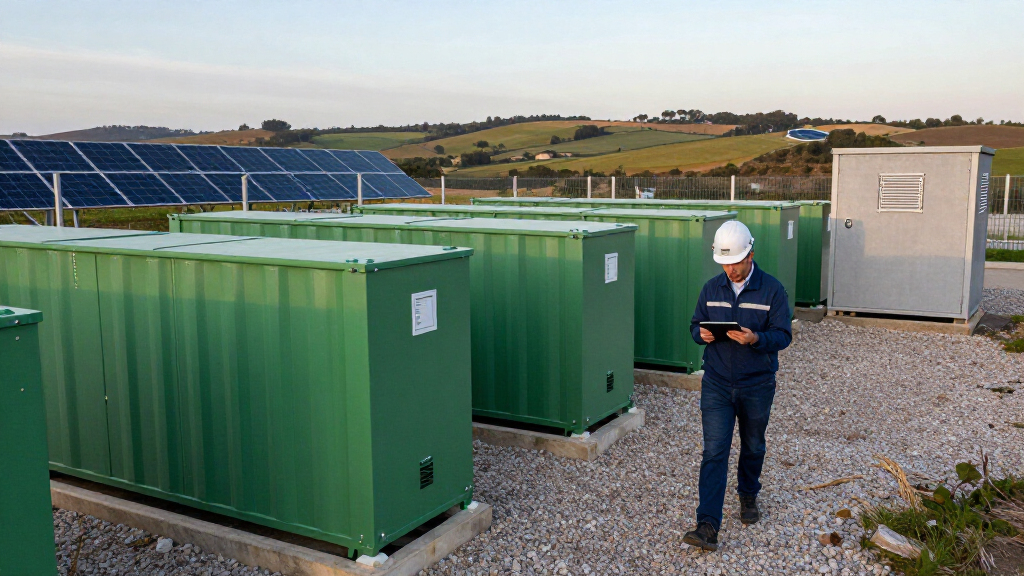
The agreement covers two systems rated at 200 MW/800 MWh each. They are located in Nowa Wieś Ełcka and Turośń Kościelna in north-eastern Poland. Under the tolling structure, Statkraft can schedule charging and discharging across energy and flexibility markets, the companies said. They did not disclose the agreement’s financial terms or specify when the full contract period begins.
Greenvolt said the arrangement is expected to let the projects earn revenue by participating in multiple power markets. It adds a long-term commercial structure to the assets, alongside potential revenue from Poland’s capacity market. The source report says that capacity-market revenue is expected to begin in 2028 for the Turośń Kościelna project.
The projects are at different stages. Turośń Kościelna was inaugurated in July 2026, while Ełk is expected to reach commercial operation shortly, according to the report. BYD Energy Storage supplied the battery systems. The report did not confirm the specific equipment model.
Statkraft Expands in Poland
The agreement gives Statkraft a role in optimizing 1.6 GWh of storage in a market where it says this is its first large-scale battery storage contract. Batteries can shift electricity use over time: charging when power is available and discharging when market conditions call for it. The companies say Statkraft will manage that activity across energy and flexibility markets.
For Greenvolt, tolling offers a way to earn contracted revenue from the projects while Statkraft takes on market optimization. The arrangement sits alongside, rather than replacing, the reported capacity-market revenue opportunity for Turośń Kościelna. The size of the contract is notable in Europe, but a direct ranking against other deals cannot be independently established from the information provided.
The deal also follows separate financing secured by Greenvolt. In August, the developer arranged €153 million in bridge facilities and a €65 million guarantee facility from UniCredit, the report says. Greenvolt stated that tolling was not required to finance construction, building or asset purchases, so the agreement is a commercial arrangement rather than a stated condition for that financing.
Top picks for "statkraft sign toll"
As an affiliate, we earn on qualifying purchases.
Two Projects Near Operation
The agreement is Statkraft’s first entry into Poland’s large-scale battery storage market, according to the source report. Statkraft described it as its largest battery storage transaction signed in the country to date. The company also cited earlier Polish power purchase agreements, including a corporate PPA and a utility-scale solar PPA, as part of its activity in the market.
The two Greenvolt projects each have 200 MW of power capacity and 800 MWh of stored energy. Power capacity describes how quickly a battery can deliver or absorb electricity; energy capacity describes how much it can store. Turośń Kościelna was inaugurated in July 2026, while Ełk was still approaching commercial operation at the time of the report. The report does not say that inauguration means the first project has begun commercial operation.
The deal’s structure assigns market scheduling rights to Statkraft. Greenvolt retains the projects and gains what it described as predictable long-term revenue. The report does not provide the tolling fee, revenue-sharing terms, or details of how operational risks and costs are divided.
Terms and Operations Still Unclear
The companies have not disclosed the tolling fee, total contract value or detailed revenue-sharing terms. The source report also does not give a precise start date for the 10-year term, an expected commercial-operation date for Ełk, or a confirmed operating date for Turośń Kościelna.
It is not clear how much revenue the projects may earn from energy and flexibility markets, or how those revenues will vary over time. The agreement’s exact division of operating costs, performance obligations and market risks was not provided. The report says BYD supplied the battery systems but does not confirm their model.
Commercial Operation and Market Entry
The next reported milestone is Ełk’s commercial operation, which the source says is expected shortly but does not date. Turośń Kościelna’s inauguration took place in July 2026; the available information does not specify its commercial-operation schedule. Once operating, the systems can begin participating in the markets covered by the tolling agreement, subject to their commissioning and applicable market arrangements.
For Turośń Kościelna, the report identifies 2028 as the start of additional revenue from Poland’s capacity market. Further information from the companies would be needed to establish the agreement’s financial terms, operating timeline and actual performance.
Key Questions
What did Statkraft and Greenvolt agree to?
They signed a 10-year tolling agreement under which Statkraft will decide when two Greenvolt battery projects charge and discharge across energy and flexibility markets.
How large are the two battery projects?
Ełk and Turośń Kościelna are each rated at 200 MW/800 MWh, for a combined total of 400 MW and 1.6 GWh.
Where are the projects located?
Both are in north-eastern Poland: Ełk is in Nowa Wieś Ełcka, and Turośń Kościelna is in the town of the same name.
When will the batteries start operating?
The report says Turośń Kościelna was inaugurated in July 2026 and Ełk is expected to reach commercial operation shortly. It does not provide confirmed commercial-operation dates for either project.
What are the financial terms of the deal?
The companies have not disclosed the tolling agreement’s fee, total value or detailed revenue-sharing terms. Greenvolt separately secured financing from UniCredit in August, according to the report.
Source: rss
Fall Picks
fall essentials
As an affiliate, we earn on qualifying purchases.