
TL;DR

Get backup power and energy gear delivered free with Prime
- Fast, free delivery on millions of items
- Prime Video, Amazon Music and more included
- Member-only deals all year
A prospective tenant in a recently built Los Angeles apartment reported higher consumer-monitor readings for total volatile organic compounds and formaldehyde after keeping the windows closed for about 48 hours. The readings and persistent odor prompted questions about professional testing, but the account does not establish that the measurements are accurate or that the apartment poses a health risk.
A prospective tenant in a newly constructed Los Angeles apartment reported higher readings for total volatile organic compounds and formaldehyde after keeping the windows closed for about 48 hours, prompting questions about whether to seek professional indoor-air testing before moving in. The figures came from a Temtop LKC-1000S+ consumer monitor, which the tenant said is not laboratory-grade; the account does not confirm the readings’ accuracy or establish a health hazard.
The reader’s account, published as a question on GreenBuildingAdvisor, says the apartment was completed a few months earlier and initially had a noticeable “new-construction” chemical smell. The reader had not moved in and reported keeping the windows open for about three weeks, as well as arranging post-construction cleaning, HVAC duct cleaning and a brief period of air scrubbing.
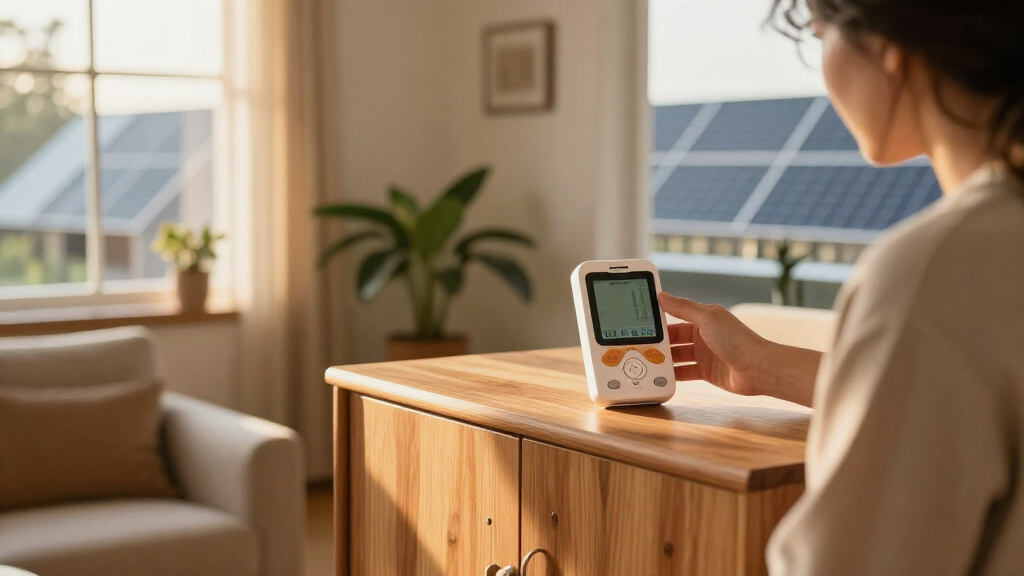
With the windows open, the monitor showed TVOC of 0.05 mg/m³ and formaldehyde, or HCHO, of 0.01 mg/m³. It also showed PM2.5 of 3.7 micrograms per cubic meter and an air-quality index reading of about 15. After the windows were closed for approximately 48 hours, the reader reported TVOC rising to 0.38 mg/m³, peaking at 0.45 before settling around 0.36, and HCHO reaching 0.08 mg/m³, which the reader estimated at about 65 parts per billion. PM2.5 was 2.1 micrograms per cubic meter.
The reader said the odor remained noticeable during the closed-window period and asked whether the figures were typical for a new apartment, whether the formaldehyde reading was reliable, and whether laboratory testing would be appropriate. No independent measurements, expert assessment, or test results are included in the reported account.
Why Closed-Window Readings Matter
The change reported after closing the windows matters because it raises a practical question about how the apartment’s indoor air behaves when outdoor-air exchange is reduced. A rise on a consumer monitor may justify seeking better information, but it cannot by itself show which chemical is present, where it came from, or whether an occupant’s exposure would exceed a health-based benchmark.
That distinction is relevant to anyone deciding whether to move into a recently completed home. Odor, a device reading and a demonstrated health risk are not interchangeable evidence. A calibrated, appropriately designed test could provide more useful information if concerns persist, while a single unverified measurement should not be treated as a diagnosis of exposure or harm.
The tenant also disclosed severe health anxiety and OCD related to toxic exposure. That personal context does not determine whether the readings are accurate, but it makes clear why the answer should avoid unsupported reassurance as well as worst-case conclusions. The reported information alone cannot establish either that the apartment is safe or that it is dangerous.
Products Worth Considering

Bose TV Speaker Compact Soundbar with Bluetooth and HDMI-ARC, Black

Samsung 85-Inch M70H Series Mini LED 4K Smart TV (2026)

Samsung 85 M80H Series Mini LED 4K Smart TV (2026)
As an affiliate, we earn on qualifying purchases.
Ventilation and the Reported Measurements
The account describes two different conditions: windows open for weeks and windows closed for about two days. Ventilation can affect indoor concentrations, but the report does not provide enough detail to identify the cause of the changes. Potential sources named by the reader include paint, flooring, adhesives and cabinetry; none was confirmed as the source in this apartment.
The distinction between TVOC and a specific chemical is also relevant. TVOC is an aggregate measure, not a direct identification of individual compounds. The reader’s formaldehyde result is a separate device reading, but the source supplies no independent laboratory confirmation, sampling protocol, calibration information or details about other conditions that could affect the monitor.
The reader described the Temtop device as not laboratory-grade, and the account does not cite a professional interpretation or a comparison with a specified standard. The reported PM2.5 and air-quality index figures do not independently verify the VOC or formaldehyde results. The reported cleaning and ventilation are part of the timeline, not evidence that particular pollutants were removed.
“The chemical/new-building smell was still noticeable after those 48 hours with the windows closed.”
— The GreenBuildingAdvisor reader
Accuracy and Health Risk Remain Unknown
The reported figures have not been independently verified. The account does not specify whether the monitor was calibrated, how long it was allowed to stabilize, where it was placed, or whether temperature, humidity or other indoor conditions changed during the test. It also does not identify the individual compounds contributing to the TVOC reading or confirm that the HCHO figure represents the apartment’s actual formaldehyde concentration.
No laboratory sampling or industrial-hygiene assessment is reported, and the source gives no expert conclusion about whether the values are typical, require action or indicate a health concern. The length of time the tenant would remain in the apartment, the conditions during ordinary occupancy and the effect of routine ventilation are also unknown. For those reasons, the account cannot answer whether professional testing is warranted in this specific case.
Independent Testing Could Clarify Results
The reader asked whether to arrange professional testing and which residential sampling methods would be suitable, but the source does not report a decision or follow-up. The next informative step, if the concern persists, would be an assessment by a qualified indoor-air professional who can discuss the question being tested and use an appropriate sampling method rather than rely solely on an unverified consumer reading.
Any results would need to be interpreted with the sampling conditions and relevant comparison criteria stated clearly. Until such information is available, the reported measurements remain personal observations from one device, not a confirmed finding about the apartment. Whether the reader moves in, seeks testing or continues ventilation is not established in the account.
Key Questions
What readings did the tenant report?
With windows open, the tenant reported TVOC of 0.05 mg/m³ and HCHO of 0.01 mg/m³. After about 48 hours with windows closed, the reported readings were TVOC around 0.36 to 0.38 mg/m³, with a peak of 0.45, and HCHO of 0.08 mg/m³. These were readings from a consumer monitor, not independently verified results.
Do the readings confirm that the apartment is unsafe?
No. The source reports measurements and an odor, but provides no laboratory test, expert interpretation or confirmed health assessment. The reported information alone cannot establish that the apartment is either safe or unsafe.
How reliable was the formaldehyde measurement?
The reader said the Temtop LKC-1000S+ was not laboratory-grade and asked about confidence in its HCHO result. The account includes no calibration records or independent comparison, so the accuracy of the reported 0.08 mg/m³ reading is unknown.
Did the reader arrange professional testing?
The reported question asks whether professional testing would be justified and what sampling method to use. It does not state that testing was arranged or provide any subsequent results.
Source: greenbuildingadvisor.com