To protect outdoor fuel tanks from corrosion, you should regularly apply specialized corrosion-resistant coatings designed for outdoor use, guaranteeing they are properly and consistently applied. Keep vents, caps, and drainage points clean and functioning to prevent moisture buildup, and inspect the tank for signs of rust or damage. Installing protective covers and insulation helps shield the tank from environmental elements. Maintaining these measures consistently will prolong your tank’s lifespan—continue for more detailed tips to ensure lasting protection.

Get backup power and energy gear delivered free with Prime
- Fast, free delivery on millions of items
- Prime Video, Amazon Music and more included
- Member-only deals all year
Key Takeaways
- Apply corrosion-resistant coatings tailored for outdoor metal surfaces and fuel tanks.
- Conduct regular inspections for rust, leaks, and damage, repairing issues promptly.
- Maintain proper ventilation, fill caps, and drainage points to prevent moisture buildup.
- Install protective covers or shelters to shield tanks from rain, snow, and sun exposure.
- Perform routine cleaning and proactive maintenance to extend tank lifespan and prevent corrosion.
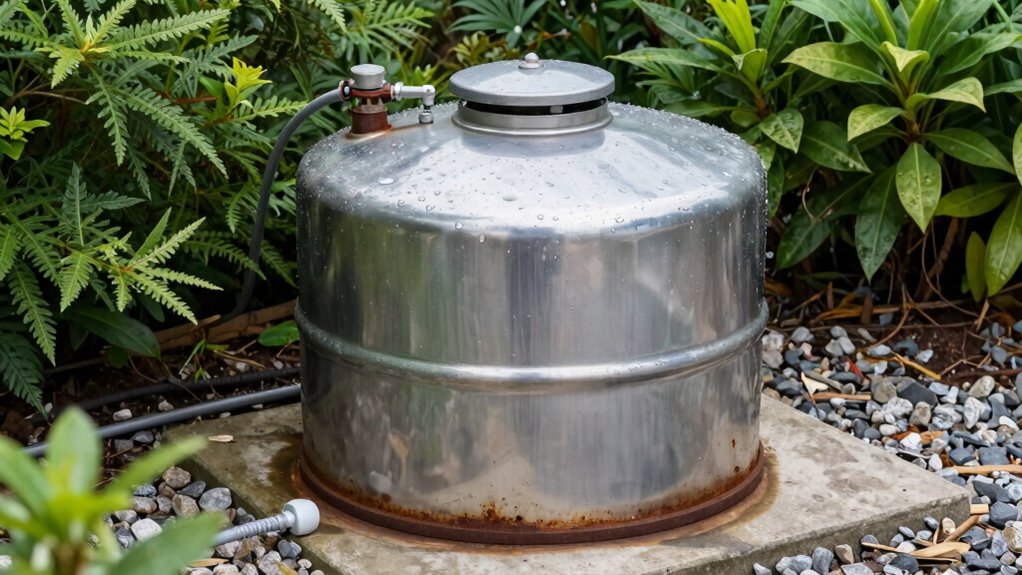
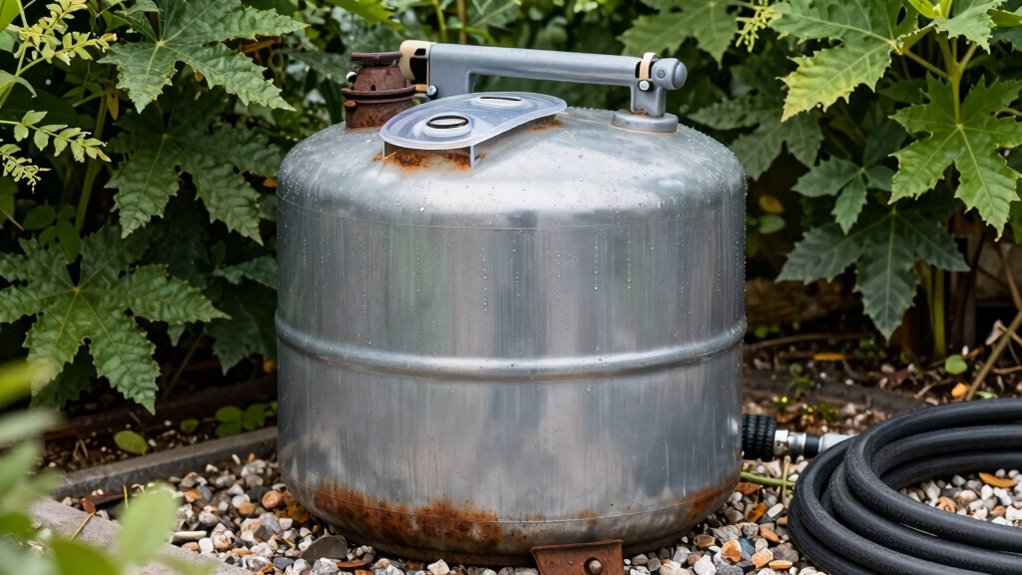
Outdoor fuel tanks are exposed to the elements, making them vulnerable to corrosion that can compromise safety and functionality. To protect your tank, you need to consider several preventative measures, starting with applying corrosion resistant coatings. These coatings act as a barrier, shielding the metal surface from moisture, oxygen, and other corrosive agents present in the environment. When selecting a coating, opt for one specifically designed for outdoor metal surfaces and fuel storage tanks. Applying it correctly and consistently is vital for maximum protection. Remember, even the best coatings will wear over time, so regular inspection and touch-ups are essential. Utilizing landscaping to divert water away from the tank can also help prevent moisture buildup that accelerates corrosion.
Apply durable corrosion resistant coatings and perform regular inspections to protect outdoor fuel tanks from environmental damage.
Alongside coatings, implementing a routine of regular maintenance greatly extends the lifespan of your outdoor fuel tank. Regular maintenance involves inspecting the tank for early signs of corrosion, such as rust spots, paint chipping, or discoloration. Catching these issues early allows you to address them before they develop into more severe problems. Cleaning the tank periodically to remove dirt, debris, and moisture buildup also helps prevent corrosion from forming. Use appropriate cleaning agents that won’t damage the coating or metal surface, and always dry the tank thoroughly afterward. Additionally, understanding the environmental factors that contribute to corrosion can help you better anticipate and prevent future issues. Being aware of climatic conditions, such as humidity and temperature fluctuations, can also influence how quickly your tank might corrode. Maintaining proper ventilation around the tank can also help control moisture levels and reduce corrosion risks.
Another vital part of maintenance is ensuring the tank’s vents, fill caps, and drainage points are functioning properly. Blocked vents can cause pressure buildup, which might lead to leaks or structural damage, while loose or damaged caps can allow moisture and contaminants inside. Proper sealing and occasional replacement of worn parts help keep the interior environment dry and free from corrosive elements. When inspecting your tank, also check for any signs of leaks or structural weaknesses, and address these issues immediately to prevent further damage. Regularly maintaining these components can significantly reduce the risk of corrosion and prolong your tank’s life.
To maximize protection, consider installing a protective cover or shelter over your tank. This additional layer shields it from direct rain, snow, and sun exposure, further reducing corrosion risks. During colder months, make sure the tank is properly insulated if necessary, as moisture can accumulate and accelerate rusting in damp conditions. In combination with corrosion resistant coatings and regular maintenance, these steps form a thorough approach to safeguarding your outdoor fuel tank. Consistent vigilance and proactive care are key to maintaining the integrity of your tank over time. Incorporating preventative measures like these helps ensure your tank remains durable and functional for years to come.
Ultimately, protecting your outdoor fuel tank from corrosion requires consistent effort. By applying quality coatings, performing regular inspections, and maintaining all components, you can greatly extend the tank’s life and ensure it functions safely. Taking these proactive steps helps prevent costly repairs or replacements down the line and keeps your fuel storage safe and reliable for years to come.
Frequently Asked Questions
Can Corrosion Damage Be Detected Early on Outdoor Fuel Tanks?
Yes, corrosion damage can be detected early on outdoor fuel tanks. You should look for corrosion indicators like rust, discoloration, or pitting on the tank’s surface. Regular inspections act as an early warning system, helping you identify potential issues before they worsen. Catching corrosion early allows you to take prompt action, preventing leaks or tank failure, and extending the tank’s lifespan.
Are There Eco-Friendly Ways to Prevent Tank Corrosion?
Think of your tank as a shielded fortress — eco-friendly coatings act like a green armor, preventing corrosion without harming the environment. Using natural corrosion inhibitors, such as vegetable oils or plant-based products, offers a sustainable way to protect your tank. These methods are safe for nature and effective, ensuring your fuel tank stays corrosion-free longer without relying on harsh chemicals. It’s a win for your tank and the planet!
How Often Should I Inspect My Outdoor Fuel Tank?
You should inspect your outdoor fuel tank at least twice a year, focusing on tank maintenance and checking for corrosion indicators. Regular inspections help catch early signs of rust, leaks, or damage, preventing costly repairs. During each check, examine the tank’s surface, fittings, and vents. If you notice corrosion indicators like rust spots or sediment buildup, take prompt action to address issues and extend your tank’s lifespan.
What Are the Best Protective Coatings for Outdoor Tanks?
The best protective coatings for outdoor tanks are those with high-quality protective paint combined with rust inhibitors. You should choose a durable, weather-resistant protective paint that forms a strong barrier against moisture and environmental elements. Applying rust inhibitors before painting helps prevent corrosion by neutralizing rust-prone areas. Regularly inspecting your tank and reapplying these protective coatings as needed guarantees long-lasting protection and keeps your tank in ideal condition.
Can Corrosion Protection Be Applied to Existing Tanks?
Yes, you can apply corrosion protection to existing tanks, but don’t expect it to be a magic fix that lasts forever. You’ll need to perform thorough corrosion repair first—scraping off rust, treating weak spots, and sealing leaks. If the damage is severe, tank replacement might be your best bet. Proper maintenance and protective coatings can extend your tank’s life, but neglecting corrosion repair could lead to catastrophic failure.
Conclusion
To keep your outdoor fuel tank in top shape, regular inspections and proper protective coatings are essential. For instance, a homeowner in Florida applied a high-quality sealant and noticed no corrosion after two years, despite the humid climate. Remember, proactive maintenance saves money and extends your tank’s lifespan. Don’t wait for rust to appear—take action now. Protecting your investment today guarantees reliable fuel storage for years to come.
Fall Picks
fall essentials
As an affiliate, we earn on qualifying purchases.