
To protect your fuel system during extreme weather, you should insulate fuel lines with weather-resistant materials to prevent freezing in cold temperatures and reduce vapor lock during heatwaves. Keep your tank at least half full to minimize condensation and water buildup. Regularly drain accumulated water and contaminants, especially before winter, and consider using fuel stabilizers. Taking these steps now will help keep your vehicle reliable, and further tips can guide you through best maintenance strategies.
Key Takeaways
- Insulate fuel lines with weather-resistant materials to prevent freezing during cold weather.
- Regularly drain fuel tanks to remove water and prevent ice blockages.
- Keep the fuel tank at least half full to reduce condensation and moisture buildup.
- Use fuel stabilizers to prevent fuel degradation and water accumulation in the tank.
- Perform routine inspections of fuel system components to identify and address potential weather-related issues.
Have you ever wondered how to keep your vehicle’s fuel system running smoothly? During extreme weather conditions, protecting your fuel system becomes even more critical. Cold temperatures can cause fuel lines to freeze, while heatwaves might lead to vapor lock or fuel evaporation. To prevent these issues, you need to understand some essential maintenance techniques, like using fuel line insulation and properly performing tank drainage procedures.
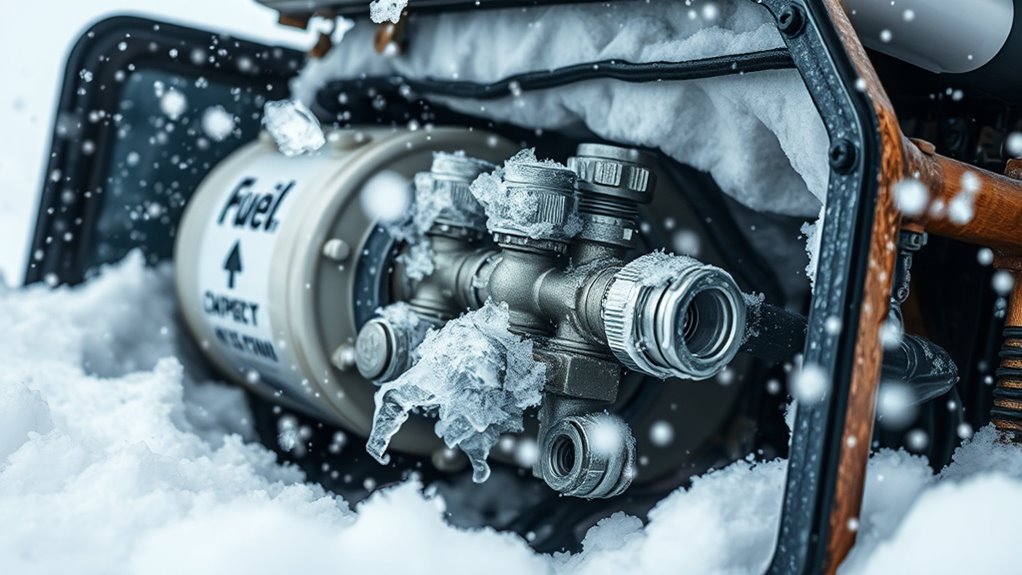
Fuel line insulation is one of the most effective ways to safeguard your vehicle against freezing temperatures. By wrapping your fuel lines with insulation material, you create a barrier that prevents the cold air from causing the fuel inside to solidify. This is especially important if you live in an area with harsh winters. Insulation also helps maintain a consistent fuel temperature, reducing the chances of vapor lock—a condition where vapor forms in the fuel line and disrupts fuel flow. When installing insulation, make sure it fits snugly around the entire length of your fuel lines, and use weather-resistant materials designed for automotive use. This simple step can considerably extend the reliability of your fuel system during cold snaps. Additionally, selecting the appropriate insulation material can further enhance protection against extreme temperatures.
Alongside insulation, tank drainage procedures play a critical role in protecting your fuel system during extreme weather. Over time, water and contaminants can accumulate in your fuel tank, especially if moisture condenses inside due to temperature fluctuations. During winter, this water can freeze, blocking fuel flow or damaging your fuel pump. Regularly performing tank drainage procedures helps remove any accumulated water and debris, ensuring your fuel remains clean and free of ice formation. If your vehicle has a drain plug or a drain valve, make sure to use it periodically, especially before winter sets in. If not, professional cleaning may be necessary to drain the tank safely. Combining tank drainage with the use of fuel stabilizers can further prevent fuel degradation and water buildup, ensuring your vehicle starts reliably in cold weather.
In addition to insulation and drainage, consider other protective measures like keeping your fuel tank at least half full. A fuller tank reduces the space for moisture to condense and minimizes the risk of ice formation. Regular inspections of your fuel system components, especially before winter or during seasonal changes, help identify potential issues early. Remember, proactive maintenance is your best defense against weather-related fuel system failures. By taking these steps—insulating your fuel lines and performing tank drainage procedures—you ensure your vehicle remains dependable, no matter how severe the weather gets.
Frequently Asked Questions
How Often Should Fuel Systems Be Inspected Before Forecasted Storms?
You should conduct a fuel system inspection at least once a year, but if a storm is forecasted, it’s best to do it quarterly. Regular inspections are essential for storm preparedness planning, guaranteeing your fuel systems are free of leaks, debris, and corrosion. Before a storm, check for any issues that could compromise safety or operation. Staying proactive helps prevent costly repairs and ensures reliable fuel supply during emergencies.
Are There Specific Fuel Additives Recommended for Cold Weather Protection?
Yes, using winter fuel and anti-gel additives is recommended for cold weather protection. These additives help prevent fuel from gelling and improve flow in low temperatures. You should add anti-gel additives according to the manufacturer’s instructions, especially before a forecasted cold snap. Regularly using winter fuel blends also ensures your system stays reliable. Always check local recommendations to choose the best products for your specific climate and equipment.
What Are the Signs of Fuel System Freeze or Clogging?
Imagine your engine coughs or stumbles, warning signs of a clogged fuel system or freeze symptoms. You might notice difficulty starting, sluggish acceleration, or engine misfires—like a blocked highway slowing traffic. Fuel system freeze symptoms include icy engine parts or unusual noises. If these signs appear, don’t ignore them; they signal your fuel system’s warning, and prompt action can prevent costly repairs and keep your engine running smoothly in cold weather.
Can Outdoor Fuel Storage Tanks Withstand Extreme Weather Conditions?
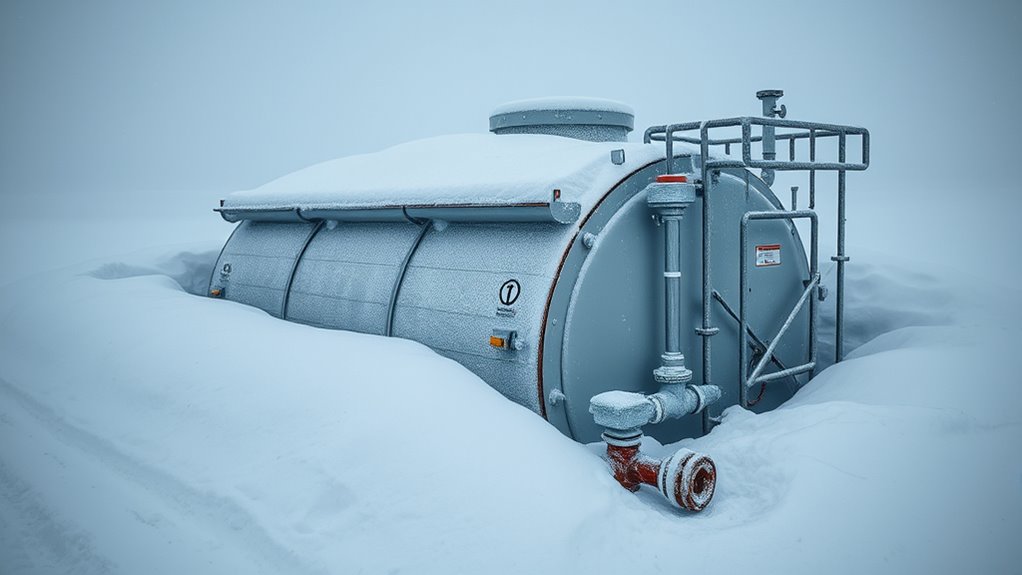
Outdoor fuel storage tanks can withstand extreme weather if you equip them properly. You should add tank insulation to protect against freezing temperatures and use weatherproof covers to shield from snow, rain, and wind. Regular inspections help guarantee seals and vents stay intact. By taking these precautions, you minimize the risk of damage and maintain fuel quality, even during severe weather conditions.
How Does Extreme Heat Affect Fuel System Components and Their Lifespan?
They say, “A stitch in time saves nine,” and that couldn’t be truer for your fuel system in extreme heat. Heat causes expansion of metal parts and accelerates material degradation, shortening component lifespan. You need to monitor fuel temperatures and maintain cooling systems to prevent damage. Ignoring these signs risks costly repairs or system failure, so stay proactive to keep your fuel system running smoothly despite the heat.
Conclusion
Think of your fuel system as a delicate boat steering through a storm. With the right precautions—like insulating your lines and keeping everything dry—you become the steady captain, steering safely through icy waters or scorching heat. By protecting your fuel system, you’re building a sturdy vessel that can withstand nature’s fiercest storms. Stay vigilant, and your fuel system will sail smoothly, no matter what extreme weather throws your way.