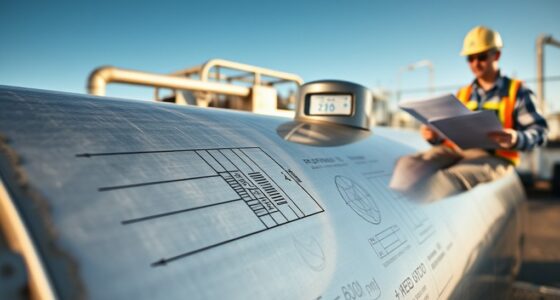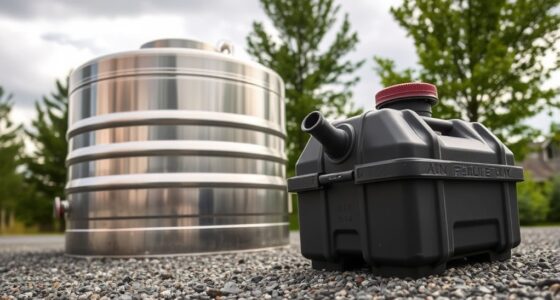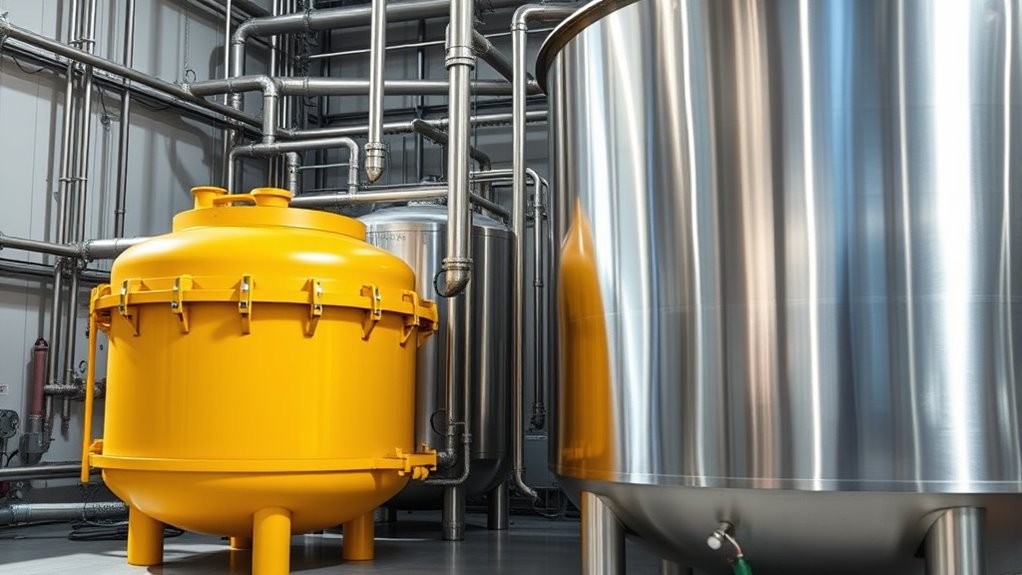

When designing day tanks and bulk tanks, consider capacity, safety features, and materials. Day tanks are smaller, portable, and suited for short-term use, so they should be lightweight and easy to access. Bulk tanks require reinforced construction, secondary containment, and temperature control for long-term storage. Both should include safety features like venting, spill containment, and emergency shut-offs. Understanding these differences helps optimize performance and safety—keep exploring to learn more about each type’s design intricacies.
Key Takeaways
- Capacity requirements influence whether a small, portable day tank or a larger, fixed bulk tank is appropriate.
- Safety features like secondary containment and emergency shut-offs vary based on tank size and design.
- Material selection (stainless steel vs. carbon steel) ensures durability and contamination prevention.
- Venting, grounding, and spill prevention are critical design considerations for both tank types.
- Bulk tanks often include insulation or heating elements, unlike most day tanks, to manage fuel temperature.
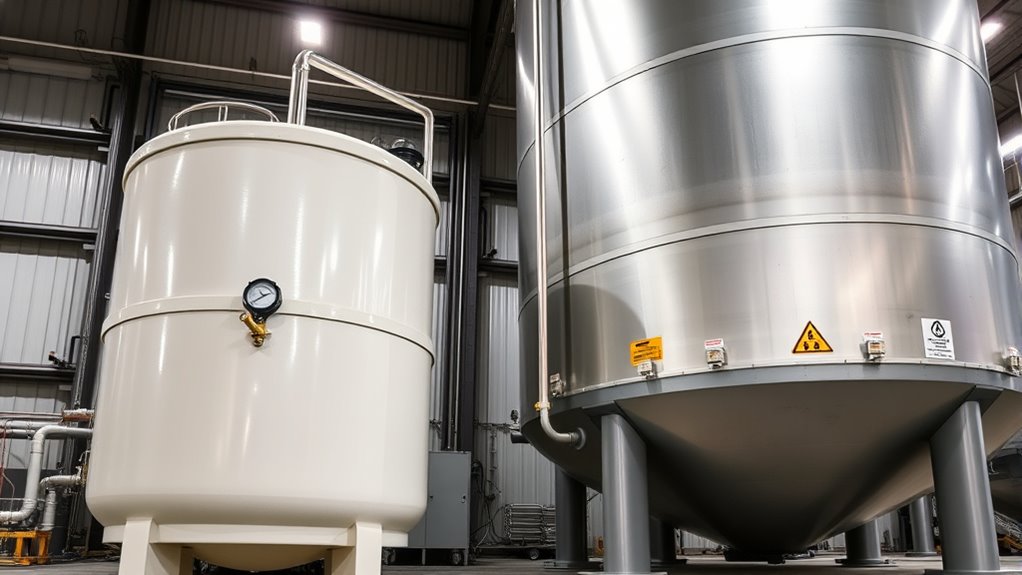
Are you trying to decide between day tanks and bulk tanks for your fuel storage needs? Choosing the right tank type involves understanding their design considerations, particularly how they handle fuel storage and adhere to safety regulations. Day tanks are typically smaller, portable units that store limited amounts of fuel, usually for immediate use within a specific process or equipment. Bulk tanks, on the other hand, are much larger and designed for extended storage of significant fuel quantities. The decision hinges on factors like capacity requirements, operational convenience, and safety standards.
Choosing between day tanks and bulk tanks depends on capacity needs, safety compliance, and operational convenience.
When evaluating design considerations, safety regulations are paramount. Fuel storage, regardless of tank size, must meet strict safety standards to prevent leaks, spills, or fires. Bulk tanks are often subject to more rigorous safety regulations because of their size and the volume of fuel they hold. They typically feature reinforced construction, secondary containment systems, and emergency shut-off mechanisms to mitigate potential hazards. Day tanks, being smaller, are usually easier to manage in terms of safety compliance, but they still require proper venting, grounding, and leak prevention measures. Understanding local safety regulations helps confirm your tanks are compliant and minimizes risks to personnel and the environment.
Another key consideration is the material and construction of the tanks. For fuel storage, materials like carbon steel or stainless steel are common because they resist corrosion and provide durability. Bulk tanks may also incorporate insulation or heating elements if temperature control is necessary, especially for fuels prone to gelling or vaporization. Day tanks are often made from lightweight materials for portability, but they still need to be robust enough to withstand daily handling and environmental conditions. Proper design ensures that fuel remains uncontaminated and safe from external factors, which aligns with safety regulations and best practices.
Accessibility and maintenance are additional factors influencing design choices. Bulk tanks often require fixed installation with easy access points for inspection, cleaning, and refilling. Safety regulations dictate routine inspections and maintenance to identify corrosion, leaks, or structural issues early. Day tanks, being portable, need convenient features like quick disconnects and clear labeling for safe handling and refueling. Both types should incorporate safety features such as spill containment, emergency shut-off valves, and proper ventilation to comply with safety standards.
Frequently Asked Questions
How Do Maintenance Requirements Differ Between Day Tanks and Bulk Tanks?
You’ll find maintenance differs mainly in cleaning protocols and inspection frequency. Day tanks require more frequent cleaning due to their smaller size and higher turnover, which can lead to sediment buildup. Regular inspections are essential to monitor corrosion and leaks. Bulk tanks, being larger, need less frequent cleaning but demand thorough inspections to ensure structural integrity and prevent contamination. Staying on top of these tasks ensures safe, efficient operation for both tank types.
What Are the Safety Concerns Specific to Each Tank Type?
You might think both tank types are equally safe, but specific concerns differ. With day tanks, corrosion can weaken the tank, causing leaks or spills. Bulk tanks pose spill prevention challenges due to their larger size and volume. Regular inspections and corrosion-resistant materials reduce these risks. Ensuring proper venting and containment measures also prevent accidents, making safety a top priority for both tank types.
How Do Installation Costs Compare for Day Versus Bulk Tanks?
You’ll find that installation expenses vary considerably between day tanks and bulk tanks. Generally, day tanks have lower initial costs due to simpler setup and smaller size, making the cost comparison favorable for smaller operations. Bulk tanks, on the other hand, involve higher installation expenses because of their larger size, more complex infrastructure, and safety requirements. Your choice depends on your capacity needs and budget constraints, balancing upfront costs against long-term operational efficiency.
What Are the Environmental Impacts of Each Tank Type?
You should consider that both tank types can impact the environment, especially if they leak. Day tanks, being smaller, might reduce soil contamination risks but require frequent inspections to prevent tank leakage. Bulk tanks, with larger capacities, pose a higher risk if a leak occurs, potentially contaminating soil over a wider area. Proper maintenance and safety measures are essential for minimizing environmental impacts regardless of tank size.
How Do Operational Efficiencies Vary Between Day Tanks and Bulk Tanks?
You’ll find that operational efficiencies differ markedly between day tanks and bulk tanks. Day tanks enable quick fuel transfer and are ideal for smaller storage capacity needs, allowing you to refuel equipment rapidly. Bulk tanks, on the other hand, provide larger storage capacity, reducing the frequency of fuel transfer and enhancing operational efficiency during high-volume usage. This means you save time and minimize interruptions, especially in large-scale or continuous operations.
Conclusion
As you weigh your options, picture the steady hum of a day tank, ready at your fingertips, or the expansive reach of a bulk tank, storing energy for days ahead. Each choice shapes your operation’s heartbeat—either a quick, nimble pulse or a steady, sustained flow. The decision guides your process, echoing your needs like a rhythmic drum, balancing efficiency and capacity. Trust your vision, and let your tanks fuel your success with confidence.