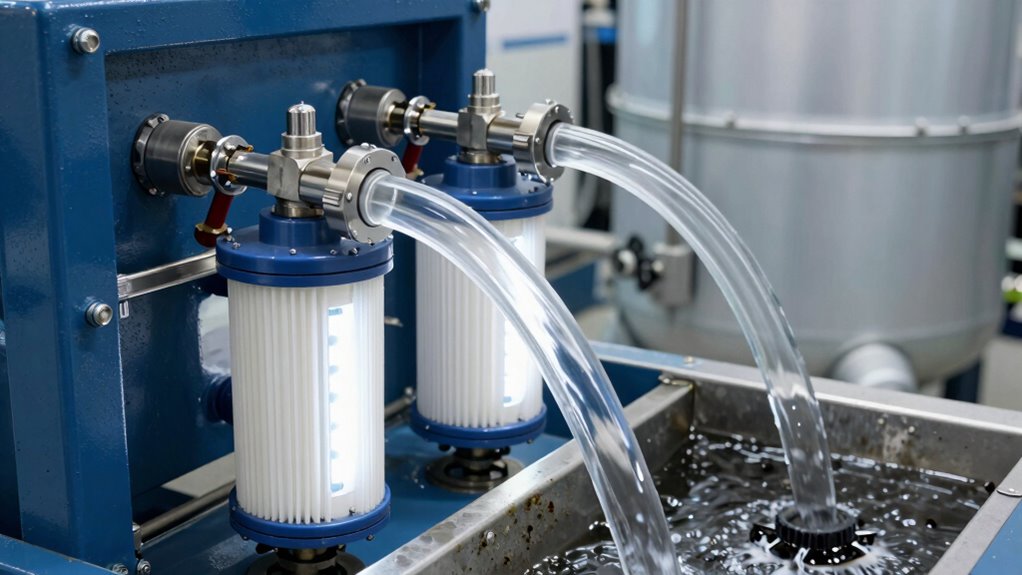
Fuel polishing systems continuously filter your stored diesel to remove water, dirt, sludge, and tiny particles. They draw fuel from your tank, clean it through advanced filtration units, and return it free of contaminants. This process prevents microbial growth, reduces the risk of engine damage, and keeps your fuel fresh for longer. Proper filtration not only improves engine performance but also extends the life of your fuel system. Keep exploring to see how these systems protect your investment.
Key Takeaways
- Circulate diesel through advanced filters to remove water, dirt, sludge, and microscopic contaminants.
- Prevent microbial growth and sludge buildup in storage tanks.
- Protect engine components by ensuring clean, high-quality fuel.
- Reduce corrosion risk by removing water and impurities.
- Extend fuel and tank system lifespan through regular filtration and maintenance.
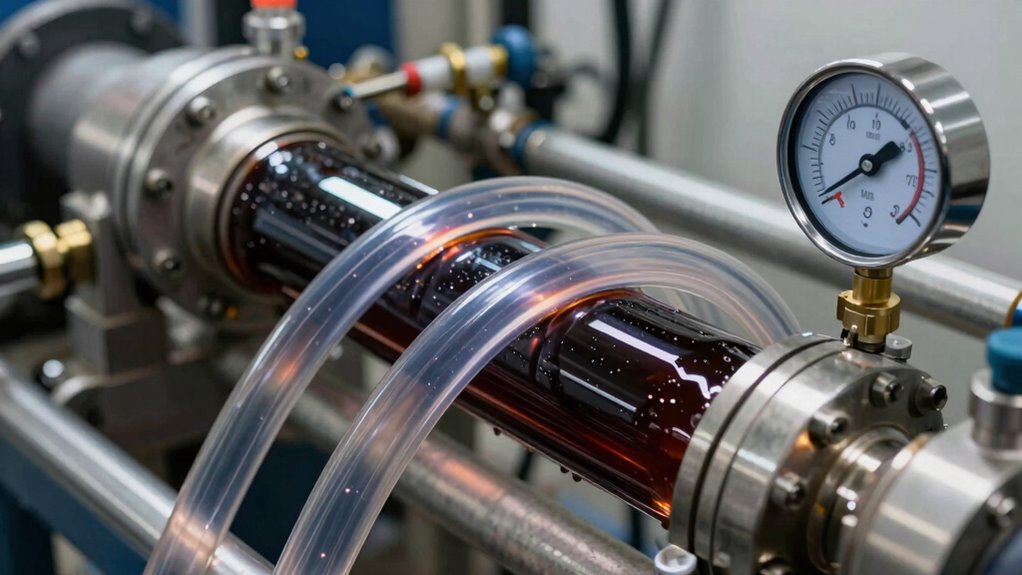
Fuel contamination is a common issue that can cause serious problems, from clogged filters to engine failure. Without proper maintenance, water and debris settle at the bottom of tanks, creating ideal conditions for microbial growth and corrosion. Fuel polishing systems work by circulating the stored diesel through advanced filtration units. They remove water, dirt, sludge, and other impurities, markedly improving filtration efficiency. This process prevents these contaminants from reaching your engine, helping maintain peak performance and reducing the risk of costly repairs.
The core function of a fuel polishing system is to continuously or periodically filter the diesel to keep it in pristine condition. The system draws fuel from the tank, passes it through multiple filters designed to trap small particles and water droplets, and then returns the cleaned fuel back to the tank. This circulation process ensures that even the tiniest particles and microscopic bacteria are removed, maintaining the quality of your stored diesel. Additionally, microbial contamination can be suppressed more effectively with proper filtration and water removal, preventing microbial growth that can produce sludge and damage your fuel system. Proper filtration technology also helps prevent the formation of fuel biological growth, which is a common issue in stagnant tanks. Using fuel storage maintenance practices regularly can further enhance the longevity of your fuel and tank systems. Incorporating advanced filtration technology can improve the efficiency of fuel polishing systems and extend their lifespan.
Another key benefit of fuel polishing is its ability to prevent the growth of algae and microbial contamination, which thrive in water layers within tanks. These microbes produce sludge that can clog filters and injectors. Filtration efficiency is critical here; high-quality systems can detect and remove these biological contaminants before they cause damage. Plus, by removing water, fuel polishing systems help prevent corrosion inside the tank, protecting your investment over the long term. Regularly scheduled fuel polishing can be especially beneficial for long-term storage, ensuring your diesel remains reliable when needed. Proper understanding and application of fuel contamination prevention techniques can significantly extend the life of your diesel assets.
Top picks for "fuel polish system"
Open Amazon search results for this keyword.
As an affiliate, we earn on qualifying purchases.
Frequently Asked Questions
How Often Should Fuel Polishing Be Performed on Stored Diesel?
You should perform fuel polishing every 3 to 6 months to maintain fuel stability and prevent contaminant buildup. Regular polishing removes water, dirt, and microbial growth, ensuring your diesel stays clean and efficient. If your stored diesel is in a humid environment or has been stored for over a year, consider more frequent polishing. Consistent maintenance keeps your fuel free of contaminants, prolongs storage life, and optimizes engine performance.
Can Fuel Polishing Eliminate All Types of Contaminants?
Fuel polishing can markedly reduce microbial growth and chemical degradation, but it can’t eliminate all contaminants. It targets water, sediments, and some microbial elements, improving fuel quality. However, stubborn contaminants like certain bacteria or complex chemical compounds may require additional treatment. Regular polishing helps maintain cleaner diesel, but complete elimination of every contaminant isn’t guaranteed. You should combine polishing with proper storage practices for ideal results.
What Is the Average Cost of a Fuel Polishing System?
The average cost of a fuel polishing system ranges from $2,000 to $10,000, depending on the system’s size and features. You might also need to budget for a fuel filter upgrade or diesel additives to enhance efficiency. Keep in mind, investing in a quality system can save you money long-term by preventing costly fuel-related issues and maintaining clean, reliable diesel.
Is Fuel Polishing Suitable for All Storage Tank Sizes?
In the age of steam and coal, you’d find that fuel polishing suits most storage tank sizes, but it’s not a one-size-fits-all solution. For effective tank maintenance and contamination control, you need a system scaled to your tank’s dimensions. Smaller tanks might require less intensive setups, while larger tanks benefit from more robust systems. Always assess your tank size to guarantee the best fuel quality and avoid costly issues down the line.
How Long Does a Typical Fuel Polishing Process Take?
A typical fuel polishing process takes between 4 to 8 hours, depending on tank size and contamination levels. During this time, the system works to improve fuel quality by removing contaminants like water, dirt, and sludge. You’ll notice cleaner, more stable diesel, which helps prevent engine problems. Keep in mind, larger tanks or heavily contaminated fuel might require longer polishing to guarantee ideal contamination removal and fuel quality.
Conclusion
By investing in a fuel polishing system, you’re fundamentally giving your stored diesel a spa day—removing every ounce of dirt, water, and contaminants. This process keeps your fuel pristine, ensuring your engines run smoothly and avoiding costly breakdowns. Think of it as the superhero shield protecting your machinery from the chaos of dirty fuel. Don’t wait until disaster strikes—let a fuel polishing system be your secret weapon for reliable, engine-loving fuel storage!