To keep your generator running smoothly, you need to understand diesel fuel test kits. These kits check for contaminants like water, dirt, bacteria, and algae that can clog filters or damage injectors. Proper calibration of your test kits guarantees accurate results, helping you identify issues early. Regular testing and interpretation of results allow you to maintain fuel quality, prevent costly repairs, and boost engine lifespan. Keep going for helpful tips to master fuel testing basics.
Key Takeaways
- Regularly test diesel fuel to detect contaminants like water, dirt, bacteria, or algae that can harm generator performance.
- Proper calibration of test kits ensures accurate results, preventing false positives or negatives.
- Interpret test results correctly to determine if fuel needs draining, filtering, or treatment.
- Routine testing helps identify early signs of microbial growth or water contamination.
- Consistent maintenance and calibration of test kits prolong fuel quality and generator lifespan.
Have you ever wondered how to guarantee your diesel fuel stays clean and free of contaminants? Keeping your fuel in top condition is essential for your generator’s performance and longevity. One of the most effective ways to do this is by regularly testing your diesel fuel using a reliable diesel fuel test kit. These kits help you identify fuel contamination early, preventing costly repairs and operational issues. But to get accurate results, you need to understand the basics—especially how to interpret test kit calibration and what signs to look for.
Fuel contamination can occur from water, dirt, bacteria, or algae, all of which can clog filters, damage injectors, and reduce engine efficiency. By using a test kit properly calibrated, you guarantee your readings are accurate, giving you confidence in the condition of your fuel. Calibration involves adjusting your test kit to match known standards, which is essential because an uncalibrated kit might give false positives or negatives. Regular calibration ensures your tests reflect the actual fuel quality, allowing you to make informed decisions about when to drain or treat your fuel. Additionally, understanding fuel contamination sources helps you implement preventative measures more effectively. Recognizing how microbial growth can develop in stored fuel is also important for maintaining fuel quality over time.
Proper calibration of your test kit ensures accurate fuel quality readings and helps prevent costly engine issues.
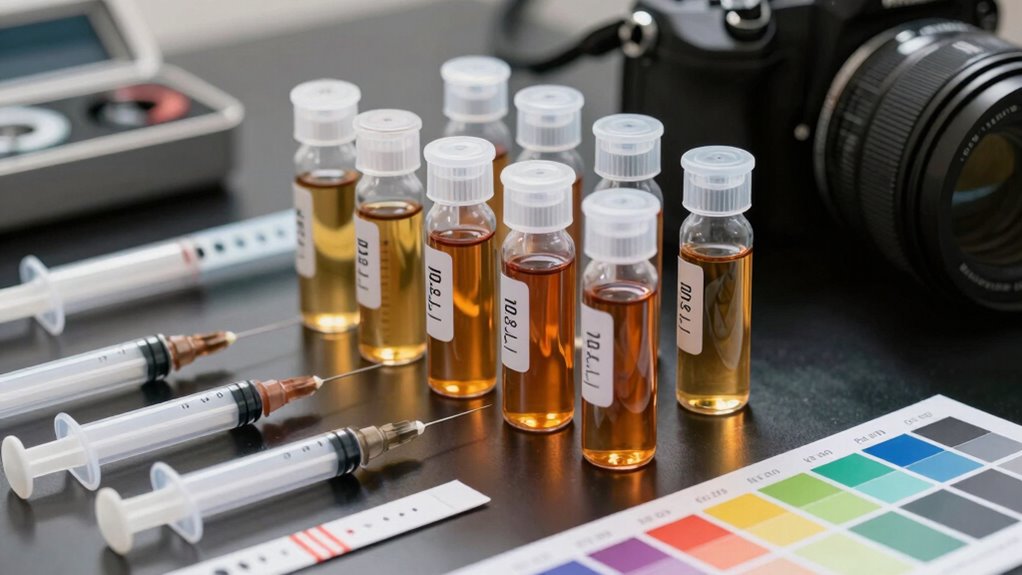
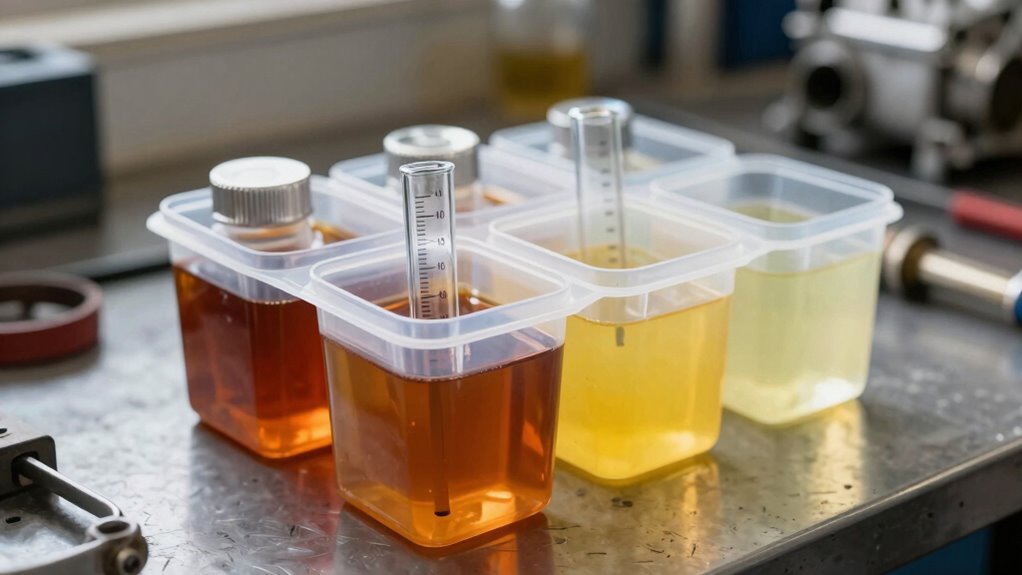
When you perform a test, you typically check for water, particulates, and microbial growth. A well-calibrated test kit will have clear instructions on how to interpret the results—usually through color changes or measurement scales. If your test indicates contamination, you’ll know it’s time to take action, whether that’s draining the fuel, adding biocides, or filtering. The importance of proper testing procedures becomes evident in ensuring reliable results and avoiding unnecessary replacements. Regularly inspecting your fuel and using calibrated test kits can help identify issues early and prevent costly damage to your engine. The key is to make testing a routine part of your maintenance schedule, especially if your generator sits unused for long periods or is exposed to conditions that promote contamination.
Having a good understanding of your test kit’s calibration process also means you can troubleshoot if your results seem off. Sometimes, test kits can become less accurate over time, so checking calibration periodically becomes an important step. Many kits come with calibration solutions or standards; using these as recommended keeps your testing reliable. Remember, the goal is to catch any issues early before they turn into major problems, saving you time and money in the long run.
In short, mastering the basics of diesel fuel testing—particularly understanding how to calibrate your test kit and interpret contamination—empowers you to maintain cleaner, safer fuel. This simple yet crucial step ensures your generator runs smoothly, efficiently, and reliably when you need it most. Proper fuel testing procedures and routine calibration are key components of effective fuel management.
Top picks for "diesel fuel test"
Open Amazon search results for this keyword.
As an affiliate, we earn on qualifying purchases.
Frequently Asked Questions
How Often Should I Perform a Diesel Fuel Test?
You should perform a diesel fuel test at least every 3 to 6 months to guarantee fuel stability and contamination prevention. Regular testing helps catch issues like water, dirt, or microbial growth early, which can harm your generator’s performance. If you notice any symptoms of fuel degradation or contaminated fuel, test immediately. Consistent testing keeps your generator running smoothly and extends its lifespan by maintaining clean, stable fuel.
Can a Diesel Test Kit Detect Water Contamination?
Yes, a diesel test kit can detect water contamination. It helps you assess fuel cleanliness, preventing potential engine issues caused by water or other contaminants. Regular testing allows you to identify water presence early, enabling you to take contamination prevention measures before fuel quality deteriorates. By using a test kit, you guarantee your generator runs efficiently, reducing the risk of costly repairs and maintaining reliable power supply.
What Are the Signs of Diesel Fuel Degradation?
Think of diesel fuel like a garden—if you neglect it, weeds and decay take over. Signs of fuel degradation include poor engine performance, increased emissions, and fuel smells. You might also notice microbial growth, like slimy residues. Fuel stability decreases over time, especially if stored improperly. Regular testing with a diesel fuel test kit can catch these issues early, helping you avoid costly repairs and keeping your generator running smoothly.
Are There Specific Test Kits for Biodiesel Blends?
Yes, there are specific test kits designed for biodiesel blends that focus on biodiesel compatibility and fuel blend analysis. These kits help you determine the proportion of biodiesel in your fuel, check for contamination, and assess fuel quality. Using such test kits guarantees your generator runs smoothly, prevents fuel-related issues, and maintains ideal performance, especially when handling various biodiesel blends. Regular testing keeps your equipment reliable and compliant with biodiesel standards.
How Do Temperature Variations Affect Test Results?
Imagine your test results hanging in the balance, swayed by unseen forces—temperature variations. When you don’t account for temperature calibration, fuel stability readings can be misleading, masking potential issues. As temperatures fluctuate, test accuracy drops, risking undetected fuel degradation. To keep your results reliable, always calibrate your test kit for the current temperature. This simple step guarantees you accurately gauge fuel stability, even in changing conditions.
Conclusion
Now that you know the essentials of a diesel fuel test kit, you’re better prepared to spot potential problems before they strike. But what if a simple test reveals a hidden threat lurking in your fuel? Will you recognize the signs in time, or let it quietly cause chaos? Stay vigilant, keep that kit handy, and remember—sometimes, the smallest test can prevent the biggest disaster. Don’t wait until it’s too late.