UL and CSA standards guarantee your generator meets strict safety, performance, and environmental benchmarks. These certifications verify proper grounding, overload protection, and durability, reducing risks like shocks or fires. They also emphasize noise reduction and fuel efficiency, helping you operate smoothly while protecting the environment. When your generator complies with these standards, you gain confidence in its reliability and safety. Keep exploring to discover how these standards can benefit your equipment choice even more.
Key Takeaways
- UL and CSA standards ensure generator equipment undergo rigorous testing for safety, durability, and reliable performance.
- Certification from UL and CSA mandates safety features like proper grounding and overload protection.
- Standards promote fuel efficiency, noise reduction, and environmental compliance in generator design.
- Certified generators minimize risks of electrical faults, shocks, and fires, ensuring user safety.
- Compliance with UL and CSA standards guarantees quality, safety, and helps prevent equipment failures.
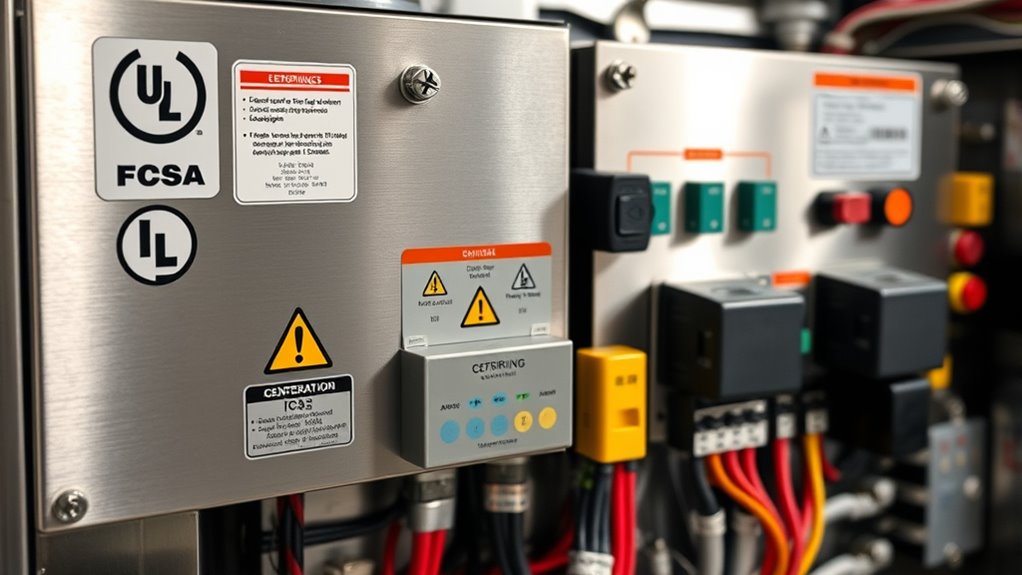
Have you ever wondered how generator equipment guarantees safety and reliability? When you choose a generator that meets UL and CSA standards, you’re ensuring the device has been thoroughly tested and certified to operate safely under various conditions. These standards serve as a benchmark for quality, guiding manufacturers to produce equipment that adheres to strict safety protocols and performance benchmarks. One key aspect that these standards address is fuel efficiency, which is vital for both cost savings and environmental impact. Efficient generators consume less fuel while delivering the same power output, which helps you reduce operational costs and minimize your carbon footprint. Additionally, these standards emphasize noise reduction, an important factor if your generator operates in residential or noise-sensitive environments. By meeting specific noise level criteria, certified generators help you maintain a quieter, more comfortable space around your property or workplace. This focus on noise reduction ensures that your generator won’t become a disruptive presence, even during extended use.
UL and CSA standards also specify rigorous safety features that protect users and property. These include proper grounding, overload protection, and safeguards against electrical faults. When a generator complies with these standards, you can trust it’s designed to prevent accidents like shocks or fires, giving you peace of mind during operation. Furthermore, these certifications often require thorough testing of the generator’s components and materials, ensuring durability and consistent performance over time. This means your investment is protected, and you’re less likely to face unexpected breakdowns or safety issues. The standards also promote innovation, pushing manufacturers to develop cleaner, quieter, and more efficient generators that meet evolving safety and environmental requirements. As a result, choosing equipment with UL or CSA certification means you’re selecting products that are not only safe but also aligned with the latest technological advancements.
In essence, UL and CSA standards act as a guarantee that your generator equipment has been evaluated for safety, efficiency, and environmental friendliness. They give you confidence that your generator will perform reliably, operate quietly, and consume fuel efficiently. Whether you’re using a generator for backup power during outages or for regular operations, adhering to these standards helps you avoid potential hazards and ensures ideal performance. So, the next time you’re selecting a generator, look for those that meet UL and CSA certifications—it’s a wise move towards safety, efficiency, and peace of mind. Proper safety features are crucial components that these standards emphasize to protect users and property, further enhancing overall reliability.
Frequently Asked Questions
How Often Should Generator Equipment Be Inspected for Compliance?
You should inspect your generator equipment at least once a year to guarantee compliance verification. Regular inspection frequency helps catch potential issues early, maintaining safety and performance. Whenever you perform inspections, check for wear, damage, or outdated parts, and verify that all safety features are functioning properly. Keep detailed records of each inspection to demonstrate ongoing compliance, and consider more frequent checks if your generator is heavily used or exposed to harsh conditions.
Are There Regional Differences in UL and CSA Standards?
Think of UL and CSA standards like a global map—regional variations exist, guiding local requirements. You should know that certification processes differ depending on where you’re operating, influencing compliance. These regional differences guarantee the standards meet local safety, environmental, and electrical codes. So, always check the specific certification process for your region to make sure your generator equipment aligns with local regulations and passes all necessary inspections.
Can Non-Certified Generators Be Used in Commercial Applications?
You can use non-certified generators in commercial applications, but it’s risky for commercial safety. Non-certified generators lack proper generator certification, which guarantees they meet safety standards. Using uncertified equipment might lead to safety hazards, potential legal issues, and equipment failure. To protect your business and ensure safety, always choose generators that meet recognized certification standards like UL or CSA. Prioritizing certified generators helps you maintain compliance and safety in commercial settings.
What Are the Penalties for Non-Compliance With These Standards?
If you don’t comply with UL and CSA standards, you face penalties enforcement that can include hefty fines, product recalls, or even legal action. Non-compliance has serious consequences, such as damage to your reputation and potential safety hazards. To avoid these compliance consequences, guarantee your generator equipment meets all relevant standards. Staying compliant safeguards your business, your customers, and ensures safe, reliable operation.
How Do UL and CSA Standards Evolve Over Time?
UL and CSA standards evolve through regular updates following the standards update process, which considers technological advances and safety data. You should stay informed about these changes because they influence certification requirements. During the certification process, manufacturers must demonstrate compliance with the latest standards. By keeping up with updates, you ensure your generator equipment remains compliant, safe, and market-ready, avoiding potential delays or penalties.
Conclusion
So, next time you confidently rely on your generator, remember the irony — it’s only as safe and reliable as the standards it meets. Thanks to UL and CSA, what seems like simple equipment actually undergoes rigorous scrutiny. Without these standards, you might be surprised by what “safe” really means. So, enjoy your backup power, but don’t forget: behind every reliable generator is a behind-the-scenes certification. Safety, after all, is no small thing.