When installing or operating a transfer switch, you should avoid switching the grounded conductor, which is typically the neutral wire, unless specifically permitted by local codes or manufacturer instructions. Generally, the neutral must stay connected to its grounding system to guarantee safety and proper operation. Switching it improperly can cause dangerous current paths and energize the transfer switch enclosure. To ensure safe and compliant installation, it’s important to understand the detailed rules—continue to explore the guidelines for your specific setup.
Key Takeaways
- Grounded conductor (neutral) should generally not be switched at the transfer switch to maintain system safety.
- Proper switching involves only the hot conductors, not the neutral, unless explicitly allowed by codes or manufacturer instructions.
- Neutral remains grounded and bonded at the main panel to prevent unintended current paths.
- Switching the neutral improperly can energize transfer switch enclosures and pose shock hazards.
- Always follow local electrical codes and manufacturer guidance when installing or operating transfer switches.
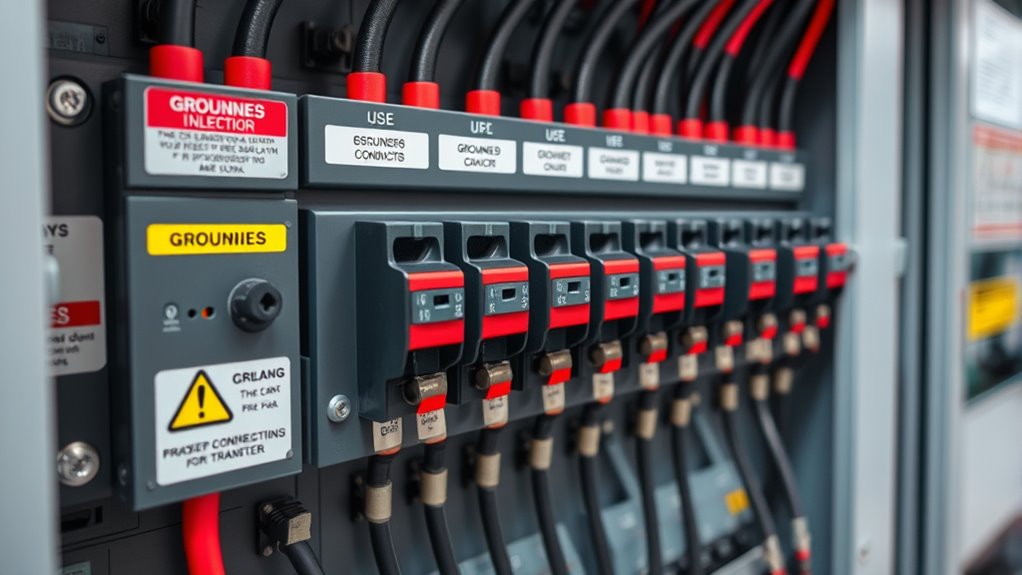
When installing transfer switches, understanding the rules for switching the grounded conductor is essential for safety and code compliance. The grounding requirements are specific and designed to prevent electrical shock, equipment damage, and fire hazards. As you set up your transfer switch, you must recognize that the grounded conductor, typically the neutral wire, plays a critical role in maintaining system safety. Switching the grounded conductor improperly can create dangerous conditions, such as energizing the transfer switch enclosure or causing unintended current paths, which jeopardize switch safety and overall system reliability.
In most cases, electrical codes specify that the grounded conductor should not be switched at the transfer switch, especially in residential settings. Instead, the neutral must remain connected to its grounding path at the main panel. This approach guarantees that the neutral remains grounded and bonded to the earth, providing a low-resistance path for fault currents. By following these grounding requirements, you reduce the risk of electrical shock and ensure that the transfer switch operates correctly during a power outage or transfer event.
Switch safety hinges on proper wiring practices. When you install your transfer switch, make sure you do not switch the neutral conductor unless explicitly permitted by local codes and manufacturer instructions. Switching the neutral can cause current to flow through unintended paths, leading to potential shocks or damage when switching between utility and generator power. Properly identifying and isolating the grounded conductor ensures that the transfer switch only switches the hot conductors, which carry the active current. This minimizes the chance of accidental energization of the transfer switch enclosure or appliances and keeps your system compliant with safety standards.
Do not switch the neutral conductor unless explicitly allowed by local codes and manufacturer instructions.
Additionally, you should double-check that the transfer switch and associated wiring are correctly connected according to the manufacturer’s instructions and local electrical codes. Proper grounding and adherence to switching rules for the grounded conductor are critical for maintaining switch safety. According to resources and tools, regional knowledge of local laws and standards can significantly impact compliance and safety practices. When in doubt, consulting a licensed electrician ensures your setup meets all regulatory standards and that safety is not compromised. Remember, the goal is to create a system that isolates the power sources safely without introducing any unintended current paths that could pose hazards.
Frequently Asked Questions
Can a Transfer Switch Switch the Grounding Conductor?
No, a transfer switch should not switch the grounding conductor. According to grounding conductor switching rules, the grounding conductor must remain connected to maintain proper grounding and safety. Switching the grounding conductor can create unsafe conditions and violate electrical codes. You need to follow the proper switching rules, which specify that only the ungrounded (hot) conductors are switched during transfer operations, ensuring the system remains properly grounded at all times.
Are There Exceptions for Residential Transfer Switches?
Yes, there are exceptions for residential transfer switches regarding the grounding conductor. In many cases, residential transfer switches are designed so that the grounding conductor remains connected to the home’s grounding system and isn’t switched. This setup helps maintain safety and code compliance. You should always check the manufacturer’s instructions and local electrical codes to verify your transfer switch’s grounding conductor is handled correctly for your specific installation.
How Does Grounding Conductor Switching Affect System Safety?
Think of grounding conductors as the safety net beneath a tightrope walker. When you switch the grounding conductor, it’s like adjusting that net—if done improperly, it can weaken grounding integrity and compromise safety protocols. This can lead to electrical shocks or damage during power shifts. By ensuring proper grounding conductor switching, you keep the system’s safety intact, providing a reliable shield that protects both equipment and people.
What Are the Code Violations Related to Grounded Conductor Switching?
You violate grounding rules and safety compliance if you switch the grounded conductor without proper control, as it can create shock hazards and system instability. The code requires that grounded conductors remain continuous and un switched in transfer switches, preventing potential backfeeding or unintended energization. Ignoring these rules risks electrical shock, equipment damage, and non-compliance penalties, so always verify grounded conductor switching adheres to the National Electrical Code for safe operation.
Is Specialized Training Needed to Install Grounded Conductor Switching?
You need specialized training to install grounded conductor switching because proper grounding requirements and switch design are critical for safety and code compliance. This training ensures you understand how to correctly isolate and switch grounded conductors without creating hazards. Without it, you risk improper installation, electrical shock, or code violations. Thus, certified courses or manufacturer-specific training are essential to gain the knowledge needed for safe, effective switching of grounded conductors.
Conclusion
Understanding transfer switch grounded conductor switching rules is vital for your safety and compliance. Remember, improper switching can lead to dangerous shocks or system damage. Did you know that nearly 30% of electrical failures are caused by incorrect transfer switch operations? By following the proper rules, you reduce risks and guarantee reliable power transfer. Stay informed and always prioritize safety when working with transfer switches to protect yourself and your property.