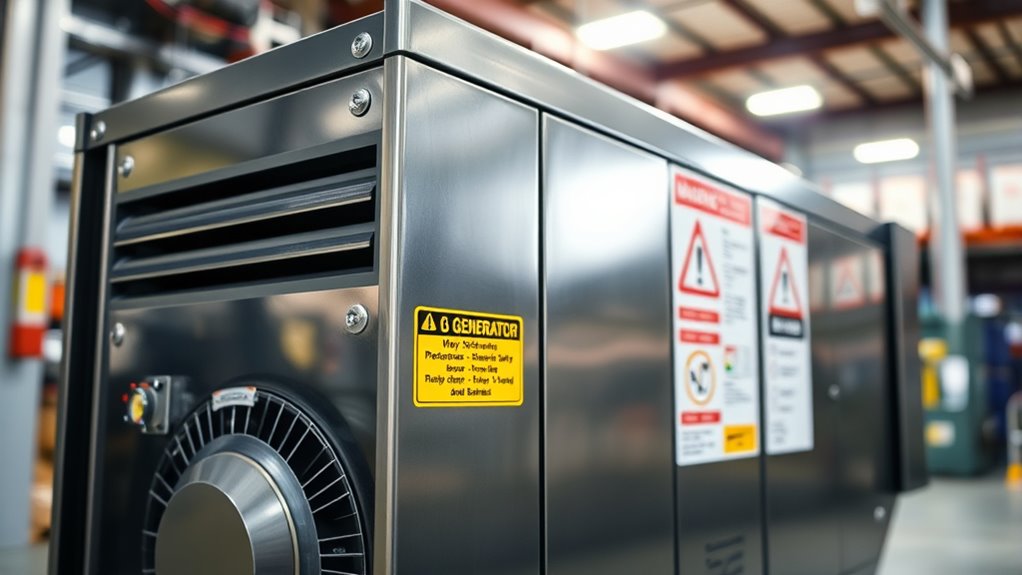

To meet generator signage and labeling requirements, make certain labels are weather-resistant, clear, and prominently placed to identify hazards like electrical shock, hot surfaces, and flammable materials. Use standard color codes—red and yellow for danger and caution—and include symbols for quick understanding. Regularly inspect and replace worn or damaged signs to maintain safety compliance. Keeping proper signage in place not only protects personnel but also demonstrates adherence to safety regulations—stay with us to learn more.
Key Takeaways
- Signage must comply with OSHA and ANSI standards for visibility, durability, and clarity.
- Labels should clearly indicate hazards like electrical shock, hot surfaces, and flammable materials.
- Use color coding (e.g., red for danger, yellow for caution) and symbols for universal understanding.
- Weather-resistant materials are essential for outdoor generator signage to withstand environmental conditions.
- Regular inspections and prompt replacement of damaged or faded labels ensure ongoing safety compliance.
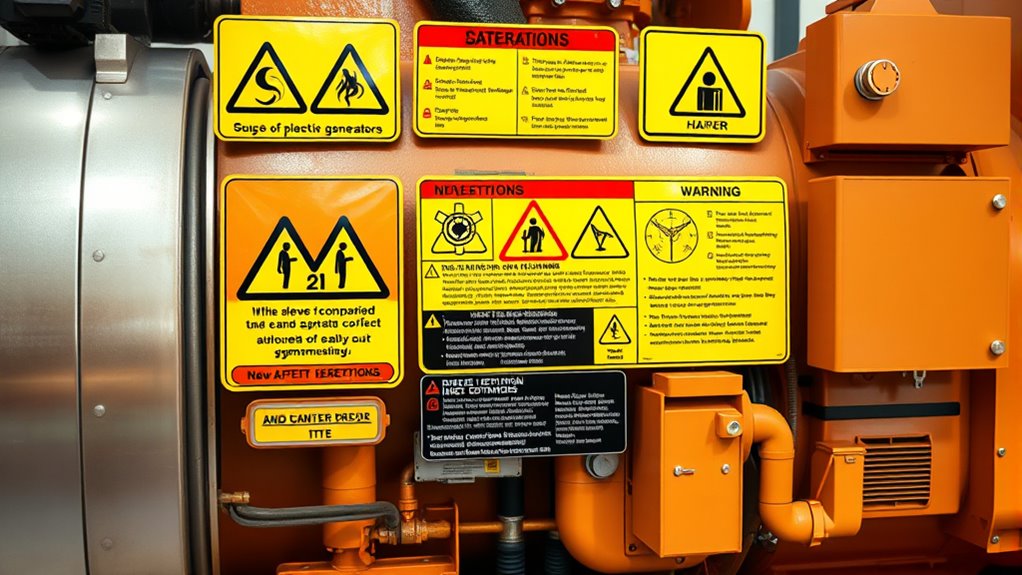
Have you ever wondered if your generator has the proper signs and labels? Ensuring your equipment meets safety compliance is critical, and clear signage plays a crucial role in that process. Proper labeling standards are not just about following regulations—they’re about protecting everyone around the generator, including those who operate or maintain it. When your generator displays the correct signs, it communicates essential safety information at a glance, helping prevent accidents, misuse, or damage.
Regulatory agencies like OSHA and ANSI set specific guidelines for generator signage and labeling. These standards aren’t arbitrary; they’re designed to ensure that safety information is visible, understandable, and durable in various environments. When your generator adheres to these labeling standards, it’s easier to demonstrate compliance during inspections and audits. The labels should be made from weather-resistant materials, especially if your generator is outdoors, so they stay clear and intact over time.
One of the most critical aspects of proper signage is indicating the potential hazards. Labels warning of electrical shock, hot surfaces, or flammable materials should be prominently placed. You need to make sure these signs are easy to read from a distance and in different lighting conditions. It’s also essential to include emergency contact information and instructions for safe shutdown or maintenance procedures. Clear, concise instructions help users understand what to do in emergency situations, reducing the risk of injury.
Color coding is another key component of effective labeling. Red and yellow are commonly used to draw attention to danger zones or caution areas, while green often indicates safety equipment or safe zones. Following consistent color schemes helps users quickly interpret signs without confusion. Additionally, labels should include symbols or pictograms where possible, since visuals often transcend language barriers and improve comprehension.
Remember that safety compliance isn’t a one-time task. You should regularly inspect your signage for damage or fading and replace any worn or illegible labels immediately. Keeping your generator properly labeled not only helps meet legal requirements but also fosters a culture of safety among operators and maintenance personnel. It’s important to understand that labeling standards are essential for effective communication of hazards and safety procedures. Ultimately, the goal is to make sure that everyone who interacts with your generator understands the risks involved and knows how to respond appropriately. By paying close attention to signage and labeling standards, you’re proactively safeguarding lives, property, and your business’s reputation.
Frequently Asked Questions
Are Digital or Electronic Signs Permitted Under These Regulations?
Yes, digital signage and electronic labeling are permitted under these regulations, but with specific conditions. You should verify that digital signage displays clear, legible, and accurate information, and electronic labels meet all safety and durability standards. It’s vital to confirm that your digital signage complies with local codes and manufacturer guidelines. Proper maintenance and updates are also indispensable to keep the signage compliant and effectively communicate generator information.
How Often Must Signage Be Inspected or Updated?
Like a watchful guardian, you must inspect your signage regularly. Typically, you should review and update signage at least annually, aligning with your maintenance schedules. This ensures visibility and compliance with safety standards. Regular inspections help catch fading or damaged signs early, preventing confusion during emergencies. Keep records of inspections, and promptly update signs when changes occur. Staying proactive safeguards everyone’s safety and keeps your generator system compliant.
Do Signage Requirements Differ for Residential Versus Commercial Generators?
You’ll find that signage requirements do differ for residential and commercial generators. For residential units, signage placement focuses on safety and easy visibility, often requiring minimal labeling. Commercial generators typically demand more extensive signage, including safety warnings and maintenance instructions, to meet regulations. Regular generator maintenance ensures signs stay legible and effective. Always check local codes to confirm your signage meets specific requirements, helping keep everyone safe and compliant.
Are There Specific Materials Mandated for Signage Durability?
You might think any material works, but for signage durability, specific materials are mandated. You need materials that meet strict standards for weather resistance, like UV-resistant vinyl or reflective coatings, to withstand harsh conditions. These material standards guarantee your signage remains clear and legible over time, preventing safety risks. Choosing the right durable materials not only complies with regulations but also keeps your generator signage effective and long-lasting.
What Are the Penalties for Non-Compliance With Signage Rules?
If you don’t comply with signage rules, enforcement agencies can impose penalties based on severity, which may include fines, citations, or even shutdowns. The penalty severity varies depending on how serious the violation is and the specific agency involved. Non-compliance risks your operation’s safety and legal standing, so it’s essential to follow all signage regulations carefully. Staying compliant helps you avoid costly penalties and guarantees safety standards are maintained.
Conclusion
By following the generator signage and labeling requirements, you’re planting the seeds for safety and compliance. Clear, visible signs act as guiding stars, steering you away from hazards and ensuring everyone’s well-being. Neglecting these guidelines is like ignoring a lighthouse in a storm—dangerous and reckless. Make safety your top priority; let proper signage be the beacon that keeps your team secure and your operation running smoothly. After all, safety isn’t just a rule—it’s the foundation of peace of mind.