
TL;DR

Get backup power and energy gear delivered free — and shop member deals
- Fast, free delivery on millions of items
- Access to Prime Big Deal Days deals on October 6–7
- Prime Video, Amazon Music and more included
Online interest has spiked around a floating solar array reportedly installed on a village reservoir in Ohio. The only verified information is the topic itself; the project’s location, size, cost, and sponsor are unconfirmed.
Search and news coverage interest has spiked around a floating solar array reportedly installed on a village reservoir in Ohio. At this stage, the topic itself — a photovoltaic system mounted on floats on a municipal reservoir — is the only element that can be treated as established; the specific project, its location, size, cost, and timeline have not been independently confirmed.
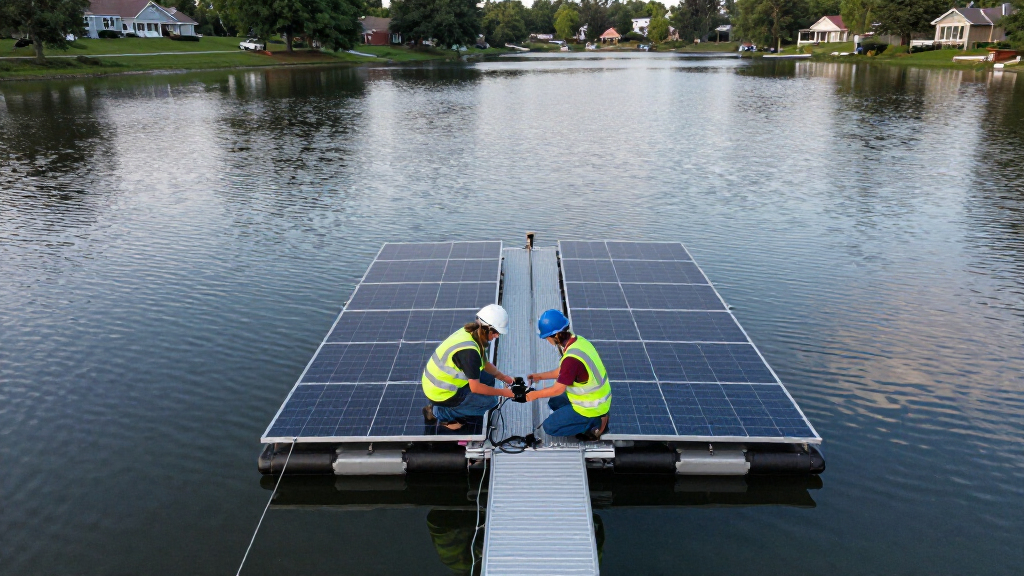
The subject generating the attention is a category of infrastructure known as floating photovoltaics, or “floatovoltaics”: solar panels mounted on buoyant structures and anchored on the surface of a body of water, typically a reservoir, quarry lake, or retention pond. The reported development places such a system on a reservoir serving an Ohio village, which is why the story is framed around municipal water infrastructure rather than a private or utility-scale site.
What is confirmed at this point is limited to the metadata of the report: a single item describing a floating solar array installed on an Ohio village reservoir, circulating online and producing a measurable spike in search interest. No verified details about the project — the name of the village, the county, the array’s capacity in kilowatts or megawatts, the installer, the funding source, or the completion date — have been confirmed through official channels as of this writing.
Readers should treat the event as reported but unverified. Any figures circulating about the array’s output, cost savings, or environmental benefits should be attributed to whatever source is circulating them, not presented as established fact.
Why a Reservoir Solar Story Draws Attention
Floating solar is a small but fast-growing segment of renewable energy, and a municipal reservoir installation would be notable for several reasons. First, reservoirs offer large, unshaded, publicly owned surfaces that avoid competing for farmland or development land — a common friction point for ground-mounted solar in rural and suburban communities. Second, panels floating on water may run slightly cooler, which can improve generating efficiency, and the shade they cast can reduce evaporation and algae growth in the water body beneath.
For small municipalities such as Ohio villages, a floating array on an existing reservoir is often framed as a way to power water treatment plants or pump stations with on-site renewable electricity, cutting operating costs for systems that run continuously. If the reported Ohio project is confirmed, it would join a growing number of small-government renewable installations in the Midwest, where villages and townships have used federal and state incentives to fund solar on public property. That significance, however, depends entirely on verification that has not yet occurred.
Floating Solar’s Track Record in the US
Floating solar is a well-established technology globally. Large installations have operated for years in Japan, South Korea, China, and parts of Europe, and the National Renewable Energy Laboratory (NREL) has published multiple studies identifying US reservoirs and other man-made water bodies as a major untapped resource for the technology. In the United States, floating arrays have been deployed on reservoirs and ponds in states including California, New Jersey, Florida, and Colorado, though adoption has lagged behind Asia and Europe.
Ohio, like much of the Midwest, has seen steady growth in municipal and community-scale solar driven by falling panel costs and incentive programs. Water-utility-owned reservoirs are a recurring candidate site because the utility already controls the land — or in this case the water surface — reducing permitting complications. It is plausible that a village-scale floating installation in Ohio fits this pattern, but that remains an informed inference rather than a confirmed fact about this specific project.
What Is Not Yet Verified
Nearly every concrete detail about the reported installation remains unclear. It is not yet confirmed which Ohio village is involved, or even whether a completed installation exists as opposed to a proposal, render, or early-stage plan. The array’s capacity, footprint on the reservoir, cost, funding mechanism, and permitting status are all unknown. Claims about environmental effects — evaporation reduction, algae control, or impacts on reservoir water quality — cannot be assessed without project documentation. The trigger for the current spike in interest is itself unconfirmed: it is not clear whether it stems from an official announcement, local news coverage, or social media circulation.
How Verification Could Unfold
Confirmation would most likely come through standard municipal channels: a village council meeting record, a press release from the village or its water department, a filing with the Ohio Power Siting Board or the Public Utilities Commission of Ohio, or coverage from local Ohio news outlets. Federal or state funding, if involved, would typically leave a paper trail through programs such as USDA rural energy grants or Ohio’s energy office. Readers seeking reliable information should watch for those primary sources rather than social media summaries. Once a project is confirmed, follow-up reporting would reasonably cover its rated capacity, expected annual output, payback period, and any measured effects on reservoir operations.
Key Questions
Has a floating solar array on an Ohio village reservoir been confirmed?
Only the topic is established. The project’s existence, location, and details circulate online but have not been verified through official or primary sources.
What is floating solar?
Floating photovoltaics are solar panels mounted on buoyant platforms anchored on water bodies such as reservoirs and ponds. The technology is long-established internationally, with large operating installations in Asia and Europe.
Why would a village put solar on its reservoir?
Reservoirs offer publicly controlled, unshaded surface area that does not compete with farmland or building land. Municipal water systems can use the power for treatment plants and pumps, potentially lowering operating costs.
Does floating solar affect water quality?
Studies suggest floating arrays can reduce evaporation and algae growth by shading the water surface, but any specific effects for an unconfirmed Ohio project cannot be assessed without project documentation.
Where can I verify this project?
Primary sources would include village council records, the village water department, the Ohio Power Siting Board, the Public Utilities Commission of Ohio, and local Ohio news coverage.
Source: rss
Fall Picks
fall essentials
As an affiliate, we earn on qualifying purchases.