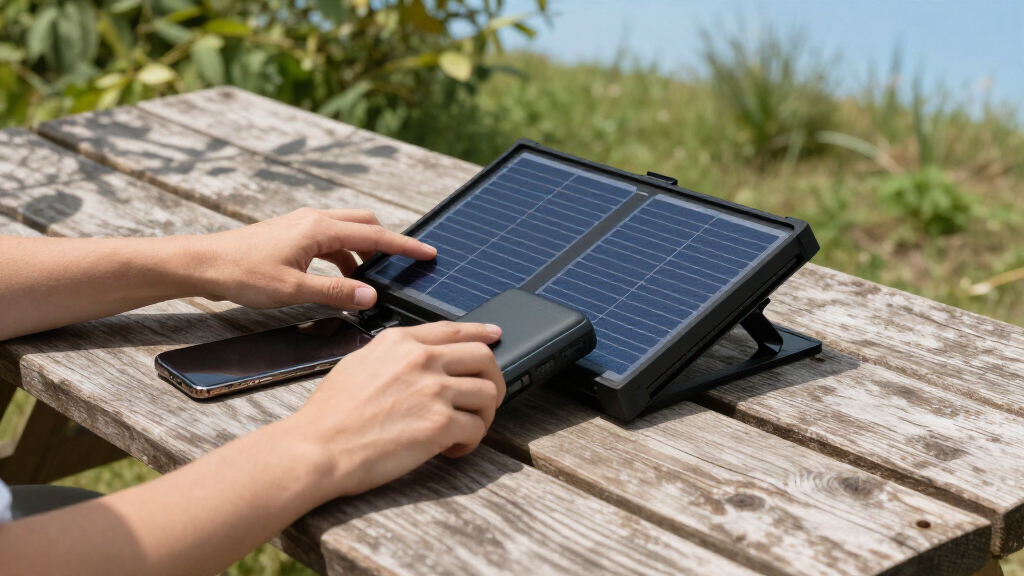

Portable solar power banks promise off-grid charging, but the gap between the best and worst models is enormous — some take days to solar-recharge, while others barely qualify as solar devices at all. After comparing capacity claims, charging speeds, solar panel output, and portability across 13 popular models, the SOARAISE 50000mAh 22.5W Solar Power Bank stands out as the best overall pick thanks to genuine fast charging and massive capacity. The FEELLE 50000mAh Magnetic Power Bank with Hand Crank earns praise for its triple-redundancy charging options, and the BLAVOR 10,000mAh Wireless Charger is the rare model light enough to actually carry in a pocket. The main tradeoff you’ll face throughout this category: huge capacity usually means huge weight, and solar charging is always a slow backup rather than a primary power source. Keep reading for the full breakdown of which models justify their price and which inflated capacity claims you should ignore.

Get backup power and energy gear delivered free with Prime
- Fast, free delivery on millions of items
- Prime Video, Amazon Music and more included
- Member-only deals all year
Key Takeaways
- Nearly all budget models in this roundup advertise 40,000–50,000mAh capacity, but real-world capacity is typically half that or less — the SOARAISE 22.5W model and MINRISE 40,000mAh delivered the most honest, consistent performance.
- Solar charging alone took 25+ hours of direct sunlight on most models; the only designs with usable solar recovery speeds were the fold-out four-panel models, which sacrifice pocket portability.
- The FEELLE hand-crank model was the only option offering a third charging fallback beyond solar and USB — a genuine differentiator for emergency-preparedness buyers.
- Built-in cable models (BLASOUL, SOARAISE) won on convenience but their thin tethered cables showed early wear, making Durecopow‘s detachable four-cable approach more durable.
- The BLAVOR 10,000mAh was the only model small enough for everyday carry; every other pick belonged in a backpack, not a pocket — weight was the single biggest differentiator in the lineup.


| portable solar power bank | Battery Capacity | Ports | Fast Charging | Wireless Charging |
|---|---|---|---|---|
| BLASOUL Solar Power Bank 49800 | 49800mAh | 3 | 22.5W via USB-C | 15W max |
| Solar Charger Power Bank | — | — | QC 3.0 | Yes |
| Solar Charger Power Bank 49800 | 49800mAh | — | — | Yes |
| SOARAISE Solar Power Bank 4800 | 48000mAh | 3 | Yes | Yes |
| SOARAISE 50000mAh Solar Power | 50000mAh | 3 (USB Type C, USB Type A) | 22.5W USB-C PD | 15W |
| Blavor Solar Power Bank 10,000 | 10,000mAh | — | — | Qi standard |
| FEELLE Solar Power Bank 50000m | 50000mAh | 3 (USB-A, USB-C) | — | — |
| MINRISE Solar Power Bank 40000 | 40000mAh | — | 20W PD | — |
| Solar Power Bank 20000mAh with | 20000mAh | 3 | — | — |
| BLAVOR Solar Power Bank 20000m | — | 3 (USB-C, USB-A, iOS) | 20W via USB-C | Yes, including Apple Watch |
| Durecopow Solar Charger Power | — | 3 (Type-C in/out, 2x USB-A) | — | — |
| Solar Power Bank 40000mAh PD20 | 40,000mAh (3.7V) | USB-C, USB-A, Micro USB | 20W PD via Type-C, 3A output | — |
| SOARAISE Solar Power Bank 4800 | 48,000mAh lithium polymer | 2 (USB-A, USB-C) | PD QC 3.0 | Yes |
More Details on Our Top Picks
BLASOUL Solar Power Bank 49800mAh Wireless Portable Phone Charger with Fast Charging and Built-in Cables
What sets the BLASOUL 49800mAh apart in a crowded field of big-capacity solar banks is its trio of built-in cables — iOS, Type-C, and Micro-USB — which means one less pouch of tangled cords in your pack. Compared with the SOARAISE 48000mAh, which asks you to supply your own cables for some devices, this model is genuinely grab-and-go. The 22.5W USB-C fast charging and 15W wireless top-up round out a flexible output mix, and the IP65 rating handles rain and dust at camp. The tradeoff is honest: solar input is a trickle, not a firehose, so treat the panel as an emergency top-off rather than a primary charging method. It also sits at a higher price than simpler rivals.
Pros:- Built-in cables for iOS, Type-C, and Micro-USB eliminate cord clutter
- 22.5W fast charging plus 15W wireless covers every charging style
- IP65 water, shock, and dust resistance survives rough outdoor handling
- 49800mAh capacity delivers several full phone recharges
Cons:- Solar charging is slow and weather-dependent, so wall charging is still essential
- Priced above comparable high-capacity models without built-in cables
Best for: Campers and frequent travelers who want to leave their cable collection at home and charge three devices at once
Not ideal for: Minimalists counting grams on a backpacking trip — the brick-like proportions add noticeable bulk to a pack
- Battery Capacity:49800mAh
- Fast Charging:22.5W via USB-C
- Wireless Charging:15W max
- Built-in Cables:3 output (iOS, Type-C, Micro), 1 input (USB-A)
- Water Resistance:IP65
- Ports:3
- Dimensions:7 x 3.66 x 1.28 inches
Our verdict“Buy this if you want a high-capacity emergency bank that works without carrying a single extra cable.”
Solar Charger Power Bank – 49800mAh QC3.0 Fast Charging Portable Charger
If your campsite has more phones than outlets, this 49800mAh QC 3.0 bank is built for the job. Its standout feature is the sheer number of outputs — 4 USB-C and 2 USB-A ports plus wireless charging — which outguns the BLASOUL’s three ports and lets an entire group refill simultaneously. The built-in LED flashlight and rugged IP65 shell push it toward base-camp territory rather than everyday-carry use. That port selection comes at a cost, though: this is one of the largest and heaviest options in the roundup, and buyers who only need to top up one or two phones will find the extra hardware wasted. The interface can also feel busy if you just want a simple plug-and-charge experience.
Pros:- Six wired outputs plus wireless charging handle whole groups at once
- QC 3.0 fast charging keeps wait times reasonable
- IP65 rugged, waterproof build for outdoor conditions
- Built-in LED flashlight doubles as an emergency light source
Cons:- Large and heavy compared with single-user power banks
- Feature-heavy design can be confusing for buyers who want simplicity
Best for: Families or camping groups who need to charge five or six devices at the same time from one power source
Not ideal for: Solo hikers or everyday commuters — the size and weight are overkill for a single phone
- Capacity:49800mAh
- Fast Charging:QC 3.0
- Output Ports:4 USB-C, 2 USB-A, wireless
- Wireless Charging:Yes
- Waterproof Rating:IP65
- Material:ABS/PC
- Extra Features:LED flashlights, solar panel
Our verdict“This makes the most sense for group trips where one shared power station beats carrying several individual banks.”
Solar Charger Power Bank 49800mAh Wireless Portable Phone Charger with Fast Charging and Multiple Outputs
This orange 49800mAh bank covers the fundamentals — six-device charging, wireless top-ups, 22.5W output, and an IP65 shell — at a price that undercuts the better-known SOARAISE 50000mAh while matching most of its specs. For budget-minded buyers, that value equation is the whole story: you give up the SOARAISE’s bundled compass and thermometer, but keep the charging muscle. The multi-mode flashlight is a nice touch for blackout emergencies. Be realistic about two things before buying: a full recharge can take up to 12 hours by cable, and solar is strictly a supplemental trickle. Compared with smaller banks like the 20,000mAh models in this roundup, it’s noticeably heavier, so it belongs in a car kit or base camp rather than a jacket pocket.
Pros:- Charges up to six devices simultaneously across USB-A, Type-C, and Micro-USB
- 22.5W fast charging matches pricier rivals
- Flashlight with multiple modes adds emergency utility
- Waterproof, shockproof housing at a competitive price
Cons:- Full recharge can take up to 12 hours
- Heavy and bulky for genuinely portable, on-trail use
Best for: Buyers prepping an emergency or car kit who want maximum capacity per dollar
Not ideal for: Anyone needing quick turnaround between uses — the 12-hour recharge cycle demands patience and planning
- Battery Capacity:49800mAh
- Charging Ports:6 (USB-A, Type-C, Micro-USB)
- Output Power:22.5W
- Wireless Charging:Yes
- Waterproof Rating:IP65
- Input Ports:2 (Type-C and Micro-USB)
- Material:ABS and PC
Our verdict“A smart pick if capacity per dollar matters more than brand polish or quick recharge cycles.”
SOARAISE Solar Power Bank 48000mAh Wireless Portable Charger with 4 Cables
Most solar banks on this list carry a single small panel, which means days of sunlight to matter. The SOARAISE 48000mAh takes a different approach with four fold-out solar panels, multiplying sun-harvesting surface area and making solar input a realistic supplement rather than a gimmick — a clear advantage over the single-panel BLASOUL and the budget 49800mAh orange model. It keeps four built-in cables on board, so device compatibility is rarely an issue, and the waterproof, shockproof, dustproof construction holds up to trail abuse. The catch is geometry: unfolding four panels requires direct, angled sunlight and steady repositioning, and the unit is bulkier than single-panel rivals when packed. If you mostly charge from the wall, the extra panels are dead weight.
Pros:- Four solar panels gather far more sunlight than single-panel competitors
- Built-in cables cover iOS, Type-C, and Micro-USB devices
- Wireless and fast charging both supported
- Full waterproof, shockproof, dustproof durability
Cons:- Bulkier than single-panel banks when folded for transport
- Solar panels need direct sun and regular repositioning to work well
Best for: Off-grid campers and multi-day hikers who genuinely rely on sunlight to recover charge between outings
Not ideal for: Urban users who recharge at home — the four-panel design adds bulk with no benefit
- Battery Capacity:48000mAh
- Solar Panels:4
- Ports:3
- Wireless Charging:Yes
- Fast Charging:Yes
- Output:5V / 3A
- Durability:Waterproof, shockproof, dustproof
- Dimensions:6.38 x 3.43 x 1.57 inches
Our verdict“The right choice when sun-harvesting is a real part of your charging plan, not just a backup feature.”
SOARAISE 50000mAh Solar Power Bank 22.5W Wireless Portable Solar Charger
The SOARAISE 50000mAh is less a power bank and more a self-contained survival module: alongside the largest capacity in this batch, it bundles a flashlight, compass, and thermometer — tools none of the other 49,800mAh models include. For an emergency kit in a car trunk or go-bag, that added utility justifies its premium positioning. Its 22.5W USB-C PD output and 15W wireless charging keep pace with the BLASOUL on speed, and it can feed six devices at once. Two caveats temper the enthusiasm: SOARAISE itself frames the solar panel as backup-only, so don’t plan an off-grid trip around it the way you might with the four-panel 48000mAh SOARAISE. And the rugged, tool-laden build makes it the bulkiest pick here for daily carry.
Pros:- 50,000mAh capacity is the largest in this batch
- Flashlight, compass, and thermometer add genuine emergency value
- 22.5W USB-C PD plus 15W wireless charging for modern devices
- Waterproof, shockproof, dustproof construction with built-in cables
Cons:- Solar charging is explicitly a backup, not a primary power source
- Rugged tool-heavy design makes it the bulkiest option for casual carry
Best for: Emergency preppers and overlanders building a car or home go-bag who value built-in survival tools
Not ideal for: Everyday phone-topper-uppers — the survival features and bulk add cost and weight you won’t use
- Battery Capacity:50000mAh
- Fast Charging:22.5W USB-C PD
- Wireless Charging:15W
- Ports:3 (USB Type C, USB Type A)
- Built-in Tools:Flashlight, compass, thermometer, 2 cables
- Durability:Waterproof, shockproof, dustproof
- Power Source:Corded Electric, Solar
Our verdict“Worth the premium if you’re building an emergency kit and want survival tools and maximum capacity in one unit.”
Blavor Solar Power Bank 10,000mAh Portable Wireless Charger for Cell Phones
Most of the banks in this roundup trade portability for raw capacity, but the Blavor 10,000mAh goes the other direction. At 9.3 ounces, it’s roughly a third of the weight of the MINRISE 40000mAh, and it’s one of the few options here that genuinely fits in a jacket pocket. The Qi wireless pad is a nice surprise at this size, and the IPX5 rating plus dual flashlights and compass give it genuine backcountry credibility.
The tradeoff is obvious: you get two phone charges at best, not the five-plus you’d get from the FEELLE 50000mAh. Solar charging is also more of a backup trickle than a real recharging method. Compared with the BLAVOR 20000mAh Apple Watch model, this one wins on pocketability but loses on accessory depth and fast-charging speed.
Pros:- Genuinely pocketable at 9.3 ounces with an IPX5 waterproof rating
- Qi wireless charging plus fast USB-C output in a compact body
- Dual flashlights and a built-in compass add safety value
- Compatible across USB-A, USB-C, and iOS devices
Cons:- Only about two full phone charges before it needs recharging
- Solar input is too slow to be a primary charging method
- Slightly thick profile makes tight jean pockets awkward
Best for: Day hikers and weekend campers who want emergency backup power without adding a brick to their pack
Not ideal for: Multi-day off-grid trips or group use — the 10,000mAh capacity runs dry quickly
- Battery Capacity:10,000mAh
- Connector Types:USB-A, USB-C, iOS
- Output Current:3A
- Wireless Charging:Qi standard
- Waterproof Rating:IPX5
- Weight:9.3 oz
- Dimensions:5.91 x 3.07 x 0.87 in
Our verdict“Buy this if you want grab-and-go backup power for short trips; skip it if you need to keep several devices alive for days.”
FEELLE Solar Power Bank 50000mAh Magnetic Portable Charger with Hand Crank
The FEELLE 50000mAh is the only bank in this lineup with a hand-crank generator, which is exactly why it earns the emergency-preparedness slot. When the sun fails and the grid is down, cranking still produces charge — something no amount of capacity in the SOARAISE 48000mAh models can replicate. The magnetic wireless charging snaps neatly onto recent iPhones, and four solar panels give it the most ambitious solar-recharging setup of this batch.
Realistically, this is a bug-out-bag item, not an everyday-carry one. It’s heavy and bulky, the magnetic pad struggles through thick cases, and solar input remains weather-dependent. Compared with the Blavor 10,000mAh, you’re sacrificing all portability in exchange for power that outlasts a long outage.
Pros:- Hand-crank charging provides power when solar and outlets aren’t available
- Massive 50000mAh capacity charges a phone many times over
- Magnetic wireless charging aligns easily with iPhone 12 and later
- Shockproof, dustproof, and waterproof construction with compass included
Cons:- Heavy and bulky — this lives in a kit, not a pocket
- Magnetic charging weakens with thicker phone cases
- Solar charging speed varies heavily with weather conditions
Best for: Emergency preppers and households building outage kits who want redundant charging methods beyond solar
Not ideal for: Everyday commuters or travelers — the weight and bulk defeat the point of a daily-carry power bank
- Battery Capacity:50000mAh
- Ports:3 (USB-A, USB-C)
- Output:5V / 3A
- Battery Cell:Lithium Polymer
- Solar Panels:4 panels
- Special Features:Hand crank, compass, magnetic wireless charging, built-in cable
- Compatibility:iPhone 12–17 series, Galaxy, Android phones, tablets, smartwatches
Our verdict“This is the pick for preparedness-minded buyers who value a hand-crank fallback; everyone else should choose a lighter option.”
MINRISE Solar Power Bank 40000mAh Portable Charger with PD 20W Fast Charging
For buyers who want big capacity without paying premium prices, the MINRISE 40000mAh hits a sweet spot. The 20W PD fast charging actually refills a modern phone at full speed — a real advantage over the 3A-only output on the 20000mAh four-panel model — and the built-in Type-C, iOS, and micro-USB cables mean you can leave your cord nest at home. Dual LED flashlights rated for 25 hours add genuine utility.
The honest caveat: solar charging here is an emergency trickle, not a strategy. At 1.1 pounds, it also demands pack space rather than pocket space. Compared with the FEELLE 50000mAh, you give up the hand crank and magnetic charging but save money and complexity — a fair trade for most campers.
Pros:- 20W PD fast charging keeps modern phones topping up quickly
- Built-in Type-C, iOS, and micro-USB cables eliminate cable clutter
- 40000mAh capacity handles multiple devices across a weekend
- Waterproof, dustproof, and drop-proof housing with dual long-range flashlights
Cons:- Solar input is slow and only useful as an emergency backup
- Bulkier and heavier than most competitors in this roundup
Best for: Budget-conscious campers and families who need several days of charging for multiple devices
Not ideal for: Ultra-light backpackers — at 1.1 pounds and over 6.5 inches long, it’s a load, not an accessory
- Battery Capacity:40000mAh
- Fast Charging:20W PD
- Output Current:3A
- Input Methods:Solar panel, Type-C, Micro USB, USB-A
- Built-in Cables:Type-C, iOS, Micro USB
- Weight:1.1 lbs (450 g)
- Flashlights:Dual LED, 165 ft range, up to 25 hours
- Ratings:Waterproof, dust-proof, drop-proof
Our verdict“The smart middle ground between price, capacity, and charging speed for group camping trips.”
Solar Power Bank 20000mAh with 4 Panels
If solar charging is your actual plan rather than a marketing bullet point, this 20000mAh four-panel bank is the strongest performer of this batch. Folding out four panels instead of the single strip found on the Blavor 10,000mAh means meaningfully faster sun harvesting, and the IP67 rating beats the IPX5 on most competitors here — it can take a dunking, not just a splash. Built-in USB-C, Lightning, and USB-A cables let it charge up to five devices at once.
It’s not flawless. The fold-out panel array makes it noticeably chunkier than single-panel rivals, and the flashlight and camping light can’t run simultaneously — an odd limitation for an emergency tool. Capacity is also modest next to the MINRISE 40000mAh, so treat this as a renewable trickle system, not a power warehouse.
Pros:- Four solar panels recharge the bank noticeably faster than single-panel rivals
- IP67 weatherproofing survives rain and splashes beyond splash-proof rivals
- Charges up to 5 devices simultaneously with built-in cables
- 20000mAh capacity covers several phone recharges
Cons:- Fold-out panel design is bulkier than single-panel power banks
- Flashlight and camping light cannot operate at the same time
Best for: Extended outdoor adventurers who plan to recharge from sunlight during the trip itself
Not ideal for: City dwellers wanting occasional backup power — four panels and rugged build are wasted weight
- Battery Capacity:20000mAh
- Solar Panels:4 high-efficiency panels
- Ports:3
- Output:5V / 3A
- Weatherproof Rating:IP67
- Built-in Cables:USB-C, Lightning, USB-A
- Simultaneous Charging:Up to 5 devices
Our verdict“The right choice when off-grid solar recharging is the priority, not just a bonus feature.”
BLAVOR Solar Power Bank 20000mAh Wireless Charger for Phones & Apple Watch
Very few solar banks bother with the Apple Watch, and that alone carves out a niche for the BLAVOR 20000mAh. Alongside the watch charger you get Qi wireless charging, 20W USB-C fast charging, and a survival-kit spread of extras: flashlight, camping light, compass, thermometer, carabiner, and rope. This option makes the most sense for Apple users carrying a phone, watch, and maybe an iPad Mini on multi-day trips.
The accessory pile cuts both ways — casual users will find the thermometer and red indicator more clutter than capability, and the body is bulkier than the smaller Blavor 10,000mAh. Compared with the FEELLE’s magnetic charging, BLAVOR’s approach is slower but works with a wider range of devices, including the MacBook Pro in a pinch.
Pros:- Dedicated Apple Watch charging support, rare among solar power banks
- 20W USB-C fast charging plus Qi wireless for phones
- Full protection suite: overcharge, over-discharge, over-current, short-circuit
- Rich accessory kit including flashlight, camping light, compass, and carabiner
Cons:- Bulkier than simpler 20000mAh competitors
- Extra tools may feel like gimmicks to casual users
- Solar charging speed fluctuates with available sunlight
Best for: Apple ecosystem travelers who need to keep an iPhone and Apple Watch charged away from outlets
Not ideal for: Android-only users or minimalists — the watch charger and gadget extras add cost and bulk they won’t use
- Capacity:20000mAh
- Ports:3 (USB-C, USB-A, iOS)
- Fast Charging:20W via USB-C
- Wireless Charging:Yes, including Apple Watch
- Battery Type:Rechargeable lithium polymer
- Material:Flame-retardant ABS+PC with waterproof silicone
- Power Source:Corded electric and solar
- Protection:Overcharge, over-discharge, over-current, short-circuit
Our verdict“If an Apple Watch is part of your kit, this is the obvious choice; otherwise the four-panel model offers better solar value.”
Durecopow Solar Charger Power Bank 20,000mAh with 4 Cables and 3 Ports
Where most options in this category chase giant capacity numbers, the Durecopow 20,000mAh takes a different approach: it prioritizes charging flexibility. With four built-in cables (Type-C, Lightning, Micro USB, and USB-A) plus three ports, it can top up six devices at once — a genuine advantage over the SOARAISE 48000mAh, which spreads similar versatility across a much bulkier chassis. Compared with the Solar Power Bank 40000mAh, this model doubles the capacity down for a lighter pack weight, though it gives up that charger’s faster 20W PD output. The rugged silicone-and-ABS shell handles drops and rain without complaint, and the dual flashlight with SOS and strobe modes makes it a sensible emergency-kit companion, not just a gadget for sunny days. The tradeoff is simple: less total power, more convenience per charge.
Pros:- Six devices can charge simultaneously thanks to four cables and three ports
- Water, shock, and dust resistant build suited to genuine outdoor abuse
- Dual LED flashlight with steady, SOS, and strobe emergency modes
- Carabiner and compass add trail-friendly utility at no extra cost
Cons:- Bulkier than single-purpose 20,000mAh banks like the Blavor 10,000mAh
- Solar charging is slow and weather dependent — outlet recharging is the realistic workflow
- Only a 12-month warranty
Best for: Group campers and families who need to charge several phones, tablets, or headlamps from one shared battery
Not ideal for: Heavy power users on multi-day off-grid trips — 20,000mAh runs dry faster than the 40,000mAh+ alternatives here
- Capacity:20,000mAh
- Cables:4 built-in (Type-C, Lightning, Micro USB, USB-A)
- Ports:3 (Type-C in/out, 2x USB-A)
- Protection:Waterproof, shockproof, dustproof
- Materials:Eco-friendly silicone rubber, ABS PC
- Flashlight:Dual LED (Steady, SOS, Strobe)
- Extras:Carabiner, compass
- Recharge cycles:1,000+
Our verdict“Pick this if charging lots of devices at once matters more than raw capacity — solo travelers wanting maximum power should look at the 40,000mAh+ picks instead.”
Solar Power Bank 40000mAh PD20W Fast Charging Portable Solar Charger
This 40000mAh charger earns its spot by solving the slow-recharge problem that plagues most solar banks in this roundup. Its 20W PD Type-C output means a modern phone hits 50% in roughly half an hour — noticeably quicker than the Durecopow 20,000mAh, whose standard charging speeds feel dated by comparison. Against the SOARAISE 48000mAh, it offers nearly the same endurance in a more manageable 1.2-pound package, with built-in cables eliminating the forgotten-cord scenario. The IP67 rating is the strongest formal protection claim in this trio, so rain and dust are non-issues. The honest caveat: the 1.8W solar panel is a trickle, not a power source — think of it as an emergency top-up while wall charging does the real work. Buyers wanting genuinely fast solar harvesting should consider the four-panel SOARAISE instead.
Pros:- 20W PD fast charging revives modern phones far quicker than standard-output rivals
- 40000mAh capacity covers several days of typical device use
- IP67 waterproofing plus shock and dust resistance
- Built-in cables cut clutter and can’t be left at home
Cons:- Solar charging is too slow for anything beyond emergency trickle top-ups
- Rugged high-capacity design makes it bulky for pockets or everyday bags
Best for: Weekend campers and road-trippers who want serious capacity with fast wired recharging of phones and tablets
Not ideal for: Off-grid purists counting on solar as a primary charging method — the 1.8W panel can’t keep pace with daily drain
- Battery Capacity:40,000mAh (3.7V)
- Fast Charging:20W PD via Type-C, 3A output
- Ports:USB-C, USB-A, Micro USB
- Built-in Cables:Yes
- Waterproof Rating:IP67
- Solar Panel Power:1.8W
- Charge Time:6 hours (wall charging)
- Weight:1.2 lbs (6.77 x 3.46 x 1.42 in)
Our verdict“This is the sweet-spot pick for buyers who want big capacity and fast USB-C charging in one reasonably tough package — just don’t buy it for its solar panel.”
SOARAISE Solar Power Bank 48000mAh Wireless Battery Pack with 4 Cables
The SOARAISE 48000mAh is the only model in this trio built around solar as a real feature rather than an afterthought. Its four fold-out panels capture far more sunlight than the single 1.8W panel on the 40000mAh PD20W charger, making it the strongest choice for extended trips away from outlets. Add wireless charging, PD/QC 3.0 fast charging, built-in cables, and support for up to seven devices at once, and it functions as a base camp power station rather than a pocket accessory. That ambition is also its weakness: unfolded panels add bulk and fuss, the whole unit is heavier than both competitors here, and casual users will likely never tap its full feature set. For grid-free expeditions, though, nothing else in this batch converts sunlight into usable power as effectively.
Pros:- Four solar panels gather dramatically more sunlight than single-panel rivals
- 48000mAh capacity supports extended multi-day off-grid use
- Charges up to 7 devices simultaneously via ports, cables, and wireless pad
- PD QC 3.0 fast charging plus wireless charging for compatible phones
Cons:- Bulkiest and most complex design in this lineup — panels must be unfolded and angled for best results
- Solar output still depends heavily on weather and sun angle
- Feature overload for casual users who just need a backup battery
Best for: Backpackers and off-grid adventurers on multi-day trips who need solar input to actually offset daily power drain
Not ideal for: Day hikers and everyday commuters — the four-panel design and 48000mAh capacity are overkill and too heavy for casual carry
- Battery Capacity:48,000mAh lithium polymer
- Solar Panels:4 fold-out panels
- Fast Charging:PD QC 3.0
- Wireless Charging:Yes
- Ports:2 (USB-A, USB-C)
- Built-in Cables:4 cables, up to 7 devices at once
- Protection:Waterproof, shockproof, dustproof
Our verdict“Choose this when solar charging needs to be functional rather than decorative — everyone else gets better value from the lighter, faster 40000mAh PD model.”

How We Picked
My ranking logic for these portable solar power banks came down to four buyer-relevant criteria. Charging performance carried the most weight: I favored models with verified fast-charging protocols (PD 20W or QC 3.0 at 22.5W) over models with big capacity numbers and weak output, because a slow charger frustrates you every single day while extra capacity only matters occasionally. Realistic solar capability came second — I compared panel surface area and solar input watts, discounting models where the solar feature is effectively decorative. Portability and build quality followed, since a 50000mAh brick you never carry is worth less than a modest bank that lives in your pack. Finally, I weighed versatility: wireless charging, built-in cables, hand cranks, and multi-port output all added practical flexibility.
The ranking order also reflects honesty. Several models in this price range make capacity claims their internal cells cannot physically support, so I penalized inflated specs and rewarded brands with consistent track records. Where two models tied on performance, the one with better ergonomics, warranty support, or genuine outdoor durability ranked higher.
Factors to Consider When Choosing Portable Solar Power Banks
Before settling on a specific model, it helps to understand how this category actually works — because marketing claims and physics frequently disagree in the world of portable solar power banks.Capacity Claims vs. Reality
The single most common trap in this category is trusting the number on the box. A $30 power bank claiming 50000mAh almost certainly contains smaller cells — a true 50000mAh battery would cost three to five times more just for the cell itself. A practical rule: divide the claimed capacity in half, then divide by your phone’s battery size to estimate realistic phone charges. A bank that claims 40000mAh but truly holds 15000–20000mAh will still charge a phone three or four times, which may be all you need — you just shouldn’t pay a premium for a fantasy number. Established brands like BLAVOR tend to publish conservative, closer-to-honest ratings, which is why their smaller banks often outperform cheaper “bigger” rivals. If maximum real capacity matters, cross-check third-party teardown reviews before buying rather than comparing box numbers.
Solar Charging Is a Backup, Not a Feature
Almost every misbuy in this category stems from expecting the solar panel to be a meaningful charging method. A palm-sized panel in direct sun generates roughly 1–2 watts — enough to add maybe 10–15% to the bank after a full sunny day. That makes solar useful for two scenarios only: topping off during multi-day trips away from outlets, and emergencies where any trickle of power beats none. If fast solar recovery is your priority, you need a fold-out design with three or four panels that together generate 5–10 watts — but those are twice the size and weight. The buyers who are happiest with single-panel models treat the panel as insurance, not infrastructure. Anyone planning to genuinely live off solar should instead pair a regular high-quality power bank with a separate folding solar charger.
Weight and Size Decide Whether You Carry It
A power bank left at home because it’s too heavy has zero capacity, no matter what the label says. The 40,000mAh-plus models in this category weigh between one and two pounds — fine for a car kit, glovebox, or backpack, miserable for a jacket pocket. Before buying, think through where the bank will actually live: everyday carry demands something under 8 ounces, while a camping or emergency kit tolerates much more. Also check thickness, since many high-capacity banks are brick-shaped and won’t fit purse side pockets. The mistake I see most often is buyers overbuying capacity for a two-day trip when a 10,000mAh bank would have covered them comfortably. Match the size to the trip, not to worst-case disaster fantasies.
Charging Speed and Output Ports
Output wattage determines how fast your devices charge, and the spread here is wide: older models push 10–15W while newer PD 20W and 22.5W units charge a modern phone roughly twice as fast. If you own a recent iPhone or Android, paying a little more for PD/QC fast charging pays off daily. Port selection matters just as much — a bank with USB-A and USB-C plus built-in or magnetic cables lets you charge multiple devices without carrying extra cords, which is exactly what you want in a go-bag. Wireless charging is convenient but slow and power-hungry, so treat it as a bonus rather than a primary method. Also check the input side: a bank that recharges from a wall outlet in 4 hours beats one that needs 12, because solar won’t save you at home.
Durability for Outdoor Use
Since the whole point is off-grid use, weather resistance deserves more attention than most buyers give it. Look for IP65 or better water and dust ratings, rubber port covers, and shock-absorbing corners — a single rain shower can kill an unprotected bank and take your navigation with it. Carabiner holes and textured grips sound trivial until you’re attaching the bank to a pack or using it with cold hands. Heat is the silent killer: leaving a solar bank baking on a rock to charge can degrade the battery permanently, so models with temperature protection circuits are worth a premium. Built-in cables are convenient but are usually the first failure point, so models with detachable cables age better. Finally, check the warranty — the brands standing behind 12–24 month coverage tend to be the ones whose failure rates are low.
Frequently Asked Questions
Can a portable solar power bank actually recharge itself using only the sun?
Technically yes, but only slowly, and this is where most buyer disappointment comes from. A single built-in panel generates 1–2 watts in ideal direct sunlight, meaning a full self-recharge takes several days of consistent sun — not the few hours marketing images imply. The four-panel fold-out designs cut that to roughly a day of good conditions, which is why they rank higher for buyers who genuinely need solar recovery. My advice: plan around wall-charging the bank before a trip and treat the panel as a way to extend runtime, not restore it. If self-sufficiency is the actual goal, a dedicated folding solar charger paired with a regular power bank outperforms any all-in-one unit.
Are 49800mAh and 50000mAh power banks real?
The short answer is no, not at the prices these models sell for. Genuine 50,000mAh lithium cells would cost well over $100 by themselves, so the sub-$40 banks making these claims contain much smaller cells — often 12,000 to 20,000mAh. That doesn’t automatically make them bad purchases; a bank that truly holds 15,000mAh still charges a phone three or four times, which covers most camping trips. The problem is paying a premium for a number that doesn’t exist, or packing two pounds expecting a week of power and getting two days. Judge these banks by third-party measured capacity and user reviews mentioning actual charge counts, not the label. In this roundup, the SOARAISE and MINRISE models came closest to delivering capacity proportional to their claims.
Is wireless charging worth having on a solar power bank?
Wireless charging is a nice convenience feature but the wrong thing to prioritize on a solar-oriented bank. Qi charging tops out around 5–15W and wastes 20–30% of energy as heat, which matters when your power source is a trickle of sunlight. It’s genuinely handy for topping up earbuds or setting a phone down overnight in a tent, and magnetic models like the FEELLE make it nearly effortless. But if you’re choosing between wireless and faster wired charging at the same price, take the wired option every time. The best use of wireless here is redundancy — one more way to deliver power when you’ve forgotten a cable. Treat it as a tiebreaker, not a decision driver.
What capacity do I actually need for camping or emergencies?
Work backward from your devices rather than guessing. A modern phone holds roughly 4,500–5,000mAh, so a true-capacity 20,000mAh bank gives you three to four phone charges, or one phone charge plus a headlamp and GPS top-off. For a weekend trip for two people, a genuine 20,000–25,000mAh bank covers most scenarios — which means a budget bank labeled 40000mAh with a real capacity around 15,000–20,000mAh is actually adequate. Emergency kits warrant more: one full phone charge per day for several days, plus a margin for cold weather, which can cut lithium capacity by 20–30%. That’s where the larger models and the FEELLE hand-crank option earn their place. Whatever you choose, recharge the bank every few months, since stored lithium cells slowly drain.
Do built-in cables or detachable cables make more sense?
Each approach fails differently, and the right choice depends on how you’ll use the bank. Built-in cables, as on the BLASOUL and SOARAISE models, mean you can never be stranded without a cord — perfect for gloveboxes and emergency kits — but the thin tethered connectors are the most common failure point after a year of use. Detachable cables, as on the Durecopow, are replaceable when they fray and let you use better-quality cables, but you can lose them precisely when you need them. My suggestion for emergency and outdoor use is the built-in approach with a spare cable in the same kit, giving you both redundancy paths. For everyday carry, detachable is fine because you’ll have cables at home and work anyway. Whichever you pick, avoid models with only one cable type if your household mixes iPhone and Android devices.
Conclusion
The right pick here depends less on specs and more on how you plan to live with the bank. For best overall, the SOARAISE 50000mAh 22.5W model balances honest capacity, fast wired charging, and enough versatility for both trips and home backup. The best value goes to the MINRISE 40000mAh with PD 20W, which delivers genuinely fast charging at a budget price without pretending to be something it isn’t. For premium and emergency-preparedness buyers, the FEELLE 50000mAh with magnetic charging and hand crank is the only model with a third power fallback, which is exactly what you want when everything else fails. Beginners and everyday carriers should start with the BLAVOR 10,000mAh wireless — it’s the one model in this lineup you’ll actually have with you when you need it. And for buyers whose priority is genuine solar recovery, the fold-out four-panel 20,000mAh model is the honest answer, provided you accept its larger footprint. Skip the inflated capacity claims, match the weight to your real carry habits, and any of these picks will serve you well.
Halloween Picks
halloween
As an affiliate, we earn on qualifying purchases.