TL;DR

Get backup power and energy gear delivered free with Prime
- Fast, free delivery on millions of items
- Prime Video, Amazon Music and more included
- Member-only deals all year
Portable solar generators store electricity in rechargeable batteries and power devices via outlets and USBs. They’re perfect for camping, emergencies, and outdoor work, but choosing the right one depends on capacity, output, and portability.
Ever tried to keep your phone, laptop, or small fridge running during a power outage or off-grid adventure? That’s where portable solar generators shine. They’re like a pocket-sized power plant, quietly fueling your devices without fuel fumes or noise.
In this article, you’ll learn exactly what makes these power stations tick, how to pick one that suits your needs, and what recent tech advances make them smarter, faster, and longer-lasting. Whether you’re a weekend camper or prepping for emergencies, understanding these key points can turn you into a confident buyer and user.
What Is a Portable Solar Generator and How Does It Work?
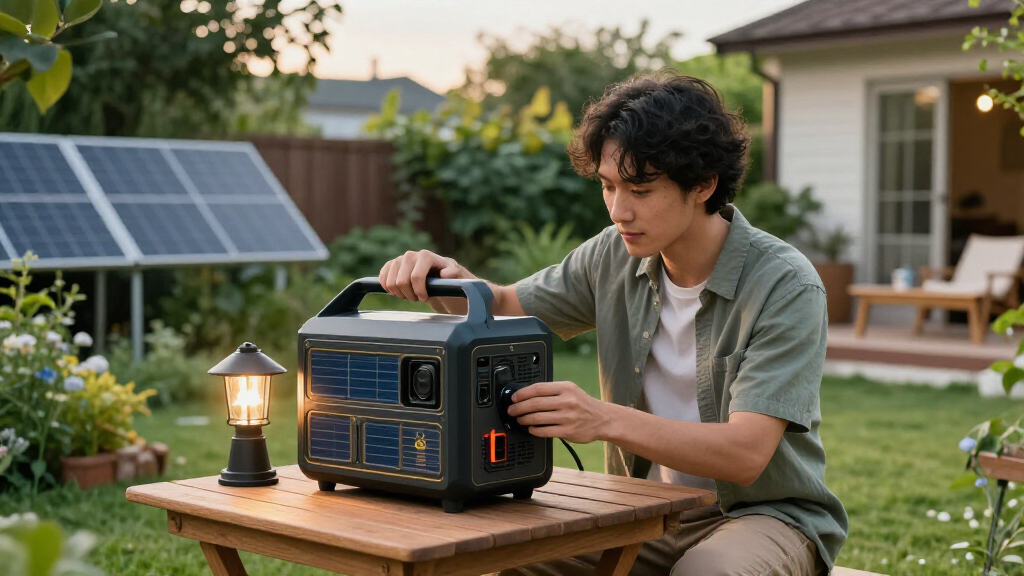
A portable solar generator is a rechargeable battery system that stores electricity and supplies it through outlets, USB ports, and 12-volt sockets. It doesn’t produce power on its own—think of it as a portable energy bank that gets charged from solar panels, wall outlets, or even your car’s cigarette lighter.
Imagine camping with a small, sleek box that keeps your phone alive, your laptop charged, and your LED lights glowing. When connected to a portable solar panel, it harnesses the sun’s rays, converting sunlight into electricity stored in its batteries. When you need power, it’s like flipping a switch, delivering clean, silent energy.
Many models now support multiple charging sources, making them versatile during outdoor trips or outages. They’re especially popular because they’re compact, quiet, and free of emissions—perfect for indoor use or in noise-sensitive environments.
How Big Should Your Battery Be? Picking the Right Capacity
Battery capacity is measured in watt-hours (Wh) and tells you how much energy your generator can store. For casual use—charging phones, running lights, or small fans—around 200–500 Wh suffices. Need to power a mini-fridge or multiple devices? Look at 500–1,000 Wh. For longer trips or emergencies, 1,000–2,000 Wh or more keeps the lights on and the gadgets running.
Here’s a quick guide:
| Capacity | Ideal For |
|---|---|
| 200–500 Wh | Phones, laptops, small lights |
| 500–1,000 Wh | Camping appliances, small fridge, fans |
| 1,000–2,000 Wh | Backup for home, longer trips |
| 2,000+ Wh | Extended outages, RVs, entire home backup |
Remember, usable energy is slightly less than the capacity—your inverter, temperature, and power conversion eat into that total. A 1,000 Wh unit often offers about 850 Wh of effective power.
Which Devices Can Your Portable Generator Power?
Power output determines which devices your generator can run. Look at the continuous wattage rating to see what it can handle steadily, and surge wattage for brief power spikes. For example, a typical home router needs only about 15–30 W, while a hairdryer can demand 1,200 W or more.
Say you want to run a small refrigerator and charge your phone simultaneously. You’ll need a unit with at least 300 W continuous output. Want to run a microwave or a small window AC? Look for models offering 800–1,500 W.
Pure sine-wave inverters are best for sensitive electronics—like medical devices or high-end audio gear—because they produce cleaner power, mimicking grid quality. Cheaper generators might use modified sine wave, which can cause noise or damage certain electronics over time.
Getting the Most From the Sun: Solar Input and Charging Speed
A portable solar generator’s ability to recharge from sunlight depends on its solar input rating, usually expressed in watts. A 400 W input means, under ideal conditions, you could replenish the battery quickly—often in a few hours for smaller units. But reality checks in: clouds, heat, and panel placement can cut that speed in half or more.
For example, a 200 Wh system with a 100 W solar panel might take 2–3 hours of direct sunlight to fully recharge—if the weather cooperates. Larger setups, like 1,500 Wh units, can take a day or more, especially in cloudy weather.
It’s vital to match your solar panel’s voltage, current, and connector type with the generator’s specifications. A high-wattage panel isn’t always better if the generator can’t handle the input limit.
What’s Inside? The Chemistry That Keeps You Powered
Battery chemistry impacts lifespan, weight, safety, and cost. Lithium iron phosphate (LFP) batteries are now the gold standard—they last over 3,000 full charge cycles, roughly eight years with daily use. They’re stable, heat-resistant, and safer under stress.
Older or cheaper models often use nickel-manganese-cobalt (NMC) batteries, which pack more energy into less space but typically last around 1,000 cycles. They’re lighter but more prone to thermal issues, making LFP the smarter choice for frequent use.
Imagine a camper using the same LFP-equipped unit for five years. It might still operate at over 80% capacity after thousands of cycles, saving money in the long run.
How Fast Can You Charge It? The Latest Tech Advances
Fast charging is a game-changer. Modern units support AC recharge rates of 1,000 W or more, filling a large battery in just 1–2 hours. That means you can top up during a quick break or before a storm hits.
Solar charging remains slower, often taking 4–8 hours or even days, depending on panel size and weather. Some models allow simultaneous AC and solar charging, boosting recharge speed further.
However, faster charging can generate more heat and noise from fans. Always check if the unit supports rapid recharge without sacrificing lifespan, especially if you’re relying on it for critical backup power.
How Portable Are They? Picking a System You Can Handle
“Portability” isn’t one-size-fits-all. Some tiny, handheld models weigh just a few pounds—perfect for backpacking or quick trips. Larger units with wheels can tip the scales at 20–50 kg, suitable for car camping or home backup.
Think about where you’ll use it. Will you carry it up stairs? Or park it next to your RV? Features like sturdy handles, wheels, and compact dimensions matter. Noise from cooling fans can also affect where you position it—quiet models are better for indoor or shared spaces.
For instance, a 10 kg unit with a sturdy handle is easy to lift into a car trunk, while a 40 kg beast requires a two-person lift and a dolly.
Can You Expand and Link It to Your Home?
Some systems accept additional batteries or can connect directly to your home’s electrical system. This is more common with high-end models. They might include transfer switches or smart controls to automatically switch to backup during an outage.
For example, a homeowner with a modular system can start small—powering essential circuits—and expand later as needed, without replacing the entire unit. Some models even support connecting to a home inverter or generator, offering a hybrid solution.
But beware: installing these systems should follow local electrical codes. Connecting a portable generator directly to your house wiring without a proper transfer switch is dangerous and illegal.
Staying Safe and Reliable: What to Watch For
Safety features protect your investment and your home. Look for units with a battery-management system (BMS), overload protection, and thermal monitoring. Certifications from UL, CE, or other agencies signal compliance with safety standards.
Proper handling also matters. Keep batteries dry, well-ventilated, and away from heat. Avoid using damaged or swollen units—lithium batteries can pose fire risks if mishandled.
Many brands offer warranties and support, which can be lifesavers if something goes wrong. Remember, these systems are safe when used correctly but require respect for their battery chemistry.
What New Tech Is Making Portable Solar Generators Better?
Recent innovations include faster charging, longer-lasting LFP batteries, and smarter control apps. Many units now support Wi-Fi or Bluetooth, letting you monitor charge levels, set schedules, or update firmware remotely.
Expandable systems are growing in popularity, blending portable convenience with home backup. Some models support multiple batteries, creating scalable energy hubs.
Alternator-charging accessories are also improving, allowing quicker recharging from your vehicle’s engine—ideal for RV and overlanding fans. And prices are dropping, making larger capacities more accessible than ever.
For example, a 1,500 Wh LFP system with app control and fast recharge can power your entire weekend camping setup, then recharge overnight from the sun or your vehicle.
Why Choose a Solar Generator Over Fuel-Based Options?
Solar generators excel in quiet operation, zero emissions, and indoor safety. They’re perfect for environments where noise and fumes are a concern—like inside a camper or an apartment. Maintenance is minimal, just occasional battery checkups.
Fuel generators provide sustained power for high loads and longer outages, especially when fuel is readily available. But they’re noisy, produce exhaust, and need regular refueling—plus, they’re prohibited indoors.
A hybrid approach often works best: use a solar generator for daily needs and backup, and a fuel generator for heavy-duty or extended outages. Always keep in mind safety—fuel must be stored properly, and combustion units belong outside.
Picking Your Perfect Portable Solar Generator
Start by listing your essential devices. Next, estimate their wattage and how long you need them powered. Consider your typical sunlight conditions and how much weight you can carry.
Compare models based on:
- Battery chemistry and cycle life
- Output wattage and surge capacity
- Solar input ratings
- Portability features
- Expandability options
- Price and warranty
For instance, if you camp in sunny deserts, a larger solar input and high-capacity battery matter. If you’re an RVer, weight and expandability could be your top priorities.
Choosing the right model is about balancing your power needs, portability, and budget. Do your homework, and don’t forget to consider future expansion plans.
Debunking Myths About Portable Solar Generators
Many believe that “a 1,000 W generator stores 1,000 Wh”—but watts measure power, while watt-hours measure stored energy. A 1,000 W unit might only have 700 Wh of usable capacity.
Another common myth: “A 200 W panel always produces 200 W.” In reality, panel output varies with sunlight, angle, and weather, often falling short of rated wattage.
And don’t assume it can power anything plugged in. Devices need to stay within the inverter’s wattage limits, and sensitive electronics require pure sine wave output for safe, stable operation.
Finally, solar is not “free energy.” The cost of panels, batteries, and controllers adds up. It’s about convenience and sustainability, not just saving on your electric bill.
Your FAQs About Portable Solar Generators Answered
Q: How much capacity do I need for an overnight trip?
A: For basic overnight needs—phones, lights, small fans—around 300–500 Wh often suffices. For fridge and multiple devices, aim for 800 Wh or more.
Q: Can I run my refrigerator or microwave?
A: Yes, if your generator’s continuous wattage exceeds the appliance’s startup and running wattage. Check labels carefully.
Q: How long does solar charging take?
A: It depends on panel size and weather. A typical 200 Wh system with a 100 W panel might take 3–4 hours in perfect sunlight but longer in cloudy conditions.
Q: Is it safe to store in a car?
A: Yes, but keep it in a cool, dry place, away from direct sunlight and extreme temperatures. Avoid leaving it in a hot car for extended periods.
Q: Can I connect multiple units for more power?
A: Some systems support stacking or linking, but always follow the manufacturer’s instructions and safety guidelines to prevent damage or hazards.
Conclusion
In a world leaning toward cleaner, quieter power, portable solar generators stand out as a smart choice. They blend convenience, sustainability, and safety—all in a compact package. When you pick the right one, you’re not just buying a gadget; you’re investing in independence from the grid.
So, next time you’re planning an outdoor adventure or prepping for emergencies, imagine the quiet hum of sunlight filling your batteries—ready to energize your day, your night, or your emergency plan. Power doesn’t have to be complicated. It just has to be portable.
Halloween Picks
halloween
As an affiliate, we earn on qualifying purchases.