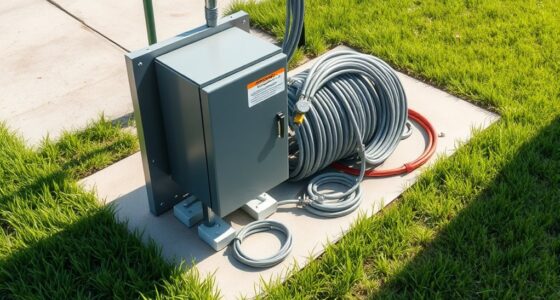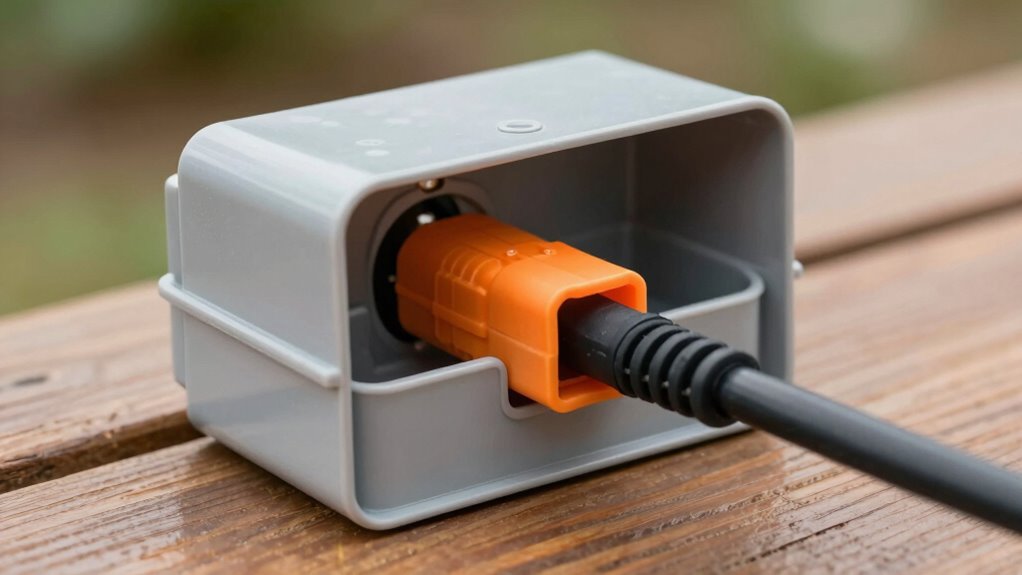
To build a reliable inlet box and cord kit, pick weatherproof plastics like polycarbonate or PVC, or galvanized aluminum for strength, guaranteeing all materials are rated for outdoor use. Use UV-resistant cords with proper insulation and sealing to prevent water ingress. Follow local electrical codes, disconnect power during setup, and ensure proper grounding. Mount everything securely on stable surfaces and inspect regularly for damage. If you keep exploring, you’ll discover more tips for a long-lasting setup.
Key Takeaways
- Select weatherproof, durable materials like polycarbonate or PVC for the enclosure and UV-resistant cords for outdoor use.
- Properly seal all entry points with gaskets and weatherproof fittings to prevent water ingress.
- Ensure electrical connections are rated, insulated, and grounded according to local safety standards.
- Mount the inlet box securely on stable, non-flood-prone surfaces, keeping cords organized and free from damage.
- Regularly inspect and maintain the setup to address corrosion, wear, and ensure continued safety and longevity.
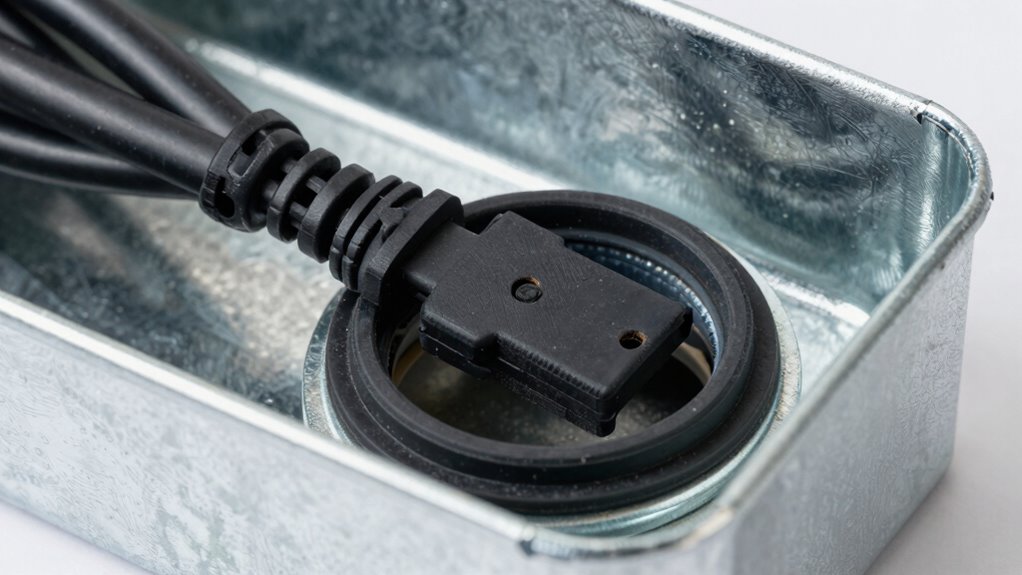
Ever wondered how to create a reliable inlet box and cord kit for your electrical needs? Building a dependable setup isn’t just about connecting wires; it’s about guaranteeing electrical safety and choosing the right materials. When you start, focus on selecting durable, high-quality materials that can withstand environmental conditions and regular use. Plastic, specifically heavy-duty weatherproof plastics like polycarbonate or PVC, is often the best choice because it’s resistant to corrosion, moisture, and impact. Metal enclosures, like those made from galvanized steel or aluminum, are also options if you need additional strength, but they require proper insulation to prevent electrical hazards.
Electrical safety should be your top priority throughout the process. Before beginning, make sure you disconnect power sources and follow local electrical codes. When designing your inlet box, consider grounding and proper insulation to prevent accidental shocks. Use rated connectors, strain relief fittings, and weatherproof seals to keep moisture out, which can cause shorts or corrosion over time. When wiring your cord kit, guarantee all connections are tight and secure, avoiding loose terminals that could spark or overheat. Test your setup thoroughly before connecting it to live power, and always double-check that grounding paths are intact and properly installed. Additionally, understanding material compatibility is crucial to ensure all components work safely and effectively together. Properly selecting and matching materials helps prevent issues like galvanic corrosion, which can occur when incompatible metals are in contact.
Material selection plays a fundamental role not only in safety but also in the longevity of your inlet box and cord kit. Opt for materials that are rated for outdoor use if you plan to install your setup outside. Weatherproof enclosures with IP (Ingress Protection) ratings help keep out dust, water, and debris. Additionally, choose cords made from UV-resistant, flexible, and insulated materials to withstand sun exposure and temperature fluctuations. When assembling, ensure all components are compatible and rated for the electrical load you anticipate. Proper sealing and gaskets are essential to prevent water ingress, especially if your project involves outdoor or damp environments. Considering environmental conditions during planning can help prevent premature deterioration of your setup. Incorporating proper ventilation can also be beneficial in managing moisture buildup within enclosures.
Finally, pay close attention to the installation process. Mount your inlet box securely on a stable surface, avoiding areas prone to flooding or physical damage. Keep cords neatly organized and avoid tight bends or kinks that could damage insulation. Regular inspections and maintenance are indispensable to catch any issues early, like corrosion or worn wiring, which could compromise electrical safety. In essence, building a sensible inlet box and cord kit is about thoughtful material selection, strict adherence to electrical safety practices, and diligent maintenance. When you do it right, you create a safe, reliable, and long-lasting electrical connection that you can trust for years to come.

Porch Shield Waterproof Universal Generator Cover 38 x 28 x 30 inch - for Most Generators 5500-15000 Watt, Black
- Compatible - More sizes for 5500w -15000w gas...
- Upgrade Material - Made of 600D polyester fabric...
- Tear Resistant & Waterproof - The high-level double...
As an affiliate, we earn on qualifying purchases.
Frequently Asked Questions
What Safety Precautions Should I Take During Installation?
During installation, you should always turn off the power supply to avoid electrical shocks. Guarantee proper electrical grounding to prevent short circuits and other hazards. Keep fire safety in mind by using correctly rated components and avoiding overloaded circuits. Use insulated tools, wear rubber gloves, and work in a dry environment. Double-check all connections before powering up, and follow local electrical codes to ensure a safe, reliable setup.
Which Materials Are Best for Weatherproofing the Inlet Box?
You should use waterproof, UV-resistant materials like outdoor-grade rubber or silicone sealants for weatherproofing. In a recent case study, a homeowner applied a silicone sealant around the inlet box’s edges, markedly improving its durability against rain and sun. Weatherproofing techniques involve sealing all seams and openings thoroughly. These materials offer excellent durability, ensuring your inlet box stays protected from moisture and harsh weather conditions over time.
How Do I Choose the Right Cord Length?
You should choose a cord length that allows for safe appliance placement without excess slack. Measure the distance from your outlet to the appliance, adding a few extra feet for flexibility and safety. Make certain the cord’s gauge matches your appliance’s power requirements to prevent overheating. Always double-check appliance compatibility with the cord to avoid electrical issues, and opt for a length that minimizes tripping hazards while providing enough reach for your setup.
Can I Customize the Inlet Box for Different Appliances?
Yes, you can customize your inlet box for different appliances. Think of it as choosing between traditional and innovative weatherproofing techniques—both serve the same purpose, but one adapts to your specific needs. By exploring alternative inlet designs, you can tailor the box’s size, shape, and features to suit various appliances. This flexibility guarantees your setup stays reliable and safe, regardless of the device you’re powering.
What Maintenance Is Required for the Inlet Box and Cord Kit?
You should regularly inspect your inlet box and cord kit for signs of damage or corrosion, guaranteeing electrical grounding remains secure. Clean connectors with a damp cloth and apply corrosion prevention spray if needed. Check the grounding wire connections to prevent electrical hazards. Also, ensure that the cord and box are free from moisture or debris, which can cause deterioration over time and compromise safety and performance.
Porch Shield Waterproof Universal Generator Cover 32 x 24 x 24 inch - for Most Generators 5000-10000 Watt, Black
- Compatible - More sizes for 5000w -10000w gas...
- Upgrade Material - Made of 600D polyester fabric...
- Tear Resistant & Waterproof - The high-level double...
As an affiliate, we earn on qualifying purchases.
Conclusion
Building your own inlet box and cord kit is a smart way to guarantee safety and efficiency in your electrical setup. With proper construction, you reduce the risk of electrical hazards and improve convenience. Did you know that DIY electrical projects, when done correctly, can save homeowners up to 30% compared to hiring professionals? So, take your time, follow the steps carefully, and enjoy the satisfaction of creating a reliable, cost-effective solution tailored to your needs.

Generator Cover Portable Waterproof,Generator Rain Cover for Outside,Universal Generator Cover for Most Portable Generators 5000-10000 Watt(32"L x 24"W x 24"H)
- 【Dimensions】Generator Covers for outside 32x24x24 inch Fits Most...
- 【Windproof Design】This generator covers for outside features an...
- 【Side Ventilation Openings】This portable generator cover features side...
As an affiliate, we earn on qualifying purchases.

Portable Solar Generator 300W Portable Power Station with 60W Solar Panel
- Portable Generator with 60W Solar Panel Included: with a big battery pack,...
- Multiple Charging outlets for camping gear with SOS Flashlight: with 2* 300W Max AC...
- Multiple Charging Optional, Solar Panel Charger 60W Included: ZeroKor portable power bank generator...
As an affiliate, we earn on qualifying purchases.