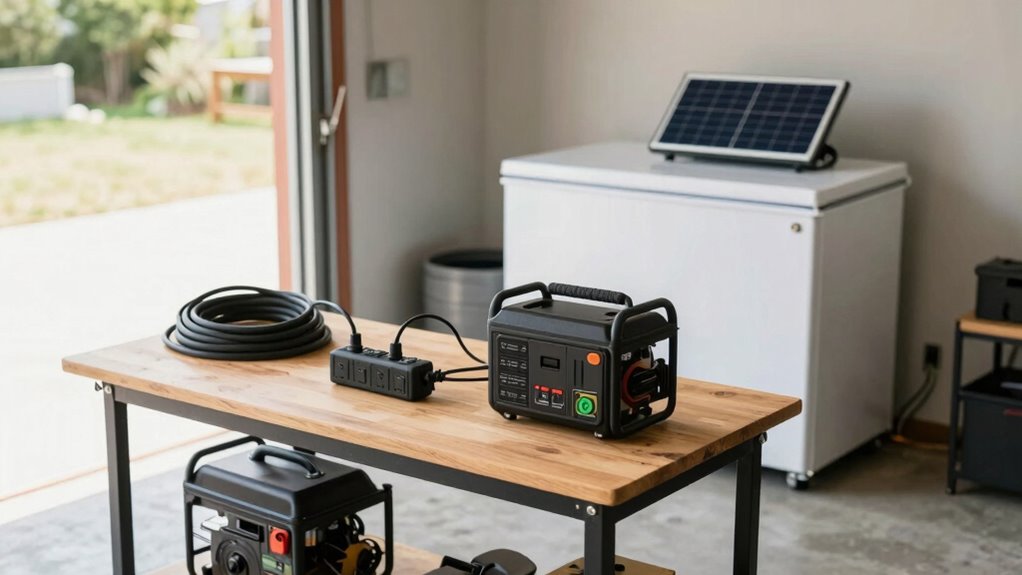

To plan backup power for freezers in garages or outbuildings, start by evaluating the freezer’s wattage and surge needs. Install solar panels with a battery bank to store energy, and add surge protectors to prevent damage from power spikes. Consider portable generators for cloudy days, and use transfer switches for seamless power switching. Regular safety checks and maintenance ensure reliable operation. Keep exploring these options to create an effective, resilient backup system.

Get backup power and energy gear delivered free — and shop member deals
- Fast, free delivery on millions of items
- Access to Prime Big Deal Days deals on October 6–7
- Prime Video, Amazon Music and more included
Key Takeaways
- Assess the freezer’s wattage and surge requirements to determine appropriate backup power capacity.
- Choose between solar backup systems, portable generators, or a combination based on reliability and sustainability.
- Install surge protectors and safety devices to safeguard the freezer and electrical system during power fluctuations.
- Use transfer switches or manual transfer methods for seamless switching between main power and backup sources.
- Regularly maintain and test the backup system to ensure reliable operation during outages.
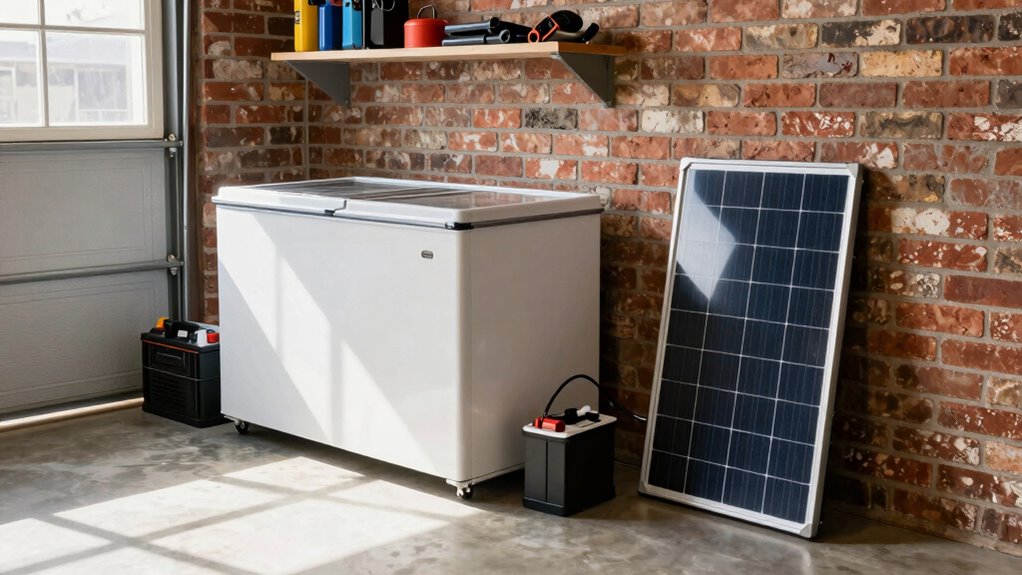
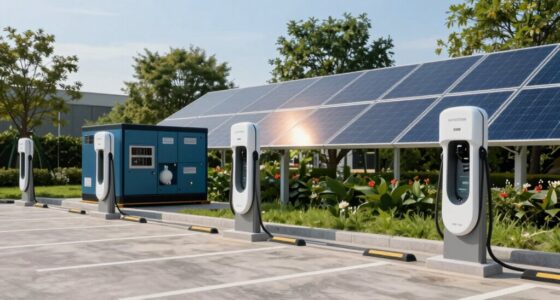
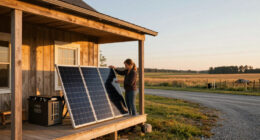
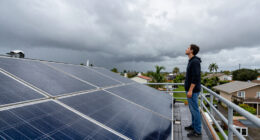
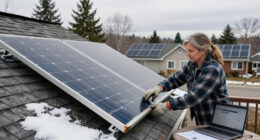
Ensuring your freezer stays powered during outages is essential to prevent food spoilage and waste. When you rely on freezers in garages or outbuildings, unexpected power failures can threaten your stored food. Planning a backup power solution helps you avoid the costly and frustrating task of throwing away spoiled items. One effective approach is to incorporate a solar backup system, which harnesses sunlight to generate electricity during outages. Solar panels can be installed in your yard or on the roof of your garage, connecting to a battery bank that stores energy for use when the grid goes down. This setup offers a renewable, eco-friendly way to keep your freezer running, especially in sunny climates. It’s imperative to guarantee that your solar backup system is properly sized to meet your freezer’s power needs, considering the freezer’s wattage and startup surge power.
Alongside a solar backup, you should invest in power surge protection devices. Power surges can occur during outages or due to lightning strikes, risking damage to your freezer’s compressor and electronic components. Installing surge protectors specifically designed for appliances helps safeguard your investment and assures your backup system functions reliably. These devices can be plugged directly into your power supply or integrated into your electrical panel for broader protection. Incorporating surge protection devices is an important step in protecting your equipment from unpredictable electrical hazards.
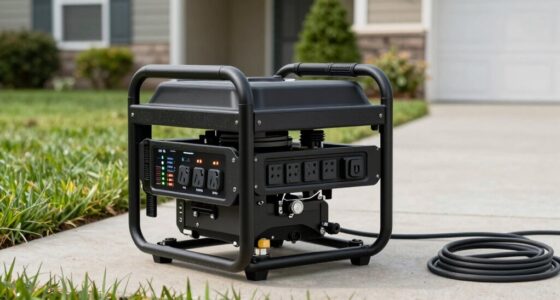
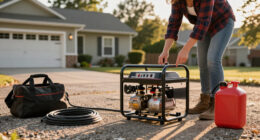
When planning your backup setup, consider the capacity of your battery bank and the efficiency of your solar panels. A larger battery bank provides more stored energy, extending how long your freezer can stay operational during longer outages. You might also explore portable generators as a supplementary or backup option, especially if your solar system isn’t sufficient in cloudy weather. However, generators require fuel and regular maintenance, so weigh their convenience against solar solutions. Additionally, solar energy is a sustainable choice that can reduce your reliance on fossil fuels and lower your energy costs over time. It’s also wise to keep informed about tax incentives and rebates that may help offset the costs of installing renewable backup systems. Considering system sizing carefully ensures your backup power setup is both effective and efficient.
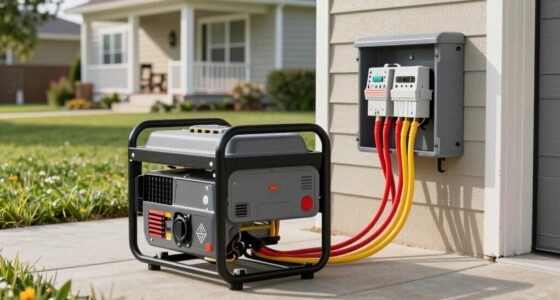
You should also think about the transfer switch or manual transfer method to switch your freezer’s power source seamlessly during an outage. Proper wiring and safety measures are essential when connecting backup power sources to prevent electrical hazards. Consulting with a professional electrician or solar installer can help make certain your system is safe and compliant with local codes. Regular maintenance and testing are also crucial to ensure your backup system remains reliable; this includes verifying connections, testing surge protectors, and running system simulations. With thoughtful planning and the right equipment, you can keep your freezers running smoothly, regardless of power outages, saving you money and reducing food waste.
Frequently Asked Questions
How Long Can My Freezer Stay Cold During a Power Outage?
Your freezer can stay cold for about 24 to 48 hours during a power outage, especially if unopened. To maximize this time, focus on energy conservation by keeping the door closed, and use a thermometer to monitor the temperature. If the power’s out longer, consider backup power options like generators, which help maintain the proper temperature and prevent food spoilage.
Are There Any DIY Backup Power Solutions for Freezers?
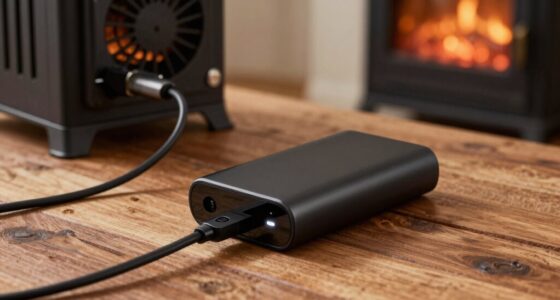
You can create DIY battery backups or portable inverter setups to power your freezer during outages. For example, a homeowner used a deep-cycle battery connected to a high-capacity inverter to keep their garage freezer running for hours. These DIY solutions are cost-effective and flexible, allowing you to supply power when needed. Just guarantee your inverter matches your freezer’s wattage, and use quality batteries for reliable backup power.
What Safety Precautions Should I Take With Backup Generators?
You should prioritize generator safety by following manufacturer instructions, ensuring proper ventilation, and never running it indoors to prevent carbon monoxide poisoning. Regularly inspect your generator for damage, keep it dry, and use heavy-duty extension cords rated for outdoor use. Incorporate generator safety into your emergency preparedness plan, including having a fire extinguisher nearby and knowing how to shut off the generator quickly if needed. These steps help protect you and your property.
Can Solar Power Be Used for Backup Freezer Power?
Yes, solar power can be used for backup freezer power. You’ll need solar panels to generate electricity and a battery storage system to store excess energy. When the sun isn’t shining, the stored power can keep your freezer running smoothly. Make sure your system has enough capacity to meet your freezer’s energy needs, and consider using a backup generator for additional reliability during cloudy days or extended outages.
How Often Should I Test My Backup Power System?
You should test your backup power system at least once a month to guarantee it’s ready when needed. During these tests, check generator maintenance, such as oil levels and battery health. Also, verify your fuel storage is sufficient and remains in good condition. Regular testing helps identify issues early, preventing surprises during an outage. Keep a log of tests to track performance and maintenance needs over time.
Conclusion
With a solid backup plan in place, you can imagine your garage or outbuilding as a fortress, standing strong against power outages. When the lights flicker and the grid falters, your freezer remains a silent guardian, preserving your frozen treasures. A reliable backup system guarantees your perishables stay safe, like a sturdy shield guarding your supplies. With preparation, you can face any storm, knowing your frozen goods are secure, even when the power’s out.
Evergreen bestsellers Picks
bestsellers
As an affiliate, we earn on qualifying purchases.