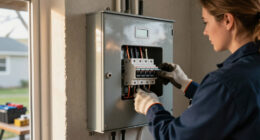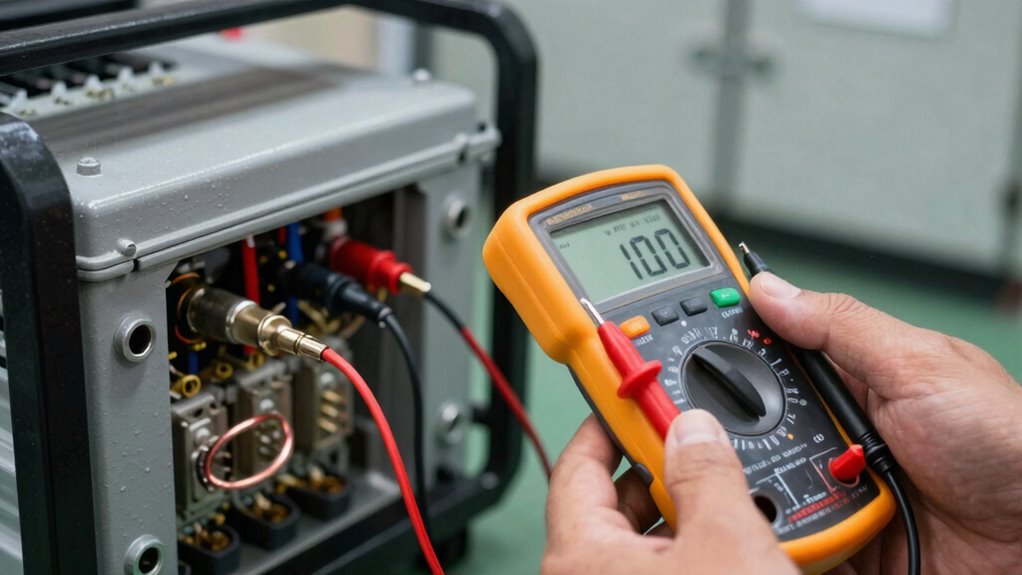

To diagnose voltage drop between your generator and load, start by measuring voltage at the generator output with a multimeter. Then, check voltage at various points along the wiring, including terminals, connections, and load points. Look for significant differences that indicate where the loss occurs. Inspect terminals for corrosion, tighten loose connections, and verify wire gauge suitability. If you keep exploring, you’ll find more ways to pinpoint faults and improve your system’s performance.

Get backup power and energy gear delivered free — and shop member deals
- Fast, free delivery on millions of items
- Access to Prime Big Deal Days deals on October 6–7
- Prime Video, Amazon Music and more included
Key Takeaways
- Measure voltage at the generator output and load point to identify where voltage drops occur.
- Check and tighten all connections, terminals, and wiring to reduce resistance causing voltage loss.
- Inspect circuit breakers for proper operation and reset or replace faulty units.
- Test the battery and power supply to ensure stable voltage input to the system.
- Use a multimeter to verify continuity and detect any damaged or corroded cables along the circuit.
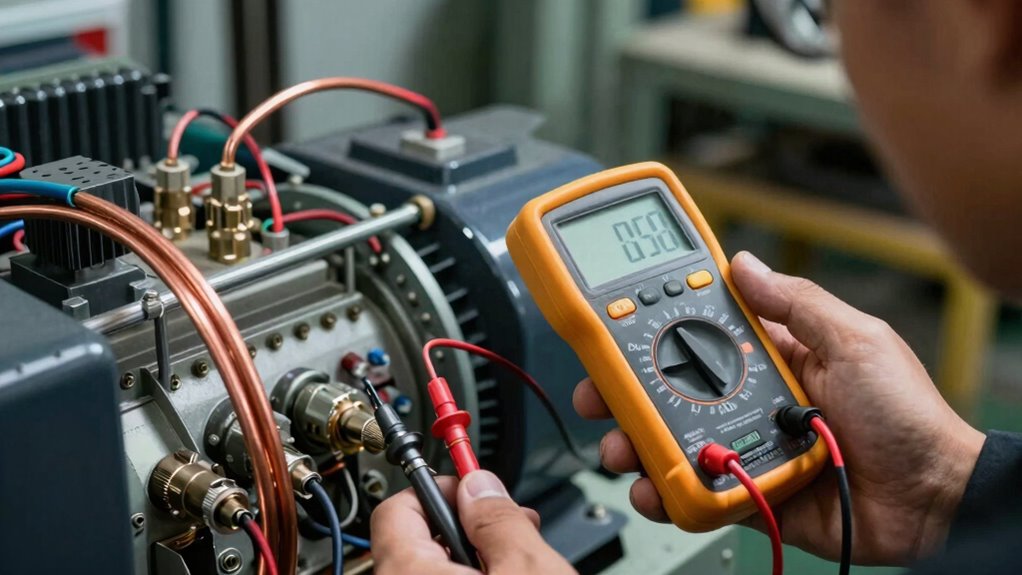
Have you ever experienced electrical issues that seem to fluctuate or suddenly worsen? If so, you’re likely dealing with a voltage drop problem that affects your generator and load. Diagnosing this issue involves examining several vital factors, starting with your system’s overall health and moving toward specific components like the battery and circuit breakers. One of the initial steps is to guarantee proper battery maintenance. A weak or poorly maintained battery can cause inconsistent voltage levels, leading to fluctuating power supply. Check the battery terminals for corrosion, tightness, and cleanliness, and test the voltage with a multimeter to confirm it’s within the manufacturer’s recommended range. A weak battery can’t sustain steady voltage, which results in voltage drops as the load increases.
Proper battery maintenance is essential to prevent voltage fluctuations and ensure stable power supply.
Next, inspecting your circuit breakers is essential. Faulty or tripped circuit breakers can interrupt or weaken the electrical flow between your generator and load. Turn off and then reset each breaker, making sure they’re functioning correctly and not showing signs of damage or overheating. If a breaker trips repeatedly under load, it may be undersized or faulty and need replacement. During your inspection, use a multimeter to check for continuity across the breaker, ensuring that it’s allowing current to pass when in the ‘on’ position. Any irregularities here could be a sign that the breaker isn’t operating properly, contributing to voltage drops along the system. Additionally, understanding the importance of proper wiring connections can prevent many issues related to voltage fluctuations. Ensuring proper wiring techniques and secure connections can significantly reduce resistance and voltage loss. Proper wiring installation practices are crucial to maintaining system stability.
Beyond these components, you’ll want to check the wiring connections between your generator and load. Loose or corroded connections can create resistance, causing voltage to drop before it reaches the end device. Tighten any loose terminals and clean corrosion off connectors with a wire brush or contact cleaner. Additionally, examine the cables for damage or wear that could increase resistance, and replace any compromised wiring. If your system uses long cable runs, consider whether the wire gauge is sufficient for the load; undersized cables tend to increase voltage drop over distance. Properly maintained connections and wiring are crucial for system stability. It’s also helpful to verify that your system’s design considerations are appropriate for your specific load requirements. Understanding the power distribution system can further help in diagnosing persistent voltage issues and optimizing your setup.
Finally, use a multimeter to measure voltage at different points along the circuit—close to the generator, at various connection points, and near the load. Comparing these readings helps pinpoint where the voltage drops occur. If you notice a significant difference between the generator’s output and the load, it indicates a problem along the pathway that needs addressing. Regular maintenance, including battery checks and circuit breaker inspections, is key to preventing voltage drops from becoming persistent issues. By systematically reviewing each component, you can identify and resolve the root causes, guaranteeing your electrical system performs reliably. Don’t forget that system design considerations can also influence voltage stability and should be reviewed if problems persist.
Frequently Asked Questions
What Tools Are Best for Measuring Voltage Drop Accurately?
You should use a clamp meter or a multimeter to measure voltage drop accurately. A clamp meter is ideal for quick, contactless readings around wires, while a multimeter provides precise measurements between points. Make certain your multimeter can handle the voltage levels involved. Both tools help you identify voltage issues effectively, giving you reliable data to troubleshoot generator and load problems efficiently.
How Often Should Voltage Drop Tests Be Performed?
You should perform voltage drop tests as part of your routine maintenance schedule, ideally every 6 to 12 months. Regular testing helps catch issues early and guarantees reliable operation. Incorporate these diagnostic procedures into your overall maintenance plan, even if everything seems fine. Consistent testing prevents unexpected failures, saves you money, and keeps your generator system running smoothly. Don’t wait for a problem—stay proactive with your diagnostic routines.
Can Temperature Affect Voltage Drop Readings?
Temperature effects can definitely influence voltage drop readings. As temperatures rise, electrical resistance in conductors increases, which can cause a decrease in voltage stability and higher voltage drops. Conversely, cooler temperatures typically improve voltage stability by reducing resistance. When diagnosing voltage drop, it’s crucial to evaluate ambient temperature conditions, as fluctuations can lead to inaccurate readings, affecting your assessment of the electrical system’s health.
What Is Considered an Acceptable Voltage Drop Percentage?
An acceptable voltage drop percentage typically falls between 3% and 5%, guaranteeing voltage stability and maintaining power efficiency. If your voltage drop exceeds this range, it can lead to equipment malfunction and reduced performance. Regularly monitor voltage levels, especially under load, to identify issues early. Keeping voltage within this range helps ensure your system runs smoothly, conserving energy and preventing potential damage to your electrical components.
How Do Environmental Factors Influence Voltage Drop?
Environmental conditions, like humidity, temperature, and exposure to electrical interference, can subtly influence voltage drop. High temperatures may increase resistance in wiring, while moisture can cause insulation issues, both leading to voltage fluctuations. Electrical interference from nearby equipment can also disrupt stable voltage flow. By understanding these factors, you can better anticipate and manage voltage drop, ensuring your generator and load operate smoothly despite environmental challenges.
Conclusion
By diligently diagnosing and determining the details of voltage drop, you prevent potential problems and protect your power supply. Remember, meticulous measurement and methodical troubleshooting reveal the root cause, restoring reliability and reducing risks. Stay steadfast in your search, scrutinizing connections, cables, and components to stop small issues from snowballing. With patience and precision, you’ll prevent persistent problems, preserve power, and promote a safe, seamless system. Success stems from skillful, systematic, and steady scrutiny.
Fall Picks
fall essentials
As an affiliate, we earn on qualifying purchases.