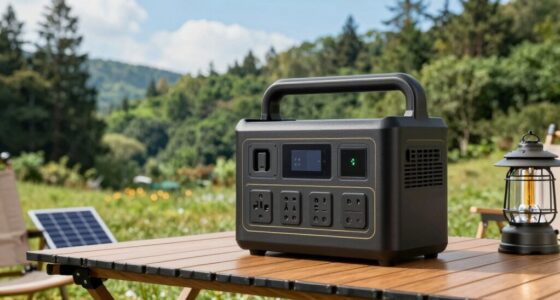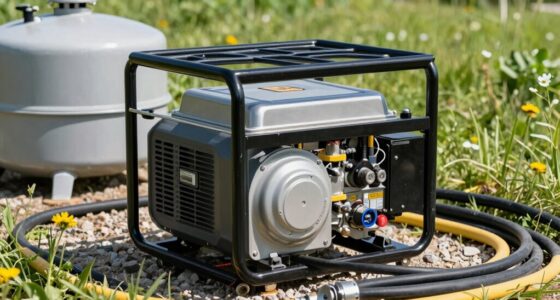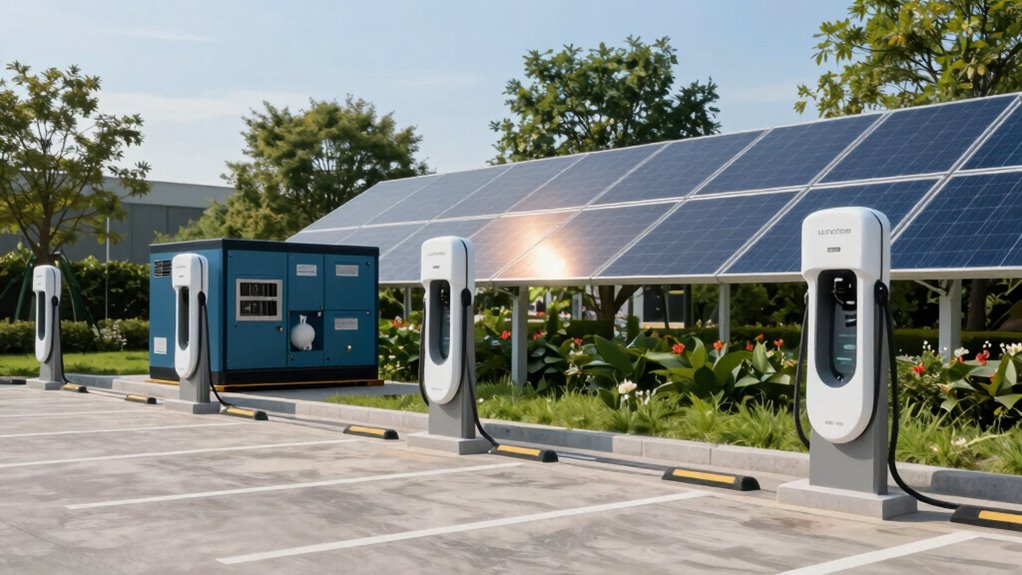

To plan for EV chargers and backup power, start by evaluating your electrical system’s capacity and consider necessary upgrades to handle additional loads. Integrate smart grid technology to optimize energy use and explore available government incentives to offset costs. Decide on backup power options like batteries or generators for outages. Focus on future-proofing your setup by choosing scalable solutions and energy management systems. Keep exploring to discover how to create a resilient, cost-effective, and sustainable energy plan.

Get backup power and energy gear delivered free — and shop member deals
- Fast, free delivery on millions of items
- Access to Prime Big Deal Days deals on October 6–7
- Prime Video, Amazon Music and more included
Key Takeaways
- Assess your current electrical capacity and identify needed upgrades before installing EV chargers or backup systems.
- Research local, state, and federal incentives to offset costs for chargers and backup power solutions.
- Integrate smart grid-enabled chargers for energy optimization and demand management.
- Plan for scalable, future-proof systems to accommodate increased EV adoption and energy needs.
- Select reliable backup power options like generators or batteries to ensure continuous operation during outages.
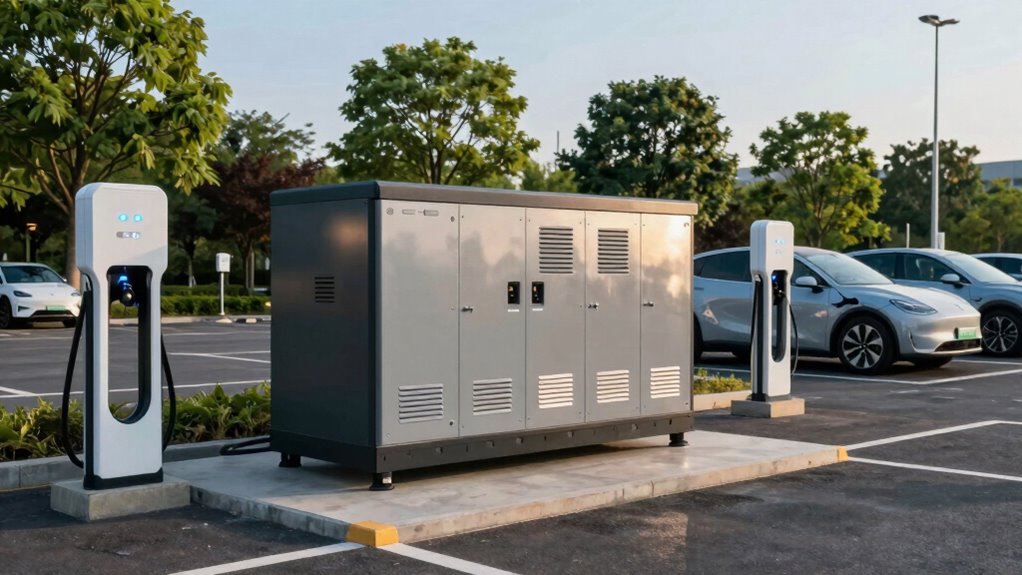
As electric vehicle (EV) adoption accelerates, planning for both charging infrastructure and backup power becomes crucial for homeowners and businesses alike. One of the most effective ways to prepare is by considering smart grid integration. A smart grid allows your charging system to communicate with the utility, optimizing energy use during off-peak hours and reducing costs. This technology can help you avoid peak demand charges and guarantee your EVs are charged efficiently without overloading your electrical system. When planning your setup, look for chargers that support smart grid features and can adapt to grid signals, making your energy consumption more sustainable and cost-effective.
Smart grid-enabled chargers optimize energy use, reduce costs, and ensure efficient, sustainable EV charging.
Additionally, government incentives play a significant role in making EV infrastructure investments more affordable. Many local, state, and federal programs offer rebates, tax credits, or grants for installing EV chargers and backup power systems. Before you start, research what’s available in your area, as these incentives can substantially offset the initial costs. Applying for these programs can make a big difference in your planning process, encouraging you to upgrade your electrical system with the latest technology without breaking the bank.
Balancing your current electrical capacity with future needs is critical when planning for EV chargers and backup power. You should assess your existing electrical panel and determine whether it can handle the additional load from multiple chargers or backup power units. If not, upgrading your electrical system early will save you headaches down the line. Incorporating energy management systems that integrate with smart grid technology can help you monitor and control energy flow, guaranteeing your backup power kicks in seamlessly during outages and your chargers operate smoothly without disrupting your main power supply. Understanding your whole-home electrical system and its capacity for handling additional loads is essential to ensure your EV chargers and backup power work effectively without causing overloads or inefficiencies. Being aware of your electrical system capacity can help you make more informed decisions during your planning process.
Furthermore, understanding your energy demand patterns can help you optimize your energy use and avoid unnecessary costs. Considering backup power options, like generators or battery storage, is equally important. These systems guarantee you have power during outages, which is especially important if you rely on your EVs for daily commutes or business operations. When selecting backup power, choose solutions that are compatible with your overall energy management plan and can work with your smart grid-enabled chargers. Government incentives often extend to backup power systems, making it more feasible to invest in reliable, resilient energy solutions.
Finally, understanding your whole-home electrical system and its capacity for handling additional loads is essential to ensure your EV chargers and backup power work effectively without causing overloads or inefficiencies. Ultimately, planning for EV chargers and backup power requires a strategic approach that combines understanding your energy needs, leveraging smart grid technology, and taking advantage of government incentives. By doing so, you guarantee your setup is efficient, cost-effective, and future-proof, providing peace of mind and supporting your transition to cleaner transportation and energy independence.
Frequently Asked Questions
What Is the Average Cost of Installing EV Chargers?
The average cost of installing EV charging stations varies between $500 and $2,500 per station, depending on factors like your home’s power capacity and the type of charger. Level 1 chargers are cheaper, while Level 2 chargers require more investment but charge faster. You should also consider upgrades to your electrical system to support higher power capacity, which can add to the overall cost but *guarantees* safe, reliable charging.
How Much Backup Power Is Needed for an Entire Home?
You’ll need enough backup power to meet your home’s power capacity during outages, typically around 10-15 kW for a standard household. Consider your backup duration based on your needs—whether you want power for essentials like refrigeration or longer periods. Assess your appliances’ wattage, total your home’s energy use, and choose a generator or battery system that offers sufficient backup duration to keep your critical devices running smoothly.
Are There Government Incentives for EV Charger Installation?
Yes, government incentives can be your golden ticket. Many rebate programs and incentive initiatives are available to help you cut costs when installing EV chargers. Think of these programs as a friendly hand guiding you through the process, making it easier to power up your home sustainably. Check with local and federal agencies to discover rebate opportunities, ensuring you maximize savings while embracing green energy.
How Does Weather Affect Backup Power Systems?
Weather impacts backup power systems considerably. Solar storms can disrupt your system’s electronics and reduce battery efficiency, so stay alert during solar activity. Temperature fluctuations also matter; extreme cold can diminish battery capacity, while high heat may cause overheating. To guarantee reliable backup power, consider weather-resistant equipment and plan for seasonal variations. Regular maintenance and monitoring help your system perform at its best despite changing weather conditions.
Can Existing Electrical Panels Support New EV Chargers?
Your existing electrical panel might support new EV chargers, but a load capacity assessment is essential. You’ll need to check if your current panel can handle the additional power demand. If not, electrical panel upgrades are necessary to guarantee safety and compliance. Consulting a licensed electrician can help determine whether your panel can support the chargers or if upgrades are needed to avoid overloads and ensure reliable charging.
Conclusion
So, next time you’re marveling at your shiny new EV and dreaming of endless road trips, remember: planning for chargers and backup power isn’t just smart—it’s actually your ticket to avoiding the horror of stranded, powerless car nightmares. Who knew that behind all that eco-consciousness, a little bit of prep could turn you into the hero of your own electric adventure? Stay ahead, stay charged, and maybe keep a flashlight handy—just in case your “cutting-edge” tech decides to take a nap.
Fall Picks
fall essentials
As an affiliate, we earn on qualifying purchases.