To plan refueling during multi-day outages, start by estimating your generator’s daily fuel needs and stockpile slightly more than that amount. Store fuel safely in approved containers in cool, dry areas away from living spaces. Before the outage, fill your tank and schedule regular refills, keeping detailed records of usage. Identify nearby fuel sources in advance and maintain relationships with suppliers. For more tips on staying prepared, keep exploring how to manage your supplies efficiently.

Get backup power and energy gear delivered free — and shop member deals
- Fast, free delivery on millions of items
- Access to Prime Big Deal Days deals on October 6–7
- Prime Video, Amazon Music and more included
Key Takeaways
- Identify and establish relationships with reliable local fuel sources beforehand.
- Keep detailed records of fuel inventory and consumption to monitor supply levels.
- Schedule regular refueling intervals based on generator usage and outage duration.
- Store fuel safely in approved containers in well-ventilated, cool, and dry locations away from living areas.
- Plan efficient refueling procedures during outages to minimize safety risks and maximize fuel availability.

During multi-day power outages, ensuring your supplies of fuel are adequate becomes essential for maintaining necessary activities. Whether you rely on generators, vehicles, or heating appliances, having a strategic plan for refueling is a key part of emergency preparedness. Proper planning helps you avoid running out of fuel at critical moments, guaranteeing your safety and comfort during extended outages. To do this effectively, you need to understand fuel storage tips and how to manage your supply responsibly.
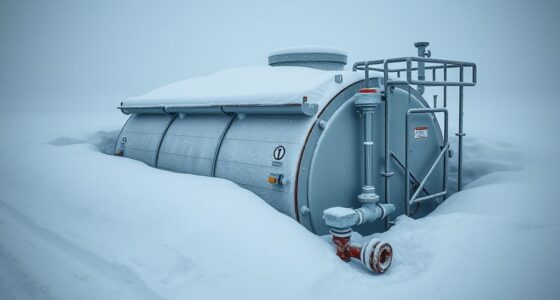
First, assess your energy needs. Determine how much fuel your generator or heating system consumes daily, and then multiply that by the expected duration of the outage. This way, you’ll know exactly how much fuel to stockpile without overdoing it. It’s better to have a little extra than to risk running out when you need it most. When storing fuel, always prioritize safety; keep containers in well-ventilated, cool, and dry areas away from living spaces. Use approved fuel containers, and never store more than you can realistically manage, as excess fuel can be a safety hazard or lead to spoilage over time. Additionally, incorporating fuel stabilization techniques can help extend the shelf life of stored fuel and prevent degradation. Regularly checking your storage setup and practicing safe handling procedures can further reduce the risk of accidents.
In terms of emergency preparedness, it’s wise to establish a fueling routine. If you’re using a generator, fill the tank before the outage hits, and plan to refill it at regular intervals as needed. Keep a record of how much fuel you’ve used and how much remains, so you can plan refills accordingly. If you have multiple vehicles or appliances that require fuel, prioritize their usage based on necessity. For example, fuel your generator first, then your vehicle for essential trips. A comprehensive understanding of fuel storage safety can further help prevent accidents and ensure your fuel remains secure. Staying informed about local fuel supply options is also beneficial, as it allows you to adapt your plan if shortages occur.
Another essential fuel storage tip is to rotate your supplies. If you stockpile fuel, check expiration dates and use older fuel first, replacing it with fresh supplies. This prevents your stored fuel from becoming unusable or contaminated, ensuring you always have reliable fuel on hand. Consider investing in fuel stabilizers, which can extend the shelf life of stored fuel, especially if you anticipate outages lasting longer than a few weeks. Regularly inspecting your fuel storage setup and maintaining proper documentation can further enhance your preparedness. Being aware of potential fuel contamination risks can also help you take preventative measures to keep your supplies safe.
Finally, always have a plan for refueling logistics. Know where you can buy additional fuel if needed, and confirm that local providers are open during emergencies. Keep a list of nearby fueling stations, and consider establishing a relationship with suppliers in advance. This proactive approach ensures that when the time comes, refueling during multi-day outages is smooth, safe, and efficient. Proper emergency preparedness and adherence to fuel storage tips enable you to maintain necessary activities without unnecessary stress or interruption.
Frequently Asked Questions
How Much Fuel Should I Store for a Multi-Day Outage?
You should store enough fuel to cover at least three to seven days of essential needs, considering your household size and energy usage. Use sturdy fuel container types like approved jerry cans or portable tanks for safe storage. In your emergency fuel planning, account for fuel consumption rates and potential supply delays. Always keep safety in mind, avoid overfilling, and store fuel in well-ventilated, cool areas away from flames.
Are There Any Safety Tips for Storing Large Fuel Quantities?
When storing large fuel quantities, prioritize fuel container safety by using approved, leak-proof containers and avoiding overfilling. Store fuel in a cool, well-ventilated, and away from direct sunlight or heat sources to prevent hazards. Keep containers on a stable surface and away from living areas. Follow local regulations for storage and handling, and always have a fire extinguisher nearby. These storage location tips help guarantee safety during extended outages.
Can I Use Alternative Fuel Sources During Outages?
During outages, you can use alternative fuel sources, but always follow storage regulations and handle fuel containers carefully. Imagine the safety of your family as you keep backup supplies—sturdy containers, clearly labeled, stored in a cool, ventilated place. Using alternative fuels like propane or kerosene is possible, but make certain they’re stored properly and used in well-ventilated areas. Safety first keeps your home and loved ones protected.
How Do I Prevent Fuel Spoilage Over Multiple Days?
To prevent fuel spoilage over multiple days, you should add fuel stabilizers to your stored fuel to keep it fresh. Always store fuel in airtight, approved containers and keep them in a cool, dry place. Guarantee proper ventilation around your storage area to avoid fumes buildup. Regularly check the fuel and container condition, and use the oldest fuel first to maintain quality during extended outages.
What Are Legal Considerations for Storing Fuel at Home?
A stitch in time saves nine, so know your legal considerations before storing fuel at home. You must guarantee legal compliance and follow storage regulations to prevent accidents and legal penalties. Check local laws regarding fuel storage limits, container types, and safe distances from living areas. Properly labeling containers and storing fuel in approved containers also help you stay within legal boundaries and ensure safety for everyone around you.
Conclusion
So, next time the power’s out for days, imagine your fuel tank as a tiny, rebellious horse refusing to run without its favorite snack. Keep it well-fed with a full tank beforehand, and you’ll avoid the dramatic gallop to the gas station in the dark. Remember, a little planning turns what could be a frantic scavenger hunt into a peaceful, coffee-fueled wait. After all, nobody wants their emergency plan to resemble a wild west showdown over a lonely gas pump.
Fall Picks
fall essentials
As an affiliate, we earn on qualifying purchases.