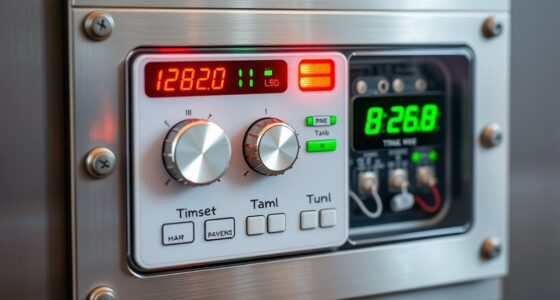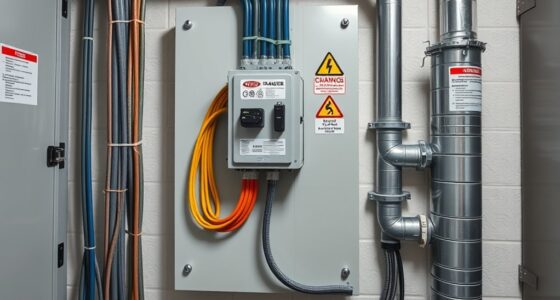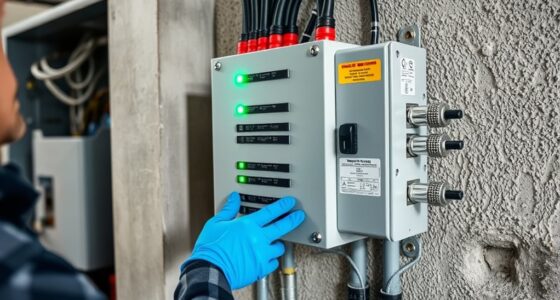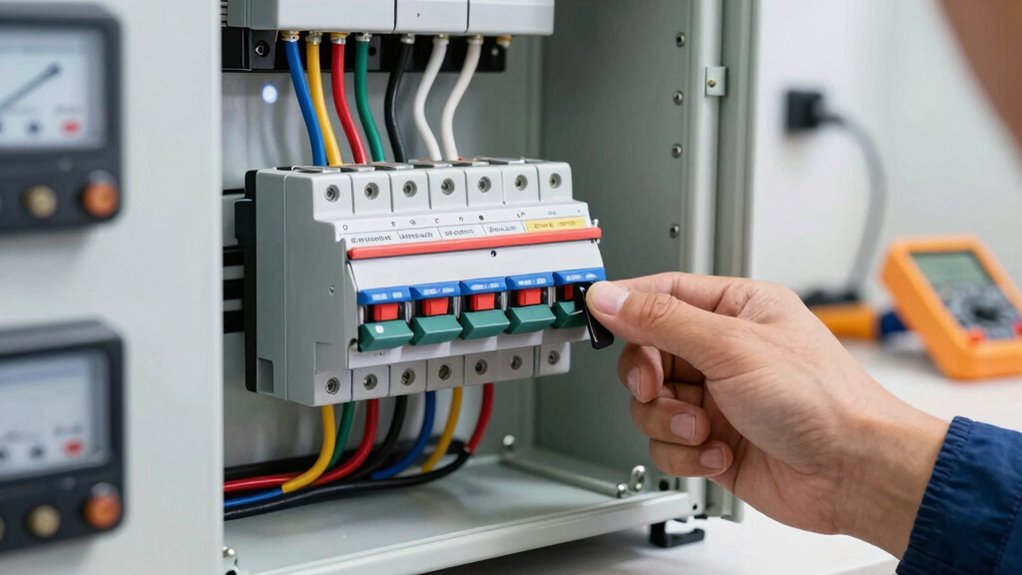

To test your essential circuits through a transfer switch, start by ensuring the generator and switch are compatible and properly grounded. Switch the transfer switch manually or wait for an automatic system to detect an outage. Observe if critical circuits turn on smoothly without hesitation or backfeeding issues. Verify safety features like overload protection are functioning. Regular testing helps maintain system reliability and safety; keep following for detailed steps to perform thorough tests confidently.

Get backup power and energy gear delivered free with Prime
- Fast, free delivery on millions of items
- Prime Video, Amazon Music and more included
- Member-only deals all year
Key Takeaways
- Verify the transfer switch is compatible with your generator’s wattage and output type before testing.
- Manually switch circuits to test proper isolation and correct operation of essential circuits.
- Simulate a power outage (if automatic) or manually switch to generator power and observe circuit activation.
- Check safety features like overload protection and grounding systems during each test.
- Document test results and perform periodic tests following manufacturer guidelines and electrical codes.
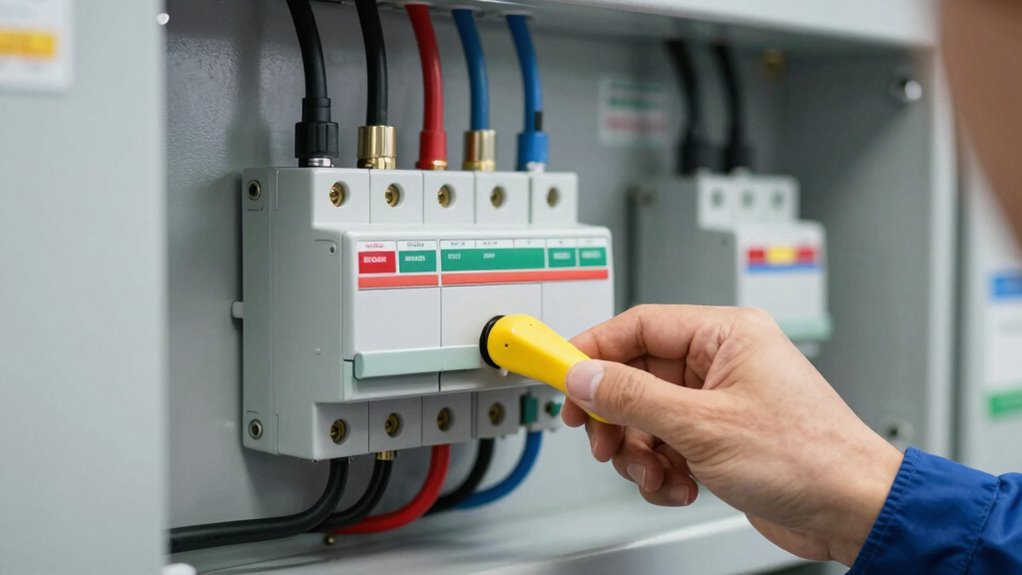
First, verify your generator is compatible with the transfer switch you plan to use. Not all generators work with every transfer switch, so double-check the manufacturer’s specifications. Some transfer switches are designed specifically for particular wattage ratings or types of power output, such as portable generators or standby units. Knowing your generator’s capacity and output type helps you select a compatible transfer switch, avoiding potential electrical mismatches that could lead to damage or unsafe conditions.
Next, familiarize yourself with the different transfer switch types: manual and automatic. Manual transfer switches require you to switch circuits on and off manually when switching to backup power, while automatic transfer switches do this automatically when they detect a power outage. Testing procedures differ slightly for each type. With a manual switch, you’ll turn off the main power, start your generator, and then manually switch the transfer switch to connect your essential circuits to backup power. For automatic switches, you’ll simulate an outage by disconnecting the utility power, and observe whether the switch automatically transfers power to your generator. Confirm that the switch properly isolates your essential circuits from the utility lines to prevent backfeeding, which can be dangerous. Additionally, ensure that your transfer switch is connected to a properly grounded system, which is crucial for safety and effective operation grounding techniques. Regular testing not only verifies proper operation but also helps prevent potential hazards during an actual outage. Proper grounding is a vital part of electrical safety, and understanding the correct methods can greatly reduce risks. It’s also beneficial to familiarize yourself with common electrical code requirements to ensure compliance and safety.
During testing, pay close attention to the operation of your transfer switch. Check that it switches properly between utility power and generator power without hesitation or failure. Observe whether your critical circuits turn on when they should, and turn off when switching back to utility power. It’s wise to verify that the transfer switch’s safety features, such as overload protection and circuit isolation, function correctly. Conduct these tests periodically, especially after installation or maintenance, to ensure ongoing reliability preventative maintenance, ensuring your system remains safe and reliable when needed.
Frequently Asked Questions
Can I Test the Transfer Switch Without a Licensed Electrician?
You can test your transfer switch without a licensed electrician, but it’s not recommended for safety reasons. For proper transfer switch maintenance and to guarantee safe operation, electrical certification is often required. If you’re not certified, consider hiring a professional to perform the test. They know how to safely verify the switch’s functionality, preventing potential hazards and ensuring your system complies with electrical codes.
How Often Should I Perform Transfer Switch Tests?
You should perform transfer switch tests at least once a year to guarantee reliability and safety. According to industry standards, regular testing can prevent up to 80% of electrical failures during power outages. Follow your maintenance schedule and testing procedures meticulously, including inspecting connections and simulating power transfer. Regular testing helps confirm your transfer switch functions correctly when you need it most, reducing potential downtime and safety hazards.
What Safety Precautions Are Necessary During Testing?
During testing, prioritize electrical safety by wearing insulated gloves and eye protection. Before starting test procedures, verify the transfer switch is properly grounded and power is turned off to prevent electrical shock. Follow manufacturer instructions carefully, and never bypass safety features. Keep clear of live circuits, and confirm all connections are secure. If unsure, consult a qualified electrician to avoid accidents and guarantee safe testing conditions.
How Do I Troubleshoot if the Transfer Switch Fails the Test?
Picture your transfer switch as a guardian, standing vigilant over your home’s power. If it fails the test, start by inspecting connections and circuit breakers, ensuring they’re secure and functioning. Use electrical diagnostics to identify faults or worn components. Check for signs of corrosion or damage. If issues persist, consult a professional for thorough maintenance. Regular transfer switch maintenance keeps your system reliable, ensuring your home stays powered during emergencies.
Is It Safe to Test the Transfer Switch During a Power Outage?
Testing your transfer switch during a power outage is generally safe if you follow proper emergency procedures. Before testing, verify your backup power system is functioning correctly and disconnect non-essential circuits. Always wear protective gear and have a fire extinguisher nearby. Confirm that your backup power source is stable, and avoid testing during severe weather. Properly following safety protocols minimizes risks and ensures your transfer switch and backup power system operate safely.
Conclusion
Testing your essential circuits through a transfer switch is quick and straightforward, ensuring your backup power system works when you need it most. Some might worry it’s complicated or dangerous, but with proper precautions and clear instructions, it’s safe and manageable. Regular testing not only keeps your system reliable but also gives you peace of mind during outages. Don’t skip these checks—being prepared is always better than being caught off guard.
Halloween Picks
halloween
As an affiliate, we earn on qualifying purchases.