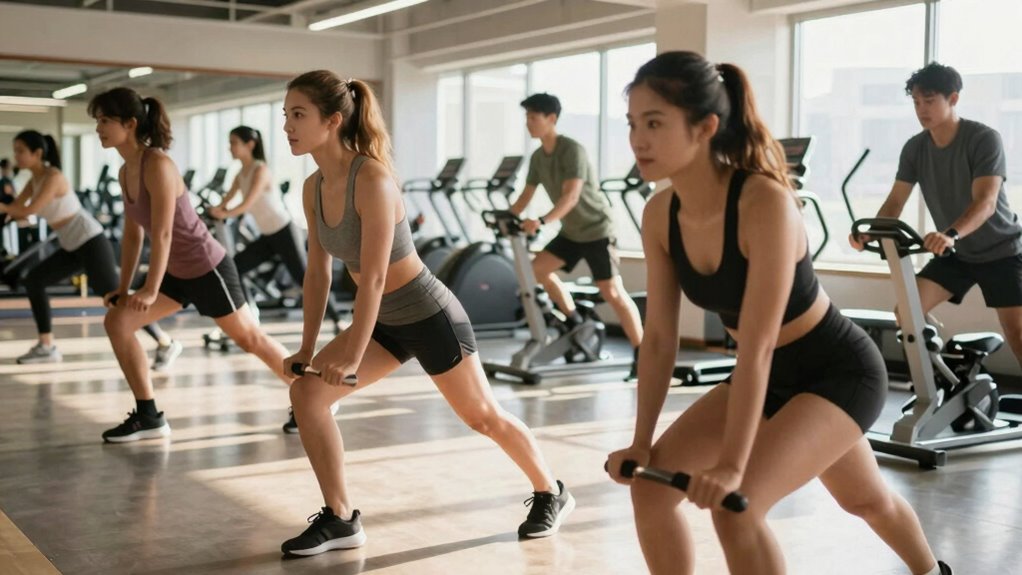
Your hormones fluctuate throughout your menstrual cycle, impacting your energy, strength, and motivation. By aligning your workouts with these natural changes, you can boost performance, recover faster, and avoid frustration. During peak estrogen phases, you might feel stronger and more capable of challenging exercises. When progesterone rises, lighter activities help prevent burnout. Learning to work with your cycle’s rhythm guarantees your fitness routine is both effective and sustainable—discover how to optimize your workouts as you explore further.
Key Takeaways
- Hormonal fluctuations influence energy, strength, and endurance, affecting workout performance throughout the menstrual cycle.
- Timing workouts around hormonal peaks, like ovulation, enhances fat burning, muscle growth, and recovery.
- Recognizing low-energy phases helps tailor activity levels, preventing overtraining and frustration.
- Adjusting exercise types during different phases supports better results and overall well-being.
- Tracking cycle patterns fosters personalized routines, improving consistency and long-term fitness success.
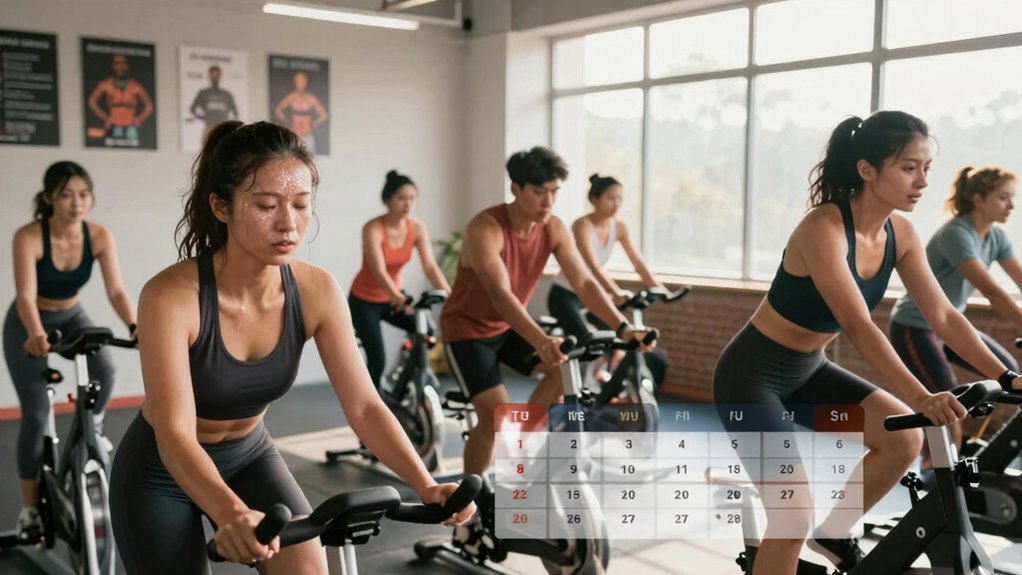
Have you ever noticed how your energy levels and motivation fluctuate throughout the month? It’s a common experience, and understanding why can make a big difference in how you approach your workouts. Your body’s hormonal fluctuations play a significant role in shaping your motivation patterns, influencing not just your mood but also your physical performance. Throughout your menstrual cycle, hormones like estrogen and progesterone ebb and flow, affecting your energy, strength, and endurance. Recognizing these patterns helps you tailor your exercise routine to match your body’s natural rhythms, making workouts more effective and less frustrating.
In the days leading up to your period, you might feel sluggish or less inclined to push yourself. This isn’t just in your head; hormonal fluctuations during this phase often lead to decreased motivation and energy levels. You may notice that heavy or intense workouts feel more taxing, and recovery takes longer. On the other hand, during the follicular phase, right after your period ends, estrogen levels rise, boosting your confidence, energy, and motivation. You might find yourself more *enthusiastic* to try new exercises or increase the intensity of your workouts during this time. Recognizing this pattern allows you to schedule your most challenging sessions when your body is naturally primed for activity.
Peak motivation and performance typically occur in the late follicular to ovulatory phase, when estrogen peaks. Your body is more efficient at burning fat, building muscle, and recovering from workouts. Additionally, understanding your hormonal fluctuations can help you better plan your exercise schedule for optimal results. During the luteal phase, when progesterone dominates, you might experience heightened fatigue, cravings, or mood swings. This can translate into lower motivation and endurance for high-intensity training. Instead of fighting these natural shifts, you can adjust by focusing on lighter activities like yoga, walking, or stretching, which still support your fitness goals without overexerting yourself.
Understanding your monthly exercise cycles isn’t about limiting yourself; it’s about working smarter. By tuning into your body’s hormonal cues, you can optimize your workouts for better results and less frustration. Tracking your cycle and noting how you feel during different phases helps you develop a personalized approach, ensuring you’re not pushing too hard when your motivation dips or underchallenging yourself when you’re at your peak. Recognizing the hormonal influences on your energy and performance can also help you stay consistent and motivated throughout your fitness journey. Ultimately, embracing these natural fluctuations makes your fitness journey more sustainable and aligned with your body’s unique rhythm.

Porch Shield Waterproof Universal Generator Cover 38 x 28 x 30 inch - for Most Generators 5500-15000 Watt, Black
Compatible - More sizes for 5500w -15000w gas generator or inverter generator.
As an affiliate, we earn on qualifying purchases.
Frequently Asked Questions
How Do Monthly Cycles Affect Workout Motivation?
Your monthly cycles can markedly impact your workout motivation. During certain phases, you might feel more energetic, prompting you to push harder, while others can bring fatigue, affecting your drive. Diet adjustments and sleep quality fluctuate with these cycles, influencing your stamina and enthusiasm. Paying attention to these changes helps you tailor your workouts, stay motivated, and optimize your performance throughout the month.
Can Exercise Improve Hormonal Balance During Cycles?
Absolutely, exercise can help improve hormonal balance during cycles. By engaging in regular physical activity, you can help regulate hormonal fluctuations that cause menstrual symptoms like cramps, mood swings, and fatigue. Exercise releases endorphins, which boost your mood and reduce discomfort. It also supports better circulation and hormone regulation, aiding in smoother cycles. Consistent workouts tailored to your cycle phases can make a noticeable difference in managing menstrual symptoms.
Are Certain Exercises Better at Specific Cycle Phases?
Yes, certain exercises are better at specific cycle phases due to hormonal fluctuations. During the follicular phase, you might find high-intensity workouts energizing since estrogen levels rise, boosting your stamina. In the luteal phase, lower energy levels suggest focusing on gentler activities like yoga or stretching. Adjusting your exercise timing around these hormonal shifts helps optimize your performance and supports hormonal balance throughout your cycle.
How Do Cycle Disruptions Impact Fitness Progress?
Cycle disruptions can hinder your fitness progress by throwing off hormonal fluctuations, which influence energy, recovery, and muscle growth. When your cycle is irregular, your body might not respond ideally to your workout routine. To counter this, you should make nutritional adjustments, like increasing protein or iron intake, to support your changing needs. Staying consistent and attentive to these shifts helps maintain progress despite cycle disruptions.
What Are the Signs of Overtraining During Cycles?
You might notice signs of overtraining during cycles through muscle fatigue that persists even after rest and energy dips that make daily activities harder. If you feel unusually sore, experience decreased performance, or struggle with motivation, these are red flags. Overtraining signals your body needs a break, so listen to these signs, cut back on intensity, and prioritize recovery to avoid setbacks and support your progress.

GenArmor Generator Covers While Running, 100% Waterproof Heavy Duty Tarps Generator Tent, Portable Outdoor Generator Enclosure for Most 4000w~13000w Generators, Black, Standard
100% Waterproof Protection: A patented innovation from GenArmor independent design lab, ensuring the safety of your generator covers...
As an affiliate, we earn on qualifying purchases.
Conclusion
Think of your monthly exercise cycle as the moon’s phases—each one shining with its own energy and purpose. Embrace these rhythms, letting them guide your strength and resilience. By honoring your cycle, you align with a natural ebb and flow, transforming your fitness journey into a dance with life itself. When you understand and respect these cycles, you release a power within—an unstoppable tide that carries you toward your best self.
Porch Shield Waterproof Universal Generator Cover 32 x 24 x 24 inch - for Most Generators 5000-10000 Watt, Black
Compatible - More sizes for 5000w -10000w gas generator or inverter generator.
As an affiliate, we earn on qualifying purchases.

Generac Guardian 14kW Home Standby Generator with 100 Amp Transfer Switch - Automatic Whole House Backup Power for Storms, Emergencies, and Outages, WiFi Enabled, Runs on Natural Gas or Liquid Propane
Remote Monitoring Anywhere: With Generac 7224 14kW Mobile Link Wi-Fi connectivity, effortlessly track generator performance from anywhere. Stay...
As an affiliate, we earn on qualifying purchases.