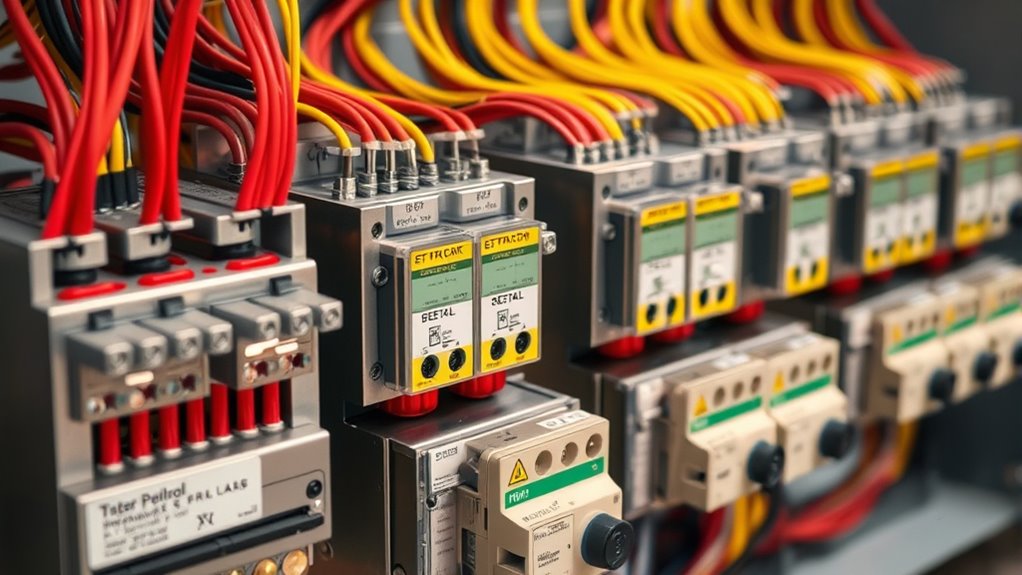

To choose between interlock kits and transfer switches, consider your backup power needs, safety, and budget. Interlock kits are simpler and more affordable, making them ideal for basic needs, while transfer switches offer safer, code-compliant solutions for whole-home backup, especially in larger or complex systems. Proper installation is key, so weigh safety, costs, and long-term maintenance. Keep exploring to discover which option best fits your home and backup goals.
Key Takeaways
- Assess your home’s power needs and outage frequency to determine whether an interlock kit or transfer switch best fits your backup goals.
- Understand safety, compliance, and installation complexity differences, choosing options that match your technical skill level and budget.
- Interlock kits are cost-effective for simple setups; transfer switches offer seamless, code-compliant switching for larger or more complex homes.
- Consider long-term maintenance, with transfer switches often requiring professional servicing, while interlock kits are simpler to manage.
- Decide between DIY installation and professional help, ensuring adherence to electrical codes for safe, reliable backup power.

Porch Shield Generator Cover for 5000-10000W, 32 x 24 x 24 inch, Black
- Compatible - More sizes for 5000w -10000w gas...
- Upgrade Material - Made of 600D polyester fabric...
- Tear Resistant & Waterproof - The high-level double...
As an affiliate, we earn on qualifying purchases.
Understanding the Core Differences Between Interlock Kits and Transfer Switches

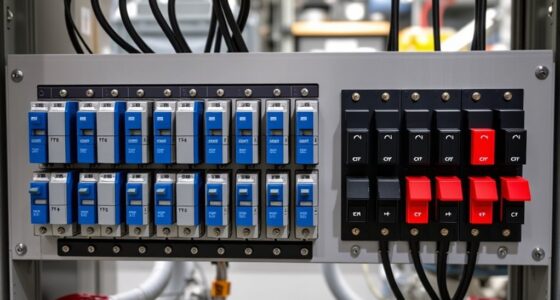
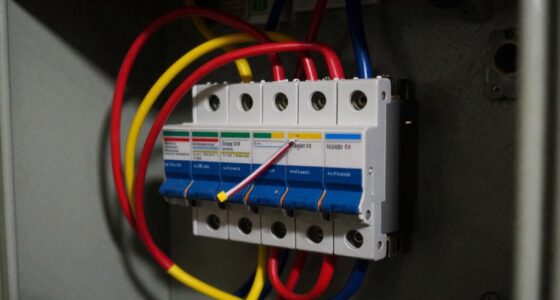
Understanding the core differences between interlock kits and transfer switches is essential for making the right choice for your backup power needs. An interlock kit is a simple, cost-effective device that prevents your generator and utility from running simultaneously, ensuring safe power transfer. It connects directly to your main panel and usually doesn’t require a separate power source. Transfer switches, on the other hand, are more advanced devices that switch your power source from utility to generator automatically or manually. They meet higher safety standards, providing a secure, code-compliant connection. While transfer switches tend to be more expensive and complex, they offer superior safety and reliability. Knowing these fundamental differences helps you assess which solution aligns with your safety standards and power source requirements.
Porch Shield Generator Cover for 5500-15000W, 38 x 28 x 30 inch, Black
- Compatible - More sizes for 5500w -15000w gas...
- Upgrade Material - Made of 600D polyester fabric...
- Tear Resistant & Waterproof - The high-level double...
As an affiliate, we earn on qualifying purchases.
Assessing Your Home’s Power Needs and Backup Power Goals
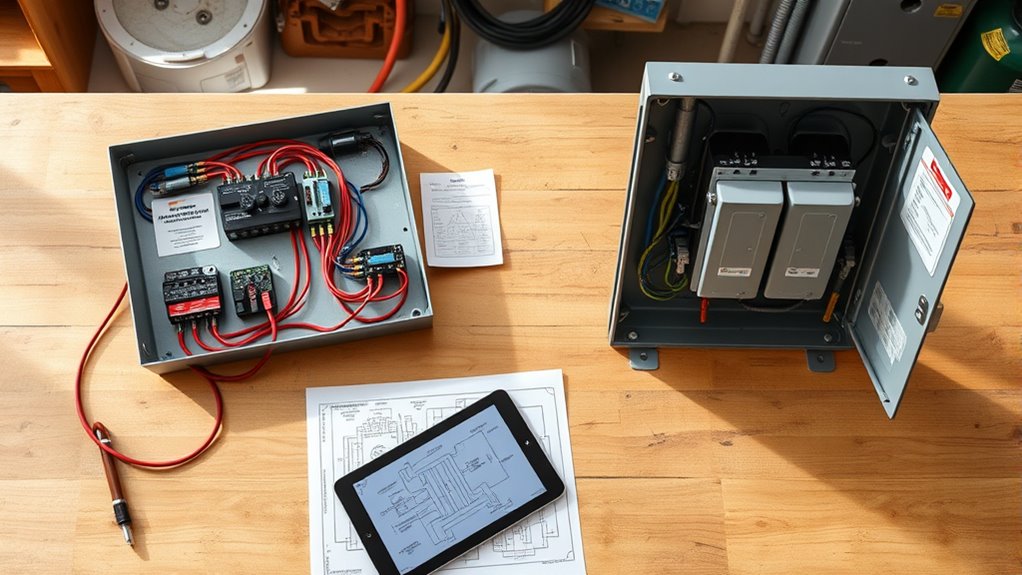
Choosing between interlock kits and transfer switches depends largely on your home’s power demands and your backup power objectives. First, assess your generator capacity—can it handle your essential appliances? Consider your power outage frequency—do outages happen often or rarely? Your goals matter: do you want to power just essentials or your entire home? This will influence your choice. Additionally, understanding grocery savings strategies can help you allocate funds toward a more reliable backup system if needed.

Jackery Explorer 1000 v2 Portable Power Station,1070Wh,1500W
- Powerful yet Compact: Boasting a 1,500W AC output...
- One Hour Fast Charging: Charge your Explorer 1000 v2...
- 10 Year Lifespan: The Explorer 1000 v2 portable...
As an affiliate, we earn on qualifying purchases.
Installation Considerations: Safety, Cost, and Compliance
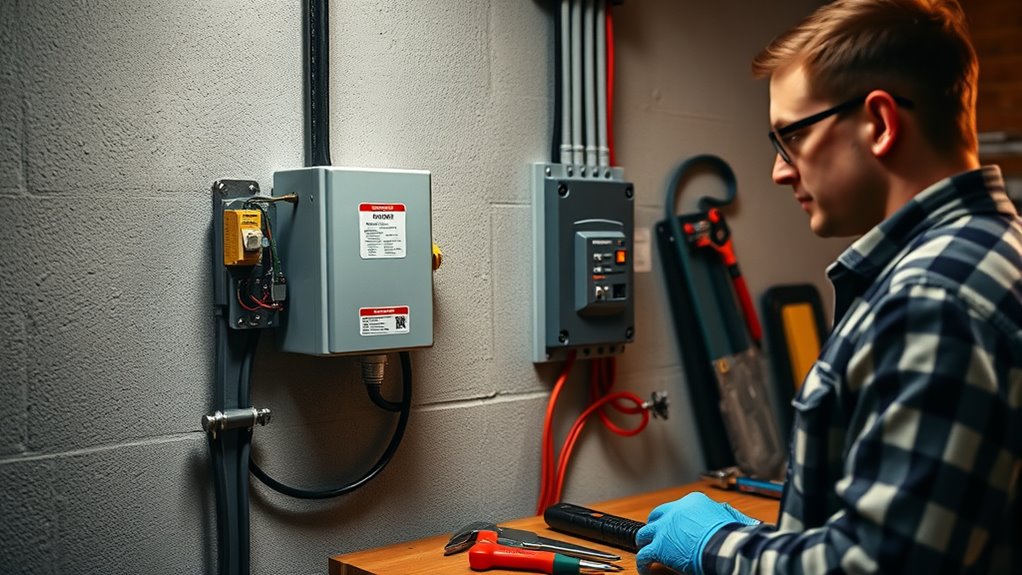
When installing interlock kits or transfer switches, prioritizing safety is vital to prevent electrical hazards and guarantee proper operation. Always follow electrical codes to confirm your setup is safe and compliant. Using portable generators requires careful consideration of grounding and proper connection to avoid back-feeding or damage. Cost varies between options—interlock kits are usually more affordable, but transfer switches may require professional installation, increasing expenses. Ensuring compliance with electrical codes helps prevent violations and potential fines. Proper installation also involves checking for suitable circuits and avoiding overloading. Remember, safety isn’t just about avoiding shocks; it also safeguards your home and the integrity of your electrical system. Incorporating knowledge of Bedroom design principles can help ensure the setup blends seamlessly with your home’s overall safety and aesthetic considerations. Investing in correct installation minimizes risks and ensures reliable backup power when you need it most.

Jackery Solar Generator 1000 v2 and 200W Solar Panel,1070Wh,1500W AC
- Powerful yet Compact: Boasting a 1,500W AC output...
- One Hour Fast Charging: Charge your Explorer 1000 v2...
- 10 Year Lifespan: The Explorer 1000 v2 portable...
As an affiliate, we earn on qualifying purchases.
Evaluating Benefits and Limitations for Your Specific Situation
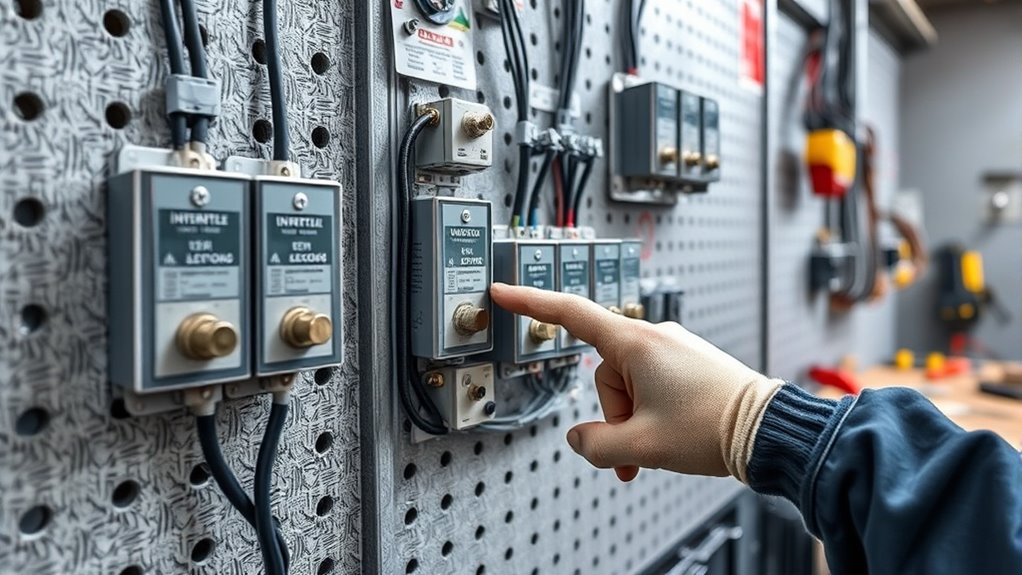
Evaluating the benefits and limitations of interlock kits and transfer switches requires considering your specific power needs, budget, and available installation options. Start with a cost comparison: interlock kits are generally more affordable upfront, but transfer switches may save money long-term through easier maintenance. Maintenance requirements differ; transfer switches often need professional servicing, while interlock kits are simpler but may require periodic checks to ensure safety. Your power needs influence your choice—if you have a larger home or complex setup, a transfer switch might offer more reliable, seamless switching. Conversely, if budget constraints are tight and your setup is straightforward, an interlock kit could suffice. Carefully weigh these factors to determine which solution aligns best with your situation. Additionally, understanding the Maintenance requirements of each option can help prevent potential issues and extend the lifespan of your system.
Making an Informed Decision: Which Solution Fits Best for Your Home
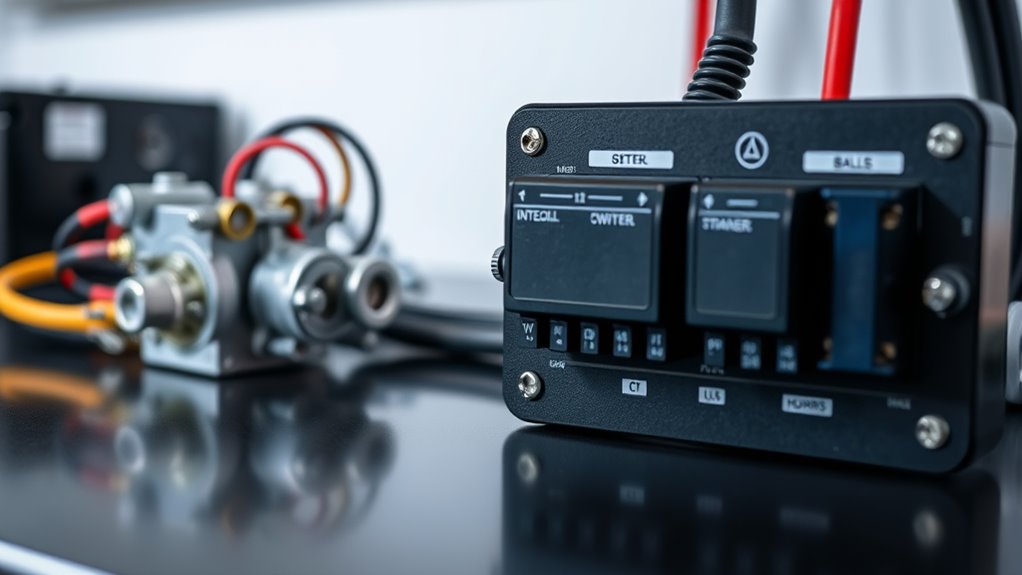
Deciding between an interlock kit and a transfer switch depends on your home’s specific power demands, budget, and installation options. To choose the best solution, consider these factors:
- Generator maintenance: Will you perform regular upkeep easily with one option over the other?
- Emergency preparedness: How quickly and safely can each solution restore power during outages?
- Installation complexity: Do you prefer a simple DIY setup or professional installation?
- Cost considerations: Which option fits your budget without compromising safety or reliability?
Additionally, understanding regulatory compliance requirements is essential to ensure your chosen system meets local codes and standards.
Frequently Asked Questions
How Long Does Installation Typically Take for Each System Type?
The installation timeline for interlock kits usually takes a few hours, thanks to their simplicity and straightforward setup. Transfer switches, however, tend to require more time—often a full day or more—because of their greater system complexity and the need for more extensive wiring. Your specific timeline depends on factors like your home’s electrical setup and whether you’re doing a DIY or hiring a professional electrician.
Are There Any Ongoing Maintenance Requirements for Interlock Kits and Transfer Switches?
You’ll need to perform regular maintenance on both interlock kits and transfer switches. Maintenance frequency typically involves checking safety inspections annually or after severe weather. During these inspections, you should verify that all components are functioning properly, look for signs of wear or corrosion, and ensure connections remain secure. Regular upkeep helps prevent malfunctions, guarantees safety, and extends the lifespan of your system.
How Do Local Electrical Codes Influence Installation Choices?
Local electrical codes heavily influence your installation choices by enforcing code compliance and permit requirements. You must follow these regulations to guarantee safety and legality, which might dictate specific methods for installing interlock kits or transfer switches. Failing to meet code standards could result in fines or the need for costly modifications. Always check with your local authorities before starting, ensuring your setup adheres to all relevant electrical codes and permit requirements.
Can These Systems Be Upgraded or Expanded Later?
Yes, both interlock kits and transfer switches can often be upgraded or expanded later. When selecting your system, consider scalability and upgrade compatibility to guarantee future needs are met. You can add additional circuits or capacity as your power requirements grow. Planning ahead makes upgrades smoother, so choose options designed for easy expansion. This way, you avoid costly replacements and maintain reliable backup power whenever you need it.
What Are the Common Troubleshooting Issues After Installation?
After installation, you might face troubleshooting issues like grounding problems or power surges. Check that all connections are secure and properly grounded to prevent electrical faults. Power surges can damage the system; installing surge protectors helps mitigate this risk. Regularly inspect your setup for loose wires or corrosion, and verify your transfer switch or interlock kit is functioning correctly to avoid operational issues.
Conclusion
Think of choosing between an interlock kit and a transfer switch as selecting the right key for your home’s power castle. Each has its own charm and purpose, but only one will fit perfectly to keep your fortress safe and powered. By understanding your needs and the ins and outs, you’ll find the key that grants you control and peace of mind during storms. Make your choice wisely, and your home’s power will always be at your command.