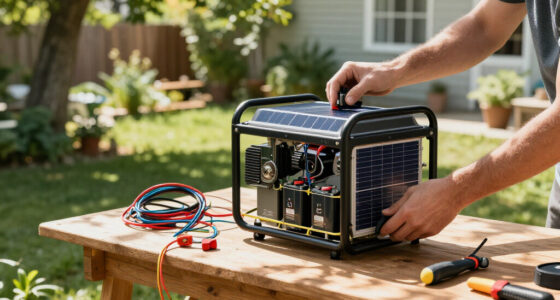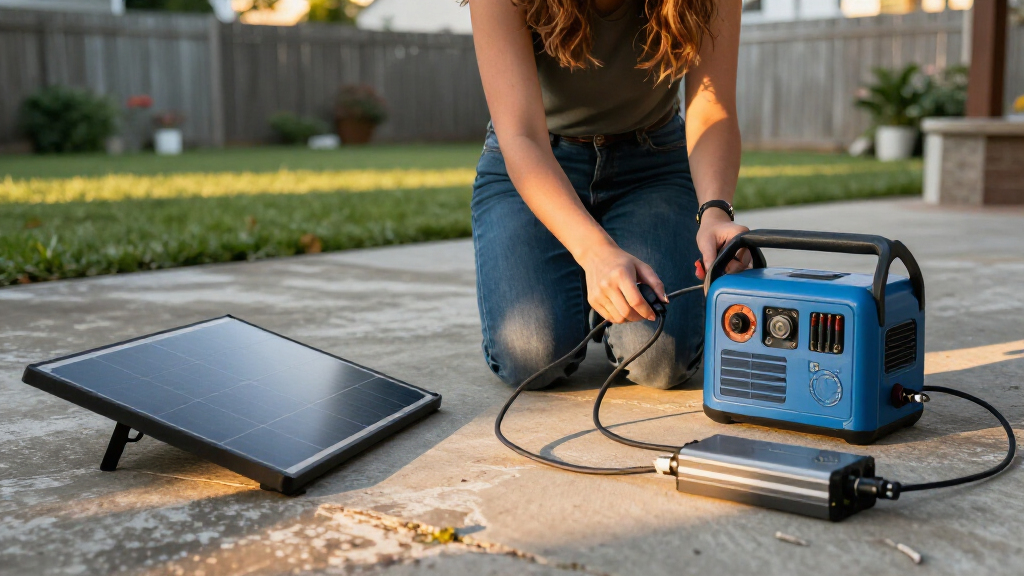
Solar panel kits for home backup vary widely in how much power they can deliver and store, so the right choice depends on the loads you need to keep running. My best overall pick is the ECO-WORTHY 10kW Off-Grid Solar Panel Kit with 16kWh Battery, which pairs substantial generation capacity with a middle-ground storage size. The 32.2kWh battery model stands out for households seeking longer backup, while the 1170W kit is a smaller-scale option for essential circuits. The main tradeoffs are upfront system size, battery runtime, inverter capability, and the space and electrical work a setup may require. Read on for the full comparison and guidance on choosing a kit that fits your home’s backup priorities.

Get backup power and energy gear delivered free with Prime
- Fast, free delivery on millions of items
- Prime Video, Amazon Music and more included
- Member-only deals all year
Key Takeaways
- The 16kWh 10kW kit is my best overall balance: it combines a high-output array with more storage than the smaller 9.36kWh-output system, without reaching the 32.2kWh model’s larger battery scale.
- Battery capacity separates the largest 10kW options: the 16kWh and 32.2kWh systems suit different runtime goals, while the 9.36kWh daily-output kit emphasizes generation rather than a stated large battery bank.
- Split-phase capability matters for whole-home ambitions: the 10kW split-phase kit is more aligned with homes that need 120/240V support than compact 24V or 48V systems.
- Smaller systems are better matched to selected loads: the 1170W and 1200W kits may suit essential backup plans, but their scale is not comparable to the 5kW and 10kW choices.
- System labels are not a runtime guarantee: panel watts, inverter rating, battery storage, sunlight, and household demand all shape real backup performance; compare the complete system rather than one headline number.
| ECO-WORTHY 10kW Off-Grid Solar Panel Kit with 32.2kWh Battery Storage |  | Best Overall for High-Capacity Home Backup | Solar panels: 18 × 590W; 10,620W total | Battery storage: 32.2kWh total | Battery configuration: 2 × 48V, 314Ah LiFePO₄ batteries | VIEW LATEST PRICE | See Our Full Breakdown |
| ECO-WORTHY 10 kW Off-Grid Solar System Kit with 9.36 kWh Daily Output |  | Best for Flexible System Expansion | Solar panels: 12 × 195W; 2,340W total | Estimated daily generation: 9.36kWh under four hours of full sunshine | Battery storage: 10.24kWh total | VIEW LATEST PRICE | See Our Full Breakdown |
| ECO-WORTHY 1170W Off-Grid Solar Kit with Batteries and 3000W Inverter Charger |  | Best Compact Backup for Cabins and Mobile Setups | Solar panels: 6 × 195W; 1,170W total | Estimated daily generation: Up to 4.68kWh under four peak-sun hours | Batteries: 2 × 12.8V, 314Ah LiFePO₄ | VIEW LATEST PRICE | See Our Full Breakdown |
| ECO-WORTHY 10 kW Off-Grid Solar System Kit with Split-Phase Inverter, Batteries, and Solar Panels |  | Best for Balanced Solar and Storage Capacity | Solar panels: 9 × 590W; 5,310W total | Estimated daily generation: Up to 21.24kWh under optimal conditions | Battery storage: 20.48kWh total | VIEW LATEST PRICE | See Our Full Breakdown |
| ECO-WORTHY 10kW Solar Panel and LiFePO4 Home Backup System |  | Best for Long-Life Battery Monitoring and Protection | Solar panels: 6 × 590W | Panel type: N-type bifacial monocrystalline | Battery configuration: 2 × 48V, 314Ah LiFePO₄ batteries | VIEW LATEST PRICE | See Our Full Breakdown |
| ECO-WORTHY 10kW Off-Grid Solar Panel Kit with 16kWh Battery |  | Best for High-Power 120V/240V Backup | Continuous inverter output: 10,000W | Peak inverter output: 20,000W | Solar array: 5 × 590W panels; 2,950W total | VIEW LATEST PRICE | See Our Full Breakdown |
| ECO-WORTHY 5 kW Off-Grid Solar System Kit with 2,340 W Panels and LiFePO4 Battery |  | Best for DIY Off-Grid Home Essentials | Solar panels: 12 × 195W; 2,340W total | Panel type: N-type monocrystalline | Inverter: 48V, 5,000W off-grid | VIEW LATEST PRICE | See Our Full Breakdown |
| ECO-WORTHY 1200W Solar Panel Kit with 48V 100Ah LiFePO4 Battery and 3500W Inverter |  | Best Compact 48V Backup Kit | System power: 1,200W | Solar panels: 6 × 195W N-type bifacial | Stated daily generation: About 4.68kWh under four hours of full sun | VIEW LATEST PRICE | See Our Full Breakdown |
| 3000W 24V Off-Grid Solar Power System Kit with 1440W Solar Panels, 5.12kWh Battery and 6000W Peak Inverter |  | Best for Essential-Load Backup on a 24V System | Solar array: 12 × 120W; 1,440W total | Battery bank: 5.12kWh LiFePO₄ | Battery configuration: 4 × 12.8V, 100Ah batteries | VIEW LATEST PRICE | See Our Full Breakdown |
| solar panel kits for home backup | AC output | Solar panels | Battery configuration | Inverter output |
|---|---|---|---|---|
| ECO-WORTHY 10kW Off-Grid Solar | 120V/240V split phase | 18 × 590W; 10,620W total | 2 × 48V, 314Ah LiFePO₄ batteries | 10,000W continuous; 20,000W peak |
| ECO-WORTHY 10 kW Off-Grid Sola | 120V/240V | 12 × 195W; 2,340W total | 2 × 48V, 100Ah lithium batteries | 10,000W maximum continuous |
| ECO-WORTHY 1170W Off-Grid Sola | — | 6 × 195W; 1,170W total | — | 3,000W pure sine wave; 6,000W surge |
| ECO-WORTHY 10 kW Off-Grid Sola | 120V or 120V/240V split phase | 9 × 590W; 5,310W total | 4 × 48V, 100Ah LiFePO₄ batteries | 10,000W continuous; 20,000W peak |
| ECO-WORTHY 10kW Solar Panel an | 120V and 240V | 6 × 590W | 2 × 48V, 314Ah LiFePO₄ batteries | — |
| ECO-WORTHY 10kW Off-Grid Solar | 120V or 120V/240V split phase | — | — | — |
| ECO-WORTHY 5 kW Off-Grid Solar | 120V | 12 × 195W; 2,340W total | — | — |
| ECO-WORTHY 1200W Solar Panel K | 110/120V | 6 × 195W N-type bifacial | — | — |
| 3000W 24V Off-Grid Solar Power | 120V pure sine wave | — | 4 × 12.8V, 100Ah batteries | 3,000W continuous; 6,000W peak for 1 second |
More Details on Our Top Picks
ECO-WORTHY 10kW Off-Grid Solar Panel Kit with 32.2kWh Battery Storage
I’d rank this first for a household that wants substantial stored energy as well as the ability to run larger 120V and 240V loads. Its 10,620W panel array and 32.2kWh of LiFePO₄ storage give it a stronger combination of generation and reserve than the ECO-WORTHY 10 kW kit with 20.48 kWh storage. The inverter’s 20,000W peak output adds headroom for brief startup surges, while Wi-Fi, Bluetooth, display, and PC monitoring offer several ways to check system status. The tradeoff is scale: 18 large, nearly 70-pound panels and two substantial batteries call for considerable space and planning. Professional installation is recommended, so this is less suitable for a quick DIY backup setup.
Pros:- 32.2kWh of LiFePO₄ storage provides a large reserve for extended backup needs.
- 10,620W of solar capacity pairs strong generation potential with the included battery bank.
- 120V/240V split-phase output and 20,000W peak capacity accommodate larger loads and startup surges.
- Battery monitoring is available through a display, Bluetooth, Wi-Fi, and PC connectivity.
Cons:- The 18-panel array and batteries require substantial space and a carefully planned installation.
- Professional installation is recommended, adding complexity for buyers who want a DIY system.
- Each panel weighs 69.9 pounds, making delivery, handling, and mounting a significant job.
Best for: Homeowners seeking substantial overnight or outage storage and backup for a mix of 120V and 240V household loads, with room for a large array and professional installation.
Not ideal for: Renters, small-property owners, and DIY beginners who lack installation space or want a compact system they can set up without professional help.
- Solar panels:18 × 590W; 10,620W total
- Battery storage:32.2kWh total
- Battery configuration:2 × 48V, 314Ah LiFePO₄ batteries
- Inverter output:10,000W continuous; 20,000W peak
- AC output:120V/240V split phase
- Solar panel efficiency:25%
- Battery monitoring:Display, Bluetooth, Wi-Fi, and PC connectivity
- Installation:Professional installation recommended
Our verdict“Choose this kit for high-capacity home backup when storage and solar input matter more than a compact, simple installation.”
ECO-WORTHY 10 kW Off-Grid Solar System Kit with 9.36 kWh Daily Output
I’d choose this kit when the ability to adjust power flow or expand inverter capacity matters more than maximizing the included panel array. Its four charging modes let owners prioritize solar, mains, or a combination, and the inverter can be paralleled with up to five additional units. That makes it more adaptable than the ECO-WORTHY 1170W kit, which is a smaller 12V-focused package rather than a platform built around 120V/240V household output. Here, though, the solar input is only 2,340W, and the 9.36kWh daily figure assumes four hours of full sunshine; real generation varies with conditions. The 10.24kWh battery bank offers useful reserve, but buyers should not mistake the inverter’s 10,000W rating for equally substantial solar charging capacity. Professional installation is recommended.
Pros:- Four charging modes provide flexibility to prioritize solar, mains, or hybrid charging.
- The 10,000W inverter supplies 120V/240V output for a broad range of household circuits.
- Inverters can be paralleled up to six units total for expanded system output.
- Includes 10.24kWh of battery storage, panels, mounting brackets, and accessories.
Cons:- The included 2,340W array is modest beside the 10,000W inverter rating.
- The stated 9.36kWh daily generation depends on four hours of full sunshine.
- Professional installation is recommended, which may complicate a DIY project.
Best for: Cabin, farm, or home owners who want 120V/240V backup, selectable charging priorities, and the option to expand inverter capacity later.
Not ideal for: Households that need a large included solar array or predictable daily energy regardless of sunshine; the 2,340W panel capacity limits solar input.
- Solar panels:12 × 195W; 2,340W total
- Estimated daily generation:9.36kWh under four hours of full sunshine
- Battery storage:10.24kWh total
- Battery configuration:2 × 48V, 100Ah lithium batteries
- Inverter output:10,000W maximum continuous
- AC output:120V/240V
- Charging modes:Only Solar, Mains Priority, Solar Priority, and Mains & Solar hybrid
- Parallel inverter support:Up to 6 units total
Our verdict“Pick this kit for flexible charging controls and future inverter expansion, not for the largest included solar array.”
ECO-WORTHY 1170W Off-Grid Solar Kit with Batteries and 3000W Inverter Charger
This is the most modest system in this group, and that is precisely its role: a smaller, self-contained option for a cabin, trailer, or limited backup load rather than whole-home coverage. The 1,170W array, two 12.8V batteries, and 3,000W pure-sine inverter make a more approachable package than the 10kW ECO-WORTHY kits, but its 12V battery configuration is a real constraint for home circuits and larger equipment. UPS switching in 30 milliseconds may help keep compatible loads supplied during an interruption, while the 6,000W surge rating allows short startup bursts. The listed battery energy is about 4.02kWh per battery, so buyers should confirm the configuration and usable capacity for their intended setup. With up to 4.68kWh daily generation under four peak-sun hours, weather and available sunlight remain limiting factors.
Pros:- Includes panels, batteries, inverter charger, MPPT controller, and cables in one package.
- Pure-sine output and 6,000W surge capacity support compatible loads with brief startup demands.
- 30ms UPS switching can help maintain power to supported equipment during a supply interruption.
- Battery displays and Bluetooth-enabled charge-controller monitoring provide system status.
Cons:- The 12V battery configuration is less suited to typical whole-home backup or larger household circuits.
- A 1,170W array and approximately 8.04kWh stated battery energy are limited compared with the 10kW kits.
- The daily generation estimate assumes four peak-sun hours and will vary with conditions.
Best for: Cabin owners, RV users, and households seeking backup for a few modest loads who can work with a 12V battery system.
Not ideal for: Homeowners aiming to back up major household circuits or 240V appliances; this kit’s 12V configuration and 3,000W inverter are much smaller than the 10kW systems.
- Solar panels:6 × 195W; 1,170W total
- Estimated daily generation:Up to 4.68kWh under four peak-sun hours
- Batteries:2 × 12.8V, 314Ah LiFePO₄
- Stated battery energy:Approximately 4.02kWh per battery
- Inverter output:3,000W pure sine wave; 6,000W surge
- Charge controller:60A MPPT with Bluetooth
- UPS switching time:30ms
- Battery charging current:Up to 100A
Our verdict“Choose this smaller kit for a cabin or mobile setup with modest loads, but skip it for broad household backup.”
ECO-WORTHY 10 kW Off-Grid Solar System Kit with Split-Phase Inverter, Batteries, and Solar Panels
I’d put this kit ahead of smaller packages when a buyer wants serious home backup but does not need the 32.2kWh reserve of the ECO-WORTHY 10kW kit with 18 panels. Its 20.48kWh battery bank is substantial, while nine 590W bifacial panels provide 5,310W of PV capacity. That balance makes it a middle ground: more included solar capacity than the 2,340W ECO-WORTHY kit, but less panel generation and storage than the top-ranked system. The 10kW inverter supports 120V or 120/240V split phase and up to 20,000W peak output, which suits larger household loads. Bifacial gains depend on the mounting surface and light reaching the rear of the panels, so I would not treat the stated potential increase as guaranteed. Freight pallet delivery and professional installation also demand planning.
Pros:- 20.48kWh of LiFePO₄ storage supports a substantial home backup reserve.
- The 10,000W inverter offers 120V/240V split-phase output and 20,000W peak power.
- Nine bifacial 590W panels provide 5,310W of solar capacity.
- Dual MPPT controllers and battery communication support system coordination and monitoring.
Cons:- The 5,310W array is smaller than the 10,620W array in the top-ranked ECO-WORTHY kit.
- Bifacial output gains depend on installation conditions and may not reach the stated potential.
- Freight pallet delivery and professional installation make setup more involved.
Best for: Homeowners who need split-phase backup and a sizeable battery reserve, but prefer a smaller array and less storage than the 32.2kWh system.
Not ideal for: Buyers with limited installation space, no access for freight delivery, or a need for the largest possible solar array and battery reserve.
- Solar panels:9 × 590W; 5,310W total
- Estimated daily generation:Up to 21.24kWh under optimal conditions
- Battery storage:20.48kWh total
- Battery configuration:4 × 48V, 100Ah LiFePO₄ batteries
- Inverter output:10,000W continuous; 20,000W peak
- AC output:120V or 120V/240V split phase
- Solar panel efficiency:23.23%
- Delivery and installation:Freight pallet shipment; professional installation recommended
Our verdict“Choose this system for substantial 120V/240V backup with a more moderate array and storage balance than the largest kit.”
ECO-WORTHY 10kW Solar Panel and LiFePO4 Home Backup System
This model stands out for pairing a 10kW inverter with two high-capacity batteries and a set of six large panels, while putting extra emphasis on battery protection and monitoring. The listed 9,000+ cycle life at 80% depth of discharge, active-balancing BMS, circuit breaker, and aerosol fire suppression are useful distinctions for buyers focused on long-term battery management. Compared with the ECO-WORTHY 10kW kit with 20.48kWh of storage, this system’s battery capacity is specified as 314Ah per 48V battery rather than as a total kWh figure, so buyers should verify the exact usable energy before comparing runtime. Six panels also provide less solar input than the nine-panel system. Pallet delivery and substantial installation space remain part of the commitment, despite the product’s plug-and-play description.
Pros:- Two 48V, 314Ah LiFePO₄ batteries include active balancing and multiple safety features.
- Battery status can be monitored through Bluetooth, Wi-Fi, an app, and an LCD screen.
- The inverter supports 120V and 240V output for varied backup circuits.
- Battery communication supports RS485, CAN, and RS232 protocols.
Cons:- The supplied data does not state total battery energy in kWh, making direct runtime comparisons harder.
- Six panels provide less solar capacity than the nine-panel ECO-WORTHY 10kW system.
- Pallet truck delivery and substantial installation space may not suit smaller properties.
Best for: Homeowners who prioritize battery monitoring, built-in protection features, and 120V/240V inverter output, and who can confirm capacity and arrange a suitable installation.
Not ideal for: Buyers who need a clearly stated total storage figure, a large included solar array, or a compact system that avoids freight delivery and installation planning.
- Solar panels:6 × 590W
- Panel type:N-type bifacial monocrystalline
- Battery configuration:2 × 48V, 314Ah LiFePO₄ batteries
- Battery cycle life:9,000+ cycles at 80% DoD
- Inverter power:10kW
- AC output:120V and 240V
- Battery monitoring:Bluetooth, Wi-Fi, app, and LCD screen
- Battery safety features:Active-balancing BMS, circuit breaker, aerosol fire suppression, and buzzer alarm
Our verdict“Pick this kit for battery monitoring and built-in protection features, but verify usable storage before choosing it over systems with stated kWh totals.”
ECO-WORTHY 10kW Off-Grid Solar Panel Kit with 16kWh Battery
For buyers who need to run a mix of 120V and 240V loads during an outage, this kit’s 10kW split-phase inverter is its defining advantage. The 16.076kWh LiFePO₄ battery gives it more stored energy than the ECO-WORTHY 5 kW Off-Grid Solar System Kit, while expansion support leaves room to grow the battery bank. Its five bifacial panels total 2,950W; the stated up to 11.8kWh daily generation depends on optimal conditions, so the large inverter should not be mistaken for a large solar array. Compared with the smaller ECO-WORTHY 1200W kit, this is better suited to broader household backup, but it also brings more installation complexity. Freight delivery and strongly recommended professional installation make this a serious system project, not a simple plug-in backup.
Pros:- 10kW continuous split-phase inverter supports 120V and 240V loads.
- 16.076kWh LiFePO₄ battery provides substantial stored energy and supports expansion.
- Dual-glass bifacial panels may increase production in suitable installation conditions.
- Inverter supports battery-free operation and multiple battery types.
Cons:- The 2,950W panel array may not replenish the large battery quickly, and stated daily generation assumes optimal conditions.
- Professional installation is strongly recommended, adding planning and labor requirements.
- Pallet freight delivery is less convenient than shipment of a compact backup kit.
Best for: Homeowners planning an off-grid or outage-backup system for both 120V essentials and compatible 240V loads, with room for battery expansion.
Not ideal for: Renters, budget-conscious buyers seeking a ready-to-use backup, or anyone who cannot arrange freight delivery and professional installation.
- Continuous inverter output:10,000W
- Peak inverter output:20,000W
- Solar array:5 × 590W panels; 2,950W total
- Battery:48V 314Ah LiFePO₄; 16.076kWh
- AC output:120V or 120V/240V split phase
- Panel type:N-type monocrystalline, bifacial dual-glass
- Battery expansion:Up to 15 units in parallel
- Certifications:TÜV and CSA
Our verdict“Choose this kit if you need expandable battery storage and 120V/240V output and can handle a substantial installation project.”
ECO-WORTHY 5 kW Off-Grid Solar System Kit with 2,340 W Panels and LiFePO4 Battery
This kit earns its place for buyers who want a complete, DIY-oriented off-grid system rather than a large, professionally installed setup. It bundles twelve panels, a 5,000W inverter, a 51.2V 100Ah LiFePO₄ battery, cables, and mounting brackets, reducing the number of core components to source separately. The 2,340W array and 120V output suit essential household circuits better than the 10kW ECO-WORTHY kit, which adds 240V split-phase capability and much more storage but also requires a more involved installation. This model is specified for off-grid use, so buyers should not assume it will connect to a home’s utility service without additional compatible equipment. Its included mounting hardware helps, but installing twelve panels and wiring a battery system still takes planning and electrical skill.
Pros:- Includes twelve panels, inverter, LiFePO₄ battery, cables, and Z brackets.
- 5,000W inverter provides 120V AC for compatible household essentials.
- Panel mounting options include roof, ground, or shed installations.
- Deep-cycle LiFePO₄ storage is included in the kit.
Cons:- 120V output does not provide the split-phase 240V capability of the ECO-WORTHY 10kW kit.
- Off-grid design may require additional equipment for other system arrangements.
- Panel mounting and wiring remain the buyer’s responsibility.
Best for: DIY-minded cabin owners or homeowners powering 120V essentials who want panels, battery, inverter, cables, and brackets in one off-grid package.
Not ideal for: Households needing 240V backup, utility-interactive operation, or a system that can be installed without panel-mounting and electrical work.
- Solar panels:12 × 195W; 2,340W total
- Panel type:N-type monocrystalline
- Inverter:48V, 5,000W off-grid
- Battery:51.2V 100Ah Cubix LiFePO₄
- AC output:120V
- Panel dimensions:58.86 × 26.18 × 1.18 in
- Included components:Inverter, battery, panels, cables, and Z brackets
Our verdict“Pick this as a bundled DIY option for 120V off-grid essentials, but skip it if your backup plan requires 240V loads or utility integration.”
ECO-WORTHY 1200W Solar Panel Kit with 48V 100Ah LiFePO4 Battery and 3500W Inverter
Among these four kits, this is the more compact route to a 48V battery-and-inverter setup for 120V essentials. The six bifacial panels provide 1,170W by their listed individual ratings, while the product identifies the system as 1,200W and states about 4.68kWh per day under four hours of full sun. That output estimate is sunlight-dependent, so this array is a better fit for modest loads than for replenishing a large household battery bank. The 3,500W inverter with built-in 80A MPPT, Wi-Fi monitoring, and 20ms transfer time brings useful controls in one unit. Compared with the ECO-WORTHY 5 kW kit, it has a lower-rated inverter and fewer panels, but offers bifacial panels and a rack-compatible battery. The one-year warranty and possible split-package delivery are tradeoffs for buyers to weigh.
Pros:- Built-in 80A MPPT controller reduces the need for a separate charge controller.
- Wi-Fi monitoring and 20ms transfer time support system visibility and backup switching.
- Battery supports CAN/RS485 communication and fits a 3U server rack.
- Bifacial N-type panels may benefit from suitable reflected-light installation conditions.
Cons:- The smaller panel array is less suited to sustained household loads than the 2,340W ECO-WORTHY 5 kW kit.
- The 4.68kWh daily generation figure assumes four hours of full sun.
- The listed warranty is one year, and the kit may arrive in multiple packages.
Best for: Owners of small cabins, workshops, or backup circuits who want a 48V system with monitoring and a rack-mountable battery.
Not ideal for: Households seeking 240V backup, high daily solar production, or a long warranty period.
- System power:1,200W
- Solar panels:6 × 195W N-type bifacial
- Stated daily generation:About 4.68kWh under four hours of full sun
- Battery:48V (51.2V) 100Ah LiFePO₄
- Inverter:3,500W; 7,000W peak
- AC output:110/120V
- MPPT controller:Built-in 80A
- Warranty:1 year
Our verdict“Choose this kit for monitored 120V backup in a compact 48V format, not for whole-home or 240V coverage.”
3000W 24V Off-Grid Solar Power System Kit with 1440W Solar Panels, 5.12kWh Battery and 6000W Peak Inverter
This kit takes a more focused approach to home backup: 3,000W continuous 120V output, a 5.12kWh LiFePO₄ bank, and a 1,440W panel array for essential appliances and electronics. The pure sine wave inverter is a practical match for sensitive electronics and motor-driven equipment, while the included combiner box and MPPT controller make the package more complete than a bare inverter-and-battery bundle. Its 24V architecture is the main dividing line: unlike the ECO-WORTHY 1200W kit’s 48V battery setup, this system requires compatible 24V equipment, which can narrow expansion choices. It also has far less inverter capacity and stored energy than the ECO-WORTHY 10kW kit, so it is not aimed at broad whole-home coverage. Sunlight-dependent charging limits how reliably the array can replenish the battery during poor weather.
Pros:- 3,000W pure sine wave inverter provides clean 120V AC power.
- Includes a 5.12kWh LiFePO₄ battery bank with built-in battery management.
- Package includes a 60A MPPT controller, PV combiner box, and cables.
- MPPT tracking efficiency is specified at greater than 99%.
Cons:- The 24V input requires compatible batteries and equipment, unlike the 48V ECO-WORTHY kits.
- The 1,440W array’s charging output depends on available sunlight.
- A 3,000W inverter and 5.12kWh battery offer less capacity than the 10kW ECO-WORTHY system.
Best for: Cabin owners and homeowners who want a self-contained 120V backup system for essential appliances, electronics, and moderate loads.
Not ideal for: Buyers planning 240V backup, large household loads, or expansion around 48V batteries and equipment.
- Solar array:12 × 120W; 1,440W total
- Battery bank:5.12kWh LiFePO₄
- Battery configuration:4 × 12.8V, 100Ah batteries
- Inverter output:3,000W continuous; 6,000W peak for 1 second
- Inverter input:24V DC
- AC output:120V pure sine wave
- Charge controller:60A MPPT
- PV combiner box:4-to-1 with DC surge protection
Our verdict“Choose this kit for essential 120V backup if you are comfortable building around a 24V system and do not need whole-home capacity.”
How We Picked
I ranked these kits around their usefulness for residential backup, not simply the largest wattage on the label. I compared stated solar-array output, battery capacity where specified, inverter capability, system voltage, and whether the design appears suited to selected essential loads or broader household circuits. I also considered how clearly the kit’s listed components describe a workable system, since buyers need to understand what is included and what may need separate installation or compatibility checks.
The order gives priority to a practical balance of generation and storage, then distinguishes systems aimed at longer runtime, 120/240V household use, or smaller backup needs. A large panel array cannot compensate for limited storage after sunset, and a large battery may take longer to recharge if array capacity is modest. Because the product names do not establish every installation detail or real-world output, I treat stated figures as comparison points rather than guaranteed household performance.
Factors to Consider When Choosing Solar Panel Kits For Home Backup
Before choosing a kit, I would start with the outage plan—not the biggest wattage figure. A home backup system can be designed to run a refrigerator, lights, communications, and a few outlets, or to support much larger loads with more storage and a suitable inverter. These choices affect battery size, solar generation, wiring, installation complexity, and whether the system can connect to existing household circuits.
Account for Installation, Expansion, and Safety
A kit can include major components without being a complete, ready-to-connect home installation. Review whether mounting hardware, wiring, breakers, transfer equipment, and required protection devices are included or must be sourced separately. Confirm that the battery and inverter can support future expansion if you may add storage or panels later; components that look similar are not automatically compatible. Permanent household connections may require permits, inspections, and licensed electrical work, while portable or dedicated-load setups have different requirements. Consider where batteries will be placed and follow the manufacturer’s environmental, clearance, and safety instructions. A clear bill of materials and a qualified installation plan can prevent costly compatibility surprises.
Frequently Asked Questions
Can I expand one of these kits later with more panels or batteries?
Expansion depends on the inverter, charge controller, battery communication and voltage requirements, and the limits of the original system. A kit’s headline size does not confirm that extra panels or batteries can be added without changing other components. Before buying, look for maximum solar input, supported battery types, permitted battery configurations, and any manufacturer rules about mixing units. Adding panels may also require suitable mounting, wiring, protection, and permits. If future growth matters, favor a system with clearly documented expansion limits and confirm compatibility with the manufacturer or installer.
Conclusion
For the strongest balance of solar generation and stored energy among these choices, I recommend the ECO-WORTHY 10kW Off-Grid Solar Panel Kit with 16kWh Battery as best overall. Buyers prioritizing longer storage should look at the 32.2kWh battery system as the best premium-scale choice, while the 10kW system with 9.36kWh daily output may suit buyers putting greater emphasis on stated generation than a large listed battery. For smaller essential-load backup and a simpler starting point, I’d shortlist the 1170W kit for beginners; it is not a substitute for whole-home capacity. The 5kW system is a middle-scale alternative for buyers who want more array capacity than the compact kits without stepping directly into a 10kW setup. Choose the split-phase 10kW model when 120/240V support is a specific need, and compare the 24V and 48V options carefully for smaller, defined loads. Before committing, match the inverter, usable storage, and installation requirements to the circuits you plan to back up.